
长江经济带发展

Search documents
长江经济带生产总值占中国比重升至47.3%
Zhong Guo Xin Wen Wang· 2026-01-05 11:03
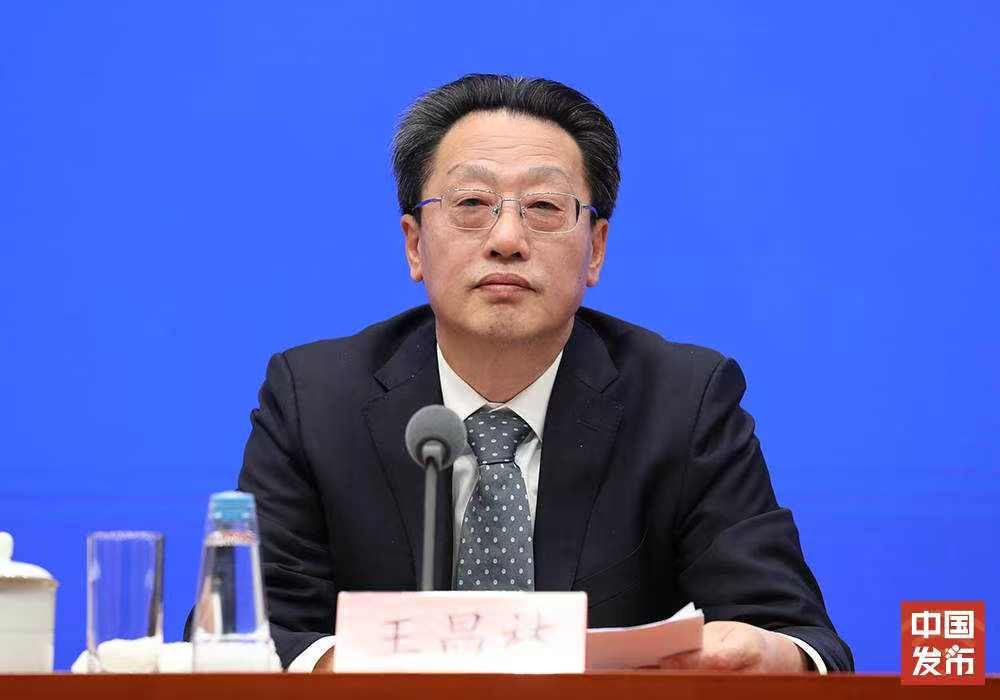
当日,国务院新闻办公室举行发布会,介绍长江经济带发展十年来的工作进展和成效。王昌林指 出,十年来,中国追根溯源、系统治疗"长江病",彻底清理整治1361座非法码头,基本消除沿江地级及 以上城市黑臭水体,坚定不移推进长江十年禁渔,长江干流水质由部分Ⅴ类提升到全线Ⅱ类。 十年来,中国坚持巩固提升长江黄金水道功能,加快构建沿江综合立体交通走廊,长江水系高等级 航道由0.8万公里增加到1.1万公里,干线港口货物吞吐量增长71%、达到42亿吨、稳居世界内河第一。 南水北调工程累计输水超840亿立方米,润泽沿线48座城市、1.95亿人。居民人均可支配收入从2.3万元 (人民币,下同)提高到4.4万元、增长了91%。 中国国家发改委副主任王昌林5日在北京表示,十年来,长江经济带地区生产总值翻了一番多、占 全国比重从42.2%提升到47.3%。 王昌林指出,下一步,将编制好实施好长江经济带发展"十五五"实施方案,一体推进长江大保护三 年行动计划落实,推动长江经济带发展不断迈上新台阶。 十年来,中国持续推进上海(长三角)国际科技创新中心和武汉、成渝地区区域科技创新中心建设, 积极培育壮大新兴产业和未来产业,创造出"人造太阳"亿 ...
长江经济带十年蝶变!42 亿吨吞吐量稳居世界内河第一
Zhong Guo Jing Ji Wang· 2026-01-05 09:34
(责任编辑:刘畅 ) 【免责声明】本文仅代表作者本人观点,与和讯网无关。和讯网站对文中陈述、观点判断保持中立,不对所包含内容 的准确性、可靠性或完整性提供任何明示或暗示的保证。请读者仅作参考,并请自行承担全部责任。邮箱: news_center@staff.hexun.com 2026年1月5日国新办于举行新闻发布会,介绍长江经济带发展十年工作进展和成效。国家发展改革 委副主任王昌林在会上谈到,十年来,横贯东西、承接南北、通江达海的优势在长江经济带持续释放, 开放长江活力更加澎湃。我们坚持巩固提升长江黄金水道功能,加快构建沿江综合立体交通走廊,长江 水系高等级航道由0.8万公里增加到1.1万公里,干线港口货物吞吐量增长71%、达到42亿吨、稳居世界 内河第一。推进高水平对外开放,中欧(亚)班列、西部陆海新通道高质量建设,沿江9个自贸试验区 联动发展。 ...
长江经济带如何绿色发展?国家发改委副主任王昌林点名武汉光谷
Chang Jiang Ri Bao· 2026-01-05 08:22
1月5日,国务院2026年第一场新闻发布会聚焦长江经济带发展,国家发展改革委副主任王昌林在回答"推动沿江产业绿色 低碳发展"时,专门提及武汉光谷等科创产业高地的高速发展。 产业升级塑造新优势,已累计培育国家级先进制造业集群41家、战略性新兴产业集群30家,分别占全国的51%和45%。他 以汽车产业为例,随着电动化、智能化技术加快变革,沿江地区汽车产业链供应链不断焕新升级,2025年上海、江苏、浙江、 安徽、重庆新能源汽车产量均超过百万辆,一条贯通全流域、覆盖全链条的新能源汽车产业链正在加速形成。 绿色转型实现新突破:积极推动钢铁、石化化工、建材等传统产业绿色转型,在长江经济带布局建设了24个国家碳达峰试 点城市和园区、14个零碳园区。加大新能源清洁能源船舶研发和推广,累计支持约1万艘老旧营运船舶报废更新。积极推动浙 江丽水、江西抚州等14个试点地区加快探索生态产品价值实现机制。 王昌林说:长江经济带以占全国约三分之一的能源消耗和碳排放,贡献了近一半的GDP,生态优先绿色发展主战场的引领 带动作用日益凸显。下一步,将加快推动沿江传统产业绿色转型,因地制宜培育壮大绿色低碳产业,更好实现在发展中保护、 在保护中发展 ...

国家发展改革委:下一步将着力做好“五大长江”建设
Xin Hua Cai Jing· 2026-01-05 08:04
Core Viewpoint - The National Development and Reform Commission emphasizes the importance of the Yangtze River Economic Belt's development in the context of the 14th Five-Year Plan, focusing on five major construction areas to enhance ecological, innovative, open, cultural, and social aspects of the region [1][2]. Group 1: Ecological Development - The initiative aims to promote high-level ecological protection, focusing on pollution control and fishing bans to enhance the beauty of the Yangtze River [1]. Group 2: Innovation Support - The plan includes improving the innovation support system by promoting technological innovation, nurturing innovative enterprises, and creating a conducive environment for continuous innovation [1]. Group 3: Regional Coordination - The strategy emphasizes strengthening regional collaboration and enhancing the Yangtze River Economic Belt's role in domestic and international dual circulation, optimizing transportation corridors, and promoting comprehensive openness across various sectors [1]. Group 4: Cultural Heritage - The development plan aims to protect and promote the cultural heritage of the Yangtze River, including the establishment of a national cultural park and the integration of culture and tourism [2]. Group 5: Social Welfare - The initiative focuses on enhancing safety and security in key areas, improving agricultural productivity, and ensuring food security while promoting high-quality employment and increasing the well-being of the population [2].
三峡水运新通道项目有最新进展!
Zheng Quan Ri Bao Wang· 2026-01-05 07:36
Core Insights - The development of the Yangtze River Economic Belt has shown significant progress over the past decade, with improvements in waterway infrastructure, cargo throughput, and environmental quality [1][2][3][4] Group 1: Infrastructure and Economic Growth - The length of high-grade waterways in the Yangtze River has increased from 8,000 kilometers to 11,000 kilometers, and cargo throughput at major ports has grown by 71% to reach 4.2 billion tons, maintaining the world's leading position in inland river transport [1] - The GDP of the Yangtze River Economic Belt has more than doubled, increasing its share of the national economy from 42.2% to 47.3% [1] - By 2025, it is expected that cargo throughput at major ports will reach 4.2 billion tons, with the number of large ports increasing to 18 and the average tonnage of cargo ships exceeding 2,300 tons, representing growth of 71%, 50%, and 67% respectively since 2015 [1] Group 2: Environmental Protection and Sustainable Development - The proportion of good water quality in the Yangtze River Economic Belt has improved from 67% to 96.5%, indicating significant advancements in environmental protection [1] - The "Three-Year Action Plan for Further Strengthening the Protection of the Yangtze River" outlines key tasks in water pollution control and ecological restoration from 2025 to 2027, with noticeable progress already made [2] - The region is focusing on green and low-carbon transformation of industries, with the establishment of 24 national carbon peak pilot cities and parks, and 14 zero-carbon parks [4] Group 3: Innovation and Industrial Upgrading - The Yangtze River Economic Belt has become a hub for innovation, with the establishment of three technology innovation centers and eight national laboratories, leading to breakthroughs in key technologies in various fields [3] - The region has nurtured 41 national-level advanced manufacturing clusters and 30 strategic emerging industry clusters, accounting for 51% and 45% of the national totals respectively [3] - The automotive industry is undergoing significant transformation, with projections indicating that by 2025, the production of new energy vehicles in several provinces will exceed one million units, forming a comprehensive supply chain across the entire river basin [3]
“数”览长江经济带发展十年“成绩单”
Yang Shi Wang· 2026-01-05 07:27
Core Insights - The Longjiang Economic Belt has achieved significant ecological and economic progress over the past decade, emphasizing ecological priority and green development [1] Group 1: Environmental Achievements - The proportion of good water quality in the Yangtze Economic Belt increased from 67% to 96.5%, with the water quality of the main river improving from some Class V to Class II [1][4] - The proportion of Class I-III water quality rose by nearly 30 percentage points over ten years [4] - The total phosphorus concentration in the Yangtze River basin has decreased by over 40% compared to ten years ago [4] Group 2: Economic Growth - The GDP of the Yangtze Economic Belt more than doubled, increasing its share of the national economy from 42.2% to 47.3% [1] - Per capita disposable income rose from 23,000 yuan to 44,000 yuan, representing a growth of 91% [1] Group 3: Infrastructure Development - The length of high-grade navigable waterways in the Yangtze River system increased from 8,000 kilometers to 11,500 kilometers [3] - The cargo throughput of mainline ports grew by 71%, reaching 4.2 billion tons, maintaining the position as the world's leading inland river [1][3] - By 2025, the expected cargo throughput of the Yangtze mainline ports is projected to reach 4.2 billion tons, with the number of major ports increasing to 18 [3] Group 4: Future Plans - The next steps include implementing the "14th Five-Year" development plan for the Yangtze Economic Belt and advancing the three-year action plan for major ecological protection [2][6] - A monitoring and regulatory system for river pollution discharge will be established to enhance biodiversity and promote the protection of beautiful rivers and lakes in the Yangtze River basin [6]
47.3%、1.15万公里……“数”览长江经济带发展十年“成绩单”
Yang Shi Wang· 2026-01-05 06:37
Core Viewpoint - The development of the Yangtze River Economic Belt over the past decade has focused on ecological priority and green development, resulting in significant improvements in environmental quality and economic growth. Group 1: Environmental Improvements - The proportion of good water quality in the Yangtze River Economic Belt increased from 67% to 96.5%, with the water quality of the main river upgraded from some Class V to Class II across the board [16][14] - The number of illegal docks was reduced by cleaning up 1,361 sites, and the black and odorous water bodies in cities along the river were largely eliminated [16] - The total phosphorus concentration in the Yangtze River basin decreased by over 40% compared to ten years ago [16] Group 2: Economic Growth - The GDP of the Yangtze River Economic Belt more than doubled, increasing its share of the national economy from 42.2% to 47.3% [7] - Per capita disposable income rose from 23,000 yuan to 44,000 yuan, representing a growth of 91% [7] Group 3: Infrastructure Development - The length of high-grade navigable waterways in the Yangtze River system increased from 8,000 kilometers to 11,000 kilometers, with cargo throughput at major ports growing by 71% to reach 4.2 billion tons [5][11] - The number of major ports with a throughput capacity of over 100 million tons is expected to increase to 18 by 2025 [13] Group 4: Future Plans - The next steps include enhancing the monitoring and regulatory system for river pollution, improving biodiversity, and promoting the construction of beautiful rivers and lakes in the Yangtze River basin [20]
交通运输部:2025年预计长江干线港口吞吐量可达42亿吨
Zhong Guo Xin Wen Wang· 2026-01-05 05:33
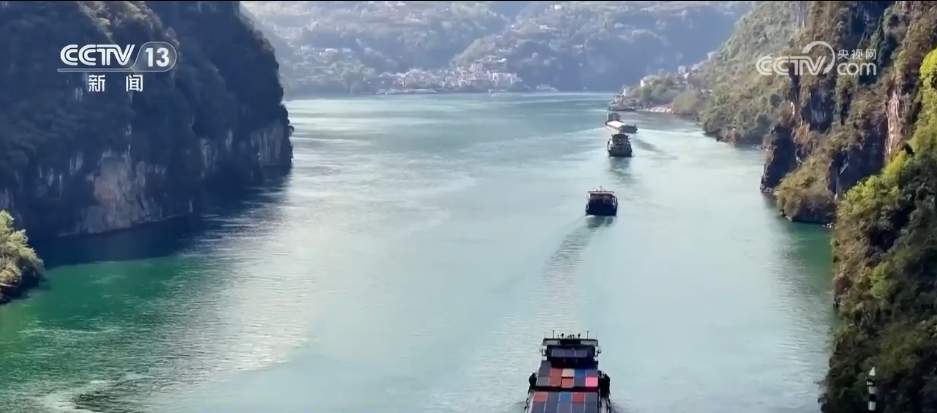
Core Viewpoint - The Ministry of Transport of China announced that the throughput of ports along the Yangtze River is expected to reach 4.2 billion tons by 2025, highlighting the strategic importance of modernizing Yangtze River shipping to support high-quality development of the Yangtze Economic Belt [1][2]. Group 1: Key Work Progress - The Ministry of Transport is focusing on strengthening the role of the Yangtze mainline as a major transportation corridor, with initiatives including the expansion and upgrading of key waterways [1]. - A total of 29 projects for the expansion of mainline waterways have been implemented, including the Wuhan to Anqing section and the second phase of the Jingjiang project [1]. - Major port projects such as Xiaoyangshan North and Shanghai Luojing are accelerating construction, enhancing the professional and large-scale capabilities of ports [1]. Group 2: Construction Achievements - The high-grade waterways of the Yangtze River system have reached a total length of 11,500 kilometers, allowing 50,000-ton vessels to reach Nanjing, 10,000-ton vessels to reach Wuhan, and 5,000-ton vessels to reach Chongqing [2]. - By 2025, the number of major ports with a throughput of over 100 million tons is expected to increase to 18, with an average cargo ship tonnage exceeding 2,300 tons, representing growth of 71%, 50%, and 67% respectively since 2015 [2]. - The Yangtze River's green service facilities are operational, with 20 green service areas, 13 washing stations, 8 LNG refueling stations, and 8 battery swap stations established [2].
长江经济带交出发展十年亮丽答卷
Xin Hua Wang· 2026-01-05 03:58
长江经济带发展是我国区域重大战略。十年来,长江经济带共抓大保护、不搞大开发,优良水质比例从67%提升到96.5%; 地区生产总值翻了一番多、占全国比重提升到47.3%;形成了汽车制造、电子信息等一批世界级产业集群……保护和发展的相互 促进、相得益彰,书写了人与自然和谐共生的中国式现代化时代篇章。 长江经济带发展十年答卷 创新长江劲能更加强劲 创造出"人造太阳"亿度干秒运行、靶向 ■ 抗癌药等一批处于世界先进水平的科技成 岸 涌现出DeepSeek、宇树科技等一批具 ■ 有国际竞争力的创新型企业 形成汽车制造、电子信息等一批世界级产 l 业集群 部半 ESS 长江经济带发展十年答卷 跟随这组海报,一起见证母亲河十年发展答卷,领略一江碧水向东流、发展新潮连天涌的壮丽画卷。 凯华社 长江经济带发展十年答卷 文化长江底蕴更加深厚 良渚古城遗址成功列入世界文化遗产名录 ■ 三星堆考古发掘震撼世界 都江堰不仅灌溉着干万亩良田、更彰显了 ■ "天人合一"的治水理念 一批具有历史人文内涵的滨江城市、美丽 ■ 乡村与灵秀山水和谐相融 凯信业 长江经济带发展十年答卷 幸福长江品质持续提升 · 132座水工程实现联合调度 南水北调 ...
国家发改委:长江经济带生产总值占全国比重升至47.3%
Zhong Guo Xin Wen Wang· 2026-01-05 03:23
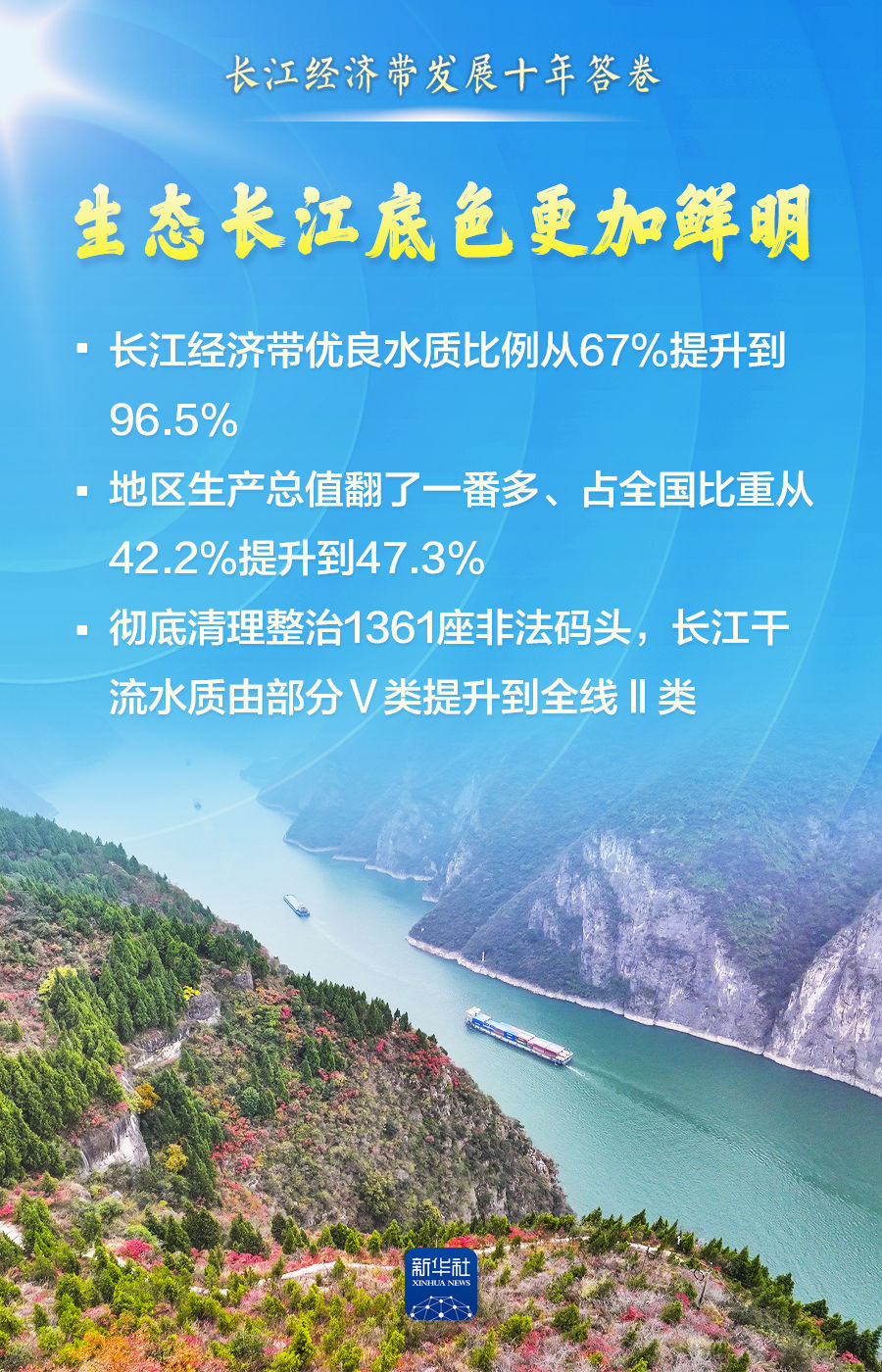
中新网1月5日电 国务院新闻办公室5日举行新闻发布会,介绍长江经济带发展十年工作进展和成效。国 家发展改革委副主任王昌林在会上介绍,十年来,长江经济带优良水质比例从67%提升到96.5%,地区 生产总值翻了一番多、占全国比重从42.2%提升到47.3%,实现了保护和发展的相互促进、相得益彰, 绘就了人与自然和谐共生的中国式现代化的长江画卷。 本文为转载内容,授权事宜请联系原著作权人 中新经纬版权所有,未经书面授权,任何单位及个人不得转载、摘编或以其它方式使用。 关注中新经纬微信公众号(微信搜索"中新经纬"或"jwview"),看更多精彩财经资讯。 来源:中国新闻网 编辑:张澍楠 广告等商务合作,请点击这里 国家发改委:长江经济带生产总值占全国比重升至47.3% ...