绿色智慧转型

Search documents
交通运输部:长江航运战略地位突出 预计2025年长江干线港口吞吐量可达42亿吨
Xin Hua Cai Jing· 2026-01-05 08:08
Core Viewpoint - The modernization of the Yangtze River shipping is crucial for supporting the high-quality development of the Yangtze River Economic Belt, with a focus on enhancing the main channel's role and promoting green and smart transformation in the shipping industry [1][2]. Group 1: Key Initiatives - The Ministry of Transport is prioritizing the construction of a strong transportation nation, actively supporting major national strategies, and enhancing the role of the Yangtze River main channel [1]. - Key projects include the expansion of 29 main channel sections, such as the Wuhan to Anqing segment and the second phase of the Jingjiang project, along with the approval of the feasibility report for the new Three Gorges waterway [1]. - Support is being provided for 12 hub cities, including Shanghai and Wuhan, to implement national comprehensive freight hub projects, with significant port projects like Xiaoyangshan North and Shanghai Luojing accelerating construction [1]. Group 2: Achievements and Future Goals - The Yangtze River's high-grade waterway mileage has reached 11,500 kilometers, allowing 50,000-ton vessels to reach Nanjing directly, 10,000-ton vessels to Wuhan, and 5,000-ton vessels to Chongqing, significantly improving channel capacity [2]. - By 2025, the port throughput of the Yangtze River main line is expected to reach 4.2 billion tons, with the number of major ports increasing to 18 and the average tonnage of cargo ships exceeding 2,300 tons, representing growth of 71%, 50%, and 67% respectively since 2015 [2]. - Future plans include further implementation of the Yangtze Economic Belt Development Plan and the Inner River Waterway Connectivity Project, focusing on upgrading main channels and enhancing port hub capabilities for a more efficient multi-layered port structure [2].
交通运输部:2025年预计长江干线港口吞吐量可达42亿吨
Zhong Guo Xin Wen Wang· 2026-01-05 05:33
Core Viewpoint - The Ministry of Transport of China announced that the throughput of ports along the Yangtze River is expected to reach 4.2 billion tons by 2025, highlighting the strategic importance of modernizing Yangtze River shipping to support high-quality development of the Yangtze Economic Belt [1][2]. Group 1: Key Work Progress - The Ministry of Transport is focusing on strengthening the role of the Yangtze mainline as a major transportation corridor, with initiatives including the expansion and upgrading of key waterways [1]. - A total of 29 projects for the expansion of mainline waterways have been implemented, including the Wuhan to Anqing section and the second phase of the Jingjiang project [1]. - Major port projects such as Xiaoyangshan North and Shanghai Luojing are accelerating construction, enhancing the professional and large-scale capabilities of ports [1]. Group 2: Construction Achievements - The high-grade waterways of the Yangtze River system have reached a total length of 11,500 kilometers, allowing 50,000-ton vessels to reach Nanjing, 10,000-ton vessels to reach Wuhan, and 5,000-ton vessels to reach Chongqing [2]. - By 2025, the number of major ports with a throughput of over 100 million tons is expected to increase to 18, with an average cargo ship tonnage exceeding 2,300 tons, representing growth of 71%, 50%, and 67% respectively since 2015 [2]. - The Yangtze River's green service facilities are operational, with 20 green service areas, 13 washing stations, 8 LNG refueling stations, and 8 battery swap stations established [2].
更好发挥沿海港口稳外贸作用(专家点评)
Ren Min Ri Bao· 2025-12-28 22:00
Core Viewpoint - The development of foreign trade is closely linked to logistics, with coastal ports handling over 90% of the country's foreign trade cargo transportation. The transition from a water transport power to a leading water transport nation is crucial during the 14th and 15th Five-Year Plans, emphasizing the need for enhanced operational capacity and service quality in ports [1]. Group 1: Port Development - Coastal ports are essential for the import and export of foreign trade goods, with over 90% of cargo transportation handled by these ports [1]. - The scale, operational efficiency, and technological level of automated terminals in China rank among the top globally, supporting stable growth in foreign trade [1]. - The 15th Five-Year Plan period is critical for transitioning to a leading water transport nation, requiring improvements in operational capabilities and service quality [1]. Group 2: Global Supply Chain and Logistics - In the context of global supply chain restructuring, port operational capacity is vital for ensuring smooth international trade [1]. - Ports should adhere to high standards and proactively upgrade facilities and functions to support cargo volume growth [1]. - The development of modern shipping services is essential for facilitating logistics channels and promoting the aggregation of marine industries [1]. Group 3: Green and Smart Transformation - Accelerating the green and smart transformation of ports is necessary for reducing costs and improving quality in transportation logistics [1]. - The digital transformation of port infrastructure and the intelligent operation of port production are key to creating new scenarios and fostering new industries [1]. - Establishing a comprehensive new energy supply system for ports and developing new energy-powered vessels will help foreign trade enterprises reduce costs and enhance efficiency [1].
与全国煤交会六度牵手
Qi Lu Wan Bao· 2025-12-04 22:07
Core Viewpoint - The 2026 National Coal Trading Conference is being held in Rizhao, Shandong, highlighting the city's strategic importance in China's energy landscape and its role as a key hub for coal trading and logistics [1]. Group 1: Conference and Location Significance - The conference is recognized as the highest standard and most influential annual event in the domestic coal industry, marking its sixth occurrence in Rizhao [1]. - Rizhao's selection as the conference venue reflects its strong capabilities in hosting such events and its strategic position in the national energy framework [1]. Group 2: Infrastructure and Logistics - Rizhao Port is the only port in the country with two heavy-load railways directly connecting to the port area, facilitating efficient coal transportation from the northwest to the eastern regions [1]. - A special train carrying over 3,400 tons of high-quality coal from Hami, Xinjiang, successfully arrived at Rizhao Port, demonstrating the port's logistical capabilities [1]. - The port's daily coal unloading capacity exceeds 50 trains, with a coal throughput capacity of 80 million tons per year and storage capacity exceeding 10 million tons [2]. Group 3: Industrial Ecosystem and Development - Rizhao has transformed from a simple coal transit point to a comprehensive industrial ecosystem, integrating coal production, transportation, and trading [3]. - The establishment of a national coal emergency reserve base and the launch of an energy trading platform have enhanced Rizhao's capabilities in coal logistics and trading [3]. - Major energy companies are establishing significant coal distribution bases in Rizhao, fostering the development of related industries such as trade, finance, and information services [3]. Group 4: Green Transformation and Sustainability - Rizhao Port has implemented advanced technologies for intelligent and green operations, significantly reducing dust and carbon emissions compared to traditional methods [4]. - The port has adopted various green initiatives, including closed storage and priority rail transport, to address environmental challenges in coal transportation [4]. - Rizhao is becoming a model for low-carbon transformation in the coal industry, showcasing successful applications of electric logistics technologies [4]. Group 5: Conference Impact and City Development - The conference allows participants to witness the operational efficiency of Rizhao's port and rail systems, enhancing the practical value of the event [5]. - Since hosting the conference in 2019, Rizhao has attracted numerous major energy projects, facilitating long-term coal supply contracts between coal-producing regions and energy-consuming enterprises [5]. - Continuous upgrades in urban service capabilities and the establishment of a comprehensive logistics command center have strengthened Rizhao's position as a northern energy hub [5].

与全国煤交会六度牵手!日照持续擦亮“北方能源枢纽”城市名片
Qi Lu Wan Bao· 2025-12-03 15:37
Core Viewpoint - The 2026 National Coal Trading Conference is being held in Rizhao, Shandong, highlighting the city's strategic importance in the national energy landscape and its recognition as a premier venue for the coal industry [1] Group 1: Energy Hub Development - Rizhao has become a preferred location for coal trading due to its unique hub advantages, complete industrial system, and strong innovation capabilities [2] - The successful arrival of a special train carrying over 3,400 tons of high-quality coal from Hami, Xinjiang, demonstrates Rizhao's role as a critical energy hub, connecting the northwest coal production area with the eastern region [2] - Rizhao Port has a daily unloading capacity exceeding 50 trains and can handle coal shipments ranging from 5,000 to 70,000 tons, with an annual coal throughput capacity of 80 million tons [2] Group 2: Strategic Location and Infrastructure - Rizhao Port's geographical position allows it to cover one-third of China's territory, serving as a key outlet for coal from inland regions and an important port for coal imports from Indonesia and Australia [3] - The establishment of a national first road-port logistics command center enhances the efficiency of coal transportation from rail to sea, significantly improving operational processes [3] Group 3: Industrial Ecosystem Transformation - Rizhao has transformed from a single coal transit point to a comprehensive industrial ecosystem, integrating the entire coal supply chain from mining to steel production [4] - Major energy companies have established significant coal distribution bases and logistics hubs in Rizhao, fostering the development of related industries such as trade, finance, and information services [4] Group 4: Green Transformation Initiatives - Rizhao Port has implemented advanced technologies for automated operations, significantly reducing dust and carbon emissions compared to traditional methods [5] - The port has adopted various green initiatives, including closed storage and priority rail transport, to address environmental challenges associated with large-scale coal handling [5] Group 5: Conference Impact and City Development - The coal trading conference in Rizhao allows participants to witness the operational efficiency of the port and surrounding industries, maximizing the event's value [7] - Continuous upgrades in city services and infrastructure have strengthened Rizhao's capacity to host national-level events, enhancing its reputation as a northern energy hub [7]
宝地矿业:以铁矿筑根基,拓矿种谋新局
Shang Hai Zheng Quan Bao· 2025-10-26 17:23
Core Viewpoint - Baodi Mining has achieved a revenue of 1.145 billion yuan in the first three quarters of 2023, marking a year-on-year growth of 17.47%, and is focused on strengthening its iron ore business while diversifying its mineral categories to build a competitive advantage in the western mining sector [2][3] Revenue and Growth - The company aims to enhance its core competitiveness and sustainable development by leveraging Xinjiang's rich mineral resources and expanding its operational scale [2] - Baodi Mining's revenue growth is supported by strategic projects aimed at resource expansion and capacity enhancement [3] Resource and Capacity Expansion - The company is in a "scale expansion period" and is actively working on three major projects, including obtaining a mining license for 10 million tons of iron ore and the expansion of the Songhu Iron Mine [3][4] - A significant acquisition of 87% stake in Xinjiang Congling Energy for 685 million yuan will add 82.66 million tons of high-quality iron ore resources, increasing the company's total iron ore resources from 380 million tons to 460 million tons, a growth of 21.75% [3] Project Highlights - The Baodi Mining's key projects include the preparation for a 10 million tons/year iron ore project and the expansion of the Songhu Iron Mine from 1.5 million tons/year to 2 million tons/year, which will significantly enhance its supply capacity to downstream steel companies [4] Diversification Strategy - The company is diversifying its mineral portfolio to mitigate cyclical risks associated with the iron ore industry, aiming to enhance its resilience [5] - The Haxiatu Iron Polymetallic Mine in Qinghai, with an annual capacity of 1.44 million tons, exemplifies the company's successful multi-mineral expansion strategy [6] Green and Smart Transformation - Baodi Mining emphasizes the importance of green and smart mining as essential components of its strategic planning, with ongoing investments in sustainable practices [8] - The company has achieved significant milestones in green mining, including zero wastewater discharge and a 100% water reuse rate [8] Financial Performance and Market Position - Since its listing in March 2023, Baodi Mining has conducted four cash dividend distributions totaling 266 million yuan, maintaining a consistent dividend payout ratio of over 50% of net profit [9] - The company's asset scale has increased from 4.7 billion yuan in 2022 to 7 billion yuan, reflecting its commitment to long-term growth despite short-term profit fluctuations [9]


南京港涨停引爆港口航运板块,宁波海运等涨幅靠前,背后逻辑曝光
Jin Rong Jie· 2025-09-23 08:03
Core Viewpoint - The port and shipping sector is experiencing a strong upward trend, driven by favorable policies and increasing cargo throughput, making it a focal point in the capital market [1][2]. Industry Developments - The Ministry of Transport reported that from January to July this year, the total cargo throughput reached 10.44 billion tons, a year-on-year increase of 4.4%, while container throughput was 20 million TEUs, up 6.2% year-on-year [1]. - Guangzhou Port Co., Ltd. announced an expected container throughput of 18.037 million TEUs from January to August 2025, representing a 7.5% year-on-year increase, and a cargo throughput of 38.587 million tons, up 2.5% year-on-year [1]. Technological Advancements - As of the end of August this year, China has established 23 automated container terminals and 29 automated dry bulk terminals, with smart technologies like 5G unmanned driving being applied on a large scale [1]. - The proportion of clean energy equipment in container transport at 11 international hub ports, including Shanghai, has exceeded 60%, indicating a deepening of the green and low-carbon transformation [1]. Sector Performance - The increase in cargo throughput directly boosts revenue for port operators through enhanced loading, storage, and related services [2]. - Shipping companies are expected to benefit from increased trade volumes, leading to higher freight income, particularly for those with extensive route resources and large fleets [2]. - The logistics and supply chain sector will also thrive as the growth in port business volume stimulates surrounding logistics enterprises, including warehousing, distribution, and freight forwarding [2]. Investment Opportunities - The port and shipping sector shows significant potential for future development driven by multiple favorable factors, presenting investment opportunities for investors [2].

百年煤港焕新颜:秦皇岛港的绿色智慧转型之路
Zhong Guo Xin Wen Wang· 2025-09-04 11:38
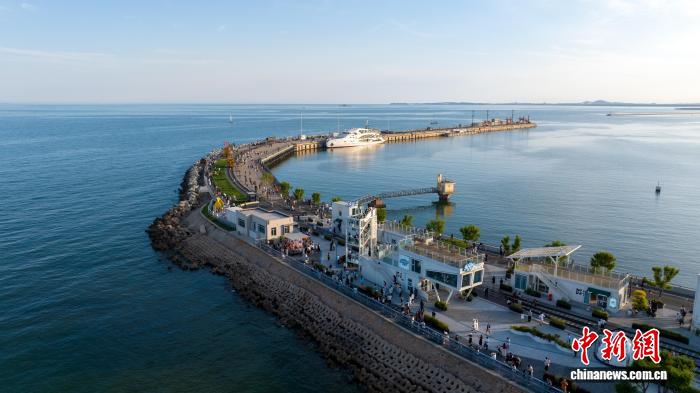
Core Viewpoint - The transformation of Qinhuangdao Port from a coal transportation hub to a green and smart industrial tourism destination showcases a successful integration of historical significance with modern innovation [3][6]. Group 1: Transformation and Upgrading - Since 2017, Qinhuangdao Port has actively promoted transformation and upgrading, optimizing its functional layout through the renovation of old buildings and large-scale greening projects, ultimately becoming a national 4A-level tourist attraction [3][6]. - The port maintains a strong core transportation function, with an average daily coal throughput of nearly 500,000 tons, while pursuing ecological and environmental goals [3][6]. Group 2: Environmental and Technological Innovations - Advanced environmental technologies are applied throughout the coal handling process, ensuring that the port operates "dust-free" from the entry of coal trains to the departure of cargo ships [3][4]. - The port has implemented smart upgrades, including the establishment of a smart operation center and platforms for production scheduling, safety supervision, and environmental monitoring, integrating AI, big data, and cloud computing into industrial production [3][4]. Group 3: Community and Economic Impact - The dual transformation towards green and smart operations has revitalized the century-old coal port, contributing to the selection of the Qinhuangdao Bay area as one of the national beautiful bays in 2024 [6]. - The port's transformation has enhanced the urban environment and vitality, positively impacting the happiness of local citizens, as reflected in community feedback [6].
从“小舢板” 到“百舸争流”!宁波远洋正向着更深更广的蓝色经济圈全速前进
Zhong Zheng Wang· 2025-08-22 12:20
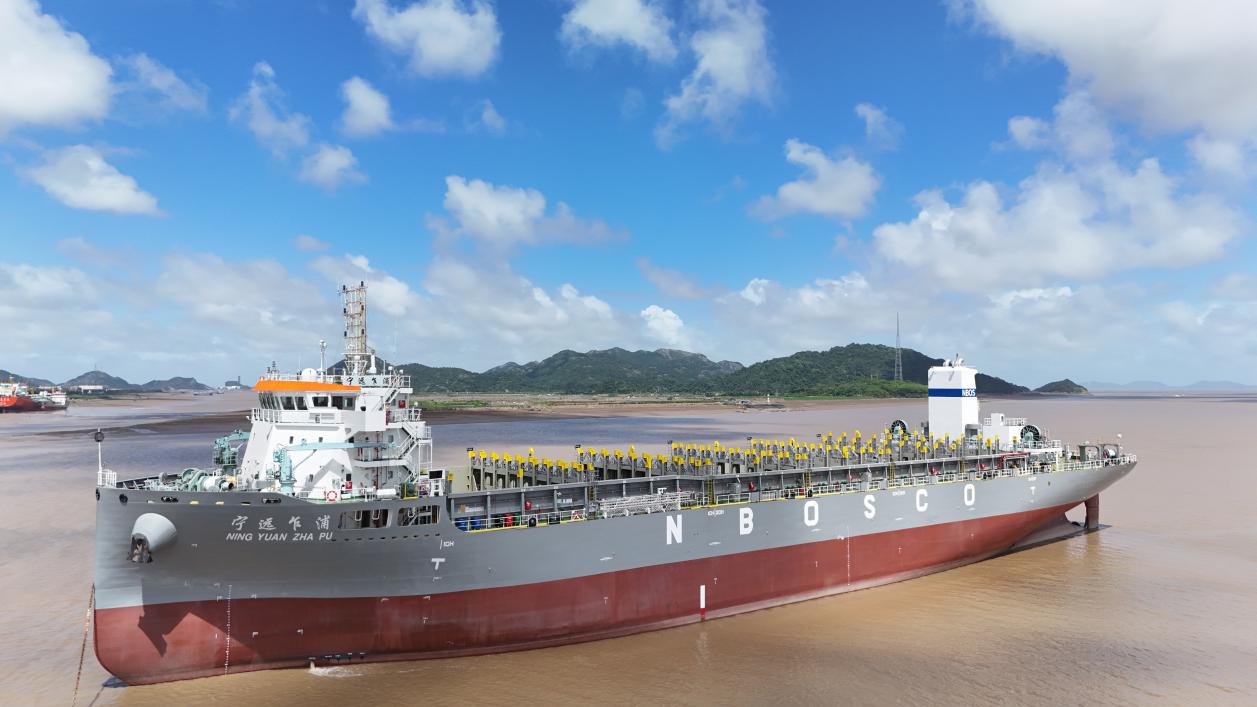
Core Viewpoint - Ningbo Ocean has significantly expanded its fleet and operational capacity over the past decade, positioning itself as a competitive player in the shipping industry, supported by technological advancements and strategic initiatives [1][2][4] Fleet Expansion - Ningbo Ocean's fleet has grown to over 109 vessels with a total deadweight tonnage exceeding 1.7 million tons, a substantial increase from less than one-third of these figures ten years ago [1] - The company added 21 new vessels since 2021, increasing its total deadweight tonnage by nearly 600,000 tons and container capacity by over 30,000 TEUs [2] Technological Advancements - The company has integrated advanced technologies such as intelligent ship collision avoidance systems and energy management systems, achieving energy savings of up to 69.6% [3] - Ningbo Ocean has established innovation centers focused on smart and green shipping, with 28 green energy-efficient vessels making up nearly 54% of its fleet [3] Market Expansion - Since 2021, Ningbo Ocean has launched direct shipping routes to Southeast Asian countries and initiated its first trans-Pacific voyage in May 2022, marking its entry into the deep-sea market [3] - The company has opened a container transport route to the Middle East and entered the foreign trade bulk cargo market, demonstrating steady progress in international expansion [3][4] Strategic Positioning - Ningbo Ocean operates over 40 shipping routes and more than 100 vessels, effectively connecting domestic coastal areas with international ports in Japan, South Korea, Southeast Asia, and the Middle East [4] - The transformation from a fleet of 30 small vessels to a modern fleet of over 100 ships reflects the company's commitment to the integrated development of Zhejiang's marine port strategy and its green, intelligent transformation [4]

宁波远洋船队规模突破109艘 正向着更深更广的蓝色经济圈全速前进
Zheng Quan Ri Bao Wang· 2025-08-22 11:46
Core Viewpoint - Ningbo Ocean Transportation Co., Ltd. has significantly expanded its fleet and operational capacity over the past decade, positioning itself as a key player in the maritime industry, particularly in the context of the integrated development of Zhejiang's marine ports [1][19]. Fleet Expansion and Capacity Growth - The fleet of Ningbo Ocean has surpassed 109 vessels with a total deadweight tonnage exceeding 1.7 million tons, a substantial increase from less than one-third of these figures a decade ago [1]. - The company has added 21 new vessels since 2021, resulting in an increase of nearly 600,000 tons in deadweight tonnage and over 30,000 standard container capacity [11]. Strategic Development and Market Positioning - The company has successfully established a "water-water transfer" logistics network centered around Ningbo Zhoushan Port, enhancing its service capabilities in near-sea, domestic, and internal trade container transportation [7]. - Since 2021, Ningbo Ocean has opened direct shipping routes to Southeast Asian countries and initiated its first trans-Pacific voyage, marking its entry into the deep-sea market [15]. Technological Advancements and Sustainability - Ningbo Ocean is actively integrating advanced technologies into its fleet, including smart ship collision avoidance systems and energy management systems, contributing to a greener and more efficient operation [11][13]. - The company has a significant portion of its fleet, with 28 green energy-efficient vessels, accounting for nearly 54% of its owned fleet, and over 30% of its vessels are classified as smart ships [13]. Competitive Edge and Market Influence - The modernized fleet, characterized by larger container capacities and improved economic efficiency, has strengthened Ningbo Ocean's competitive position in the market [15]. - The company has developed over 40 shipping routes and operates more than 100 cargo vessels, effectively connecting domestic coastal areas with international ports in Japan, South Korea, Southeast Asia, and the Middle East [17].