靶向抗癌药

Search documents
AI图说:长江经济带十年焕新
Zhong Guo Jing Ji Wang· 2026-01-06 07:51
Core Viewpoint - The development of the Yangtze River Economic Belt over the past decade has achieved significant progress, emphasizing ecological priority and green development, revitalizing the Yangtze River [1] Group 1: Achievements in Development - The Yangtze River Economic Belt has seen the high-grade waterway length increase from 8,000 kilometers to 11,000 kilometers [8] - The cargo throughput at trunk ports has grown by 71%, reaching 4.2 billion tons, maintaining its position as the world's leading inland river [8] - The region has established nine free trade pilot zones along the river, promoting coordinated development [9] Group 2: Innovation and Technology - The integration of technological and industrial innovation has accelerated, with the establishment of international technology innovation centers in Shanghai (Yangtze River Delta) and Wuhan, Chengdu regions [7] - Notable technological achievements include the "artificial sun" operating at a billion degrees for a thousand seconds and targeted cancer drugs, showcasing world-class advancements [7] Group 3: Cultural and Environmental Enhancements - The Longjiang National Cultural Park has been developed, with the Liangzhu Ancient City site successfully listed as a UNESCO World Heritage site [12] - The quality of life has improved, with per capita disposable income rising from 23,000 yuan to 44,000 yuan, a 91% increase [14] - The proportion of good water quality in the Yangtze River Economic Belt has increased from 67% to 96.5% [14]

权威发布|优良水质比例提升近30个百分点,地区生产总值翻一番多
Ren Min Ri Bao· 2026-01-06 06:49
Core Viewpoint - The development of the Yangtze River Economic Belt has achieved significant progress over the past decade, with improvements in water quality, economic growth, and residents' income, highlighting a successful model of ecological priority and green development [1][2][4]. Economic Development - The regional GDP of the Yangtze River Economic Belt has more than doubled, increasing its share of the national GDP from 42.2% to 47.3% [1][4]. - Residents' per capita disposable income rose from 23,000 yuan to 44,000 yuan, marking a 91% increase [4]. Environmental Protection - The proportion of good water quality in the Yangtze River increased from 67% to 96.5% [4]. - Continuous efforts in ecological protection have led to the elimination of black and odorous water bodies in major cities along the river [2][4]. - The implementation of a fishing ban has shown positive results, with a notable increase in biodiversity, including the successful natural reproduction of the Yangtze sturgeon [5][6]. Infrastructure and Transportation - The construction of a comprehensive transportation corridor along the Yangtze River has accelerated, with the high-grade waterways increasing from 8,000 kilometers to 11,000 kilometers [3]. - The cargo throughput of major ports has grown by 71%, reaching 4.2 billion tons, maintaining the position as the world's leading inland waterway [3]. Innovation and Industry - The Yangtze River Economic Belt has fostered the emergence of innovative enterprises and advanced technology, with significant breakthroughs in fields such as artificial intelligence and quantum information [6]. - The region has cultivated 41 national-level advanced manufacturing clusters and 30 strategic emerging industry clusters, accounting for 51% and 45% of the national totals, respectively [6]. Cultural and Social Development - Efforts to protect and promote the cultural heritage of the Yangtze River have been enhanced, including the establishment of the Yangtze National Cultural Park [3]. - Water management projects have effectively safeguarded the safety of people's lives and property, with over 840 billion cubic meters of water supplied through the South-to-North Water Diversion Project [3].
长江母亲河焕发生机活力
Jing Ji Wang· 2026-01-06 06:24
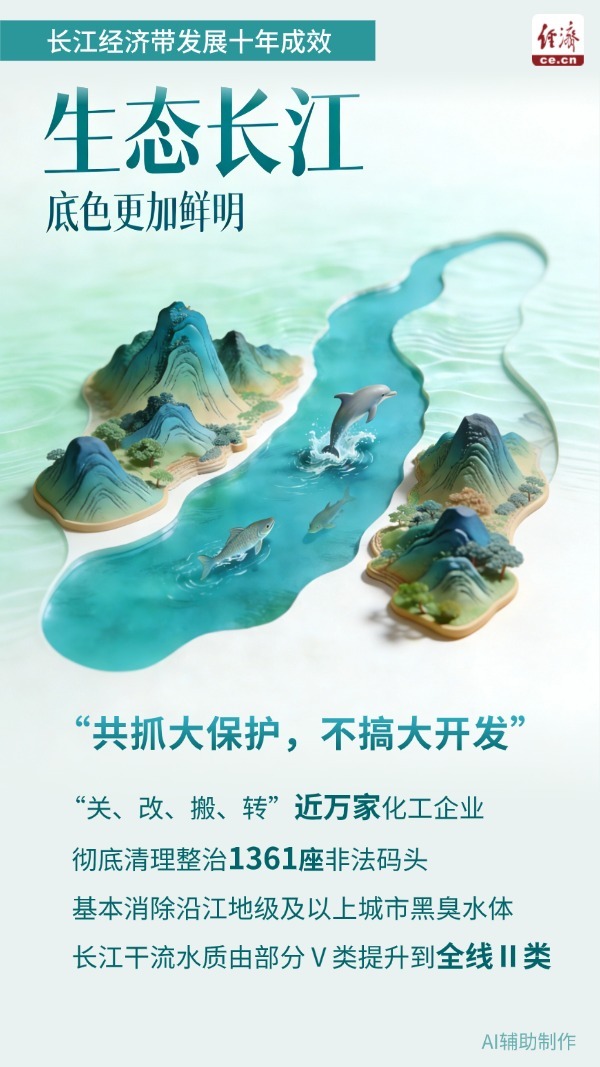
Core Viewpoint - The Yangtze River Economic Belt has achieved significant progress in ecological protection and green development over the past decade, emphasizing the integration of economic growth with environmental sustainability [1][2]. Group 1: Development Progress - The concept of "coordinated major protection, not major development" has been firmly established in the Yangtze River Economic Belt, leading to a more pronounced ecological foundation [2]. - Technological and industrial innovations have accelerated in the region, with significant achievements such as the "artificial sun" and targeted cancer drugs, showcasing the emergence of competitive innovative enterprises [2]. - The region has seen the establishment of world-class industrial clusters in automotive manufacturing and electronic information, enhancing its economic resilience and dynamism [2]. Group 2: Infrastructure and Transportation - The Yangtze River's shipping is a crucial component of the comprehensive transportation system, with ongoing efforts to modernize and enhance its capacity [4]. - Key projects include the expansion of major shipping channels and the implementation of green and smart transformation initiatives, such as the construction of pollution management facilities and the promotion of green vessels [4]. - The high-grade waterway mileage has reached 11,500 kilometers, significantly improving the navigational capacity for large vessels [4]. Group 3: Green and Low-Carbon Transition - The Yangtze River Economic Belt is a vital area for industrial aggregation, with a focus on promoting green and low-carbon transitions in industries [5][6]. - The establishment of innovation platforms and the development of key technologies in various fields have been prioritized to foster new growth drivers [5]. - Traditional industries are undergoing green transformations, with pilot cities and parks being developed to achieve carbon peak and zero-carbon goals [6].
优良水质比例提升近30个百分点,地区生产总值翻一番多
Ren Min Ri Bao· 2026-01-06 01:17
Core Insights - The development of the Yangtze River Economic Belt has led to significant improvements in environmental quality and economic performance over the past decade, with a focus on ecological protection and green development. Economic Performance - The per capita disposable income of residents increased from 23,000 yuan to 44,000 yuan, a growth of 91% [1][3] - The regional GDP more than doubled, with its share of the national total rising from 42.2% to 47.3% [1][5] Environmental Improvements - The proportion of good water quality increased from 67% to 96.5% [5] - The water quality of the Yangtze River main stream has maintained a Class II standard for six consecutive years, with flagship species like the Yangtze River dolphin seeing population increases [4][6] Industrial Transformation - The Yangtze River Economic Belt is promoting green and low-carbon transformation of industries, with 41 national advanced manufacturing clusters and 30 strategic emerging industry clusters established, accounting for 51% and 45% of the national totals, respectively [7] - Traditional industries such as steel and petrochemicals are undergoing green transformations, with 24 national carbon peak pilot cities and parks established [7] Infrastructure Development - The construction of a comprehensive transportation corridor along the Yangtze River has accelerated, with the high-grade waterways increasing from 8,000 kilometers to 11,000 kilometers [3][8] - The cargo throughput of trunk ports grew by 71%, reaching 4.2 billion tons, maintaining the world's leading position in inland river transport [3] Cultural and Social Aspects - Efforts to protect and promote the cultural heritage of the Yangtze River are ongoing, with initiatives to enhance the cultural park and support the creative transformation of traditional culture [3]
优良水质比例提升近30个百分点 地区生产总值翻一番多
Ren Min Ri Bao· 2026-01-06 00:49
Core Insights - The Yangtze River Economic Belt has achieved significant ecological and economic advancements over the past decade, emphasizing ecological priority and green development. Group 1: Environmental Improvements - The proportion of good water quality has increased from 67% to 96.5% [1] - The main stream of the Yangtze River has maintained a Class II water quality for six consecutive years, with flagship species like the Yangtze dolphin showing population recovery [4][6] - A total of 1,361 illegal docks have been thoroughly cleaned and rectified, and black and odorous water bodies in major cities along the river have been largely eliminated [2] Group 2: Economic Growth - The regional GDP has more than doubled, increasing its share of the national GDP from 42.2% to 47.3% [1] - Per capita disposable income of residents has risen from 23,000 yuan to 44,000 yuan, marking a 91% increase [1][3] Group 3: Industrial Transformation - The Yangtze River Economic Belt is actively promoting green and low-carbon transformation of industries, with significant progress in traditional sectors like steel and petrochemicals [7] - A total of 41 national-level advanced manufacturing clusters and 30 strategic emerging industry clusters have been cultivated, accounting for 51% and 45% of the national totals, respectively [7] Group 4: Infrastructure Development - The length of high-grade navigable waterways in the Yangtze River system has increased from 8,000 kilometers to 11,000 kilometers, with cargo throughput at mainline ports growing by 71% to reach 4.2 billion tons [3] - The construction of green service facilities along the Yangtze River has been completed, including 20 green service areas and 13 washing stations [8]
优良水质比例提升近30个百分点,地区生产总值翻一番多(权威发布)
Ren Min Ri Bao· 2026-01-06 00:28
Core Viewpoint - The development of the Yangtze River Economic Belt has achieved significant progress over the past decade, focusing on ecological protection and green development, resulting in improved water quality, economic growth, and increased residents' disposable income. Group 1: Environmental Improvements - The proportion of good water quality in the Yangtze River has increased from 67% to 96.5% [1] - The water quality of the main stream has maintained a Class II standard for six consecutive years, with flagship species like the Yangtze River dolphin showing population recovery [4] - A total of 1361 illegal docks have been thoroughly cleaned up, and black and odorous water bodies in cities along the river have been largely eliminated [2] Group 2: Economic Growth - The regional GDP of the Yangtze River Economic Belt has more than doubled, increasing its share of the national GDP from 42.2% to 47.3% [1] - Residents' per capita disposable income has risen from 23,000 yuan to 44,000 yuan, representing a 91% increase [1][3] Group 3: Industrial and Technological Development - The Yangtze River Economic Belt has fostered the emergence of innovative companies and advanced technology in fields such as artificial intelligence and quantum information [6] - A total of 41 national-level advanced manufacturing clusters and 30 strategic emerging industry clusters have been cultivated, accounting for 51% and 45% of the national totals, respectively [6] Group 4: Infrastructure and Transportation - The high-grade navigable waterways of the Yangtze River have increased from 8,000 kilometers to 11,000 kilometers, with cargo throughput at trunk ports growing by 71% to reach 4.2 billion tons [3] - The construction of green service facilities along the Yangtze River has been completed, including 20 green service areas and 13 washing stations [7] Group 5: Disaster Prevention and Management - The water and drought disaster prevention system in the Yangtze River basin has shown significant effectiveness, successfully managing major floods and droughts in recent years [5] - The Yangtze River fishing ban has led to a positive recovery in aquatic biodiversity, with the number of native fish species monitored increasing by 36 since the ban [5]
10年来,长江经济带走出一条生态优先、绿色发展的新路子 优良水质比例提升近30个百分点,地区生产总值翻一番多(权威发布)
Ren Min Ri Bao· 2026-01-05 22:28
Core Insights - The development of the Yangtze River Economic Belt has led to significant improvements in ecological quality, economic growth, and social welfare over the past decade, with a focus on green development and ecological protection [1][2][3][4][5]. Economic Development - The per capita disposable income of residents increased from 23,000 yuan to 44,000 yuan, a growth of 91% [3][5]. - The regional GDP more than doubled, with its share of the national total rising from 42.2% to 47.3% [1][5]. Ecological Improvements - The proportion of good water quality in the Yangtze River increased from 67% to 96.5% [5]. - The water quality of the main river has been maintained at Class II for six consecutive years, and the population of flagship species like the Yangtze River dolphin has increased [4][6]. Infrastructure and Transportation - The high-grade navigable waterways of the Yangtze River increased from 8,000 kilometers to 11,000 kilometers, with cargo throughput at trunk ports growing by 71% to reach 4.2 billion tons, maintaining the world's leading position in inland river transport [3][8]. - The construction of a comprehensive transportation corridor along the river has accelerated, enhancing connectivity and trade [3]. Industrial Transformation - The Yangtze River Economic Belt has seen the establishment of 41 national-level advanced manufacturing clusters and 30 strategic emerging industry clusters, accounting for 51% and 45% of the national totals, respectively [7]. - Traditional industries such as steel and petrochemicals are undergoing green transformation, with 24 national carbon peak pilot cities and parks established [7]. Cultural and Social Development - Efforts to protect and promote the cultural heritage of the Yangtze River have been emphasized, including the establishment of the Yangtze National Cultural Park [3]. - Water projects have effectively protected the safety of people's lives and property, with over 840 billion cubic meters of water supplied through the South-to-North Water Diversion Project, benefiting 1.95 million people [3].
视频丨十年来长江经济带生产总值翻了一番多 未来工作重点公布
Yang Shi Xin Wen Ke Hu Duan· 2026-01-05 14:28
Core Insights - The development of the Yangtze River Economic Belt over the past decade has seen significant improvements in water quality, with the proportion of good water quality rising from 67% to 96.5%, and regional GDP more than doubling, increasing its share of the national economy from 42.2% to 47.3% [1] Group 1: Environmental Protection and Economic Growth - The concept of "coordinated major protection, not major development" has been effectively implemented, leading to the resolution of the "chemical industry surrounding the river" issue by addressing nearly 10,000 chemical enterprises [1] - A total of 1,361 illegal docks have been cleared, and black and odorous water bodies in major cities along the river have been largely eliminated [1] - The water quality of the Yangtze River has improved from some sections being classified as Grade V to the entire river being classified as Grade II [1] Group 2: Technological and Industrial Innovation - The integration of technological and industrial innovation in the Yangtze River Economic Belt has accelerated, with the establishment of international technology innovation centers in Shanghai and other regions [1] - Significant technological achievements include the "artificial sun" achieving a billion-degree operation for a thousand seconds and targeted cancer drugs, alongside the emergence of competitive innovative companies like DeepSeek and Yushu Technology [1] - World-class industrial clusters have formed in sectors such as automotive manufacturing and electronic information [1] Group 3: Infrastructure and Transportation - The functionality of the Yangtze River as a "golden waterway" has been reinforced, with the high-grade navigable waterways increasing from 8,000 kilometers to 11,000 kilometers [1] - The cargo throughput of trunk ports has grown by 71%, reaching 4.2 billion tons, maintaining its position as the world's leading inland river [1] Group 4: Cultural and Social Development - The cultural heritage of the Yangtze River has deepened, with the successful inclusion of the Liangzhu Ancient City Ruins in the World Heritage List and significant archaeological discoveries at Sanxingdui [2] - The "Happiness Yangtze" initiative has improved quality of life, with per capita disposable income rising from 23,000 yuan to 44,000 yuan, an increase of 91% [2] - The South-to-North Water Diversion Project has delivered over 84 billion cubic meters of water, benefiting 48 cities and 195 million people [2] Group 5: Future Development Plans - The "14th Five-Year Plan" emphasizes the continued development of the Yangtze River Economic Belt, focusing on ecological protection, innovation, regional collaboration, and cultural heritage [3][4] - Key areas of focus include pollution control, fostering original technological innovations, and enhancing agricultural production capabilities [3][4] - The plan aims to strengthen the safety and quality of life in the region, ensuring food security and improving the welfare of the population [4]
十年来长江经济带生产总值翻了一番多 未来工作重点公布
Yang Shi Xin Wen Ke Hu Duan· 2026-01-05 13:05
Core Insights - The development of the Yangtze River Economic Belt over the past decade has seen significant improvements in water quality, economic growth, and environmental protection measures [2][3] Economic Growth - The GDP of the Yangtze River Economic Belt has more than doubled, increasing its share of the national GDP from 42.2% to 47.3% [2] - The per capita disposable income of residents has risen from 23,000 yuan to 44,000 yuan, marking a 91% increase [3] Environmental Protection - The proportion of good water quality in the Yangtze River has improved from 67% to 96.5% [2] - The implementation of the "protection first, development second" principle has led to the closure and relocation of nearly 10,000 chemical enterprises and the cleanup of 1,361 illegal docks [2] - The water quality of the Yangtze River has improved from a mix of class five to class two across the entire river [2] Technological and Industrial Innovation - The integration of technological and industrial innovation has accelerated, with the establishment of international technology innovation centers in Shanghai and Wuhan [2] - Notable technological achievements include advancements in nuclear fusion and targeted cancer therapies, alongside the emergence of competitive innovative companies [2] Transportation and Infrastructure - The high-grade navigable waterways of the Yangtze River have increased from 8,000 kilometers to 11,000 kilometers [2] - The cargo throughput of major ports along the river has grown by 71%, reaching 4.2 billion tons, maintaining its position as the world's leading inland waterway [2] Cultural Development - The cultural heritage of the Yangtze River has been enhanced, with the successful inclusion of the Liangzhu Ancient City site in the World Heritage List [2] - Efforts are underway to promote cultural tourism and deepen the integration of culture and tourism [6] Future Development Plans - The "14th Five-Year Plan" emphasizes continued development of the Yangtze River Economic Belt, focusing on ecological protection, innovation, regional collaboration, cultural heritage, and enhancing the quality of life for residents [5][6] - Key initiatives include improving environmental protection, fostering innovation, and enhancing regional connectivity and openness [5][6]
长江经济带十年蝶变:科创赋能,世界级产业方阵成形
2 1 Shi Ji Jing Ji Bao Dao· 2026-01-05 13:01
Core Insights - The Yangtze River Economic Belt has achieved significant green development over the past decade, contributing nearly half of the national GDP while accounting for about one-third of energy consumption and carbon emissions [1][11]. Group 1: Economic Growth and Development - The GDP of the Yangtze River Economic Belt has more than doubled, increasing its share of the national GDP from 42.2% to 47.3% [6]. - The region has cultivated 41 national-level advanced manufacturing clusters and 30 strategic emerging industry clusters, representing 51% and 45% of the national totals, respectively [11]. Group 2: Technological and Industrial Innovation - The integration of technological and industrial innovation has accelerated, with a focus on building international technology innovation centers and nurturing emerging industries [1][11]. - Breakthroughs in key technologies have been achieved in fields such as artificial intelligence, quantum information, and life sciences, with notable companies like DeepSeek and Yushu Technology emerging as internationally competitive [1][12]. Group 3: Green Transformation and Sustainability - The Yangtze River Economic Belt is actively promoting the green and low-carbon transformation of industries, with initiatives including the establishment of carbon peak pilot cities and zero-carbon parks [11]. - The shift from viewing ecological protection as a burden to recognizing it as a driving force for economic development has been emphasized, showcasing a successful model of harmonious coexistence between economic growth and environmental sustainability [6][7]. Group 4: Future Directions and Recommendations - Future efforts should focus on broader regional cooperation in key sectors such as aerospace and renewable energy, enhancing collaborative innovation to elevate China's global competitiveness [14][17]. - The need for a transition from government-led development to a model that fully activates market and social forces has been highlighted, aiming for innovative shared ecological development [16][17].