风险投资

Search documents
为什么我反对“大众创业”?
Hu Xiu· 2025-09-10 14:16
Core Viewpoint - Entrepreneurship is a serious commitment that requires a complete business ecosystem, including a scalable team, mature products and services, and a comprehensive governance structure [1] Group 1: Responsibility to Investors - Venture capital (VC) funding is viewed as a serious debt rather than risk-free capital, emphasizing the emotional and financial obligations tied to each investment [2] - The trust placed by investors during uncertain times is invaluable and must be repaid, as failure to do so can lead to a permanent deficit in industry credibility [2] Group 2: Responsibility to Customers - Early customers who choose to support a nascent brand are crucial and should not be neglected, even in the event of company failure [3] - Abandoning customer service commitments can lead to lasting negative perceptions that are more damaging than the company's demise [3] Group 3: Responsibility to Team - Employees are not mere resources; they are individuals with dreams and lives who invest their careers in the company's vision [4] - Leadership entails providing a sustainable platform for employees, beyond just financial compensation [4][5] Group 4: The Harsh Reality of Entrepreneurship - The phrase "nine lives" in entrepreneurship assumes a foundation of resources; for most, it is more akin to "hundred lives" or "thousand lives" due to the extreme challenges faced [6] - The entrepreneurial journey is fraught with uncertainty and pressure, where every decision can impact the company's survival [6][7] Group 5: Call for Rationality in Entrepreneurship - Before embarking on entrepreneurship, individuals should assess their readiness and consider focusing on innovation within existing roles instead [8] - True innovation does not necessitate starting a new venture and can occur in various contexts, contributing to healthier societal development [8] Group 6: Commitment to Entrepreneurship - For those who choose the entrepreneurial path, it is essential to recognize it as a serious commitment that requires ongoing responsibility [9] - Entrepreneurs must be prepared to take on all responsibilities and view investor funds as debts [10]

雷军和张一鸣背后的女人,正在寻找下一个字节
虎嗅APP· 2025-09-07 02:51
Core Viewpoint - The article discusses the rapid evolution of the AI investment landscape, highlighting the shift in venture capital (VC) strategies towards more efficient communication and decision-making processes, as exemplified by Zhang Qian's approach at Tianji Capital [6][10][12]. Group 1: AI Investment Landscape - The AI sector has accelerated the decision-making process in traditional VC, moving from a broad investment strategy to a more focused and rapid approach [6][10]. - Zhang Qian, founder of Tianji Capital, has successfully navigated multiple technology cycles, achieving notable exits with investments in companies like ByteDance and Meituan [6][10]. - The emergence of AI has led to a significant transformation in how VCs operate, with a growing emphasis on content creation and personal branding to enhance communication and attract like-minded entrepreneurs [7][8][13]. Group 2: Content Creation and Communication - Creating content has become a consensus among Silicon Valley VCs, as it reduces communication costs and fosters connections with entrepreneurs and limited partners (LPs) [7][8]. - Zhang Qian's videos have not only helped in internal communication but also attracted external interest, allowing potential founders to resonate with her investment philosophy [8][22]. - The approach of encouraging founders to build their personal brands reflects a broader trend in the industry, where authenticity and direct communication are valued [9][20]. Group 3: Investment Strategy and Philosophy - Tianji Capital's investment philosophy, termed the "Tianji Iron Triangle," focuses on market demand, technological competitiveness, and the capabilities of founding teams [11][52]. - The firm has strategically avoided investing in large model projects during the AI boom, opting instead for AI applications and hardware that were undervalued at the time [10][32]. - The importance of timing in investment decisions is emphasized, with a focus on identifying the right moment for market entry rather than following trends [28][52]. Group 4: Market Trends and Challenges - The current wave of AI entrepreneurship is characterized by increased competition and higher entry barriers, requiring founders to possess strong technical capabilities [26][27]. - The involvement of major tech companies in the AI space has intensified the competitive landscape, contrasting with the slower adoption seen during the mobile internet era [27]. - The article notes that many traditional VC practices may not align with the fast-paced nature of AI investments, necessitating a reevaluation of investment strategies [54][55]. Group 5: Future Outlook - The article concludes that the AI industry is still in its early stages, with significant growth potential ahead, and emphasizes the need for VCs to adapt to the evolving landscape [53][56]. - The integration of AI tools in VC operations is expected to enhance efficiency and reduce the time required for investment validation, leading to a potential reshaping of the industry [55][56].


张乐飞:股权投融资务实,从创业到上市的务实指南
Sou Hu Cai Jing· 2025-09-06 13:42
Group 1 - Equity financing is a key driver for business growth, encompassing various stages such as startup financing, venture capital, and strategic investment [2] - Talent acquisition is crucial for driving innovation and enhancing market competitiveness, with a strong team being essential for success [3] - Resource integration, including technology and market channels, accelerates project growth and enhances operational efficiency [4] Group 2 - Securing funds is a direct goal of startup financing, providing essential support for daily operations, product development, and marketing [5] - Entrepreneurs must conduct thorough assessments before financing, including determining the necessity and scale of funding, and planning the use of funds [6][7] - Venture capital progresses through stages, starting from seed funding to Series E, each with specific goals and funding requirements [8][9][10][11][12][13][14] Group 3 - Strategic investments by leading companies can enhance control over the supply chain and improve overall efficiency [15] - Platform companies can expand their business and enhance user engagement through strategic investments [17] - Industry funds aim to promote upgrades and capital appreciation by investing in promising enterprises [18] Group 4 - Startup competitions serve as a valuable avenue for identifying potential investment opportunities [19] - Entrepreneurs should be able to distinguish between genuine and false investors to avoid wasting time [20] - Finding the right strategic investors requires proactive engagement and leveraging industry connections [22] Group 5 - Financial advisors (FA) can enhance the efficiency of fundraising by providing professional support and facilitating investor connections [24][25] - Choosing the right FA involves evaluating their expertise, industry resources, and past performance [26][27] - Companies must approach the IPO process with a long-term strategy, ensuring stable performance and compliance [28] Group 6 - Companies should remain flexible in their strategic goals to adapt to market changes and competition [29] - Post-IPO, companies must continue to strive for growth and innovation while managing new challenges [30] - Careful consideration of performance guarantees and buyback commitments is essential to mitigate financial risks [31][32][33] - Vigilance against potential pitfalls in capital partnerships is crucial for safeguarding business interests [34]
中小企业部启动 “釜山创新规模扩张风险基金”, 规模达1000亿韩元
Shang Wu Bu Wang Zhan· 2025-09-05 17:34
Group 1 - The Ministry of SMEs and Startups has launched the "Busan Innovation Scale Expansion Risk Fund" with a total size of 101.1 billion KRW to support innovative startups in the Busan region [1] - The fund is backed by 60 billion KRW from the Ministry of SMEs and Startups, with additional contributions from Busan Metropolitan City, Busan Bank, and Korea Development Bank [1] - There are plans to establish a total fund size of 200 billion KRW, focusing on investments in the Busan area [1] Group 2 - An operational committee will determine the investment sectors in September, with the child fund investment projects set to commence in October [1]
“深港穗”创新全球第一 超越“东京-横滨”
Nan Fang Du Shi Bao· 2025-09-04 23:07
Core Insights - The "Shenzhen-Hong Kong-Guangzhou" cluster ranks first globally in the 2025 Global Innovation Index, as announced by the World Intellectual Property Organization, excelling in international patent applications, scientific publications, and venture capital transactions [3][4][5] Group 1: Performance Metrics - The "Shenzhen-Hong Kong-Guangzhou" cluster outperformed the "Tokyo-Yokohama" cluster primarily due to its significant advantage in venture capital transaction volume, which was a new evaluation criterion this year [4][5] - Huawei and Sun Yat-sen University ranked as the top patent applicant and research institution, respectively, within the "Shenzhen-Hong Kong-Guangzhou" cluster [5] Group 2: Government Initiatives - The Hong Kong government emphasizes a four-pillar strategy of "Education, Technology, Talent, and Investment" to systematically advance innovation and technology infrastructure [6] - The government has introduced three initiatives, each involving HKD 10 billion, aimed at fostering innovation and technology development [7] Group 3: Investment Environment - The active venture capital landscape in the "Shenzhen-Hong Kong-Guangzhou" cluster supports the commercialization of technological innovations, benefiting from Hong Kong's status as an international financial center [8][9] - The region's infrastructure improvements enhance connectivity among the 11 cities in the Greater Bay Area, facilitating the flow of people, goods, and capital [9]
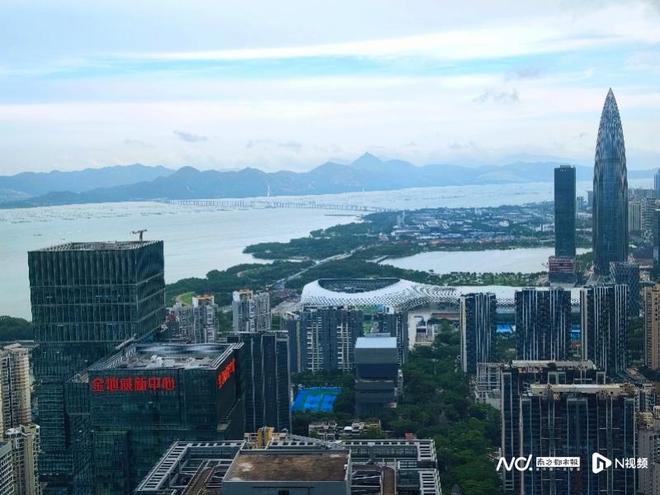
“深港穗”坐上创新集群“头把交椅”,风投优势成为制胜关键
Nan Fang Du Shi Bao· 2025-09-04 11:51
Group 1 - The "Shenzhen-Hong Kong-Guangzhou" cluster ranks first globally in the 2025 Global Innovation Index, as announced by the World Intellectual Property Organization [1][4] - The cluster excels in three core indicators: international patent applications, scientific publications, and venture capital transactions, with a notable advantage in venture capital transactions [4][11] - Huawei and Sun Yat-sen University are the top patent applicant and research institution, respectively, within the "Shenzhen-Hong Kong-Guangzhou" cluster [4][11] Group 2 - The Hong Kong government emphasizes a four-pillar strategy of "education, technology, talent, and investment" to enhance innovation and technology infrastructure [7][10] - Hong Kong's financial market provides ample venture capital opportunities, supporting the transformation of innovative ideas into tangible results [9][12] - The government has introduced three major funding plans, each involving 10 billion HKD, to support innovation and technology development [10][12] Group 3 - The active venture capital environment in the "Shenzhen-Hong Kong-Guangzhou" cluster is crucial for the development of the technology innovation industry [12][13] - Regional cooperation within the Guangdong-Hong Kong-Macao Greater Bay Area enhances connectivity and synergy between manufacturing and financial sectors [12][13] - The global interest in emerging markets, particularly in technology innovation, is expected to provide further support for the Greater Bay Area's innovation ecosystem [13]
陈大同丨芯片往事(续)
半导体行业观察· 2025-09-04 07:31
Core Viewpoint - The article reflects on the evolution of the semiconductor industry in China over the past two decades, highlighting the transition from entrepreneurship to venture capital investment, and the significant role of government support in fostering industry growth. Group 1: Transition to Venture Capital - After the IPO of Spreadtrum Communications in 2007, the author transitioned into the emerging high-tech venture capital industry in China, recognizing the importance of venture capital in fostering innovation [3][4]. - The author emphasizes that the success of a venture capital fund can support numerous startups, contrasting with individual entrepreneurship, which is limited to a few successful companies [4][5]. - The establishment of Huashan Capital in 2009 was a response to the global financial crisis, aiming to seize opportunities in high-tech investments, particularly in semiconductors [7][8]. Group 2: Government Support and Industry Growth - The launch of the National Integrated Circuit Industry Development Promotion Outline in 2014 and the establishment of a 128 billion yuan national semiconductor fund marked a turning point for the industry, significantly increasing government funding from a few billion to hundreds of billions annually [10][11]. - The fund's combination of government and social capital broke the traditional planned economy model, creating a new investment approach that spurred rapid growth in the semiconductor sector [10][11]. - The article notes that the semiconductor manufacturing capacity has dramatically increased, alleviating long-standing capacity bottlenecks, and that many key equipment and materials companies received support from the fund [11]. Group 3: Successful Investments and Market Dynamics - The establishment of the Sci-Tech Innovation Board in 2019 allowed numerous semiconductor companies to go public, creating a complete industry chain and fostering the emergence of leading enterprises in various segments [11][12]. - The author highlights the successful investment track record of the venture capital firm, with over 200 companies funded, primarily in the semiconductor sector, and more than 50 companies successfully listed [12][13]. - The article discusses the challenges faced by semiconductor companies, including competition from global giants like Sony and Samsung, and the need for domestic companies to adapt to local market conditions [33][34]. Group 4: Mergers and Acquisitions - The acquisition of Spreadtrum Communications by Tsinghua Unigroup in 2013 marked a significant event in the semiconductor industry, showcasing the potential for domestic companies to reclaim their positions in the market [15][16]. - The article details the complex process of merging and acquiring companies, emphasizing the importance of strategic partnerships and the challenges faced during negotiations [21][22]. - The eventual acquisition of OmniVision Technologies by Beijing OmniVision highlighted the necessity for local companies to integrate and adapt to the domestic market to thrive amidst international competition [34][35].

陈大同|芯片往事(续)
投资界· 2025-09-04 06:58
Core Viewpoint - The article reflects on the evolution of the semiconductor industry in China, highlighting the transition from entrepreneurship to venture capital investment, and the establishment of educational institutions like Dongfang University of Technology, while emphasizing the importance of localizing operations for companies like OmniVision. Group 1: Transition to Venture Capital - After the IPO of Spreadtrum Communications in 2007, the author transitioned to the emerging high-tech venture capital industry in China, recognizing the critical role of venture capital in fostering innovation [4][5] - The author joined Northern Light Venture Capital in 2008, marking a significant shift from being an entrepreneur to becoming an investor, akin to moving from an athlete to a coach [4][5] Group 2: Semiconductor Industry Development - The establishment of the National Integrated Circuit Industry Investment Fund in 2014 marked a pivotal moment for the semiconductor industry in China, leading to substantial government and social capital investment [10][11] - The fund's support has significantly increased domestic semiconductor manufacturing capacity and facilitated breakthroughs in key technologies, contributing to the rapid growth of the industry [10][11][12] Group 3: Formation of Investment Teams - The author, along with other Tsinghua alumni, formed Huashan Capital in 2009 to invest in high-tech startups, focusing on overcoming "bottleneck" technologies in the semiconductor sector [8][9] - The team successfully invested in several semiconductor companies, with five out of six companies from the first two funds going public [8][9] Group 4: OmniVision's Privatization and Return - In 2013, Tsinghua Unigroup's acquisition of Spreadtrum Communications initiated a trend of Chinese companies returning from overseas listings, with OmniVision also considering similar moves [18][19] - The author played a role in facilitating the acquisition of OmniVision, which involved complex negotiations and strategic partnerships [19][20] Group 5: Challenges in the Domestic Market - The failed attempt to list OmniVision through a backdoor listing with Junzheng Technology highlighted the complexities and challenges of navigating the domestic capital market [32][33] - The competitive landscape intensified with the entry of major players like Sony and Samsung, necessitating a shift in OmniVision's strategy to localize operations and develop domestic partnerships [36][37] Group 6: Leadership Transition and Future Directions - The need for a leadership transition at OmniVision became apparent as the founder's age and experience in the domestic market posed challenges [41][42] - A new leadership team was established to guide the company through its localization efforts and operational improvements, ensuring its competitiveness in the semiconductor industry [41][42]

独家洞察 | LP投资地图大公开!过去20年,谁才是真正的“吸金王”?
慧甚FactSet· 2025-09-03 02:41
Core Insights - The article explores the average commitment investment amounts from Limited Partners (LPs) in three regions: North America, Western Europe, and the rapidly growing MENA (Middle East and North Africa) market over the past 20 years [1][5]. Regional Analysis - The MENA region has consistently shown lower average investment amounts from individual LPs compared to North America and Western Europe, with only two quarters exceeding $50 million, while the other two regions have never dropped below $65 million in the past 15 years [5]. - The investment style differences are a primary reason for this trend, as the MENA market is mainly driven by venture capital and growth funds, which are typically smaller and more flexible than acquisition funds, leading to lower average commitment amounts [5]. - During significant economic downturns, such as the global financial crisis and the early COVID-19 pandemic, the average investment amounts from LPs in MENA were less affected compared to other regions, possibly due to a reduction in the number of funds LPs chose to partner with, maintaining a relatively normal trend line [5]. Future Outlook - The MENA market has experienced significant growth over the past two decades, and as the region continues to develop and mature, there may be more opportunities for acquisition-style investments, potentially increasing average investment amounts [6]. - The data set primarily comes from North American LPs, and as LPs diversify their investments and increase allocations in other regions, average commitment amounts may also rise, marking a trend to watch in the coming years [6].

太空创业进入“平价时代”,SpaceX带火45 亿“疯投”
阿尔法工场研究院· 2025-09-03 00:03
Core Viewpoint - The significant reduction in launch costs by SpaceX has shifted venture capital interest towards startups focused on space applications, indicating a broader trend in the investment landscape [2][3]. Group 1: Investment Trends - Venture capital firms are increasingly investing in space startups, with global venture capital investment in space technology reaching $4.5 billion across 48 companies as of July this year, which is more than four times the expected funding for space startups in 2024 [2]. - Investors are now focusing on companies that utilize space-based data and infrastructure for new applications, including climate monitoring, intelligence gathering, and communications, rather than just rocket manufacturing [3]. Group 2: Geopolitical Factors - Geopolitical tensions, particularly the rapid advancement of China's space capabilities, have made defense-related space startups more attractive, leading to increased investment from the U.S. government [4]. - The U.S. defense sector is seen as a stable customer base for emerging technologies, enhancing confidence in the commercial viability of space enterprises [4]. Group 3: Notable Funding Activities - Several U.S. defense-related space startups have completed significant funding rounds this year, such as True Anomaly, which raised $260 million in July, and K2 Space, which secured $110 million in February [5]. - The national security applications of technologies, such as helium-3 mining by Interlune, add to the appeal of these investments [5]. Group 4: Return on Investment - The return cycle for investments in space startups has significantly shortened, with venture capital firms now expecting liquidity within the traditional 10-year fund cycle, a stark contrast to the decades typically required for traditional space enterprises [6]. - Public market acceptance of emerging space companies is evident, with Voyager achieving a market capitalization of $1.9 billion upon its listing, and Karman Space & Defense seeing a 30% increase on its first trading day [6]. Group 5: Evolving Skill Sets - The changing landscape of space investment is attracting a diverse range of skills, as exemplified by investors like Katelin Holloway, who transitioned from education and entertainment to venture capital [7]. - The essence of business remains consistent, emphasizing the need for strong operational capabilities to tackle complex projects in the space sector [7].