虚拟电厂

Search documents
中国冲击全球首个“电力王国”,年发电量直逼10万亿度
Sou Hu Cai Jing· 2025-07-31 05:32
Core Viewpoint - China has become the world's largest electricity producer, surpassing the United States and India, fundamentally changing the global energy landscape [1][3][24] Group 1: Electricity Production and Infrastructure - China's annual electricity generation has exceeded 10.1 trillion kilowatt-hours, establishing it as the "Electricity Kingdom" [1] - The country has prioritized electricity as a national strategy, moving away from traditional energy sources like coal and oil [3][5] - The installed capacity of renewable energy has significantly increased, with wind and solar power leading the charge, contributing to 4.1 million kilowatts of new capacity this year alone [10][14] Group 2: Technological Advancements - China has developed a robust high-voltage transmission system, capable of transmitting electricity over long distances with minimal loss, achieving less than 7% loss over 3,000 kilometers [8][10] - The implementation of AI algorithms for energy management is set to enhance efficiency in electricity distribution, allowing for real-time adjustments to supply and demand [12][24] Group 3: Economic Impact and Global Positioning - The growth in electricity production has alleviated regional economic constraints, making electricity as accessible as turning on a tap, especially crucial during peak demand periods [10][14] - China's dominance in renewable energy technology has positioned it as a leader in the global energy market, with significant exports of transformers and electric meters expected to rise by 70% and 10% respectively in 2024 [21][24] Group 4: Future Outlook - The transition to a more electrified energy structure is anticipated to continue, with non-fossil energy sources expected to account for 87.3% of total energy by next year [14][16] - The vision for a future where electricity is as ubiquitous as Wi-Fi is being actively pursued, with smart energy management systems set to revolutionize daily life [23][24]


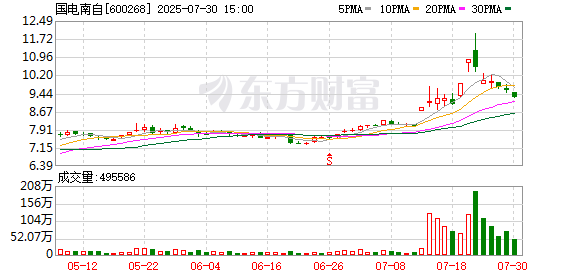
国电南自:公司虚拟电厂调控系统可接入分布式光伏、储能、充电桩、微电网及多类型工业可调负荷等
Mei Ri Jing Ji Xin Wen· 2025-07-30 12:14
每经AI快讯,有投资者在投资者互动平台提问:公司重点突破的虚拟电厂调控系统(接入1.2万个分布 式电源)可接入哪些领域?公司在虚拟电厂领域的行业优势与地位如何? 国电南自(600268.SH)7月30日在投资者互动平台表示,公司虚拟电厂调控系统可接入分布式光伏、 储能、充电桩、冰蓄冷、楼宇空调、微电网及多类型工业可调负荷等。公司充分聚焦虚拟电厂战新产业 发展,目前已形成了虚拟电厂全套产品和整体解决方案,具备能碳虚拟电厂系统研发和参与建设的能 力。 (文章来源:每日经济新闻) ...

国电南自(600268.SH):具备能碳虚拟电厂系统研发和参与建设的能力
Ge Long Hui· 2025-07-30 10:30
格隆汇7月30日丨国电南自(600268.SH)在互动平台表示,公司虚拟电厂调控系统可接入分布式光伏、储 能、充电桩、冰蓄冷、楼宇空调、微电网及多类型工业可调负荷等。公司充分聚焦虚拟电厂战新产业发 展,目前已形成了虚拟电厂全套产品和整体解决方案,具备能碳虚拟电厂系统研发和参与建设的能力。 ...
江岳文:畅通清洁能源消纳通道
Jing Ji Ri Bao· 2025-07-30 00:05
Group 1 - The rapid growth of clean energy generation is leading to increasing challenges in its consumption, particularly due to the inherent volatility and intermittency of wind and solar resources, which complicates the power balance in the electricity system [1] - The existing grid infrastructure is struggling to adapt quickly to the demands of large-scale renewable energy integration, with current technologies like flexible coal plant modifications and large-scale energy storage not meeting the requirements for high proportions of clean energy in the grid [1] - Distributed renewable energy consumption is limited by the capacity of distribution networks, leading to increased instances of curtailment of wind and solar energy due to constraints in transmission and voltage issues [1] Group 2 - To enhance the operational flexibility of grids with high proportions of clean energy, it is essential to leverage virtual power plants to aggregate demand-side resources, enabling better resource optimization through active participation from various sectors [2] - Demand-side flexibility resources, such as electric vehicles and industrial loads, offer lower adjustment costs and broader adjustment ranges compared to grid infrastructure upgrades, but require organized aggregation to achieve scalable responses [2] - Promoting local consumption of distributed energy involves assessing the carrying capacity of distribution networks, allocating available capacity, and designing flexible local markets for surplus renewable energy [2]
原力能源:临港新政落地,虚拟电厂在上海迎来 “提质升级”!
Sou Hu Cai Jing· 2025-07-29 22:56
Core Viewpoint - The recent policy upgrade for virtual power plants in Shanghai's Lingang New Area marks a significant step towards market-oriented operations, enhancing the commercial viability of virtual power plants and promoting demand-side management in the energy transition [1][4][8]. Policy Changes - The implementation of the "Precise Response Implementation Plan for Virtual Power Plants (2025 Edition)" aims to achieve a demand-side peak-shaving capacity of 30 MW by 2025, building on the previous trial version from 2023 [1]. - The revised policy increases subsidy incentives significantly, with annual subsidies for second-level response resources raised by 33% to 40,000 yuan/MW, and additional capacity incentives for top-performing operators [1][2]. - New incentives for reactive power response have been introduced, offering 0.08 to 0.13 yuan/kWh [2]. Commercial Model Breakthrough - The new regulations allow virtual power plants to operate as independent entities in the electricity market, participating in long-term contracts, ancillary services, and spot markets, moving away from a reliance on single subsidies [4]. - The policy supports technologies like electrochemical energy storage and V2G (Vehicle-to-Grid), which further reduce operational costs for related projects [4]. Management and Operational Framework - A three-tier management structure is established, with the Lingang Virtual Power Plant Management Center overseeing operations, resource scheduling, and settlement, ensuring efficient resource integration [6]. - Strict assessment mechanisms are in place, where operators failing to meet performance standards face mandatory corrections, enhancing system reliability and market credibility [4][6]. Industry Implications - The upgrade of the Lingang policy not only enhances the commercial feasibility of virtual power plants but also signifies a market maturation phase, balancing increased subsidies with stricter assessments [8]. - The integration of technologies like electrochemical storage and V2G, along with active participation from companies like Yuanli Energy, is expected to optimize the utilization of decentralized user-side resources, contributing significantly to grid flexibility and carbon neutrality goals [8].
畅通清洁能源消纳通道
Jing Ji Ri Bao· 2025-07-29 22:18
Group 1 - The rapid growth of clean energy generation is leading to increasing challenges in its consumption, particularly due to the inherent volatility and intermittency of wind and solar resources [1] - The existing power grid infrastructure struggles to adapt quickly to the demands of large-scale renewable energy integration, with current technologies like flexible coal plant modifications and large-scale energy storage not meeting the requirements for high proportions of clean energy [1] - Distributed renewable energy consumption is limited by the capacity of distribution networks, leading to increased instances of curtailment of wind and solar energy due to voltage and capacity constraints [1] Group 2 - The potential of virtual power plants to aggregate demand-side resources is crucial for enhancing the operational flexibility of grids with high proportions of clean energy [2] - Demand-side flexibility resources, such as electric vehicles and industrial loads, can provide a more cost-effective and broader range of adjustments compared to traditional grid infrastructure, but require organized aggregation to achieve scale [2] - Promoting local consumption of distributed energy and developing flexible local market mechanisms are essential for optimizing renewable energy utilization [2]
【新能源周报】新能源汽车行业信息周报(2025年7月21日-7月27日)
乘联分会· 2025-07-29 08:43
Industry Information - The Ministry of Transport reports that the coverage rate of charging piles in highway service areas has reached 98.4%, with an average daily traffic of new energy vehicles accounting for about 20% [7] - Hunan province has made significant progress in building high-power charging facilities, with 4,693 public fast charging piles constructed in the first half of the year, achieving 93.8% of the annual target [7] - Toyota's subsidiary plans to invest 3.7 billion yuan to build a factory in Dalian, which will produce batteries for pure electric vehicles [8] - Honeycomb Energy plans to trial production of semi-solid batteries in Q4 of this year, with mass supply expected by 2027 [8] - The automotive industry is seeing a rise in electric vehicle exports, with Guangzhou exporting 90,000 vehicles in the first half of the year, a year-on-year increase of 28.4% [15] - In Norway, electric vehicles account for 97% of new car sales, with Chinese brands holding a market share of 12.3% [15] - The first international standard in the field of photovoltaic direct current has been released, which will guide the development of distributed photovoltaic systems [36] Policy Information - The Ministry of Transport has implemented measures to enhance the management of "smart driving" systems, emphasizing that they are not fully autonomous and will strengthen regulations to prevent false advertising by car manufacturers [13][14] - The Ministry of Science and Technology has published ethical guidelines for the research and development of automated driving technologies to mitigate ethical risks [35] - Guangdong and Anhui provinces are implementing measures to promote healthy competition in the automotive industry, encouraging companies to focus on quality and innovation rather than price wars [34] Company Information - BYD has produced its 13 millionth new energy vehicle, with the model being the Yangwang U7 [6] - NIO has announced the completion of its 10000th delivery of its pure electric vehicle, the Firefly [6] - Xpeng Motors has launched its first overseas manufacturing base, with the first locally produced X9 delivered in Indonesia [6] - Tesla has delivered over 8 million electric vehicles globally, with its Shanghai Gigafactory supporting market expansion [6] - Xiaomi is developing a home DC charging pile with a power output exceeding 7kW [6] - Li Auto has achieved cumulative deliveries of over 300,000 units for its L6 model [6]

多地积极布局虚拟电厂 行业多元化盈利模式待探索
Zheng Quan Ri Bao· 2025-07-28 17:13
Core Viewpoint - Multiple regions in China, including Shanghai, Chongqing, and Qinghai, are actively deploying initiatives related to the construction and operation of virtual power plants, which is expected to enhance power supply security and support energy transition [1][2]. Policy Developments - The Qinghai Provincial Development and Reform Commission has released a draft management plan for virtual power plants, open for public consultation from July 22 to August 22 [1]. - The National Development and Reform Commission and the National Energy Administration have set a target for virtual power plants to achieve a regulatory capacity of over 20 million kilowatts by 2027, indicating a shift from pilot projects to large-scale development [2]. Market Trends - The virtual power plant industry is characterized by a clear trend towards large-scale development, with more localities issuing detailed implementation rules and standards for market participation [2]. - The competitive landscape is evolving as state-owned enterprises, listed companies, and private firms increasingly engage in the virtual power plant sector, leading to a more optimized competition structure [2]. Market Outlook - The virtual power plant market in China is projected to reach a scale of 10.2 billion yuan by 2025 and potentially exceed 100 billion yuan by 2030, driven by its role in promoting renewable energy consumption and achieving carbon neutrality goals [3]. - Current revenue models for virtual power plants are primarily based on demand response and ancillary service transactions, with the need for diversified profit models highlighted [3]. - The ongoing construction of distributed energy sources and loads is expected to create more opportunities for flexible and diverse profit models for virtual power plants [3].
关于实现“隔墙售电”自由交易,国家能源局答复
中国有色金属工业协会硅业分会· 2025-07-28 06:09
Core Viewpoint - The National Energy Administration is accelerating the establishment of a market mechanism for renewable energy participation in the electricity market, aiming to enhance the utilization of renewable energy and innovate distribution mechanisms [1][6]. Group 1: Green Value of Integrated Energy Projects - The government supports the innovative model of integrated energy projects through market-oriented approaches to achieve commercial development, promoting efficient energy use and carbon emission transformation [3]. - A joint document issued by multiple departments in March 2025 outlines the establishment of a green electricity consumption certification mechanism, encouraging third-party certification for various industries to reflect the green value of integrated energy projects [4]. Group 2: Free Trading of Electricity Across Walls - The government has been promoting market-oriented trading of distributed generation since 2017, encouraging local market transactions within the distribution network [5]. - In February 2025, a notice was issued to promote the market-oriented reform of renewable energy grid prices, ensuring that distributed renewable energy enters the market comprehensively [5]. - The government is also advancing the green electricity direct connection model to better meet the green energy needs of enterprises and guide industrial transformation [5][6]. Group 3: Value of Regulation Capacity in Integrated Energy Projects - The government supports the virtual power plant model to aggregate distributed energy resources and participate in electricity system regulation and market transactions, reflecting the multi-dimensional value of energy, capacity, and regulation [7]. - A guiding opinion issued in March 2025 encourages virtual power plants to gain revenue through energy provision and ancillary services, while research on capacity pricing mechanisms is ongoing [7].
127岁“老爵爷”,联手杭州LP
投中网· 2025-07-26 04:35
Core Viewpoint - Renault Group is collaborating with Chinese private equity firms to establish an investment fund focused on the electric vehicle sector, marking a significant step in the partnership between state-owned LPs and foreign capital [5][7][17]. Group 1: Renault's Strategic Moves - Renault's CEO Luca de Meo visited China in early November 2023, meeting with Dongfeng Group and Geely, indicating a strong interest in the Chinese market [4][5]. - The newly announced investment fund will target areas such as batteries, intelligent driving, and software, aligning with Renault's strategy to leverage China's innovation capabilities [7][10]. - Renault's "Renaulution" strategy aims to revitalize the company by focusing on profitability, product innovation, and transforming its business model towards technology and mobility solutions [9][10]. Group 2: Historical Context and Performance - In 2020, Renault reported its worst financial performance, with global sales dropping by 21.3% and a net loss of €8.05 billion, prompting a strategic overhaul [8]. - Under Luca de Meo's leadership, Renault has seen a turnaround, with a projected 1.3% increase in sales to 2.26 million units in 2024 and a significant rise in electric vehicle sales by 87.9% year-on-year [13]. Group 3: Investment Fund and Collaborations - The new fund is a continuation of Renault's previous investment initiatives, such as the Alliance Ventures fund established in 2018, which aimed to invest $1 billion over five years [15][16]. - The collaboration with Hangzhou's state-owned capital is strategic, focusing on technological innovation rather than production capacity, as evidenced by Hangzhou's strong tech ecosystem [17][18]. - The partnership reflects a growing trend of local state-owned LPs collaborating with foreign capital, with Hangzhou's previous successful ventures in the automotive sector serving as a model [18].