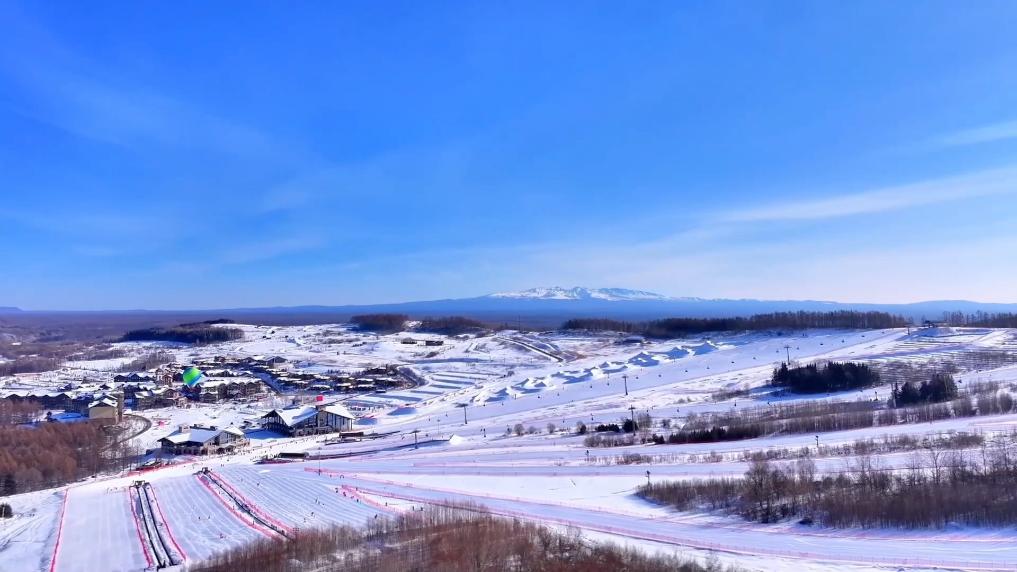
冰雪经济

Search documents
《中国冰雪经济发展报告(2025)》发布 我国冰雪经济实现跨越式发展
Yang Shi Wang· 2025-12-25 12:38
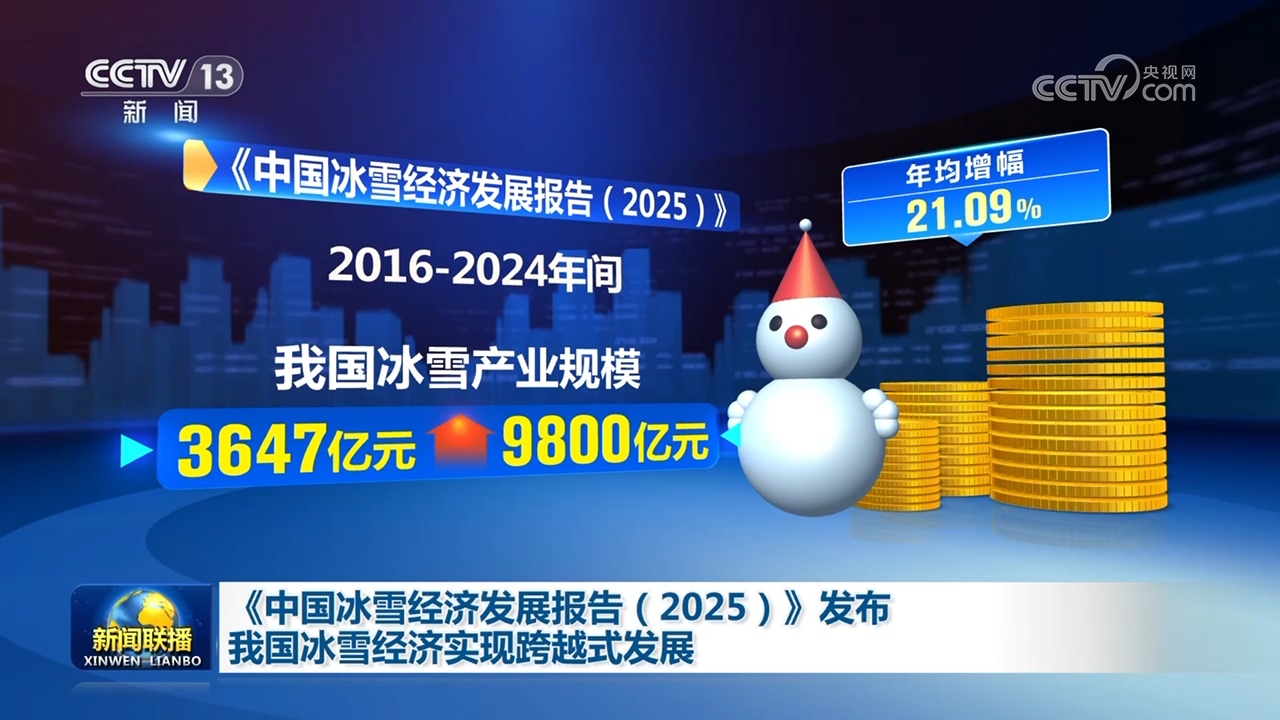
央视网消息(新闻联播):《中国冰雪经济发展报告(2025)》日前发布。数据显示,近年来,我国冰雪经济实现跨越式发展,市场规模持续扩大。 我国冰雪旅游人次已连续三个冰雪季实现了超过3亿人次的市场规模。2023—2024冰雪季,中国冰雪休闲旅游人数达4.3亿人次,收入达5247亿元。 2016—2024年间,我国冰雪产业规模从3647亿元跃升至9800亿元,年均增幅达到21.09%,预计2025年将突破万亿元大关。2024—2025冰雪季,居民参 与冰雪运动项目及由此带动的消费规模超1875亿元,较上一冰雪季增长超25%。 ...

黑龙江省将举办首届“雪超”联赛
Xin Hua She· 2025-12-25 12:24
Core Viewpoint - The first "Snow Super League" (雪超) will be held during the 2025-2026 winter season in Heilongjiang Province, aiming to enhance participation in ice and snow sports and stimulate the ice and snow economy through high-quality development [1][2] Group 1: Event Structure - The inaugural "Snow Super League" will feature three types of events: youth snow football series, international snow football invitation matches, and domestic snow football invitation matches, creating a multi-layered and widely covered event system [1] - The league will include ten key provincial events that will drive hundreds of local events across cities and counties [1] Group 2: Regional and International Engagement - Numerous youth snow football events will be held across the province, including the Sino-Russian youth snow football match in Tongjiang, which will involve over 20 teams from Northeast China and the Russian Far East [1] - Seven international snow football invitation matches will be organized, leveraging Heilongjiang's geographical advantages for cross-border sports and cultural exchanges, including the third Shanghai Cooperation Organization snow football match with eight participating teams from member countries [1] Group 3: Economic and Cultural Integration - The "Snow Super League" aims to stimulate enthusiasm for football among the public and promote deep integration of regional sports, culture, tourism, and commerce, thereby unleashing the potential of ice and snow consumption [2] - During the events, various activities such as performances, food exhibitions, and folk displays will be introduced to create new consumption scenarios like "events + food" and "events + specialty markets" [2]
冰雪微笑曲线|中外游客共赴长白山冰雪之约
Yang Shi Wang· 2025-12-25 10:30
Group 1 - The core viewpoint of the article highlights the booming ice and snow economy in China, which is continuously stimulating consumer activity and enhancing the industry ecosystem [2] - The Changbai Mountain ski resort is attracting a growing number of domestic and international tourists, showcasing its unique geographical advantages and quality facilities [2] - The increasing popularity of ice and snow sports is encouraging more individuals to participate, thereby enhancing the overall experience and driving the potential for ice and snow consumption [2] Group 2 - The continuous enrichment of ice and snow tourism projects and the vigorous promotion of ice and snow sports are crucial for providing high-quality experiences to visitors [2] - The development of the ice and snow economy is being fueled by strong consumer demand and participation, which is essential for its high-quality growth [2]

我国冰雪经济实现跨越式发展 新雪季首月喜迎“开门红”
Yang Shi Wang· 2025-12-25 10:03
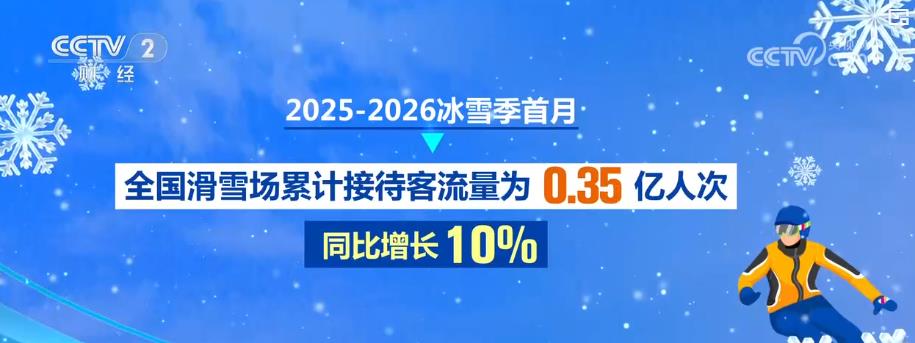
最近,国家体育总局发布《中国冰雪经济发展报告(2025)》,2025—2026冰雪季首月,我国冰雪经济实 现开门红。 记者从国家体育总局体育经济司了解到,2025—2026冰雪季首月,全国滑雪场累计接待客流量为0.35亿 人次,同比增长10%,其中入境客流量达19万人次,同比增长66%;消费额达363.5亿元,同比增长 6%,实现开门红。 我国冰雪产业预计2025年突破万亿元大关 《中国冰雪经济发展报告(2025)》显示,2016—2024年间中国冰雪产业规模呈现跨越式增长,从3647亿 元跃升至9800亿元,年均增幅达到21.09%,预计2025年将突破万亿元大关。 近年来,我国冰雪经济实现跨越式发展,市场规模持续扩大,产业链条不断完善。截至2025年3月,我 国冰雪产业相关的企业数量已达到18492家。装备制造业销售收入从2019年的153亿元增长至2023年的 220亿元,年复合增长率达9.5%。 室内滑雪场呈现爆发式增长,从2013—2014冰雪季的5家跃升至2023—2024冰雪季的59家,主要分布于 南方城市,有效破解地域限制瓶颈。滑冰场馆体系更加完善,截至2025年4月,全国包括花样滑冰场、 冰 ...
让冰雪运动“火热”升温,建行信用卡冰雪季热力启幕
Xin Lang Cai Jing· 2025-12-25 09:57
Group 1 - The core idea of the news is that China Construction Bank's credit card division is actively promoting the "Enjoy Fun Ice and Snow Season" campaign to stimulate the ice and snow economy, aligning with national sports development strategies [1][3] - The campaign utilizes a three-pronged approach: online promotion, offline interaction, and diverse discount activities, aiming to create an immersive ice and snow consumption experience for the public [1][2] - The online strategy includes leveraging popular platforms like Douyin to engage users through creative video challenges, resulting in over 100 million views and participation from 57,000 users within three days [1][2] Group 2 - Offline, the bank has set up brand booths at major ice and snow venues, such as Harbin and Chongli, to enhance consumer engagement through interactive activities and giveaways, bridging online enthusiasm with offline consumption [2] - The bank offers various discounts, such as up to 166 yuan off for purchases at ice skating rinks across multiple cities, and collaborates with leading OTA platforms for ticket discounts, enhancing accessibility to ice and snow activities [2] - The initiative aligns with national policies aimed at boosting domestic demand and enhancing consumer experience, with the bank committed to innovating financial products and services to support the development of the ice and snow economy [3]

破地域、延链条、扩消费!我国冰雪经济实现跨越式发展 新雪季首月喜迎“开门红”
Yang Shi Wang· 2025-12-25 09:04
Core Insights - The report titled "China Ice and Snow Economy Development Report (2025)" indicates a strong start for the ice and snow economy in the 2025-2026 season, achieving significant growth in various metrics [1][3]. Group 1: Economic Performance - In the first month of the 2025-2026 ice and snow season, the total visitor count at ski resorts reached 35 million, marking a 10% year-on-year increase [3]. - The inbound tourist flow reached 190,000, which is a remarkable 66% increase compared to the previous year [3]. - The total consumption in the ice and snow sector amounted to 36.35 billion yuan, reflecting a 6% year-on-year growth [3]. Group 2: Industry Growth - The scale of China's ice and snow industry has seen exponential growth from 364.7 billion yuan in 2016 to 980 billion yuan in 2024, with an average annual growth rate of 21.09% [6]. - It is projected that the industry will surpass the 1 trillion yuan mark by 2025 [4][6]. Group 3: Infrastructure and Market Expansion - As of March 2025, the number of enterprises related to the ice and snow industry has reached 18,492 [8]. - The sales revenue of the equipment manufacturing sector grew from 15.3 billion yuan in 2019 to 22 billion yuan in 2023, with a compound annual growth rate of 9.5% [8]. - Indoor ski resorts have surged from 5 in the 2013-2014 season to 59 in the 2023-2024 season, primarily located in southern cities, effectively overcoming regional limitations [10]. Group 4: Regional Development - Key areas such as the Northern Economic Leading Zone and the Beijing-Zhangjiakou Sports Culture Tourism Belt, along with the "Ice and Snow Silk Road," have emerged as new highlights in regional economic development [11].
冰雪热土再“上新”
Xin Hua Wang· 2025-12-25 09:02
Core Insights - The article highlights the transformation of Zhangjiakou's Chongli district into a vibrant winter tourism destination, attracting over 800,000 visitors since the start of the 2025-2026 snow season, leveraging "new gameplay, new business formats, and new services" to convert "cold resources" into a "hot economy" [1] New Gameplay - Chongli has introduced diverse skiing experiences, including four new off-piste trails and adventure routes at Taiwu Ski Resort, catering to thrill-seekers [2] - Snow Ru Yi Ski Resort has expanded its offerings to 24 ski trails and launched a 3,000 square meter youth training center with six dedicated trails for ages 6 to 16, promoting a "skiing + research" package [2] - The region now provides comprehensive ice and snow activities for all ages and skill levels, with tailored services for both seasoned skiers and beginners [2][4] New Business Formats - Chongli is innovating by integrating local agricultural products, such as using local bell peppers as coffee containers, enhancing the value of its agricultural output [5] - The area is fostering the integration of primary and tertiary industries, with new business formats like "ice and snow + folk customs," "ice and snow + picking," and "ice and snow + hot springs" emerging [5] - Various ski resorts are collaborating with local agricultural greenhouses to offer picking experiences, creating a seamless connection between skiing and agricultural activities [5] New Services - A new direct bus service from Beijing to Chongli has been launched, facilitating easy access for tourists carrying ski equipment [7] - Transportation services in Chongli have been upgraded to enhance connectivity, including a one-hour direct train from Beijing North Station to Taizicheng Station and new flight routes [7] - Ski resorts are implementing comprehensive service upgrades, including mobile app services for ticket purchases and equipment rentals, and "zero-lift" services to assist visitors with their gear [9]
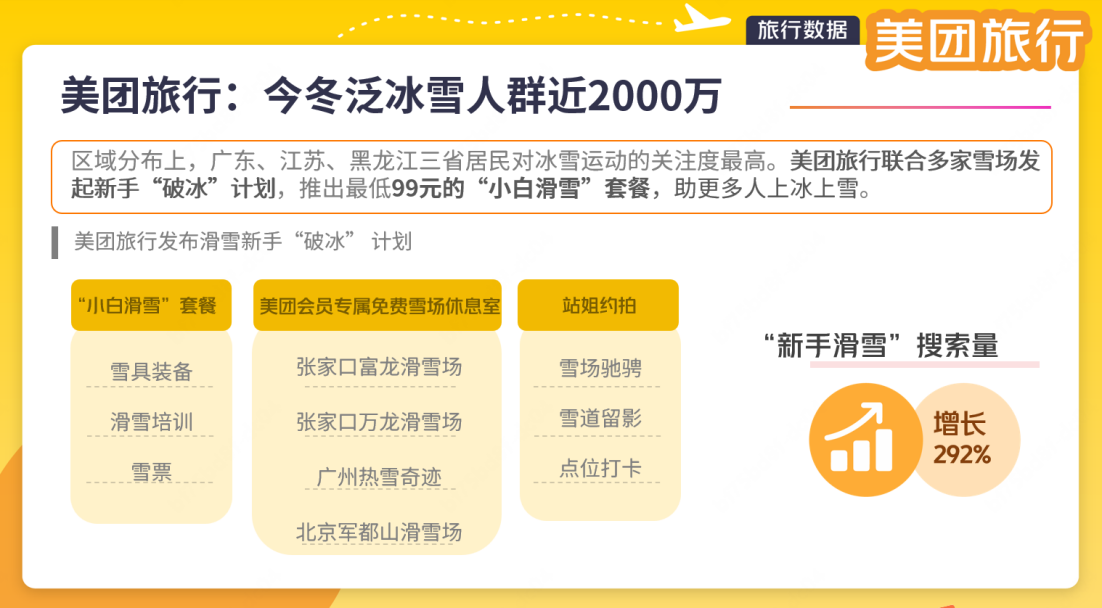
美团旅行:今冬泛冰雪人群近2000万,推新手“破冰”计划
Zhong Guo Jin Rong Xin Xi Wang· 2025-12-25 08:57
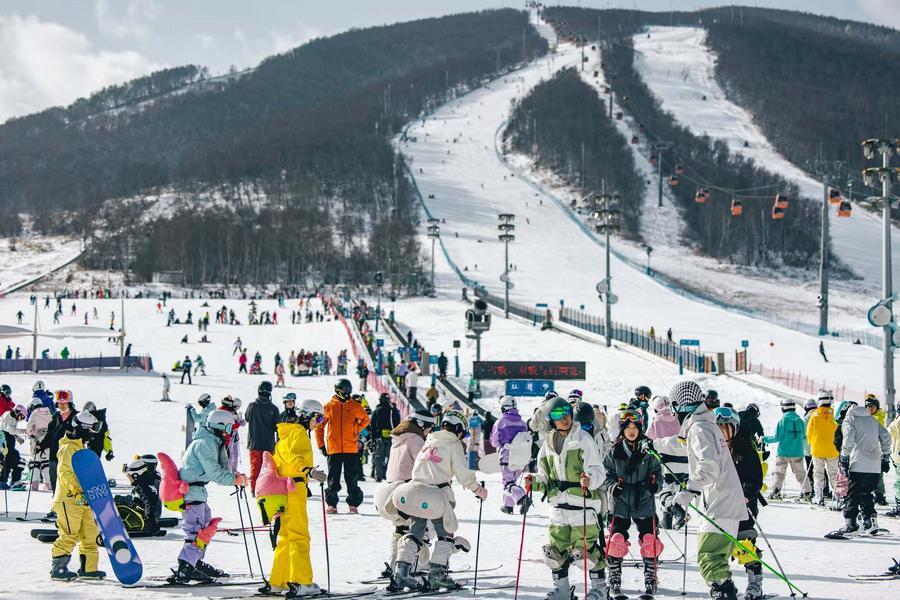
Core Viewpoint - The popularity of skiing in China is rapidly increasing, with a significant rise in participation among younger demographics, particularly those born in the 1990s, as skiing transitions from a niche sport to a mainstream recreational activity [2][3]. Group 1: Market Trends - A "Beginner Skiing" package launched by Meituan Travel offers a comprehensive service for as low as 99 yuan, making skiing more accessible to the public [2][3]. - Since November, nearly 20 million people have shown interest in ice and snow sports, with over 40% of participants being post-95s [2]. - The search volume for "beginner skiing" has increased by 292% in December, indicating a growing interest in skiing among new users [5]. Group 2: Demographics and Participation - Over 50% of skiing enthusiasts are from the post-90s generation, highlighting a trend of younger individuals engaging in skiing as a social activity [3][5]. - The majority of the ice and snow interest demographic is under 35 years old, making up 52% of the total [7]. - The adult participation in skiing training has notably increased, especially among those aged 30 to 40, with over 80% being beginners [5]. Group 3: Consumer Behavior - The customer base for skiing is evolving, with many new skiers transitioning into dedicated enthusiasts willing to invest in equipment and advanced training after initial experiences [7][8]. - The demand for night skiing has surged, with ticket sales increasing by over 30% this year [8]. - Related sectors such as transportation and accommodation are also benefiting, with hotel bookings up by 9% and flight bookings soaring by 45% in December [8]. Group 4: Industry Initiatives - Meituan Travel is collaborating with various ski resorts to enhance skiing services and offer exclusive member benefits, aiming to stimulate the ice and snow economy [9].

全国大众冰雪季在哈尔滨启幕 “一冬天”将开展300多项冰雪活动
Zhong Guo Xin Wen Wang· 2025-12-25 07:55
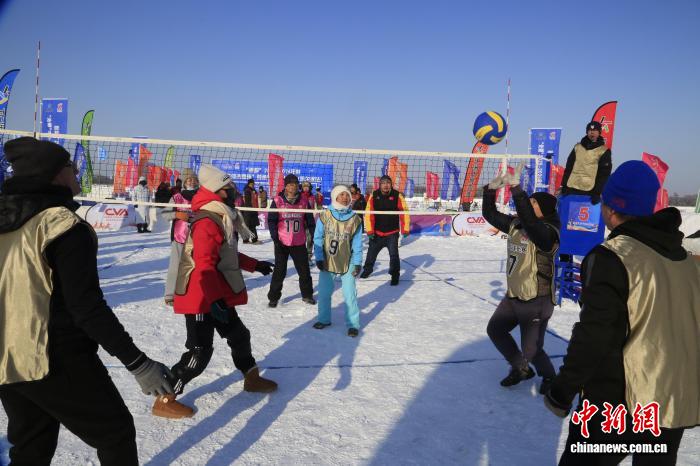
Core Insights - The 12th National Public Ice and Snow Season has officially launched in Harbin, featuring over 300 ice and snow activities throughout the winter [1][6]. Group 1: Event Overview - The event includes four main components: an ice and snow sports achievement exhibition, a launch ceremony themed "Joyful Ice and Snow, Creating the Future Together," a smart ice and snow interactive area, and a public ice and snow sports park [3][4]. - The launch ceremony showcased various performances, including dynamic dance, figure skating, and ice hockey, highlighting the rich ice and snow sports heritage of Heilongjiang [4]. Group 2: Technological Integration - The smart ice and snow interactive area features highlights such as robot soccer and drone soccer, demonstrating the integration of technology and sports [6][7]. - Innovative projects like the new type of ice dragon boat developed by a local enterprise and the debut of snow pickleball combine emerging sports with the ice and snow environment, attracting public participation [6]. Group 3: Community Engagement and Economic Impact - The event aims to promote public fitness enthusiasm through activities like snow volleyball, parent-child sports events, and traditional ice sports, fostering community engagement [6]. - The series of activities is designed to enhance the appeal of Heilongjiang's ice and snow offerings and contribute to the high-quality development of the ice and snow economy, supporting the goal of involving 300 million people in ice and snow sports [6].
新华视点丨“冷资源”涌动“热浪潮”——从雪场到工厂,冰雪经济全链升温
Xin Hua Wang· 2025-12-25 07:23
Group 1 - The popularity of ice and snow tourism is on the rise, with the ice and snow economy becoming a significant driver for consumption and regional high-quality development [1][3] - Hebei Province's Wanquan County, with an average altitude of about 1500 meters and a winter snow period lasting 120 days, provides excellent conditions for the development of ice and snow tourism [3] - In the new snow season, ski resorts in Hebei Chongli are enhancing facilities, introducing events, and optimizing services to create a more professional and enjoyable skiing destination [5] Group 2 - The "Ice and Snow +" consumption model is being developed to stimulate consumer activity, with projections indicating that China's ice and snow industry will exceed 1 trillion yuan by 2025 [7] - During the 2025-2026 snow season, Chongli will host numerous high-level international and national snow sports events, allowing enthusiasts to experience the excitement of competitive sports [8] - Heilongjiang Province's Tieli City is leveraging its ice and snow resources to launch unique tourism products, such as "Ice and Snow + Hot Springs" and "Ice and Snow + Sports" [10] Group 3 - The booming ice and snow sports sector is driving demand for ice and snow venues and equipment, with companies in Hebei enhancing their R&D capabilities in areas like skis and snow-making machines [12] - Hebei has established four ice and snow industry clusters, with parks dedicated to the R&D, manufacturing, sales, and service of ice and snow equipment [14] - In Ningbo, Zhejiang Province, there are 34 companies producing sports poles, with an annual production value exceeding 920 million yuan, primarily for export [16]