
AI医疗

Search documents
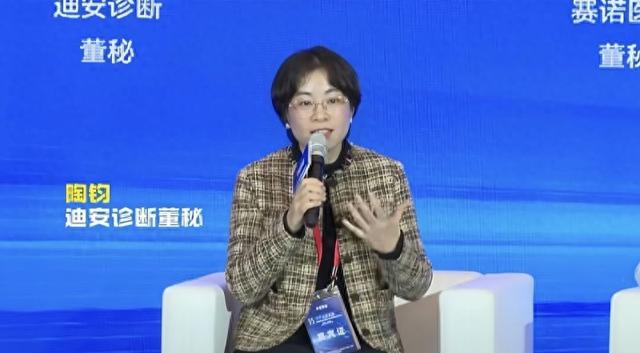
迪安诊断董秘陶钧:构建AI医疗生态,从诊断服务商迈向智能解决方案引领者|聚焦2025华夏大健康
Hua Xia Shi Bao· 2025-11-22 14:45
Core Viewpoint - The article discusses the transition of Di'an Diagnostics from a traditional "product + service" provider to a leader in intelligent diagnostic solutions, emphasizing the role of AI in healthcare management, drug development, and commercial health products [2][3]. Strategic Layout - Di'an Diagnostics' AI development is structured in three phases: tool-based, platform-based, and ecosystem-based. The initial phase involves developing AI tools for medical diagnostics, such as the AI pathology software for cervical cell image processing [3]. - The platform phase includes the launch of the Smart Inspection Linkage Platform, which integrates medical resources and addresses the challenge of mutual recognition of test results [3]. - The future vision is to create an ecosystem that deeply engages in AI applications across medicine, pharmaceuticals, and patient diagnostics [3]. Core Advantages - Data is identified as the core barrier for AI medical products, with Di'an accumulating 21PB of data and an annual increase of 1PB from self-testing operations. This extensive data foundation supports sustainable and compliant AI applications [5]. - The company boasts a large offline service network, including 36 laboratories and over 800 collaborative centers, which enhances its competitive edge in commercializing AI solutions [5]. Commercialization Challenges - Di'an acknowledges the challenges in commercializing AI products, particularly in securing dedicated funding from hospitals. The strategy focuses on demonstrating product value before widespread clinical adoption, especially in tertiary hospitals [5][6]. - Currently, Di'an's direct revenue from AI commercialization is in the tens of millions, indicating a cautious yet optimistic approach to monetizing AI technologies [6]. Conclusion - Di'an Diagnostics is committed to embracing AI and evolving its industry structure, positioning itself as a builder of ecosystems rather than just a technology service provider. The company is exploring a transformative path from a diagnostic service provider to a leader in intelligent solutions [6].


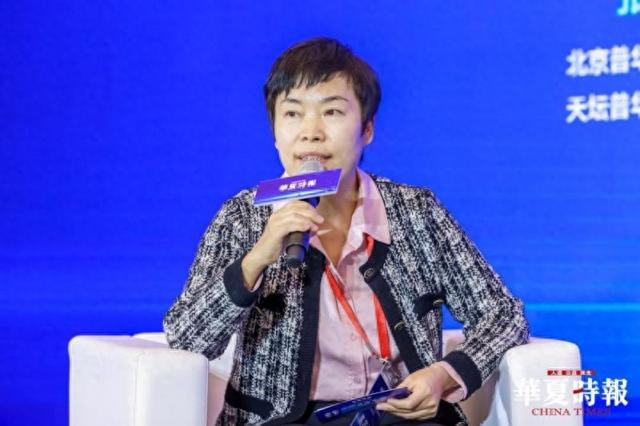
北京普华诊所总经理张敬:AI医疗破局需构建“技术+场景+商业”新范式,临床价值是根本出发点|聚焦2025华夏大健康
Hua Xia Shi Bao· 2025-11-22 14:41
Core Insights - The future of AI in healthcare is characterized by a collaborative ecosystem built on technology, clinical practices, payment models, and data, transitioning from a focus on technical barriers to a combination of technology, scenarios, and business [2][4] Group 1: Industry Trends - AI technology is reshaping the healthcare ecosystem, but challenges remain in realizing its true value due to clinical pain points, payment models, and industry cycles [2][3] - The industry is shifting from a focus on technical barriers to a more integrated approach that combines technology with practical applications and business strategies [3][4] Group 2: Key Discussions - The roundtable discussion featured representatives from various healthcare companies, including Di'an Diagnostics, Sino Medical, and GeRui Technology, focusing on the practical applications of AI in medical settings [2][3] - Key topics included the integration of AI in medical devices, the construction of AI ecosystems, barriers to AI usage, and the development of AI recognition in physician service platforms [3][4] Group 3: Strategic Vision - The development philosophy of "looking to the future while building an ecosystem, and being pragmatic while refining products" was emphasized as a clear direction for the AI healthcare industry [4] - There is a need for a sustainable business model that addresses real-world clinical challenges and fosters a collaborative industry ecosystem [4]
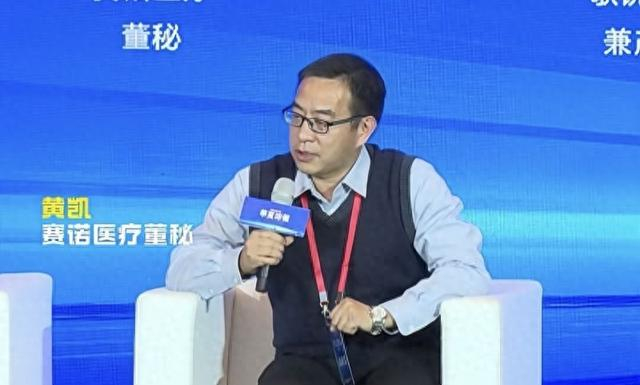
赛诺医疗董秘黄凯:AI医疗商业化面临支付瓶颈,呼吁构建完善产业生态|聚焦2025华夏大健康
Hua Xia Shi Bao· 2025-11-22 14:41
面对复杂的支付难题,黄凯提出了生态共建的解决方案。他强调,单靠企业自身无法突破这一瓶颈,需 要构建包括政府、医保、商保、企业、医院、患者在内的全方位生态系统。 数据资产化:机遇与挑战并存 从数据资产化的实践角度,黄凯分享了赛诺医疗的经验与思考。他透露,公司在支架产品上市后积累了 五六千例上市后临床实验数据,但这些数据的开发利用面临着诸多挑战。 他用创新药的发展历程类比AI医疗,指出重大技术创新都需要经过较长的培育周期,"这一波的结果实 际是2015、2016年甚至更早的资本、商业化的投入,我们最后看到的结果。像AI才刚刚开始,也需要 各个方面的投入。" 本报(chinatimes.net.cn)记者赵文娟 于娜 北京报道 "无论是医保还是药监,期待对于AI包括对于器械企业的创新有更多的包容和支持。"在11月21日举办的 2025华夏大健康产业发展暨康复服务大会上,赛诺医疗董秘黄凯在圆桌对话中发出了这样的呼吁。 本次大会以"智领健康未来"为主题,在《AI医疗的规模化破局:从技术爆发到医疗价值兑现》圆桌环 节,黄凯与迪安诊断、歌锐科技、医脉通等企业代表共同探讨了AI技术在医疗领域面临的商业化挑 战。 作为血管介入 ...

医脉通投资者关系负责人胡慧楠:深耕医生服务平台,以AI技术赋能医疗专业生态|聚焦2025华夏大健康
Hua Xia Shi Bao· 2025-11-22 14:39
Core Insights - The core viewpoint emphasizes that data is fundamental, AI technology is the driving force for development, and commercialization is the ultimate goal in AI healthcare [2][5]. Group 1: AI Technology in Healthcare - The company, as a leading online professional doctor platform, has over 7 million registered users, with more than 4 million being licensed physicians, covering 88% of the physician community in China [3]. - The company has developed a medical vertical large model through independent research and has received approval from the National Internet Information Office, enabling intelligent clinical decision support for doctors [3]. - AI products have demonstrated significant value, providing traceable answers to clinical questions, ensuring information accuracy and reliability for physicians [3]. Group 2: Business Model and Commercialization - The company focuses on the pharmaceutical and medical device sectors, particularly in prescription drug markets, to conduct targeted academic education for doctors [5]. - The core logic of the business model is to leverage strong physician resources to enhance the efficiency of academic marketing and provide professional academic support to doctors [5]. - The company has achieved over 30% annual revenue growth and maintains a strong net profit margin, supporting ongoing investments in AI technology [5]. Group 3: Future Development and Industry Impact - The company has established a virtuous cycle between AI technology and commercial applications, contributing to the digital transformation of the healthcare industry [5].

丁香园、微医、医联,谁的AI牌最硬?
Sou Hu Cai Jing· 2025-11-21 09:08
Core Insights - The IPO plans for two medical technology companies, Dingxiangyuan and Yilian, have stalled, with no specific updates available from either company [2][3] - Weiyi Holdings is actively pursuing an IPO in Hong Kong, having updated its prospectus in September [3][11] - The shift towards AI healthcare is evident as companies like Weiyi, Dingxiangyuan, and Yilian pivot from traditional internet healthcare to AI-driven solutions [4][7] Company Developments - Weiyi has transformed into an AI healthcare company, with over 90% of its revenue from AI medical services, totaling 28.41 billion yuan in the first half of 2025 [6][24] - Dingxiangyuan has launched AI tools like ClinMaster, focusing on clinical decision support, and has a significant user base of over 9 million registered professionals [6][15] - Yilian is developing a large medical model, MedGPT, and has been collaborating with companies for patient management solutions [20][29] Market Trends - The internet healthcare sector is struggling, with only drug sales proving profitable, as evidenced by the acquisition of Haodaifu Online by Ant Group [8][9] - Companies are increasingly adopting AI labels to attract investment, with recent IPOs in the AI healthcare space showing strong market interest [4][12] - The market for AI healthcare is hot, but investors remain cautious, focusing on business models, regulatory impacts, and unique competitive advantages [12][21] Business Models - Dingxiangyuan is shifting towards a consumer market, leveraging its large doctor user base to drive e-commerce without selling drugs [14][15] - Weiyi is focusing on a hybrid model that combines online and offline services, particularly in chronic disease management through partnerships with local healthcare systems [18][20] - Yilian is exploring two revenue streams: membership fees from individual users and expanding its corporate partnerships [28][29] Financial Performance - Weiyi's revenue grew by 69.4% year-on-year to 30.8 billion yuan in the first half of 2025, with a narrowing loss rate of 4.2% [24][25] - Dingxiangyuan's profitability remains uncertain, with its business model still needing to prove its viability in the consumer market [22][23] - Yilian's success hinges on establishing a robust technical barrier and acquiring quality medical data for its AI models [29][30]
医药行业再现百亿美金并购案,医疗器械ETF(562600)午后跌幅收窄,瑞迈特涨势靠前
Mei Ri Jing Ji Xin Wen· 2025-11-21 06:32
Core Viewpoint - The medical device sector is experiencing significant investment interest, highlighted by a notable acquisition in the industry and a strong performance of related ETFs, indicating a positive outlook for domestic companies driven by innovation and policy support [1]. Group 1: Market Performance - The medical device ETF (562600) saw its decline narrow to 1.02% as of 1:46 PM on November 21, with a continuous net inflow of funds for 18 trading days, reaching a record size of 319 million yuan [1]. - Key stocks within the ETF, such as Ruimai Te, Ouhao Bo, and United Imaging Healthcare, are showing strong upward momentum [1]. Group 2: Acquisition News - Abbott is reportedly close to finalizing an acquisition agreement with Exact Sciences Corp, a leader in cancer diagnostics, with the transaction expected to exceed 13 billion dollars, likely to be announced in the coming days [1]. Group 3: Industry Outlook - According to Zhongtai Securities, the domestic medical device industry is in a rapid development phase, with a focus on innovation-driven import substitution and globalization [1]. - The current market conditions suggest that multiple negative impacts are being fully released, indicating that the medical device sector has entered a turning point [1]. - Domestic companies are enhancing their competitiveness through policy support and innovation, accelerating the process of import substitution [1]. - There is an increasing emphasis on investment opportunities in AI healthcare and brain-computer interface themes [1].
合富中国,复牌涨停
Sou Hu Cai Jing· 2025-11-20 21:42
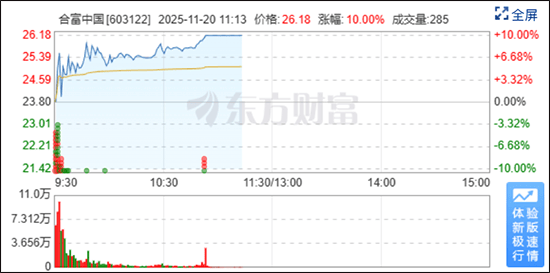
Core Viewpoint - The company, HeFu China, has completed its investigation into abnormal stock trading and will resume trading on November 20, 2025, after a significant stock price increase of 256.29% over fourteen trading days, despite the company being in a loss position [1][4][5]. Financial Performance - For the third quarter of 2025, HeFu China reported a net profit attributable to shareholders of -5.048 million yuan, a decline of 225.26% year-on-year [7]. - The company's revenue for the third quarter was 548.862 million yuan, down 22.80% compared to the same period last year [7]. - The latest price-to-earnings (P/E) ratio stands at 343.67, significantly higher than that of industry peers, indicating a potential bubble in stock price [5][6]. Stock Trading Activity - HeFu China's stock experienced a remarkable increase, with twelve out of fourteen trading days closing at the daily limit, reflecting a speculative trading environment [5][6]. - The stock's trading volume showed significant fluctuations, suggesting a "hot potato" effect among investors [6]. Company Overview - HeFu China, established in 2000 and headquartered in Shanghai, is the only medical enterprise listed on both the A-share market and the Taiwan Securities Over-the-Counter Market [6]. - The company primarily provides procurement and logistics services for in vitro diagnostic products, which account for over 90% of its total revenue [6].

AI医疗:如何在技术突破与人文关怀间寻找平衡?
财富FORTUNE· 2025-11-19 13:05
Core Viewpoint - The article discusses the challenges and potential of AI in healthcare, emphasizing that while AI shows promise in controlled environments, its integration into real clinical settings faces significant hurdles [1][2][4]. Group 1: AI Performance and Clinical Integration - Microsoft's AI diagnostic system scored four times higher than human doctors in a complex case test, highlighting AI's potential in medical diagnostics [1]. - A study from Harvard indicates that simply providing doctors with AI tools like ChatGPT does not improve diagnostic outcomes; optimal results occur when AI analyzes cases first, followed by human input [4]. - The disconnect between AI's technical capabilities and clinical needs is a core issue, as medicine requires both scientific and artistic approaches, which AI struggles to replicate [5]. Group 2: Challenges in Implementation - The integration of AI into clinical workflows is hindered by established practices among doctors, who may find AI tools burdensome rather than helpful [6]. - Medical data infrastructure is crucial for AI's effectiveness; for instance, Yidu Tech invested over $100 million over four years to build a data foundation necessary for AI applications [6]. - Patient trust remains paramount, as evidenced by a survey where none of the 3,000 patients chose hospitals based on AI tools, indicating that patients prefer human doctors over algorithms [6]. Group 3: Democratization of Healthcare - AI's ultimate goal is to democratize access to quality healthcare, as illustrated by a new insurance model in Beijing and Shenzhen that offers affordable premiums and high coverage [7]. - The use of AI in non-critical care settings is being explored to enhance service delivery, particularly in underserved areas [7]. - AI can reduce administrative burdens on doctors, allowing them to spend more time with patients, thus improving overall healthcare delivery [7]. Group 4: Future Collaboration Between Doctors and AI - There is a consensus that AI will not replace doctors; however, those who do not learn to utilize AI effectively may be outpaced by their peers [8]. - Medical education is evolving to include AI collaboration skills, ensuring future doctors can use AI tools while understanding their limitations [9]. - Continuous monitoring and optimization of AI tools are necessary to ensure they are user-friendly and effective for busy healthcare professionals [9].
润达医疗与华鲲振宇达成战略合作
Zheng Quan Shi Bao Wang· 2025-11-19 12:59
Core Viewpoint - Recently, RunDa Medical (603108) signed a strategic cooperation agreement with Sichuan Huakun Zhenyu Intelligent Technology Co., Ltd. to jointly develop AI medical solutions [1] Group 1: Strategic Cooperation - The partnership aims to leverage each company's strengths in AI medical applications and domestic computing infrastructure [1] - The collaboration will focus on comprehensive cooperation in branding, products, technology, and channels [1] Group 2: Goals and Objectives - The objective is to create an integrated, self-controlled smart medical AI solution [1] - The initiative seeks to promote the widespread and scalable application of AI technology in the healthcare industry [1]

从制药到“智”药,无锡打造生命健康产业世界级舞台
Sou Hu Cai Jing· 2025-11-19 12:11
Core Insights - The 2025 International Cooperation and Exchange Conference on Industrial and Supply Chains was held in Wuxi, focusing on the theme "Gathering New Quality Productive Forces, Open Cooperation for a Win-Win Future" [1] - The establishment of the Jiangsu Province Biopharmaceutical Full Industry Chain Open Innovation Alliance and the signing of several foreign-funded R&D center projects mark a significant acceleration for Wuxi's life and health industry [1] Industry Growth - Wuxi's biopharmaceutical industry has shown robust growth, reaching a total scale of 200 billion yuan by the end of 2023, with an average growth rate exceeding 13% over the past five years [2] - The Wuxi High-tech Zone (Xinwu District) accounts for over 1 billion yuan of this growth, representing a significant portion of the city's biopharmaceutical industry [2] - GE Healthcare's Wuxi base has evolved from an ultrasound equipment assembly plant to the largest global production base for ultrasound and life care devices, serving over 100 countries [2] Innovation in Medical Devices - GE Healthcare's Carevance patient monitor, developed in Wuxi, features a "mobile brain" design that simplifies clinical operations and ensures continuous monitoring of vital signs [4] - Wuxi has released a list of innovative biopharmaceutical products, including advanced ultrasound diagnostic systems, showcasing the city's strong innovation capabilities [6] Breakthroughs in Pharmaceuticals - Local pharmaceutical company Nuoyu Pharmaceutical has made significant progress with its cancer diagnostic radiopharmaceuticals, with plans to submit for market approval next year [5] - The approval of two innovative drugs by Dize Pharmaceutical marks a breakthrough for original drug approvals in Wuxi [5] Supportive Ecosystem - The Jiangsu provincial government has implemented policies to optimize the regulatory environment for the biopharmaceutical industry, facilitating its development [9] - Financial support measures have been introduced to enhance investment in the biopharmaceutical sector, creating a collaborative ecosystem [11] - Wuxi has established a matrix of life and health industry carriers, focusing on various sectors such as synthetic biology and gene therapy [11] Future Prospects - The establishment of the Jiangsu Province Biopharmaceutical Full Industry Chain Open Innovation Alliance positions Wuxi as a new hub for innovation in the life and health industry [12]

