
新型电力系统

Search documents
聚焦新型电力系统发展 专家热议——数智技术成为核心引擎
Ke Ji Ri Bao· 2025-10-26 23:48
Core Viewpoint - The integration of artificial intelligence and digital technology with the power system is accelerating, becoming a key driver for the construction of a new power system, which is essential for the low-carbon transition and high-quality development of the energy sector [1][2]. Group 1: Digital Transformation in the Energy Sector - The "Artificial Intelligence + Energy" trend is becoming unstoppable, with digitalization and intelligence in the energy sector entering a new phase [1]. - The construction of a new power system is a critical component of building a new energy system, with digital technology serving as the core engine for the evolution of this new power system [1]. - The power industry has made significant achievements in integrating digital technology and artificial intelligence across the entire industry chain, enhancing the capabilities of the new power system [1]. Group 2: Data as a Key Element - Energy big data is a crucial element in the digital transformation of the power industry, encompassing the entire process of energy production, storage, transportation, and consumption [2]. - The State Grid Corporation has integrated 57 categories and 217.7 billion pieces of energy big data, establishing a two-tier energy big data center to promote data aggregation and provide analysis services [2]. Group 3: Technological Innovations and Market Adaptation - Companies are exploring how to leverage digital technology to address profitability challenges in the energy sector, particularly under the pressures of accelerated energy projects and market-oriented pricing reforms [3]. - The use of AI, weather data, and price forecasting is being employed to reconstruct investment return models, allowing for precise investment strategies in response to market fluctuations [3]. - Experts believe that with ongoing technological advancements and policy support, artificial intelligence will further integrate into the power industry, driving intelligent upgrades of the power grid [3].
媒体报道︱电力市场建设与监管分论坛 适应能源转型的电力市场建设与监管
国家能源局· 2025-10-26 10:53
Core Viewpoint - The forum focused on the construction and regulation of electricity markets in the context of energy transition, highlighting the opportunities and challenges faced by the electricity market globally [3]. Group 1: Electricity Market Construction - China's electricity market has achieved significant results after ten years of deep reform, establishing a multi-level unified market system covering inter-provincial, regional, and intra-provincial levels [3]. - The construction of a national unified electricity market should continue to strengthen international cooperation and rule mutual learning, while improving regulatory collaboration and efficiency [3]. Group 2: Regulatory Practices and Mechanisms - Experts shared insights on key areas of electricity market construction, including the development path and regulatory practices of China's unified electricity market, market mechanism design to promote energy transition, and risk prevention strategies under new power systems [3][4]. - The forum reached a consensus on various aspects such as market mechanisms, regulatory innovation, international experience, and corporate practices [4]. Group 3: Reports and Publications - The forum released and interpreted the "National Unified Electricity Market Development Planning Blue Book (English Version)" and the "2024 Annual Report on China's Electricity Market Development (English Version)," showcasing the progress and planning of China's electricity market [4].


展望十五五,全面绿色转型渐明晰
HTSC· 2025-10-26 06:38
Investment Rating - The report maintains a "Buy" rating for multiple companies in the energy and power equipment sector, including Ningde Times, Pinggao Electric, Guoneng Rixin, Sany Renewable Energy, and others [4][7][8]. Core Insights - The report emphasizes the importance of a comprehensive green transition in China's economy, driven by goals of carbon peak and carbon neutrality, with a focus on developing a new energy system [1][2]. - The dual control of carbon emissions is expected to expand the demand for green electricity, with policies promoting both carbon market management and mandatory green electricity consumption [2][3]. - The energy sector's green and low-carbon transformation is identified as a critical area for achieving overall green transition goals, with a significant portion of new electricity demand expected to be met by clean energy sources by the end of the 14th Five-Year Plan [3]. Summary by Sections Section 1: Industry Overview - The report highlights the acceleration of green transformation in the economy, with key measures including the establishment of a dual control system for carbon emissions and the promotion of green energy transition [1][2]. Section 2: Company Recommendations - **Ningde Times (300750 CH)**: Target price raised to 566.18 CNY, with a strong outlook on electric vehicle and energy storage markets [9][10]. - **Pinggao Electric (600312 CH)**: Target price set at 22.80 CNY, benefiting from strong domestic bidding for power transmission and transformation equipment [11]. - **Guoneng Rixin (301162 CH)**: Target price of 73.54 CNY, with significant growth in service stations and customer retention [12]. - **Sany Renewable Energy (688349 CH)**: Target price increased to 38.01 CNY, with expectations of improved profitability in wind turbine sales [14]. - **Siyuan Electric (002028 CH)**: Target price raised to 147.90 CNY, driven by strong growth in overseas orders and data center demand [14]. - **Sungrow Power Supply (300274 CH)**: Target price set at 195.40 CNY, with a focus on energy storage and international expansion [14]. - **Oriental Electronics (000682 CH)**: Target price of 13.86 CNY, with steady growth in core business and new energy projects [14]. - **China Western Power (601179 CH)**: Target price set at 8.25 CNY, with a stable growth outlook in power transmission equipment [14]. - **Guodian NARI Technology (600406 CH)**: Target price of 26.00 CNY, benefiting from new power system construction [14].





岳君:标准化引领电力燃煤行业高质量发展
中国能源报· 2025-10-26 00:40
Core Viewpoint - The standardization work in the coal-fired power industry is essential for ensuring safety, efficiency, cleanliness, and sustainable development, acting as the "nervous system" and "common language" of the industry [1][4]. Group 1: Importance of Standardization - Standardization serves as a "lifeline" for safe and stable operations, with a comprehensive standard system being crucial for preventing accidents and ensuring energy security [4]. - It acts as a "booster" for efficiency and effectiveness by unifying equipment design and operational standards, significantly reducing lifecycle costs [4]. - Standardization is a "catalyst" for technological innovation, enabling the rapid implementation of advanced technologies across the industry [5]. - It provides "hard constraints" and "measuring tools" for green transformation, translating environmental policies into executable technical standards [5]. - Standardization functions as a "common language" for industry chain collaboration, ensuring seamless connections across various stages of the coal-fired power industry [5]. Group 2: Challenges in Standardization - The industry faces challenges in technology, economics, and operations, particularly in balancing efficiency and flexibility, with coal consumption increasing significantly during deep peak regulation [6]. - There is a mismatch between investment and returns, as substantial investments in flexibility modifications and carbon capture technologies are not fully covered by current pricing mechanisms [6]. - Safety risks are heightened due to low-load operations and stringent regulatory requirements, complicating management for enterprises [6]. Group 3: Proposed Solutions - The industry should redefine its strategic positioning, shifting coal power from a "main role" to a "supporting role" in the energy system [7]. - Emphasis on technological innovation is necessary, focusing on operational optimization and integrating low-carbon technologies [7]. - Market mechanisms need improvement to ensure that adjustment services receive reasonable compensation, while standards and policies should help reduce modification costs [7]. Group 4: Future Directions of Standardization - The standardization work will transition from following policies to leading transformations, with a focus on dual control of energy consumption and carbon emissions [9]. - Standards will evolve from merely meeting technical requirements to becoming essential for market participation, quantifying flexibility for revenue generation [9]. - The scope of standards will expand from equipment modifications to system integration, facilitating collaboration between coal power and renewable energy sources [9]. - A proactive approach to risk management will be adopted, with standards covering predictive maintenance and intelligent warning systems [9]. Group 5: New Technology and Standardization - The application of new technologies will create demands for standards related to data specifications, model validation, and algorithm transparency [10]. - Standardization will support the integration of coal-fired machinery with renewable energy and storage systems, facilitating the construction of a new power system [10]. - The competition in standardization is fundamentally a competition in innovation ecosystems, necessitating a shift towards resource allocation and risk management [10].
2030 年用电晚高峰或存1750万千瓦供电缺口,江苏如何变负荷为能源
Di Yi Cai Jing· 2025-10-25 15:31
Core Insights - By 2030, if renewable energy and load-side resources do not participate in power balancing, Jiangsu may face a power supply gap of approximately 17.5 million kilowatts during peak usage periods [1] - Jiangsu is experiencing a dual challenge of high load and a high proportion of renewable energy, complicating the construction of a new power system [1] - The development of virtual power plants and smart microgrids is being prioritized to convert industrial loads and electric vehicles into marketable adjustable resources [1][2] Group 1: Current Situation and Challenges - In 2025, Jiangsu's summer peak electricity load is projected to exceed 155 million kilowatts, with wind and solar power installations reaching 110 million kilowatts, accounting for over 45% of the total [1] - The intermittent and volatile nature of renewable energy makes it difficult to meet peak load demands, increasing the requirements for grid regulation and absorption capacity [1] - The current scale and regular utilization of demand-side resources face challenges, including the difficulty of resource aggregation and the inadequacy of incentive measures [3] Group 2: Development of Virtual Power Plants - Virtual power plants aggregate dispersed resources like air conditioners and electric vehicles, acting as a controllable entity to alleviate extreme electricity demand and enhance grid absorption of renewable energy [2] - Jiangsu has made progress in virtual power plant development, with 25 virtual power plants officially participating in the electricity market as of July 1 [2] - The investment required for virtual power plants is significantly lower than traditional power plants, with operational costs ranging from 1.5 to 5 yuan per kilowatt-hour and construction costs between 200 to 400 yuan per kilowatt [2] Group 3: Recommendations for Future Development - Experts recommend enhancing the digital capabilities of virtual power plants to ensure demand-side resources are observable, measurable, adjustable, and controllable [4] - There is a need to improve market mechanisms and establish effective pricing strategies for different flexible resources to encourage investment in virtual power plants [4] - A comprehensive understanding of resource characteristics and market signals is essential for guiding social investment and providing predictable revenue channels for virtual power plants [4]
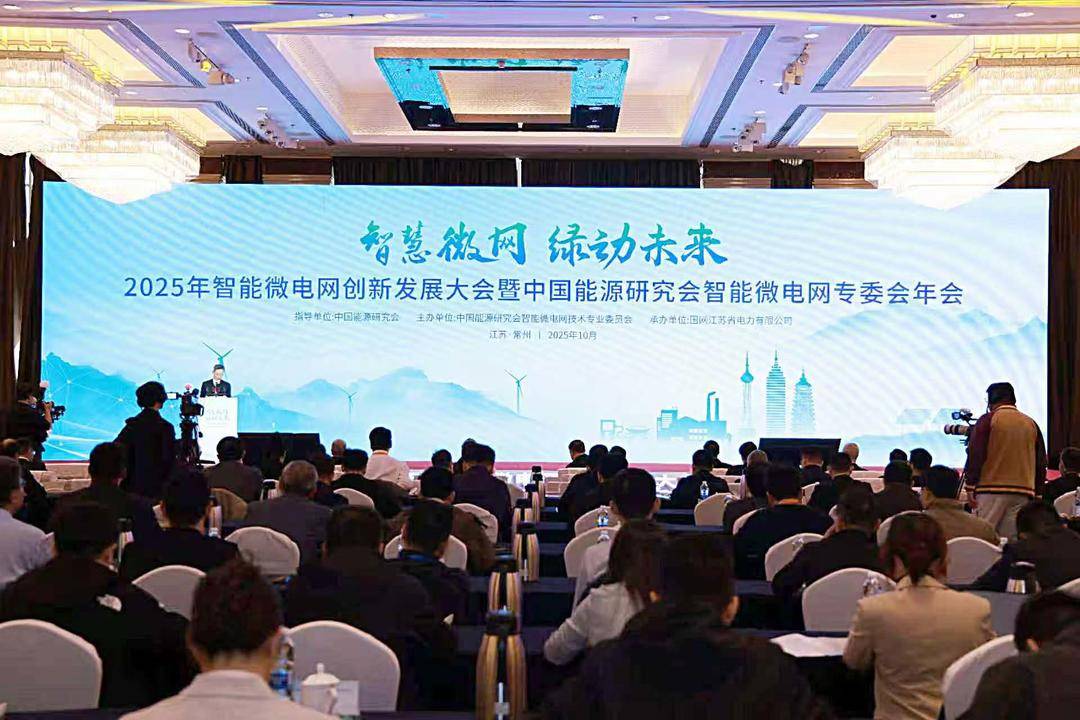
2025年智能微电网创新发展大会暨中国能源研究会智能微电网专委会年会在江苏召开
Yang Zi Wan Bao Wang· 2025-10-25 09:01
Core Insights - The conference on smart microgrid innovation and development was held in Changzhou, Jiangsu, focusing on the theme "Smart Microgrid, Green Future" and aimed to discuss new opportunities for the development of smart microgrids in the energy sector [1][3]. Group 1: Objectives and Goals - The Smart Microgrid Committee aims to support the national "dual carbon" strategy and promote green energy transition, focusing on technological innovation and application in smart microgrids [3]. - The conference is designed to create a dialogue platform across academia, industry, and commerce, addressing key topics such as cutting-edge technologies and operational models while responding to policy directions and enterprise needs [5]. Group 2: Achievements and Developments - The Smart Microgrid Committee highlighted its achievements in technology promotion and standardization, identifying development bottlenecks and outlining the industry's growth trajectory [7]. - The conference showcased the practical efforts and leading outcomes of State Grid Jiangsu Electric Power in advancing high-quality development of microgrids, emphasizing the committee's role as a bridge in promoting technological innovation and industry application [7]. Group 3: Conference Structure and Activities - The conference lasted one day and was structured as a "main forum + sub-forums" format, featuring key segments such as work summaries, forward-looking discussions, keynote speeches, and high-level dialogues [5]. - Prior to the conference, experts and industry representatives conducted in-depth research at typical microgrid demonstration projects, gaining insights into the technological pathways and advanced operational models of Jiangsu's microgrid interactions with the grid [7].
苏州市建成智慧配电网与虚拟电厂 打造国际能源变革发展典范
Su Zhou Ri Bao· 2025-10-25 00:49
Group 1 - The core idea of the articles revolves around Suzhou's efforts in optimizing its energy supply structure and enhancing the reliability of its power grid to support green energy consumption and carbon reduction initiatives [1][2][3] Group 2 - Since the establishment of the International Energy Transformation Forum in 2015, the State Grid Suzhou Power Supply Company has been working on improving energy supply structures and resource allocation [1] - Suzhou has built a robust power grid infrastructure, including 563 substations and 14,400 kilometers of transmission lines, making it the largest power grid among prefecture-level cities in China [1] - In the summer of this year, external electricity accounted for about 50% of Suzhou's power load, with one-third of the electricity being green energy [1] - From 2015 to last year, Suzhou's installed power generation capacity increased by 57%, with renewable energy capacity growing 21 times over the past decade [1] Group 3 - In 2016, the State Grid Corporation and the Suzhou government signed a strategic cooperation agreement to develop Suzhou as a model city for energy transformation [2] - Suzhou was selected as one of the ten pilot cities for world-class urban distribution network construction, focusing on advanced distribution network technology applications [2] - The city has installed over 100,000 sensing devices, creating a highly perceptive smart distribution network [2] - In October 2023, Suzhou established a proactive monitoring system for low-voltage user outages and launched an AI-powered service system for power supply management [2] Group 4 - The emergence of virtual power plants is a trend in the construction of new power systems and market reforms [3] - The Suzhou Zero Carbon Smart Virtual Power Plant, established in December 2022, can consume and provide electricity while participating in power trading [3] - The virtual power plant completed market registration and is one of the first six virtual power plants in Jiangsu to participate in the electricity spot market [3]
国内国际市场两手抓 电力装备行业提质增效正当时
Zheng Quan Shi Bao· 2025-10-24 22:28
Core Insights - The "Work Plan for Stable Growth in the Power Equipment Industry (2025-2026)" emphasizes the transition to a green and low-carbon energy structure and the construction of a new power system, setting targets for annual revenue growth of around 7% for national advanced manufacturing clusters and 10% for leading enterprises in the power equipment sector [1] Group 1: New Power System Requirements - The new power system requires higher performance, reliability, and intelligence from power equipment, leading to increased demand for upgrades and new equipment across all segments of generation, transmission, transformation, distribution, and consumption [1][2] - The construction of the new power system is seen as a key pathway for China to achieve its "dual carbon" goals, presenting unprecedented opportunities and new requirements for related enterprises [2][3] Group 2: Technological Innovations - New technologies, products, and applications are being introduced to support the construction of the new power system, including high-efficiency photovoltaic components and energy storage systems [4] - Companies like SANY Heavy Energy and JA Solar are launching innovative products, such as the SI-242 wind turbine series and TOPCon solar modules, to meet the evolving demands of the market [4][5] Group 3: Major Engineering Projects - The "Work Plan" aims to stabilize demand for power equipment by leveraging major engineering projects, including large onshore wind and solar bases, coal power upgrades, and significant hydropower and nuclear projects [6] - These projects are expected to provide new growth points and market space for the wind power industry, with policies aimed at enhancing wind energy resources and increasing domestic wind turbine installation capacity [6][7] Group 4: International Market Expansion - The "Work Plan" highlights the importance of actively exploring international markets as a key measure for stable growth in the power equipment industry [8] - Chinese power equipment companies are encouraged to leverage their technological and capacity advantages to seize opportunities in emerging markets and adapt to competitive environments in high-end markets like Europe [8][9] - Companies like JA Solar are investing in overseas production capacities to better meet local demands and reduce trade barriers, while also collaborating with power generation companies on international projects [9][10]
新型电力系统“新”在哪儿
Zheng Quan Ri Bao· 2025-10-24 18:12
Group 1 - The core viewpoint is that China's power system is transitioning from a traditional fossil fuel-dominated model to a new energy-dominated model under the "dual carbon" goals, involving comprehensive innovation in concepts, technologies, and models [1][3] Group 2 - The transition involves moving from "passive acceptance" to "active consumption," addressing the challenges of integrating renewable energy sources, with wind and solar power utilization rates expected to remain above 95% from 2022 to 2024 [1] - The shift from "simple substitution" to "coordinated optimization" is exemplified by Huamin Co.'s project in Yunnan, which combines wind and solar energy with storage, reducing electricity costs by 13% to 15% compared to traditional energy [2] - The transition from "individual efforts" to "coordinated layout" is marked by significant investments from the State Grid, projected to exceed 650 billion yuan in 2025, facilitating the construction of cross-regional transmission channels and intelligent scheduling platforms [2] Group 3 - The threefold innovation of the new power system fundamentally reconstructs the traditional system, shifting focus from fossil fuels to renewable energy, from single functionality to multi-coordination, and from resource limitations to national expansion [3] - These innovations not only break through the bottlenecks of renewable energy development but also provide a replicable transformation path for achieving the "dual carbon" goals [3]
新型电力系统:负荷“大考”淬炼韧性
Zheng Quan Ri Bao Zhi Sheng· 2025-10-24 18:09
Core Insights - The National Energy Administration reported that China's total electricity consumption reached 77,675 billion kilowatt-hours in the first three quarters of the year, marking a year-on-year increase of 4.6% [1] - The sales of new energy vehicles in China reached 8.088 million units in the first eight months of 2025, representing a year-on-year growth of 30.1%, which has led to increased electricity demand [1] - The new energy system in China is characterized by a multi-layered energy structure, flexible coordination among various components, and a trend towards overall cleanliness and intelligence [1][2] Multi-layered Energy Structure - In 2022, extreme weather and rapid economic growth led to a widening gap between electricity demand and supply, prompting several provinces to issue orderly electricity usage notifications [2] - The integration of wind and solar energy in projects, such as the one in Yunnan, demonstrates the ability to provide clean energy and optimize energy consumption patterns [2][3] - Thermal power remains a crucial component of the energy system, providing stability and support for renewable energy [3] Source-Grid-Load-Storage Coordination - The new energy system operates on a model that emphasizes the collaboration of power sources, grids, loads, and storage to optimize energy utilization and ensure stable power supply [4] - The use of supercritical technology in thermal power plants allows for rapid adjustments to match the fluctuating output of renewable energy sources [5] Grid Infrastructure - The construction of a unified national grid and breakthroughs in ultra-high voltage transmission technology have facilitated the delivery of wind and solar energy to distant load centers [6] - As of May, China has completed 43 ultra-high voltage projects, significantly supporting electricity demand in the eastern and central regions [6] Technological Innovations - Companies like Changlan Technology are actively involved in the development of high-voltage cable accessories, which are essential for efficient power transmission [7] - Innovations in energy storage, such as Zhejiang's record-breaking storage capacity, enhance the system's ability to manage peak loads [7][8] Transition to Overall Formation Period - China's new energy system is transitioning from the acceleration phase to the overall formation phase, with a focus on cleaner energy sources and smarter grid technologies [9] - The country is leading globally in renewable energy capacity, grid infrastructure, and technological innovations, which are crucial for economic growth [9] Challenges Ahead - Key technologies and materials, such as flexible direct current transmission and long-duration energy storage, require further development [10] - The integration of artificial intelligence with power development and the establishment of a robust electricity trading market remain significant challenges [10]