
工业互联网

Search documents
第三届全国技能大赛在河南郑州开赛
Xin Hua Wang· 2025-09-19 16:01
新华社郑州9月19日电(记者张晓洁、孙清清)第三届全国技能大赛19日晚在河南郑州开赛。本届 大赛以"技能照亮前程"为主题,35个代表团的3420名选手围绕106个竞赛项目参赛。这是我国赛事规格 最高、竞赛项目最多、参赛规模最大、影响范围最广的综合性国家职业技能赛事。 选手方面,看年龄,既有来自院校的"技能新星",也有长期坚守一线的"老师傅",年龄跨度从16岁 至57岁;看身份,技工院校学生、企业职工分别占比58%、21%,企业职工占比增加;看学历,博士、 硕士、本科人数占比33%,高学历参赛选手主要集中在智能制造、高端装备等前沿技术技能领域。 赛事活动为期5天,9月23日举行闭幕式,届时不仅将集中向获奖选手颁奖,河南省还将与第四届大 赛承办地浙江省进行会旗交接。 赛项方面,包括66个世界技能大赛选拔项目和40个国赛精选项目。25个省份代表团参加比赛项目超 过赛项总数的90%;21个代表团参加全部赛项,较上届增长近1倍。首次设置乡村振兴专项赛项。智能 制造、工业互联网、人工智能等新领域赛项占比超50%。17个新职业赛项展现新技术、新技能发展的最 新趋势。 ...
调研速递|蓝箭电子接受投资者调研 聚焦行业发展与战略规划
Xin Lang Zheng Quan· 2025-09-19 12:58
9月19日下午15:30至17:00,佛山市蓝箭电子股份有限公司通过全景网"投资者关系互动平 台"(https://ir.p5w.net)以网络远程的方式召开业绩说明会,接受投资者网上提问调研。公司总经理袁 凤江、副总经理兼财务总监赵秀珍、副总经理兼董事会秘书张国光、证券事务代表林品旺等接待人员出 席会议,就投资者关心的问题进行了回复。 对于是否为华为核心供应商的疑问,公司明确回应,不是华为的核心供应商。 本次投资者关系活动类别为业绩说明会。在活动中,投资者提出多个关键问题,公司一一进行解答。 在行业发展与战略规划方面,公司表示,随着新一轮科技和产业变革的深入,半导体行业持续发展,人 工智能、工业互联网等新兴领域不断涌现,数字经济与实体经济的深度融合,以及科技创新催生的新质 生产力,对经济全球化发展起到决定性作用。公司战略核心在于专注半导体封测主营业务,持续推进高 端产品研发,积极拓展高端客户群体,充分发挥自身特色。 声明:市场有风险,投资需谨慎。 本文为AI大模型基于第三方数据库自动发布,任何在本文出现的信 息(包括但不限于个股、评论、预测、图表、指标、理论、任何形式的表述等)均只作为参考,不构成 个人投资 ...
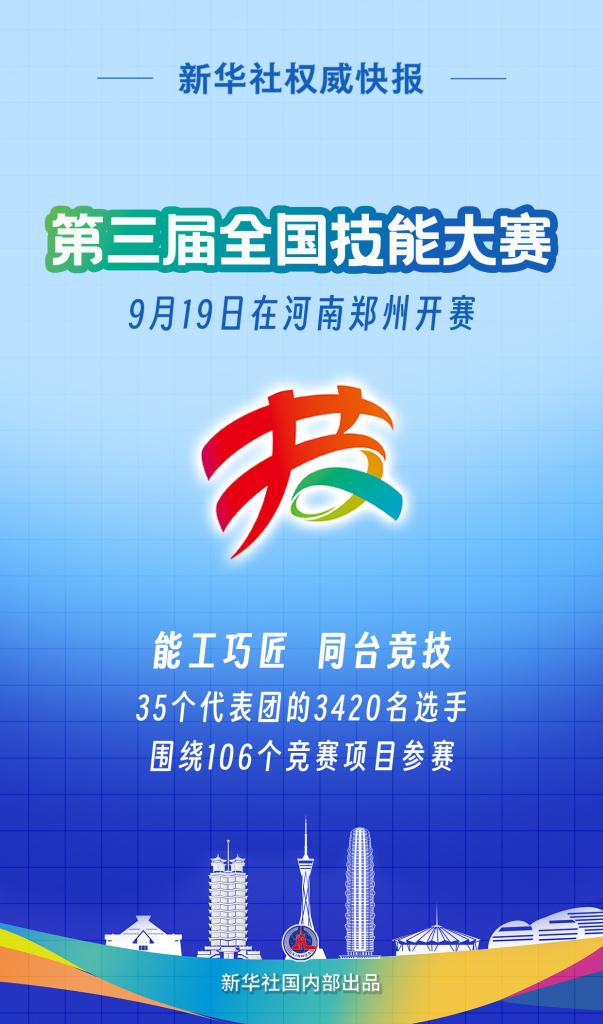
新华社权威快报丨第三届全国技能大赛开赛
Xin Hua She· 2025-09-19 12:51
这是我国赛事规格最高、竞赛项目最多、参赛规模最大、影响范围最广的综合性国家职业技能赛 事。 记者:张晓洁 新华社权威快报 三届全国技能大赛 9月19日在河南郑州开赛 能工巧匠 同台竞技 35个代表团的3420名选手 围绕106个竞赛项目参赛 新华社国内部出品 第三届全国技能大赛9月19日在河南郑州开赛,35个代表团的3420名选手围绕106个竞赛项目参赛, 赛事活动为期5天。 选手方面,从16岁"技能新星"到57岁"老师傅",从企业职工到院校学生,能工巧匠同台竞技、大展 风采。 赛项方面,首次设置乡村振兴专项赛项。智能制造、工业互联网、人工智能等新领域赛项占比超 50%。17个新职业赛项展现新技术、新技能发展的最新趋势。 海报制作:贾稀荃 新华社国内部出品 ...

蓝箭电子(301348) - 301348蓝箭电子投资者关系管理信息20250919
2025-09-19 12:46
证券代码: 301348 证券简称:蓝箭电子 | 感谢您的关注。 | | | | | | | | --- | --- | --- | --- | --- | --- | --- | | 2、咱们公司是华为的核心供应商吗? | | | | | | | | 尊敬的投资者您好,公司不是华为的核心供应商,感谢您的 | | | | | | | | 关注! | | | | | | | | 3、请问贵公司从上市以来,股价一直下跌到现在 | 业绩也出 | | | | | | | 现较为严重的亏损,后期对投资者保护有什么保护措施! | | | | | | | | 尊敬的投资者,您好。公司管理层对公司的长期发展潜力持 | | | | | | | | 有坚定信心,本着对全体股东负责的态度努力经营公司,稳步提 | | | | | | | | 升公司业绩;公司将继续提升管理水平和经营业绩,深度梳理企 | | | | | | | | 业核心投资价值塑造,通过稳定分红等途径维护公司价值,为投 | | | | | | | | 资者提供长期回报。感谢您对公司的关注。 | | | | | | | | 附件清单(如有) | 无 | | | | | ...
调研速递|上海海得控制系统股份有限公司接受多家投资者调研,透露业务布局与产品进展要点
Xin Lang Zheng Quan· 2025-09-19 10:21
Core Viewpoint - Shanghai Haide Control System Co., Ltd. held a mid-year performance briefing on September 19, 2025, addressing investor concerns regarding industry status, operational performance, and financial conditions [1] Group 1: Business Layout and Technology Reuse - The company focuses on industrial electrical automation and industrial information technology, developing hardware and software products such as medium redundancy PLCs and edge controllers [1] - The accumulated automation and information technology can be reused in intelligent industries like robotics, integrating with the company's "two-in-one" solutions for control and data interaction layers [1] - The company is advancing its digital business by focusing on automation control technologies and developing software and hardware products and solutions for multiple industries [1] Group 2: Industrial Internet Platform Achievements - The company is enhancing its "two-in-one" solutions by developing hardware and software for control and data interaction, particularly in the metallurgy sector for unmanned intelligent systems [1] - The company is addressing user needs by integrating OT and IT systems, focusing on adaptability and improving overall digital and intelligent system levels [1] Group 3: Product-Related Responses - The company does not engage in the research and manufacturing of high-density optical components but applies relevant devices in self-developed products [1] - Currently, the company is not involved in humanoid robot research, although related technologies can be reused [1] - Automation products are applied in the renewable energy sector, with stable year-on-year orders for wind power converters and increased orders for commercial energy storage products [1] Group 4: Energy Storage Business Situation - In the first half of 2025, the company focused on risk management in the centralized energy storage market, reducing market investment and concentrating on quality clients and projects [1] - The company implemented cost reduction and efficiency improvement measures, resulting in a significant year-on-year decrease in expenses [1] - The exploration of business models and market opportunities in commercial storage has shown initial success [1] Group 5: Shareholder Reduction Situation - The actual controller of the company, Mr. Xu Hong, has never reduced his shareholding, while Mr. Guo Menglong announced a reduction plan for the first time since the company went public in 2007 due to business investment needs [1] - In 2016, the two actual controllers collectively increased their shareholding by 9,778,067 shares [1] - Any future reduction information will be disclosed in accordance with legal regulations [1]

海得控制(002184) - 002184海得控制投资者关系活动记录表20250919
2025-09-19 09:50
Group 1: Company Strategy and Product Development - The company focuses on the integration of automation and information technology, emphasizing the development of software and hardware products for industrial automation and informationization, including medium redundancy PLCs, edge controllers, SCADA software, and industrial intelligent network management software [3][7] - The digitalization strategy aims to leverage software to enhance automation control, industrial software, information security, and industrial internet technologies, targeting sectors such as equipment manufacturing, infrastructure, and process industries [3][7] Group 2: Industrial Internet and Smart Systems - The company is enhancing its "dual-integration" solutions, focusing on industries like metallurgy, port management, and mining to develop unmanned intelligent systems, improving adaptability, replicability, and iterative capabilities [5][6] - The "EIControl edge controller AI functionality development" project aims to achieve real-time inference capabilities and predictive maintenance, significantly enhancing production line intelligence [4] Group 3: Financial Performance and Market Position - The company has adjusted its investment strategy in the centralized energy storage market, focusing on risk management and prioritizing high-quality clients and projects, resulting in a significant reduction in costs compared to the previous year [7] - The revenue and profit from the energy storage business have seen substantial year-on-year growth, indicating a positive trend in financial performance despite market challenges [7] Group 4: Market Trends and Customer Engagement - Orders for automation products in the renewable energy sector have shown a stable trend, with new application scenarios for commercial energy storage products leading to an increase in orders [9] - The company has disclosed plans regarding stock reduction by actual controllers, emphasizing that the primary purpose is for personal funding needs and business development [9]
海得控制:工业互联网平台建设成果斐然
Quan Jing Wang· 2025-09-19 08:40
Group 1 - The core viewpoint of the article highlights Haide Control's ongoing efforts to enhance the integration of automation and information technology solutions, focusing on industries such as metallurgy, pipeline corridors, ports, and mining [1] - The company is developing software and hardware for control and data interaction layers, aiming to meet user demands for adaptability, replicability, and iteration in the integration of operational technology (OT) and information technology (IT) [1] - Haide Control's main business revolves around smart manufacturing, leveraging its long-term experience in industrial electrical automation and industrial information technology to provide integrated solutions that promote automation, digitalization, networking, intelligence, and energy efficiency in production [1] Group 2 - The company has achieved breakthroughs and continuous iterations in its products, including industrial intelligent network management software, industrial system cloud migration, and AI intelligent edge controllers [1] - Haide Control aims to assist industrial users in reducing production and management energy consumption, thereby facilitating green and intelligent development in manufacturing [1]
春风动力跌2.03%,成交额2.66亿元,主力资金净流出665.87万元
Xin Lang Cai Jing· 2025-09-19 02:27
Group 1 - The core viewpoint of the news is that Chufeng Power's stock has experienced fluctuations, with a year-to-date increase of 77.80% but a recent decline in the last five trading days by 4.40% [1] - As of September 19, Chufeng Power's stock price was 272.43 CNY per share, with a total market capitalization of 41.567 billion CNY [1] - The company has seen a net outflow of main funds amounting to 6.6587 million CNY, with significant buying and selling activities recorded [1] Group 2 - Chufeng Power's main business includes the research, production, and sales of all-terrain vehicles, motorcycles, yachts, and recreational sports equipment, with revenue composition being 47.95% from four-wheeled vehicles, 42.79% from two-wheeled vehicles, and 6.89% from parts and others [1] - For the first half of 2025, Chufeng Power achieved operating revenue of 9.855 billion CNY, a year-on-year increase of 30.90%, and a net profit attributable to shareholders of 1.002 billion CNY, up 41.35% year-on-year [2] - The company has distributed a total of 1.485 billion CNY in dividends since its A-share listing, with 1.115 billion CNY distributed in the last three years [3]

网友点赞“十四五”成绩单
Ren Min Ri Bao Hai Wai Ban· 2025-09-18 22:56
Group 1: Achievements in Infrastructure and Technology - China has built the world's largest and most extensive network infrastructure, with 4.598 million 5G base stations and over 1 million device connections on key industrial internet platforms [5] - The country has established more than 35,000 basic-level and over 230 excellent-level smart factories, showcasing significant advancements in smart manufacturing [5] - The application of industrial robots is accelerating, with demonstrations of robots capable of material handling and intelligent inspections at the 2025 Global Industrial Internet Conference [6] Group 2: Agricultural Production and Food Security - During the "14th Five-Year Plan" period, China's grain production is projected to exceed 1.4 trillion jin (approximately 700 million tons) by 2024, an increase of 74 billion jin compared to 2020 [14] - The average per capita grain availability has reached 500 kg, ensuring basic self-sufficiency in grains and absolute safety in staple food supplies [14] - The production of cotton, oil, sugar, fruits, vegetables, meat, eggs, milk, and aquatic products has been continuously enhanced, enriching the food supply for the population [14] Group 3: Ecological and Environmental Initiatives - Significant progress has been made in ecological protection and restoration, with the "Three North" project completing construction tasks covering 164 million acres [9] - The "Mountain and Water Project" has been implemented across 27 initiatives, protecting and restoring over 8 million acres [9] - Inner Mongolia has made strides in combating desertification, achieving an 80% progress rate in the governance of the Maowusu Sandy Land and establishing a "photovoltaic wall" in the Kubuqi Desert [10] Group 4: Cultural and Educational Developments - By the end of 2024, the number of registered museums in China is expected to reach 7,046, with an average of one museum for every 200,000 people, and over 91% of them offering free admission [19] - Museums have become popular cultural and tourism destinations, with 28.6079 million visitors recorded in Jiangsu province alone during the summer [20] - The transformation of museums into comprehensive cultural experience centers has enhanced their role in promoting cultural tourism consumption [20]

第三届全国职业技能大赛明日开幕
Zheng Quan Ri Bao Wang· 2025-09-18 13:14
Core Points - The third National Vocational Skills Competition will open on September 19 in Zhengzhou, Henan Province, China [1] - The theme of this year's competition is "Skills Illuminate the Future," featuring 106 competition projects with 3,420 participants from 35 delegations nationwide [1] - This event is recognized as the highest specification, largest scale, and most influential national vocational skills competition in China [1] Competition Structure - The competition includes 66 selection projects for the World Skills Competition and 40 selected national competition projects [1] - Over 50% of the competition projects focus on intelligent manufacturing, high-end equipment, digital technology, and new energy, aligning with the national innovation-driven development strategy [1] Special Features - For the first time, a special competition for rural revitalization has been established, directly supporting the national rural revitalization strategy [1] - Four professional technical competition projects are included, showcasing the latest trends in technology and skill integration: artificial intelligence engineering technology, intelligent manufacturing engineering technology, industrial internet engineering technology, and integrated circuit engineering technology [1]