脑机接口

Search documents
医疗再度走弱,512170续跌逾2%连失多根均线!成份股批量业绩预喜,逾10亿元资金坚定逆行
Xin Lang Ji Jin· 2026-01-27 02:17
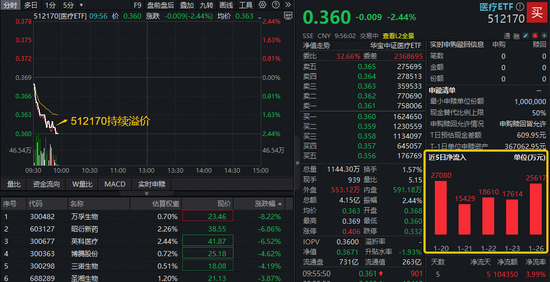
Group 1 - The medical sector continues to decline, with the largest medical ETF (512170) dropping by 2.44%, losing multiple moving averages [1] - Despite the decline, there is active low-buying interest, as evidenced by a net subscription of 1.07 billion yuan over six consecutive trading days [1] - Eight out of ten component stocks of the medical ETF have reported positive earnings forecasts for 2025, with seven stocks expected to achieve double-digit growth [2][3] Group 2 - Notable earnings growth includes a projected increase of 214% to 371% for Zhaoyan New Drug, and both Boteng Co. and WuXi AppTec are expected to double their profits [2][3] - The CXO industry is expected to benefit from a recovering global investment environment and continued domestic support for innovative drug development, indicating a positive trend for the sector [2] - The medical ETF (512170) has a total fund size of 26.8 billion yuan, making it the largest in the market for medical ETFs [6]

脑机接口来了,我们需要担心什么
Xin Lang Cai Jing· 2026-01-27 00:11
Core Insights - The brain-computer interface (BCI) sector is gaining significant attention, with Neuralink planning large-scale production in 2026 and over 10,000 patients waiting for implantation [1] - China's strong brain technology company has completed approximately 2 billion yuan in funding, marking the second-largest financing record globally in this field [1] - The technology is advancing rapidly, enabling high-level paraplegics to control wheelchairs and ALS patients to communicate through synthetic speech [1] - Ethical, legal, and social issues are emerging as BCI technology evolves beyond medical applications into cognitive enhancement and memory backup [1] Group 1: Definition and Functionality of BCI - BCI is an advanced medical device that collects brain signals through electrodes, using AI algorithms to decode and analyze these signals to translate them into machine-readable commands [1] - Current BCI products focus on specific functions, with motion intention decoding being relatively mature, while language decoding is a hot research area [2] - Visual decoding is seen as a future target for breakthroughs, with potential advancements in decoding complex brain functions like emotions and memory [2] Group 2: Types of BCI - Non-invasive BCI systems collect brain signals from the scalp without surgery, but the signal precision is lower, limiting their functionality [3] - Invasive BCI systems require surgical procedures to implant electrodes directly into the brain, allowing for more accurate signal collection [3] - Semi-invasive techniques place electrodes beneath the skull but above the dura mater, reducing surgical risks compared to fully invasive methods [4] Group 3: Implications for Patients and Users - Invasive and semi-invasive BCIs are primarily focused on conditions like spinal cord injuries and ALS, showing potential for significant quality of life improvements [5] - Invasive techniques face challenges such as inflammation and device failure risks, necessitating long-term monitoring for safety and reliability [5] - Non-invasive BCIs are more widely used in stroke rehabilitation and consumer applications, with a growing emphasis on mental health and wellness [6] Group 4: Challenges and Future Directions - Key challenges for widespread BCI adoption include performance enhancement, mastering core technologies, and ensuring precision in large-scale production [8] - Recent breakthroughs in silicon-carbon hybrid transistors could significantly improve the precision of brain signal extraction [8] - The competition between the US and China in core technologies highlights the urgency for independent technological development in the BCI sector [9] Group 5: Potential of BCI Technology - BCI technology has the potential to restore lost sensory functions and enhance human capabilities, raising questions about the ethical implications of such advancements [10] - The global market for BCI could reach trillions, with applications in healthcare, consumer products, and scientific research [10] - BCI technology is positioned to transform human interaction with machines, offering new ways to improve quality of life and explore brain functions [10]
为全球经济增长带来更多动力 国际舆论看好中国经济发展前景
Ren Min Ri Bao· 2026-01-26 23:56
Core Viewpoint - In 2025, China's economy demonstrated resilience and growth amid complex domestic and international environments, maintaining its position as the world's second-largest economy and contributing significantly to global economic growth through high-quality development and openness [1][2][3]. Economic Performance - The industrial added value for large-scale industries increased by 5.9% year-on-year, while total goods import and export rose by 3.8% [2]. - Final consumption expenditure contributed over 50% to economic growth, with real disposable income per capita increasing by 5.0%, aligning with economic growth [2]. - China's GDP surpassed 140 trillion yuan for the first time, achieving a year-on-year growth of 5.0% and successfully meeting annual economic growth targets [2][3]. Government Initiatives - The Chinese government implemented various economic stimulus measures, including a trade-in policy for consumer goods like home appliances and automobiles, which boosted retail sales of consumer goods [2][3]. - International organizations, including the International Monetary Fund, have raised their growth forecasts for China, attributing this to effective government measures that stimulated domestic demand and boosted economic confidence [3]. Innovation and Technology - Research and development expenditure intensity reached 2.8%, exceeding the OECD average for the first time, with China ranking in the global top ten for innovation index [4]. - Significant growth was noted in advanced technology sectors, with production increases in civil drones (37.3%), 3D printing equipment (52.5%), industrial robots (28.0%), and new energy vehicles (25.1%) [4]. - China's advancements in green technologies, such as electric vehicles and solar panels, have solidified its position as a global manufacturing hub [4][6]. Global Economic Impact - China's economic growth is projected to contribute approximately 30% to global economic growth, making it one of the most stable and reliable sources of economic momentum worldwide [7]. - The country's governance model, emphasizing cohesion, order, and long-term planning, has been identified as a key factor in its economic success [7][8].
两会聚焦丨建设现代化产业体系 巩固壮大实体经济根基
He Nan Ri Bao· 2026-01-26 23:42
Group 1 - The core focus of the government work report is to enhance the advantages, momentum, vitality, and efficiency of the economy, aiming for qualitative improvement and reasonable quantitative growth [1] - The province is transitioning from a manufacturing powerhouse to a manufacturing stronghold, with emphasis on upgrading ten traditional industries including steel, coal, and non-ferrous metals [2] - Innovations in manufacturing are highlighted, such as the use of autonomous cranes in a new energy vehicle factory, showcasing a shift towards intelligent machinery [2] Group 2 - Emerging industries are gaining attention, particularly in the fields of brain-machine interfaces and embodied intelligence, which are transforming the rehabilitation sector [3] - The province is working to establish a billion-level aerospace industry chain, enhancing its high-quality development through advanced positioning capabilities and leading international standards in 5G positioning [3] - The integration of various sectors, including electronic information, artificial intelligence, and biomedicine, is expected to create new economic growth points [3] Group 3 - The healthy development of the real economy relies on multi-dimensional collaboration, with efforts to strengthen market circulation and financial support [4] - The importance of institutional innovation and full industry chain layout is emphasized to maximize the "multiplier effect" of the province's key hub role [4] - The synergy between the real economy and financial development is crucial for injecting strong momentum into high-quality economic growth [4] Group 4 - The Agricultural Bank of China in Henan is committed to supporting agricultural development, focusing on food security, rural industries, and urban-rural integration [5] - The bank aims to innovate financial products that cater to local needs and enhance the quality of financial services to empower the province's economic and social development [5]
“6G通信有了超宽高速公路”
Ren Min Wang· 2026-01-26 22:38
Group 1 - The "14th Five-Year Plan" suggests forward-looking layouts for future industries, exploring diverse technological routes, typical application scenarios, feasible business models, and market regulatory rules to promote quantum technology, biomanufacturing, hydrogen energy, nuclear fusion energy, brain-computer interfaces, embodied intelligence, and sixth-generation mobile communication as new economic growth points [1] - 6G, as the next generation of wireless communication networks, requires high-speed transmission of wireless signals across various frequency bands in diverse scenarios. Traditional electronic hardware is limited to single frequency bands, making it challenging to achieve cross-band or full-band operation [1] - A joint team from Peking University and City University of Hong Kong has successfully developed an ultra-wideband optoelectronic integrated system for 6G communication, achieving the first full-band, flexibly tunable high-speed wireless communication, ensuring smoother and more reliable 6G wireless communication in the future [1] Group 2 - The development of ultra-high-frequency optoelectronic fusion chips is a research hotspot both domestically and internationally, with many global teams concurrently working on this technology. The collaboration between Peking University and City University of Hong Kong demonstrates effective cooperation despite geographical distance [1] - The new system, enhanced by AI algorithms, will create a more flexible and intelligent AI wireless network capable of operating in various complex scenarios, achieving real-time data transmission and precise environmental perception while automatically avoiding interference signals for safer and smoother network signal transmission [2]
用脑机接口硬成果 驱动未来产业新引擎
Xin Lang Cai Jing· 2026-01-26 22:09
Core Insights - The establishment of the Brain-Machine Interaction and Human-Machine Integration Haihe Laboratory, led by Tianjin University, aims to create a complete closed-loop system for clinical diagnosis, technology research and development, product registration, and medical insurance access, enhancing innovation in Tianjin [1][2] - The laboratory focuses on market-driven, original, and disruptive technology exploration, developing a comprehensive innovation system that includes core electronic devices, high-end general-purpose chips, basic software products, and key foundational systems [1] - The laboratory aims to elevate industrial capabilities by integrating technological and industrial innovation, promoting the application of brain-machine interface technology in various fields such as healthcare, consumer electronics, and military aerospace [1] Talent Development - To support the rapid development of the brain-machine interface industry, Tianjin University and its partners are innovating talent cultivation mechanisms, launching the first undergraduate program in brain-machine interfaces in 2024, and establishing a doctoral program in the same field by 2025 [2]
出席市政协十六届四次会议的委员报到
Xin Lang Cai Jing· 2026-01-26 21:05
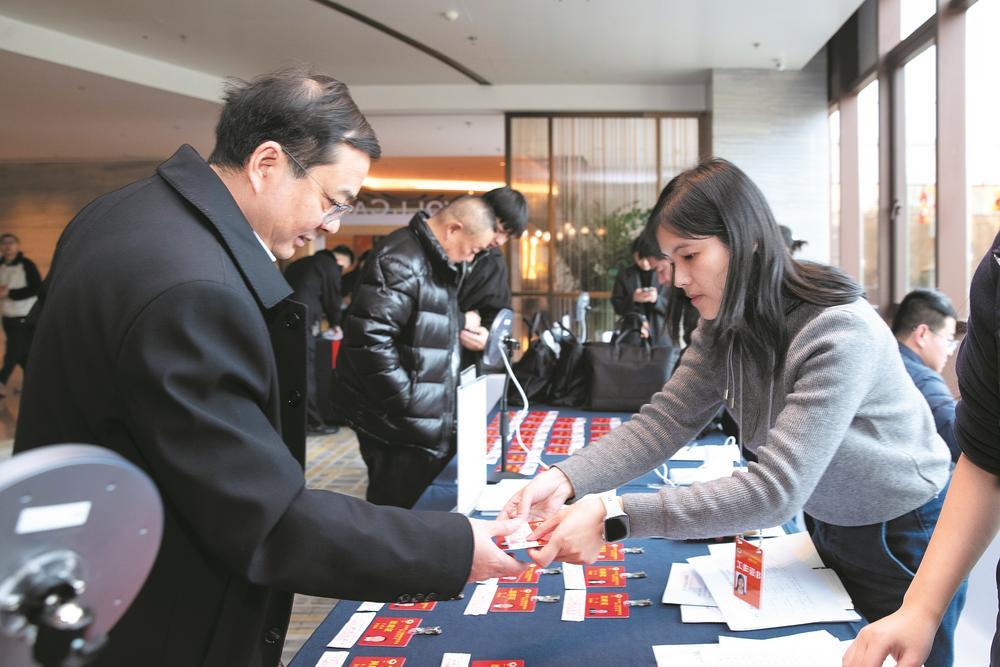
认真履职、建言献策。1月26日,出席市政协十六届四次会议的委员陆续抵达驻地报到,成都进入2026两会时间。 转自:成都日报锦观 建务实之言 献可行之策 出席市政协十六届四次会议的委员报到 出席市政协十六届四次会议的委员陆续抵达驻地报到。 "数字经济不是'选择题',而是传统产业提质增效的'必答题'。"市政协委员、成都市产业数字化促进会秘书长徐震长期聚焦产业数字化转型, 他带来的两项提案都与传统产业数字化升级息息相关。他表示,要明确传统产业数字化转型升级的清晰路径,避免企业"盲目转、不会转";更 要打通"科研端"与"产业端"的壁垒,让实验室里的人工智能技术真正落地到传统产业的质改体系中,让技术创新转化为实实在在的生产效能。 "'进解优促'像'精准手术刀',解决产业链各节点的具体难题;'立园满园'则像'生态培育师',搭建产业集聚平台,二者相辅相成,能有效推动 产业生态完善和产业链完整。"他建议,"十五五"期间,要持续深化这两项行动,针对不同产业的发展困境精准施策,让数字经济与实体经济 深度融合,推动产业在成都落地生根、集群发展,实现可持续增长。 聚焦文商旅体: 打造流量变现与城市品牌"金名片" 坐拥丰富的文旅资源, ...
筑梦星辰海 川跃新境
Si Chuan Ri Bao· 2026-01-26 20:52
Group 1: Core Technology Trends - The global technology wave is reshaping the economic landscape, with a shift from "what can be done" to "what should be done" in 2026, integrating social responsibility into technological development [2] - Artificial intelligence (AI) is the main driver of technological innovation, moving towards large-scale implementation and industrialization [2][3] - AI will transition from conceptual demonstrations to a phase of value realization, focusing on the integration of technology, industry, and governance [3] Group 2: Robotics and AI - Humanoid robots are entering a phase of large-scale trials, driven by breakthroughs in physical AI that allow robots to understand and interact with physical laws [4][5] - The development of humanoid robots will significantly change human-machine coexistence, requiring global collaboration and unified technical standards [5] Group 3: Commercial Space - The commercial space industry in China is poised for significant growth, transitioning from capability building to value creation, with a focus on reusable rockets and satellite networks [6][7] - 2026 is expected to be a pivotal year for the commercialization of space services, driven by advancements in satellite communication technology [7] Group 4: Future Transportation - Super high-speed rail, utilizing low vacuum tube technology, aims to achieve speeds over 1000 km/h, overcoming weather-related disruptions [8][9] - China is at the forefront of this technology, with significant engineering breakthroughs and ongoing trials [10] Group 5: Quantum Technology - Quantum technology is becoming a focal point for global research, with quantum error correction recognized as a key area for future advancements [11][12] - China is positioned in the leading tier of quantum communication and computing, with significant contributions expected from regions like Sichuan [12] Group 6: 6G Technology - The development of 6G technology is underway, promising speeds 10-100 times faster than 5G and enabling comprehensive coverage across air, land, and sea [13][14] - Sichuan is actively working on key technologies to accelerate the industrialization of 6G [15] Group 7: Controlled Nuclear Fusion - Research in controlled nuclear fusion is advancing towards engineering practice, with multiple countries exploring various technological routes [16][17] - China's strategic development in nuclear fusion is gaining momentum, supported by recent legislative frameworks [17] Group 8: Deep Space Exploration - Deep space exploration aims to expand human understanding of the universe, with significant global advancements in observational technology [18][19] - Sichuan is emerging as a key research hub for astronomy and deep space exploration, contributing to national strategic initiatives [19] Group 9: Brain-Computer Interfaces - Brain-computer interfaces are evolving to enhance human-machine interaction, with applications in healthcare and consumer technology [20][21] - Sichuan has developed a complete industry chain for brain-computer interfaces, with a market size of 1 billion yuan, entering a new phase of clinical application [22] Group 10: Biomedicine - The biomedicine sector is a critical area for innovation, integrating biotechnology with pharmaceuticals to drive high-quality development [23][24] - Sichuan is actively cultivating its biomedicine industry, focusing on various key and emerging sectors to enhance its competitive edge [24]

创新质量持续提升知识产权效益加速显现
Xin Lang Cai Jing· 2026-01-26 16:56
Core Insights - The report highlights significant advancements in China's intellectual property (IP) landscape, showcasing a robust increase in patents, trademarks, and geographical indications, indicating a strong commitment to building a knowledge-based economy [1][2]. Group 1: Patent and Trademark Statistics - A total of 972,000 invention patents, 1,461,000 utility model patents, and 666,000 design patents were authorized in the year [1]. - The number of registered trademarks reached 4,206,000, with 384,000 trademark review cases concluded and 112,000 opposition cases processed [1]. - The number of patent transfer and licensing registrations reached 697,000, marking a year-on-year increase of 13.7% [1]. Group 2: Innovation Quality and Regional Activity - The number of high-value invention patents increased by 2.2 percentage points compared to the overall growth rate, totaling 2,292,000 [2]. - The Yangtze River Delta, Beijing-Tianjin-Hebei, and Guangdong regions accounted for approximately two-thirds of the total effective invention patents in China, with effective registered trademarks exceeding half of the national total [2]. Group 3: Economic Impact and International Protection - The value added by patent-intensive industries surpassed 18 trillion yuan, increasing its share of GDP from 11.97% in 2020 to 13.38% in 2024 [3]. - China's brand value among the top 5,000 global brands reached $1.81 trillion, ranking second globally [3]. - The National Intellectual Property Administration (NIPA) is enhancing foreign IP protection, establishing 99 overseas IP dispute response platforms across 30 provinces, and providing over 4,800 consultations to businesses, recovering losses of 2.75 billion yuan [4][5].
超70亿“爆款”重现!市场风向变了
Zhong Guo Zheng Quan Bao· 2026-01-26 14:13
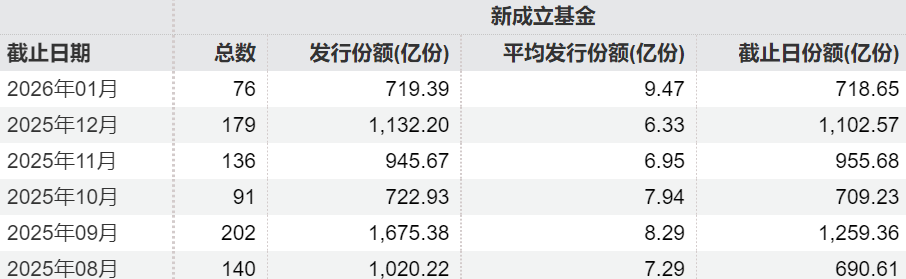
Group 1 - The core viewpoint of the articles indicates a significant rebound in the issuance of actively managed equity funds, highlighted by the launch of the Guangfa Research Smart A fund, which achieved an issuance of 7.221 billion shares, marking it as a "blockbuster product" [1][4] - As of January 25, 76 new funds have been established in 2026, with a total issuance of 71.939 billion shares, showing a recovery in the fund issuance market [2][3] - The average issuance of new funds in January 2026 reached 9.47 billion shares, significantly higher than the 6.33 billion shares in December 2025, indicating a notable improvement in market conditions [3] Group 2 - The issuance of actively managed equity funds is gaining momentum, with several funds exceeding 2 billion shares, including the E Fund Balanced Selection with 3.408 billion shares [5] - The upcoming issuance of 50 new funds before the Spring Festival suggests a balanced market between actively managed equity funds and passive index funds, with both types of funds having equal representation [5] - Institutions are cautiously optimistic about the equity market in 2026, with expectations of significant style and structural shifts, driven by positive policies and improving fundamentals [6]