
生态文明建设

Search documents
从休养生息到生生不息——长江禁渔五年观察
Xin Hua She· 2025-05-11 13:55
Core Points - The article highlights the significant achievements of the Yangtze River's ten-year fishing ban, showcasing a 24.7% decrease in fishing-related administrative cases and a 9.5% increase in resource quantity at monitoring points along the river [1] - The restoration of biodiversity, including the return of rare aquatic species like the Yangtze finless porpoise and the Chinese sturgeon, is emphasized as a positive outcome of the fishing ban [2][4] - The article discusses the ongoing ecological restoration efforts and the transformation of local economies as fishermen transition to alternative livelihoods [9][10] Summary by Sections Fishing Ban Achievements - The Yangtze River's fishing ban has led to a 24.7% reduction in fishing-related administrative cases and a 9.5% increase in resource quantity at monitoring points [1] - A total of 344 indigenous fish species have been monitored in the Yangtze River basin from 2021 to 2024, an increase of 36 species compared to the period before the ban [1] Biodiversity Restoration - The population of the Yangtze finless porpoise has increased, with 336 sightings recorded in a specific natural reserve, indicating a rise from approximately 62 individuals in 2022 [2] - The reappearance of the rare Chinese paddlefish, previously absent for over a decade, signifies the recovery of aquatic resources in the Yangtze River [3][4] Ecological Protection Efforts - The article outlines various initiatives to combat illegal fishing and enhance aquatic species protection, including the "Fishing Administration Sword" and "Safe Yangtze" campaigns [4] - The Chinese sturgeon release program has surpassed 1 million individuals, with about 110,000 juvenile fish successfully entering the ocean [4] Water Quality Improvement - The overall water quality of the Yangtze River has improved, with monitoring indicating that the water quality remains stable at Class II [7] - By the first quarter of 2025, 92.1% of major river sections are expected to meet good water quality standards, reflecting a 0.6 percentage point increase year-on-year [7] Economic Transition for Fishermen - The fishing ban has prompted over 145,000 fishermen to transition to alternative employment, with 220,000 eligible fishermen enrolled in basic pension insurance [10] - Local governments have provided agricultural skills training and support to ensure stable livelihoods for fishermen who have shifted to farming [10] Ongoing Challenges - Despite the progress, challenges remain in fully restoring the ecological system and addressing illegal fishing practices [11] - Continuous efforts are needed to ensure the stability of employment for former fishermen and to enhance support measures [11]
党建引领聚合力 生态护航促发展——宁夏生态环境系统全力找问题转作风抓落实促发展
Zhong Guo Huan Jing Bao· 2025-05-09 05:02
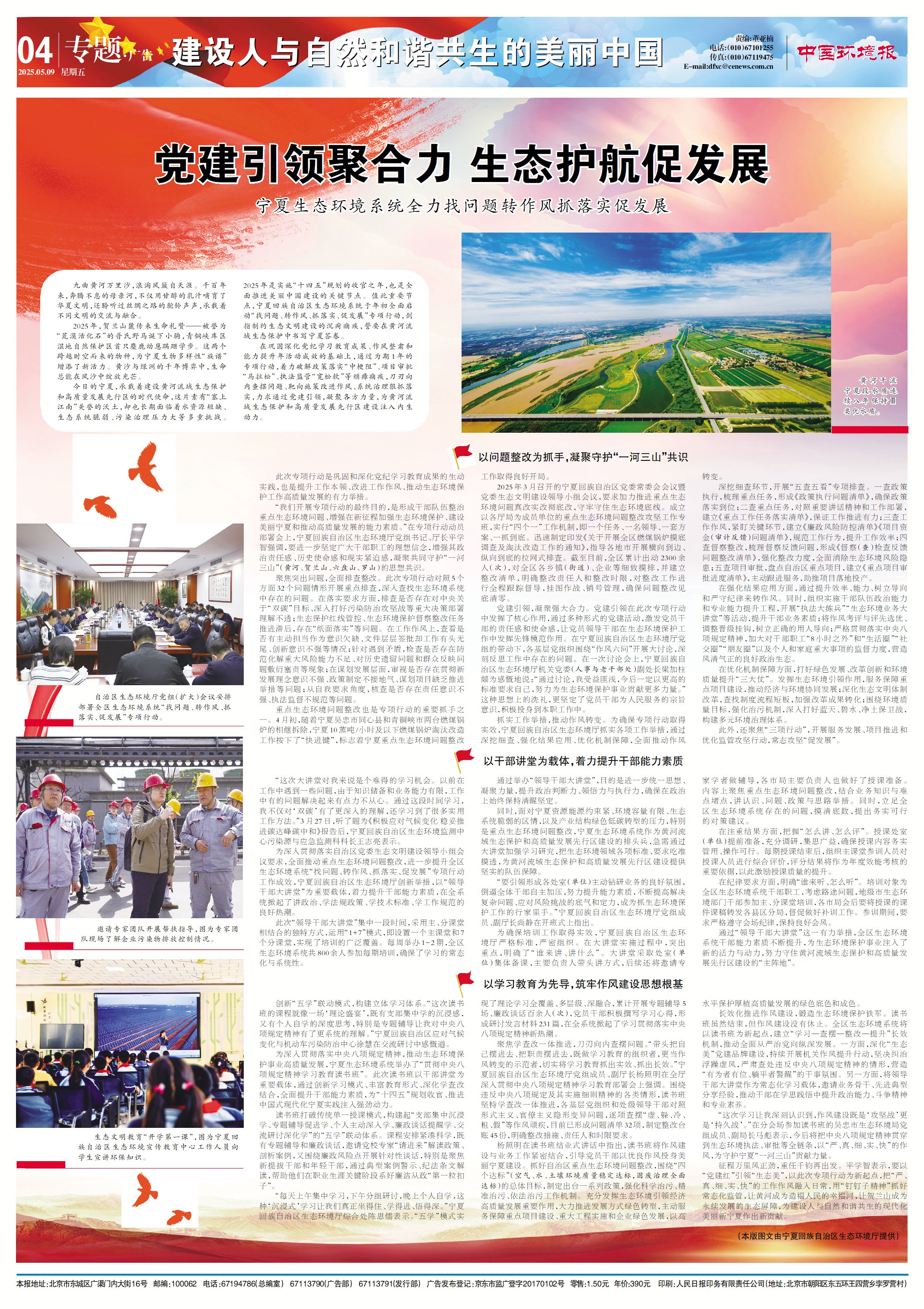
九曲黄河万里沙,浪淘风簸自天涯。千百年来,奔腾不息的母亲河,不仅用甘醇的乳汁哺育了华夏文明,还聆听过丝绸之路的驼铃声声,承载着不同文明的 交流与融合。 2025年,贺兰山麓传来生命礼赞——被誉为"荒漠活化石"的普氏野马诞下小驹,青铜峡库区湿地自然保护区首只麋鹿幼崽蹒跚学步。这两个跨越时空而来的 物种,为宁夏生物多样性"族谱"增添了新活力。黄沙与绿洲的千年博弈中,生命总能在风沙中绽放光芒。 今日的宁夏,承载着建设黄河流域生态保护和高质量发展先行区的时代使命,这片素有"塞上江南"美誉的沃土,却也长期面临着水资源短缺、生态系统脆 弱、污染治理压力大等多重挑战。2025年是实施"十四五"规划的收官之年,也是全面推进美丽中国建设的关键节点。值此重要节点,宁夏回族自治区生态环 境系统于年初全面启动"找问题、转作风、抓落实、促发展"专项行动,剑指制约生态文明建设的沉疴痼疾,誓要在黄河流域生态保护中书写宁夏答卷。 在巩固深化党纪学习教育成果、作风整肃和能力提升年活动成效的基础上,通过为期1年的专项行动,着力破解政策落实"中梗阻"、项目审批"马拉松"、执 法监管"宽松软"等顽瘴痼疾,刀刃向内查摆问题、靶向施策改进作风、系统治理 ...

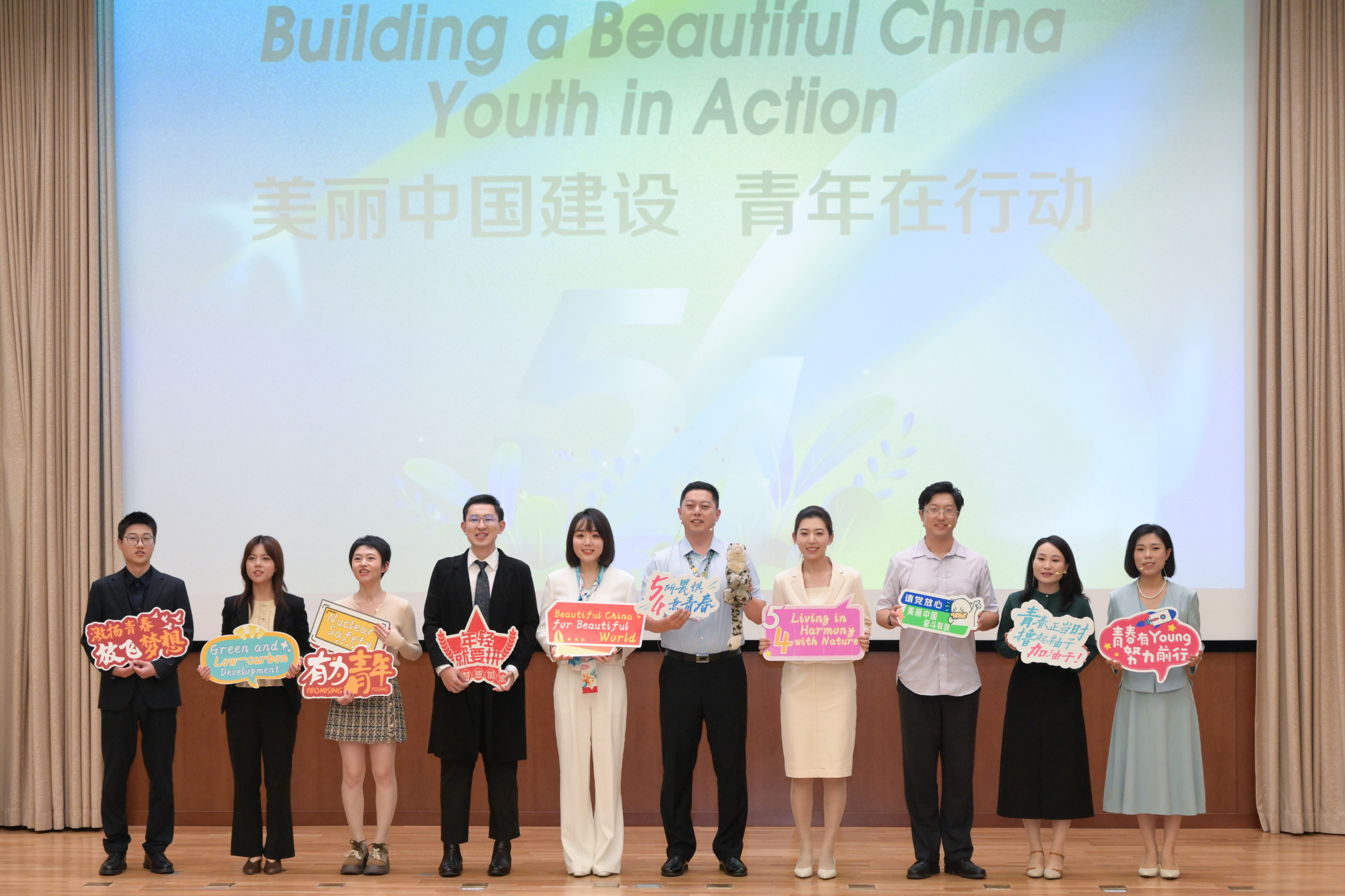
宏伟蓝图催人奋进 青春使命无上光荣——2025年生态环境部系统青年英文演讲决赛暨五四青年节纪念表彰活动侧记
Zhong Guo Huan Jing Bao· 2025-05-09 01:05
Core Viewpoint - The event highlighted the active participation of youth in promoting environmental protection and the construction of a "Beautiful China," showcasing their confidence and commitment to global environmental governance [1][6]. Group 1: Youth Engagement in Environmental Governance - Ten contestants presented compelling stories about "Beautiful China Construction," demonstrating their roles as green ambassadors [1]. - The event emphasized the importance of youth in international environmental negotiations, with participants sharing their experiences and challenges faced during global discussions [6][12]. - The speeches reflected a strong sense of responsibility among young representatives to ensure China's voice is heard in international climate discussions [12][15]. Group 2: Success Stories and Initiatives - Contestants shared personal stories that illustrated the practical aspects of environmental negotiations, emphasizing that skills are honed through real-world experiences rather than theoretical knowledge [15]. - The event showcased various initiatives, such as marine ecological governance and biodiversity protection, highlighting China's commitment to sustainable development [20][32]. - The narratives included successful projects like the "For Love Power Generation" initiative, which aims to provide solar energy to remote areas, demonstrating the intersection of environmental protection and social responsibility [32]. Group 3: Recognition of Youth Contributions - The event recognized outstanding youth representatives in various fields, including theoretical research, grassroots contributions, and teamwork, marking their evolution into a vital force in building a beautiful China [1][32]. - The speeches collectively illustrated the dedication of young professionals in tackling environmental challenges and their role in advancing ecological civilization [1][22].
为中国式现代化凝聚磅礴青春力量
Zhong Guo Qing Nian Bao· 2025-05-07 22:38
Group 1 - The core message emphasizes the importance of youth engagement in China's modernization efforts, highlighting the expectations set by President Xi Jinping for young people to take on responsibilities and contribute to national development [1][12][15] - The response from various youth leaders reflects a strong commitment to grassroots initiatives, with many expressing their intent to mobilize young people in rural areas and community service [2][4][10] - The call for unity among youth across different regions, including Hong Kong and Macau, is evident, with leaders stressing the need to foster a sense of national identity and responsibility among young people [12][15][16] Group 2 - Youth leaders in various sectors, including agriculture, education, and healthcare, are inspired to lead by example and encourage their peers to engage in volunteerism and community service [3][10][11] - The emphasis on innovation and technology is highlighted, with youth in scientific fields encouraged to contribute to national goals through research and development [8][9] - The importance of cultural and ideological education for youth is underscored, with leaders aiming to instill values that align with national interests and aspirations [11][15]
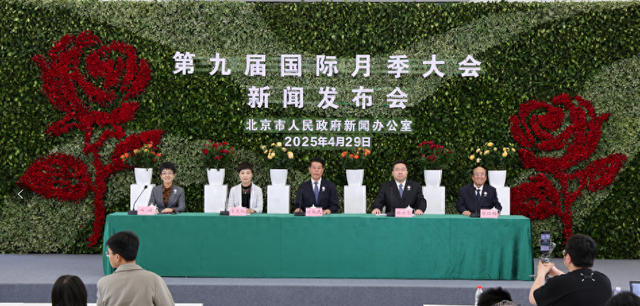
40年来首次落地中国,第九届国际月季大会即将在京举办
Huan Qiu Wang· 2025-05-02 06:00
Group 1: Conference Overview - The 9th International Rose Conference will be held in Beijing from May 10 to 15, 2025, marking the first time this event is hosted in China [3][4] - The conference is organized by multiple entities including the Beijing Municipal Government and the International Society for Horticultural Science, showcasing the global recognition of China's rose research and industry development [2][3] Group 2: Ecological and Industrial Significance - The conference will take place in the Mentougou District, an important ecological conservation area in Beijing, which has a forest coverage rate of 48.34% and a per capita park green space of 26.07 square meters [3][6] - The event is expected to enhance the ecological and industrial development of the region, aligning with Beijing's strategic positioning as an international innovation and consumption center [9][10] Group 3: Conference Themes and Activities - The theme of the conference is "Flowers Bloom in Beijing, Fragrance Promises Everlasting," emphasizing the integration of rose culture with modern technology and creative industries [4][5] - The conference will include an international academic meeting, the 12th China Rose Exhibition, and the 2025 Beijing Rose Cultural Festival, featuring various activities such as exhibitions and cultural events [5][6] Group 4: Rose Industry Development - The rose, known as the "Queen of Flowers," has significant ecological and economic benefits, with China being the largest producer and consumer of roses globally [6][7] - Beijing has a rich genetic resource for roses, with over 25,000 acres of rose planting area and more than 3,000 varieties, establishing a model for urban rose application [7][8] Group 5: Strategic Goals - The conference aims to serve national strategies by promoting China's rose industry on the global stage, facilitating international collaboration in horticulture [9][10] - It will also focus on the development of Mentougou as a model for post-disaster recovery and resilient urban construction, integrating ecological restoration with industrial growth [10]
赵乐际主持十四届全国人大常委会第十五次会议闭幕会并作讲话
Xin Hua She· 2025-04-30 08:40
Group 1 - The National People's Congress (NPC) Standing Committee has passed the Private Economy Promotion Law, which aims to promote the development of the private economy by ensuring equal treatment, fair competition, and protection of rights [2] - The law includes provisions on market access, resource guarantees, standardized operations, service support, and rights protection, contributing to the establishment of a high-level socialist market economy [2] - The NPC is also working on compiling an ecological environment code, which reflects the principles of ecological civilization and aims to ensure sustainable environmental development [2][3] Group 2 - The newly revised Infectious Disease Prevention Law provides a more comprehensive legal framework for enhancing public health risk management and disease prevention [3] - The NPC has conducted reviews of various legislative drafts, including the Atomic Energy Law and the Arbitration Law, emphasizing the importance of thorough research and improvement of these drafts [3] - The NPC is focused on deepening ecological civilization reforms and improving environmental quality, as well as enhancing supervision of state asset management [3][4]
生态环境法典将带来哪些改变?专家详解
Di Yi Cai Jing· 2025-04-29 03:02
Core Viewpoint - The compilation of the Ecological Environment Code is a significant legislative effort aimed at modernizing China's ecological environment legal system, integrating over 30 existing laws and numerous regulations into a cohesive legal framework [2][3]. Group 1: Legislative Framework - The Ecological Environment Code is positioned as a key legislative measure to fulfill constitutional tasks related to ecological civilization and national responsibilities [2]. - The code aims to systematically integrate over 30 existing ecological environment laws, more than 100 administrative regulations, and over 1,000 local regulations into a unified legal text [2][3]. - The compilation process is based on the achievements of ecological civilization legal practices since the 18th National Congress of the Communist Party of China [2]. Group 2: Content and Structure - The code will address various ecological elements such as air, water, and soil, promoting integrated protection and systematic governance [3]. - It will include general institutional norms for ecological environment, optimize pollution prevention regulations, and establish principles for green low-carbon development and climate change response [3]. - The code will maintain openness and compatibility by incorporating essential elements from existing laws related to natural resources and biodiversity [3]. Group 3: Impact on Legislation and Enforcement - The enactment of the Ecological Environment Code is expected to reduce the number of existing ecological environment laws, leading to the revision or repeal of certain administrative regulations [6]. - A unified legal basis will enhance the authority of ecological environment enforcement, reducing disputes arising from unclear or conflicting regulations [7]. - The code will promote systematic protection of the ecological environment, emphasizing the integrity and interconnectivity of ecosystems [7].
钟寰平:以法治之力推进生态文明建设
Zhong Guo Huan Jing Bao· 2025-04-29 01:14
Core Viewpoint - The draft of the "Ecological Environment Code of the People's Republic of China" was presented for the first review at the 15th meeting of the 14th National People's Congress Standing Committee, marking a significant step in the legal framework for ecological civilization and environmental protection in China [1][2]. Group 1: Legislative Framework - The Ecological Environment Code consists of five parts: General Principles, Pollution Prevention, Ecological Protection, Green Low-Carbon Development, and Legal Responsibilities, totaling 1188 articles [1]. - This code is the second law in China to be named a "code," following the Civil Code, and represents a major legal initiative by the central government to promote harmonious coexistence between humans and nature [1][2]. Group 2: Systematic Integration - The compilation of the Ecological Environment Code aims to address the fragmented nature of existing environmental laws, which have led to inconsistencies and inefficiencies in regulatory frameworks [2]. - The code will not only compile existing laws but also integrate and innovate the legal system to enhance its systematic, holistic, and timely nature, adapting to new challenges and requirements [2][3]. Group 3: Focus Areas - The code will encompass comprehensive laws related to ecological protection and pollution prevention, while also addressing critical areas of green low-carbon development and climate change [3]. - It aims to incorporate essential legal norms related to water basins, natural resources, biodiversity, and circular economy, ensuring the code remains open and compatible with future developments [3].
新华全媒+|以法治之力推进美丽中国建设——写在生态环境法典草案首次提请审议之际
Xin Hua She· 2025-04-28 00:53
新华社北京4月27日电 题:以法治之力推进美丽中国建设——写在生态环境法典草案首次提请审议之 际 新华社记者罗沙、高敬、魏弘毅 2025年4月27日上午,北京人民大会堂,全国人大常委会会议厅。 5编、1188条……《中华人民共和国生态环境法典(草案)》,这份承载着护航新时代美丽中国建设历 史使命的重要法典草案,提请十四届全国人大常委会第十五次会议首次审议。 法典长卷启,青山入画来。党的十八大以来,在以习近平同志为核心的党中央坚强领导下,我国生态环 境法律制度与时俱进、完善发展,生态文明建设成就举世瞩目。以习近平生态文明思想为"纲和魂",贯 彻习近平法治思想,生态环境法典编纂扎实推进,必将有力保障生态环境领域治理体系和治理能力现代 化,为中华民族永续发展筑牢更加坚实的法治根基。 奏响新时代生态环境立法更强音 生态兴则文明兴,生态衰则文明衰。生态文明建设是关系中华民族永续发展的根本大计,法律制度是守 护绿水青山的根基和力量。 习近平总书记明确强调,用最严格制度最严密法治保护生态环境,加快制度创新,强化制度执行,让制 度成为刚性的约束和不可触碰的高压线。 从1989年环境保护法通过,到新世纪颁布一系列环境保护法律、 ...
以毁林毁草开垦耕地要不得
Jing Ji Ri Bao· 2025-04-28 00:21
Group 1 - The core issue highlighted is the illegal occupation of forest, grassland, and wetland for agricultural expansion, which poses a threat to food security and ecological balance [2][3] - Since 2021, the total arable land in the country has increased by 17.58 million mu, achieving a net increase for three consecutive years, which is a significant accomplishment given the challenges of uneven distribution and low quality of arable land [2] - The government has implemented strict land protection policies to ensure food security while also emphasizing the importance of ecological civilization and sustainable development [2][3] Group 2 - The occurrence of illegal deforestation and grassland destruction is largely attributed to inadequate awareness and responsibility among local government officials regarding these issues [3] - There is a call for local governments to learn from past mistakes, enforce regulations, and enhance their overall perspective and systematic thinking to prevent simplistic and uniform approaches to governance [3] - The relationship between high-quality development and high-level security is emphasized, indicating that both must be managed in tandem for the overall benefit of society [2][3]