
共同富裕

Search documents
敢字当先 活力奔涌(前沿观察·挑大梁 看担当)
Ren Min Ri Bao· 2025-08-04 22:39
Core Viewpoint - The article emphasizes the proactive measures taken by local governments in Jiangsu Province to drive high-quality economic development, showcasing successful case studies and innovative practices in various industries, particularly in aerospace and semiconductor sectors [6][7][9]. Group 1: Economic Growth and Development - Jiangsu Province achieved a GDP growth rate of 5.7% in the first half of the year, driven by local government initiatives and a focus on high-quality development [6][7]. - The region is transforming its industrial landscape by investing in aerospace and semiconductor industries, with local leaders actively engaging in learning and collaboration to attract key enterprises [7][9]. Group 2: Innovation and Technology - The integration of technology and industry is a priority, with local officials working closely with enterprises to foster innovation and address technological challenges [9][11]. - Jiangsu is focusing on upgrading traditional industries while simultaneously developing new sectors, aiming to create 16 advanced manufacturing clusters and 50 key industrial chains [11][12]. Group 3: Collaborative Governance - The establishment of the Yangtze River Delta integrated development demonstration zone has led to streamlined project approvals and collaborative governance among Jiangsu, Shanghai, and Zhejiang [12][14]. - Local governments are adopting a unified approach to project management, enhancing efficiency and reducing bureaucratic hurdles [12][13]. Group 4: Market Environment and Support - Initiatives like the "Suqi Tong" platform in Suqian have improved the business environment by providing direct access to policies and funding for enterprises, significantly enhancing operational efficiency [15][17]. - The government is actively promoting a supportive ecosystem for businesses, including innovative solutions for financing and regulatory processes [15][16]. Group 5: Social Impact and Community Development - Local governments are addressing community needs by implementing policies that promote common prosperity, such as debt reduction for villages and enhancing public services [18][19]. - The focus on community engagement and support has led to improved living standards and economic opportunities for residents, demonstrating the link between governance and social welfare [18][19].

第一观察丨总书记要求认真研究吸纳“十五五”规划编制网民建言
Xin Hua She· 2025-08-04 14:24
Core Points - The article emphasizes the importance of public participation in the formulation of the "15th Five-Year Plan" through a network solicitation of opinions, which received over 3.113 million suggestions from citizens [4][5] - General Secretary Xi Jinping highlighted the need to integrate scientific, democratic, and legal decision-making processes, ensuring that public input is effectively incorporated into the planning [4][6] - The solicitation activity lasted for one month and included new themes such as "Artificial Intelligence+", "Cultural Heritage Preservation", and "Common Prosperity", reflecting a broad range of public concerns [6][7] Group 1 - The "15th Five-Year Plan" is crucial for China's modernization process, requiring adaptation to changing circumstances and better channels for public opinion [4][6] - The network solicitation activity is recognized as a vivid practice of whole-process people's democracy, with high participation and wide coverage [6][7] - Xi Jinping called for a scientific and long-term mechanism to ensure that public opinion collection is genuine and that suggestions are effectively implemented [5][6] Group 2 - The feedback from citizens included both macro-level strategic insights and micro-level practical concerns, demonstrating a blend of problem-oriented and solution-oriented thinking [6][7] - The article stresses the need for the government to maintain a people-centered approach, actively listening to public voices and gathering wisdom to drive modernization efforts [5][7] - The successful integration of public expectations with government initiatives is seen as essential for creating a new blueprint for development in the "15th Five-Year Plan" [7]
收入水平全国第三,浙江如何提振消费?|活力中国调研行
2 1 Shi Ji Jing Ji Bao Dao· 2025-08-04 08:05
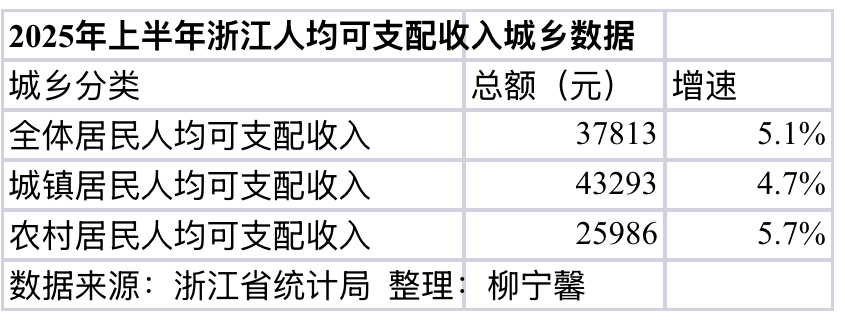
Core Viewpoint - The article emphasizes the importance of effectively releasing domestic demand potential in China, particularly through enhancing consumer spending and improving living standards, with a focus on Zhejiang province as a case study for successful implementation [1][5]. Group 1: Income Growth and Consumer Demand - In the first half of the year, the per capita disposable income of all residents in Zhejiang reached 37,813 yuan, a nominal increase of 5.1% year-on-year, ranking third nationally [2][3]. - Urban residents in Zhejiang had a per capita disposable income of 43,293 yuan, growing by 4.7%, while rural residents saw a higher growth rate of 5.7%, with their income reaching 25,986 yuan [2][3]. - The income disparity between urban and rural residents in Zhejiang is narrowing, with an income ratio of 1.67, indicating a reduction in consumer concerns and a stronger motivation for spending [2][5]. Group 2: Regional Economic Development - Zhejiang is recognized as the first province in China to establish a common prosperity demonstration zone, aiming to achieve common prosperity by 2035, with plans to reach income levels comparable to developed economies [5][6]. - The "Ten Million Project" aims to promote rural industrial integration and reduce development gaps between regions, while ensuring high-quality public services are shared [5][6]. Group 3: Innovative Consumption Scenarios - Zhejiang has launched a summer consumption promotion plan focusing on cultural tourism, sports events, night economy, and dining services, aiming to create distinctive consumption brands [8][9]. - The integration of various consumption scenarios, such as combining shopping with cultural and entertainment experiences, is a key focus for enhancing consumer engagement, particularly among younger demographics [8][9]. Group 4: Rural Revitalization and New Business Models - In rural areas, innovative business models are emerging, such as the transformation of old buildings into creative workshops and cafes, which have significantly boosted local income and tourism [9][10]. - The development of a "homestay + health + culture" industry chain in rural areas has led to a substantial increase in local employment and income, demonstrating the potential of rural tourism [10].
收入水平全国第三,浙江如何提振消费?
2 1 Shi Ji Jing Ji Bao Dao· 2025-08-04 08:02
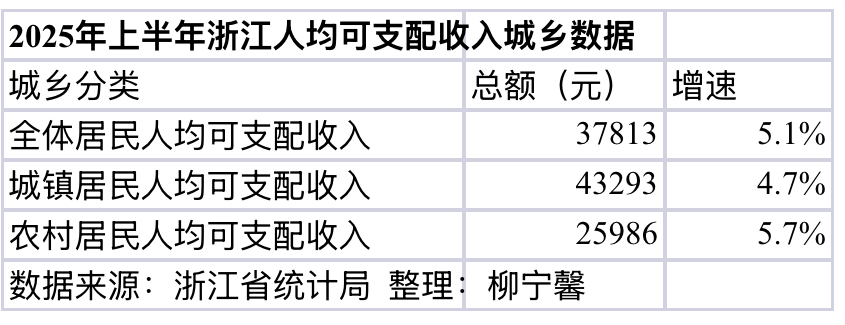
Core Insights - The central point of the articles emphasizes the importance of enhancing domestic demand in China, particularly through consumption initiatives, with a focus on the province of Zhejiang as a model for achieving common prosperity and reducing income disparities [1][5][6]. Economic Performance - In the first half of 2025, the per capita disposable income of all residents in Zhejiang reached 37,813 yuan, marking a nominal increase of 5.1% year-on-year, and a real growth of 5.3% after adjusting for price factors [3][4]. - Urban residents in Zhejiang had a per capita disposable income of 43,293 yuan, growing by 4.7%, while rural residents saw a higher growth rate of 5.7%, with their income reaching 25,986 yuan [3][4]. Income Disparity - The income gap between urban and rural residents in Zhejiang has narrowed, with an income ratio of 1.67, indicating a more equitable distribution of wealth [2][5]. - Specific cities like Huzhou and Shaoxing reported lower income ratios of 1.48 and 1.64, respectively, which are significantly better than the national average [2]. Consumption Trends - Zhejiang is actively cultivating new consumption sectors, including cultural tourism and sports economy, and has launched initiatives like nighttime economy to stimulate consumer spending [2][8]. - The province's focus on innovative consumption scenarios, such as transforming industrial sites into parks and marketplaces, reflects a shift towards experiential and integrated consumption [7][8]. Rural Development - The growth of rural residents' income is attributed to various factors, including increased wages and entrepreneurial activities, with some areas reporting significant income growth from creative business models [5][9]. - Initiatives in rural areas, such as the development of tourism and local businesses, have led to substantial increases in both collective and individual incomes, showcasing a successful model for rural revitalization [9][10]. Policy Initiatives - Zhejiang has set ambitious goals for achieving common prosperity by 2035, aiming for per capita GDP and income levels comparable to developed economies [5][6]. - The "Ten Thousand Projects" initiative aims to integrate rural industries and improve public services, addressing regional disparities and enhancing overall economic development [5][6].
2025年第二期“政协杭商荟”活动举行
Hang Zhou Ri Bao· 2025-08-04 03:10
Core Insights - The event focused on soliciting suggestions for high-quality economic development in Hangzhou during the "15th Five-Year Plan" period [1][2] - The discussions highlighted the importance of technology innovation, financial support, and the role of private capital in venture investment [1][2] Group 1: Economic Development Strategies - Nine representatives provided suggestions on accelerating the transformation of technological innovation results and enhancing financial support in the tech sector [1] - Emphasis was placed on encouraging private capital participation in venture investments and accelerating the integration of artificial intelligence across various industries [1] Group 2: Talent and Industry Development - Recommendations included strengthening talent cultivation and promoting the development of cultural and creative industries, as well as modern agriculture [1] - The need for a resilient smart city infrastructure and the promotion of common prosperity were also discussed [1] Group 3: Government and Business Collaboration - The city government aims to incorporate the insights from entrepreneurs into the "15th Five-Year Plan" to create a better business environment and innovation ecosystem [2] - The event underscored the importance of collaboration between the government and businesses to drive high-quality development and innovation [2]
攻坚奋战担使命 创新拓局谱新篇
Hang Zhou Ri Bao· 2025-08-04 03:10
关山初度尘未洗,策马扬鞭再奋蹄。 7月29日,市委十三届九次全体(扩大)会议举行,发出了进一步动员全市上下干在实处、走在前 列、勇立潮头,出色完成年度各项目标任务,坚决打好"十四五"收官战,奋力推动高质量发展建设共同 富裕示范区城市范例取得明显实质性进展,为加快建设世界一流的社会主义现代化国际大都市、努力成 为中国式现代化的城市范例而不懈奋斗的号召。 锚定航向,聚力前行。全会精神在我市干部群众中引发强烈反响,大家纷纷表示,将把"干在实 处"的韧劲、"走在前列"的闯劲、"勇立潮头"的干劲熔铸于岗位实践,在建设更高水平创新活力之城、 奋力打造高质量发展建设共同富裕示范区城市范例中出实招、见真章,以点滴之力汇聚成加快建设世界 一流社会主义现代化国际大都市的磅礴动能。 以创新推动新质生产力加快发展 创新是杭州发展的鲜明标识。本次全会审议通过了《中共杭州市委关于加快建设更高水平创新活力 之城因地制宜发展新质生产力的决定》。 "杭州在这样的时间节点,对建设更高水平创新活力之城进行再动员再部署,是有深厚的基础和底 气的。"市社科联(院)经济研究所所长周旭霞认为。杭州的创新版图从未止步于单一领域,而是在多 元赛道上持续拓展深 ...
市政府召开第八次全体会议
Hang Zhou Ri Bao· 2025-08-04 02:58
会议还专门邀请了部分市人大代表、市政协委员、党代表、市民代表、市政府参事代表列席会议。 在充分肯定上半年成绩后,姚高员指出,做好下半年工作,重点在十方面发力:着力提振市场信 心,持续优化营商环境,健全涉企问题快速响应闭环解决机制,支持民营经济高质量发展,为经济稳进 向好创造良好氛围。着力推动科技创新,加快建设人工智能创新高地,统筹推进教科人一体改革,提升 科创平台能级,加大科技企业培育力度,打造更高水平创新活力之城。着力拓市场稳外贸,壮大外贸新 增长点,推动内外贸一体化,打好外经贸高质量发展攻坚战。着力强化招引和项目推进,突出抓好产业 项目招商引资,激活民间投资活力,全力扩大有效益的投资。着力激发消费需求,积极培育服务消费新 增长点,充分发挥"演赛展商旅"叠加效应,加快消费转型升级。着力稳住基本盘,扎实推动制造业提质 升级、智改数转网联、工贸联动发展,扎实做好能源保供稳价工作,巩固工业回升向好态势。着力提质 增效,加快生产性服务业发展,推动平台经济高质量发展,促进房地产市场平稳健康发展,推进文化产 业创新发展,更好发挥服务业压舱石作用。着力深化改革,推动各项重大任务落地见效。着力除险保 安,实现高质量发展与高 ...
许昆林在乡村振兴联系点调研时强调注重联农带农 激发动力活力 走好共同富裕的乡村振兴道路
Xin Hua Ri Bao· 2025-08-03 23:34
Core Points - The provincial governor emphasizes the importance of rural revitalization and increasing farmers' income as central tasks in agricultural work [1][2] - The new vegetable greenhouse project in the community is expected to generate an income of 300,000 yuan for the community and provide job opportunities for over 60 local villagers [1] - There is a focus on developing green and specialty agricultural products, fostering new industries and business models in rural areas [1][2] Group 1 - The governor highlights the need for practical measures to promote income growth for farmers and strengthen the county economy [2] - There is an emphasis on integrating the primary, secondary, and tertiary industries to support employment-generating industries [2] - The governor calls for improved rural infrastructure and better resource allocation to enhance living conditions in rural areas [2] Group 2 - The governor encourages the cultivation of cultural and tourism industries leveraging local natural resources and historical significance [2] - There is a commitment to respect grassroots innovation and actively involve local communities in the reform process [2] - The governor stresses the importance of a collaborative mechanism between enterprises, cooperatives, and farmers to ensure income generation [1]
注重联农带农 激发动力活力 走好共同富裕的乡村振兴道路
Xin Hua Ri Bao· 2025-08-03 22:19
Group 1 - The core viewpoint emphasizes the importance of rural revitalization and increasing farmers' income as central tasks in agricultural work, aligning with Xi Jinping's important speeches on "three rural issues" [1][2] - The newly established vegetable greenhouse in the community is expected to directly generate an income of 300,000 yuan for the community and provide job opportunities for over 60 local villagers, highlighting the focus on developing profitable industries [1] - The government aims to enhance the integration of primary, secondary, and tertiary industries to support the growth of employment-intensive industries, thereby increasing farmers' income and solidifying the material foundation for common prosperity [2] Group 2 - There is a strong emphasis on improving rural infrastructure and ensuring that resources and services are directed towards rural areas, which includes enhancing housing, water supply, electricity, gas, and sewage treatment facilities [2] - The government plans to leverage natural resources and cultural heritage to develop the cultural tourism industry, aiming to host events that showcase local characteristics and promote sustainable development [2]
4年200亿人次报销,未来五年全民医保如何升级|“十四五”规划收官
Di Yi Cai Jing· 2025-08-03 12:32
Group 1 - The core viewpoint emphasizes the dual role of medical insurance in promoting common prosperity and providing institutional support for the development of new productive forces during the "15th Five-Year Plan" period [1][9] - The national medical insurance coverage reached 1.327 billion people, with a stable basic medical insurance participation rate of around 95% during the "14th Five-Year Plan" period, benefiting nearly 20 billion medical reimbursements [2][9] - The government aims to balance fairness and efficiency in medical insurance development, adapting to high-quality development needs through institutional innovation [1][2] Group 2 - The per capita financial subsidy for residents' insurance contributions increased from 490 yuan in 2018 to 670 yuan in 2024, with rural low-income and poverty alleviation populations maintaining a participation rate of over 99% [2] - The total medical insurance expenditure reached 12.13 trillion yuan during the "14th Five-Year Plan," with an average annual growth rate of 9.1% [9] - The medical insurance fund's expenditure on newly negotiated drugs increased significantly, with 2024 spending being 3.9 times that of 2020, reflecting a 40% annual growth rate [9] Group 3 - The number of designated medical institutions for medical insurance is expected to reach 1.1 million by June 2025, with cross-provincial direct settlement for outpatient chronic diseases expanding to 10 types [3] - Approximately 200 million urban employees are still not covered by basic medical insurance, highlighting a gap in coverage for flexible employment [3][4] - Local medical insurance bureaus are exploring pathways for new employment forms to participate in basic medical insurance, with various strategies being implemented [4] Group 4 - The medical insurance fund's total expenses for employees and residents are projected to grow at a slower rate, with 2024 medical expenses for employee insurance at approximately 2.06 trillion yuan, a 3.6% increase from the previous year [7] - The implementation of a multi-tiered payment system for major diseases is necessary to reduce the high personal payment ratio, which can lead to financial hardship for families [8] - The focus on long-term care insurance is expected to stabilize funding for related industries, with over 50% growth in service institutions and personnel during the "14th Five-Year Plan" [11]