
产学研协同

Search documents
身家超450亿元!陕西富豪夫妇的“流量”生意经
21世纪经济报道· 2025-05-23 00:02
Core Viewpoint - The article discusses the rise of Fan Daidi and Yan Jianya, the founders of Juzhi Biotechnology, who recently became the richest couple in Shaanxi with a net worth exceeding 450 billion yuan, highlighting their journey from academia to entrepreneurship and the commercialization of their scientific research [1][2]. Group 1: Background and Early Career - Fan Daidi, born in 1966, comes from an ordinary family in Weinan, Shaanxi, and became China's first female PhD in biochemical engineering after studying at Northwest University and East China University of Science and Technology [2]. - After returning from a visit to MIT in 2000, Fan led a research team to develop human-derived collagen, which garnered significant academic recognition [2][3]. - Yan Jianya left the academic system in 2000 to co-found Xi'an Juzhi Biotechnology with Fan, starting from a small office and focusing on the commercialization of their research [2][3]. Group 2: Business Development and Challenges - Despite holding core technology, the couple faced challenges in converting their research into marketable products, relying on personal savings during the initial years [3]. - Yan Jianya pivoted to the military sector in 2003, leveraging his connections to attract state and private capital, which alleviated financial pressures on their research [3][4]. - Fan Daidi continued to focus on technological breakthroughs, leading to the establishment of a research center and the completion of a factory in 2005 [3][4]. Group 3: Commercialization and Growth - The couple's business model combined scientific expertise with commercial acumen, leading to the launch of their first commercial brand, Keli Jin, in 2009 [5][6]. - They formed strategic partnerships, notably with Wanse City, which significantly increased their market reach despite later controversies surrounding the partner's business practices [6][7]. - The establishment of Xi'an Maker Village allowed them to expand their distribution network, contributing significantly to Juzhi's revenue [6][7]. Group 4: IPO and Financial Performance - Juzhi Biotechnology went public in 2022, becoming the first Hong Kong-listed company focused on recombinant collagen, with a revenue growth of nearly five times from 2019 to 2024 [12]. - The company reported a revenue of 55.38 billion yuan in 2024, with a compound annual growth rate of 42% [12]. - Despite high revenue growth, concerns arose regarding governance, reliance on a single brand, and increasing sales expenses, which outpaced revenue growth [13]. Group 5: Market Position and Future Outlook - Juzhi holds the top position in the collagen protein skincare market and ranks second in the medical dressing market with a 9% market share [9]. - The company has attracted significant investment from prominent firms, indicating strong market confidence, with a pre-IPO valuation exceeding 19.3 billion yuan [11]. - The transition of leadership to the next generation has raised questions about the sustainability of the business model and governance structure [12][13].


从科学家到女首富再到副校长 陕西富豪夫妇的“流量”生意经
2 1 Shi Ji Jing Ji Bao Dao· 2025-05-22 10:53
Core Viewpoint - The article discusses the rise of Fan Daidi and Yan Jianya, founders of Juzhi Biotechnology, who recently became the richest couple in Shaanxi with a stock value exceeding 45 billion yuan, highlighting their journey from academia to entrepreneurship and the challenges they faced in commercializing their scientific research [2][19]. Group 1: Background and Early Career - Fan Daidi, born in 1966, comes from an ordinary family in Weinan, Shaanxi, and became China's first female PhD in biochemical engineering after studying at Northwest University and East China University of Science and Technology [3]. - After a research visit to MIT in 2000, Fan returned to lead a team at Northwest University to develop human-derived collagen, marking the beginning of her entrepreneurial journey [4]. Group 2: Formation of Juzhi Biotechnology - In 2000, Yan Jianya left academia to co-found Juzhi Biotechnology with Fan, combining her technical expertise with his entrepreneurial spirit [5]. - The couple faced significant challenges in the early years, relying on personal savings to fund the company as they struggled to transition from small-scale to industrial production [6]. Group 3: Business Development and Growth - Yan Jianya's strategic move to enter the military industry in 2003 helped alleviate financial pressures and opened doors for mixed-ownership enterprises [7][8]. - By 2009, Juzhi Biotechnology began to gain traction, launching its first commercial brand, Keli Jin, and forming partnerships that significantly increased its market presence [9][10]. Group 4: Financial Performance and Market Position - Juzhi Biotechnology reported revenues exceeding 3.7 billion yuan in the last three years, with a gross margin of 87.2% [15]. - The company’s IPO valuation exceeded 19.3 billion yuan, attracting investments from notable firms, indicating strong market confidence [16][17]. Group 5: Recent Developments and Challenges - In 2022, Juzhi Biotechnology became the first Hong Kong-listed company in the collagen industry, with revenues projected to grow from 9.57 billion yuan in 2019 to 55.38 billion yuan by 2024, reflecting a compound annual growth rate of 42% [18]. - However, the company faces challenges such as high sales expenses, reliance on a single brand, and governance issues following the transition of leadership to the next generation [19][20].
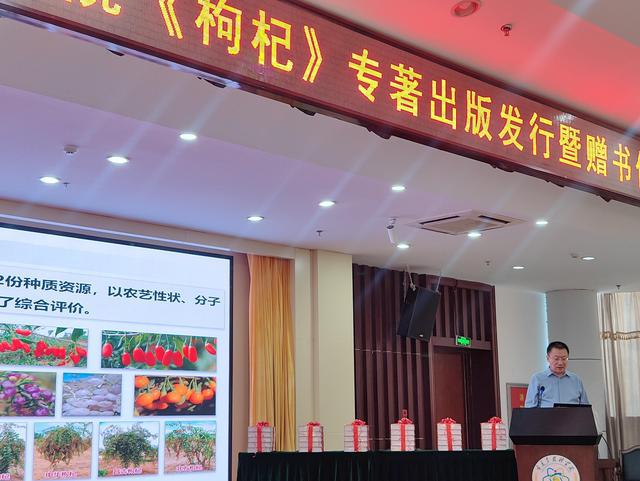
宁夏出版《枸杞》赋能科研产业升级
Huan Qiu Wang Zi Xun· 2025-05-19 09:20
Core Insights - Ningxia is a leading region in the research and marketing of goji berries, aiming for high-quality industrial development through the publication of a dedicated book on goji berries [1][3] - The goji berry industry in Ningxia has evolved from a simple dried fruit to a variety of deep-processed products, driven by technological advancements and increasing health demands [1] - Despite progress, the industry faces challenges such as low adaptability of cultivation techniques, low deep processing conversion rates, and insufficient knowledge among technical personnel [1][3] Summary by Sections - **Publication of Goji Berry Book**: The book titled "Goji Berry" was published by the Ningxia Academy of Agricultural and Forestry Sciences, involving over 30 researchers and industry experts, covering the history, current status, research achievements, cultivation techniques, and deep processing results of goji berries [3] - **Content and Structure of the Book**: The book consists of 17 chapters and approximately 1 million words, detailing various aspects of goji berries, including origin, classification, genomics, breeding, growth patterns, and pest control [3] - **Impact on Industry and Research**: The publication is seen as a significant technological achievement for the goji berry industry, aiming to enhance the connection between basic research and industrial application, and to promote educational practices, research innovation, and talent cultivation [3][4] - **Collaboration and Resource Integration**: The publication serves as a catalyst for strengthening collaboration between academia and industry, with an emphasis on converting research outcomes into practical applications [4]
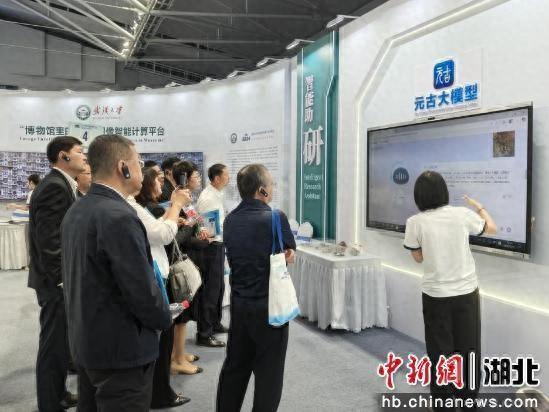
中国地质大学(武汉):数智为翼 探索智慧教育新模式
Zhong Guo Xin Wen Wang· 2025-05-16 03:28
Group 1 - The core theme of the 2025 World Digital Education Conference is "Education Development and Transformation: In the Intelligent Era," showcasing the integration of AI and earth sciences through the "Yuan Ancient Model" developed by China University of Geosciences (Wuhan) and iFLYTEK [1][3] - The Yuan Ancient Model features multiple intelligent tools, including a fossil specimen recognition assistant, geological literature data mining tool, and paleontology knowledge Q&A platform, aimed at creating a socially impactful platform for earth science education and research [3][5] - The "Smart Learning at Geosciences" initiative, launched in collaboration with iFLYTEK, aims to build a comprehensive digital teaching system that addresses challenges in traditional education, such as resource silos and homogenized teaching [5][8] Group 2 - The AI-driven supervisory system at China University of Geosciences (Wuhan) aims to enhance teaching quality evaluation by establishing a multi-dimensional evaluation mechanism that combines online and offline assessments [8] - The university has developed a digitalized system that integrates research, teaching, and evaluation, creating a new model of smart education that leverages AI technology for improved educational outcomes [7][8] - Future collaborations between iFLYTEK and the university will focus on deepening digital integration and exploring cross-domain innovations to lead high-quality development in higher education [8]

方大集团股份有限公司2025年第一季度报告
Shang Hai Zheng Quan Bao· 2025-04-21 20:39
Core Viewpoint - The company reported a revenue of 4,424.22 million yuan for 2024, with a net profit of 144.81 million yuan, indicating a decline in net profit by 46.91% compared to the previous year due to decreased gross margins and delayed project settlements [3][22][32]. Company Overview - The company specializes in high-end smart curtain wall systems, new materials, intelligent screen door systems for rail transit, and commercial management services, with its products recognized as industry benchmarks [2][3]. - The company has established itself as a leader in smart manufacturing and AI integration, enhancing operational efficiency and product quality through digital transformation initiatives [5][6]. Financial Performance - The company achieved a total revenue of 4,424.22 million yuan, with a net profit of 144.81 million yuan, and a significant operating cash flow of 270.89 million yuan [3][32]. - The order reserve at the end of the reporting period was 828.74 million yuan, which is 1.87 times the expected revenue for 2024, indicating strong future growth potential [3]. Business Segments Smart Curtain Wall Systems and New Materials - The revenue from the smart curtain wall and materials segment was 3,555.99 million yuan, reflecting a 2.27% increase year-on-year [6]. - The company has implemented a "5G + Smart Factory" strategy, enhancing production efficiency and achieving industry-leading standards in digital management [5][6]. Rail Transit Intelligent Screen Door Systems - The revenue from this segment was 612.82 million yuan, with a year-on-year growth of 9.74%, and a significant portion of revenue coming from overseas markets [14]. - The company has established a strong presence in international markets, particularly in countries along the Belt and Road Initiative, enhancing its competitive edge [13][14]. New Energy Sector - The company is actively involved in photovoltaic building integration (BIPV) and distributed solar power stations, contributing to national carbon reduction goals [18][19]. - The company has successfully implemented several BIPV projects, showcasing its commitment to sustainable development [18]. Commercial Management and Services - The company maintains a high occupancy rate in its properties, with a sales clearance rate of 98.84% for its Shenzhen project [20]. - The company is leveraging AI technology to enhance property management efficiency and customer service [21]. Research and Development - The company invested 171.03 million yuan in R&D, accounting for 3.87% of its revenue, and holds 671 patents related to smart curtain wall systems and new materials [10]. - The company has established partnerships with academic institutions to drive innovation and has launched several green products in response to national energy-saving policies [8][10].
