
代币化

Search documents
Robinhood 25Q3财报电话会议实录全文
美股IPO· 2025-11-06 01:13
Core Insights - Robinhood achieved strong profit growth in Q3 2025, with revenue doubling year-over-year to nearly $1.3 billion, marking a historic high [1][10] - The company reported net deposits exceeding $20 billion in Q3, surpassing last year's total record [1][11] - Key areas of focus include active traders, wallet share, and a global financial ecosystem, all of which saw rapid product iterations [1][9] Active Traders - Robinhood recorded record trading volumes in stocks and options, launching new products such as short selling and AI-driven custom indicators [1][7] - The contract volume in the prediction market reached 2.3 billion in Q3, with October's volume exceeding the total for Q3 [1][7] - The company aims to make active traders feel disadvantaged if they do not trade on Robinhood [5][9] Wallet Share - Customer assets surpassed $330 billion, benefiting from a generational wealth transfer of $120 trillion [8][9] - Robinhood Gold subscription users reached 3.9 million, a year-over-year increase of over 75% [1][11] - The early promotion of Robinhood Banking is accelerating, with over 500,000 Gold Card holders [1][8] Global Financial Ecosystem - The company aims for over half of its revenue to come from outside the U.S. within the next decade [2][9] - Bitstamp, as the first scaled institutional business, saw trading volume increase by over 60% quarter-over-quarter [2][9] - Robinhood Ventures was launched to provide non-accredited retail investors with access to private company investment opportunities [2][9] Financial Performance - The company reported a 65% revenue growth year-to-date and a 150% increase in earnings per share [10][11] - Adjusted EBITDA margin reached 75%, reflecting strong cost control [10][11] - The third quarter saw significant contributions from newer products like prediction markets and Bitstamp, both achieving annualized revenues exceeding $100 million [10][11] Leadership Transition - CFO Jason Warnick announced his retirement, with Shiv Verma set to succeed him [2][14] - The company emphasizes maintaining a lean and disciplined culture while reinvesting in growth areas [2][17]



OSL集团(00863)董事会主席李金鸿:转折点的抉择,共建数字资产与实体经济的新均衡
智通财经网· 2025-11-04 06:32
Core Viewpoint - The digital asset industry is transitioning from the "speculative hype 1.0 era" to the "utility-driven 2.0 era," emphasizing the need for a compliant and trustworthy "Financial Internet" to integrate digital assets with the real economy [1][13]. Industry Insights - The Finternet 2025 - Asia Digital Finance Summit was held in Hong Kong, highlighting the city's role as a bridge between traditional finance and decentralized digital communities [4][17]. - The total market value of crypto assets has surpassed $3.5 trillion, with stablecoins reaching an unprecedented market cap of over $230 billion [4]. - The emergence of blockchain technology is reshaping the economic ecosystem, leading to new business models and innovations [5]. Market Dynamics - The tokenization market is projected to grow from billions to trillions in the next decade, reflecting a significant shift in how value is defined and exchanged [5]. - The volatility in the cryptocurrency market serves as a reminder of the challenges faced during this transition, marking a critical point in the industry's evolution [8][10]. Regulatory and Compliance Focus - The need for a balanced approach between innovation and regulation is emphasized, with a call for constructive global dialogue among regulators, entrepreneurs, and financial institutions [15]. - The potential for stablecoin payments is highlighted, with a growth rate nearly ten times that of traditional payment networks, particularly in B2B transactions [16]. Future Outlook - The future of the "Financial Internet" is not predetermined; it requires collective effort and vision from industry participants to shape its development [18][19]. - The summit serves as a platform for discussion and idea generation, aiming to build a credible and responsible "Finternet" [20].
香港将推出金融科技2030策略,探索常规金融中的代币化
Huan Qiu Wang· 2025-11-04 01:04
Group 1 - The core viewpoint is that Hong Kong's fintech industry is projected to exceed $600 billion in total revenue by 2032, with an annual growth rate of over 28% [1] - The Hong Kong government plans to relax restrictions to encourage more investors in the fintech sector and is exploring tokenization in conventional finance [1] - The Hong Kong Monetary Authority (HKMA) is set to launch a fintech strategy focusing on four strategic pillars: data, artificial intelligence, resilience, and tokenization [1] Group 2 - Hong Kong regulatory authorities aim to expedite the release of consultation summaries for "digital asset trading licenses" and "custody licenses" in the coming months [4] - The HKMA expects to announce the first batch of stablecoin issuer licenses by early next year [4] - The next phase for Hong Kong regulators includes considering allowing licensed cryptocurrency brokers to connect with global liquidity pools [4]
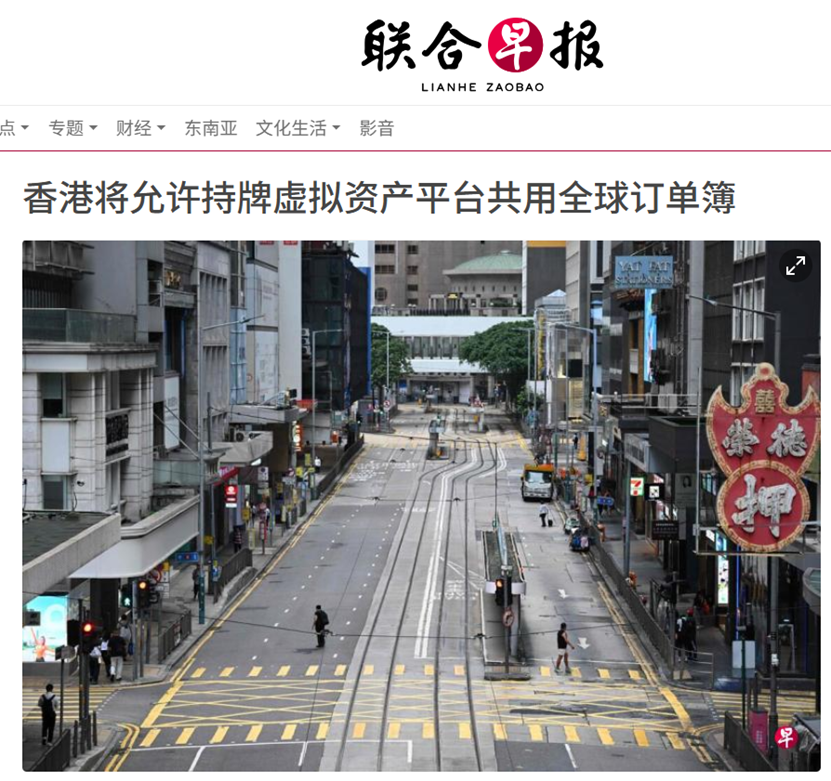
香港多部门出台文件巩固国际金融中心地位
Zheng Quan Shi Bao· 2025-11-03 17:44
Core Insights - The "Hong Kong FinTech Week × StartmeupHK Festival 2025" opened on November 3, featuring over 37,000 executives from more than 100 economies, 800 speakers, and 700 exhibitors, aimed at exploring cutting-edge technology trends and fostering innovation and business development opportunities [1] Group 1: Government Initiatives - Hong Kong's Chief Executive, John Lee, announced measures to solidify Hong Kong's status as an international financial center, including support for mainland tech companies to raise funds in Hong Kong and encouraging overseas companies to list [2] - The Hong Kong Monetary Authority (HKMA) and the Securities and Futures Commission (SFC) introduced multiple new policies to enhance Hong Kong's financial center position [1][2] Group 2: Financial Technology Growth - There are currently over 1,200 fintech companies in Hong Kong, a 10% increase from last year, with projected total revenue for the fintech sector expected to exceed $600 billion by 2032, growing at an annual rate of over 28% [2] - The HKMA's "FinTech 2030" vision aims to establish Hong Kong as a robust, resilient, and forward-looking international fintech hub, focusing on four key areas and over 40 specific projects [4][5] Group 3: Blockchain and AI Integration - The government emphasizes blockchain and artificial intelligence (AI) as key technologies in fintech, with 75% of financial institutions currently adopting or trialing generative AI, aiming to increase this to over 87% in the next 3 to 5 years [2] - Efforts are underway to promote seamless cross-border payments between Hong Kong and mainland China, enhancing the credit system and payment convenience in the Greater Bay Area [3] Group 4: Regulatory Developments - The SFC released new guidelines for licensed virtual asset trading platforms, focusing on liquidity sharing and expanding product offerings, allowing platforms to share global order books and sell virtual assets with less than 12 months of trading history [6][7] - The new policies aim to strengthen Hong Kong's strategic position as a global digital asset trading hub while enhancing investor protection and market regulation [7]
Robinhood's CIO Steph Guild on Investing, Tokenization & Prediction Markets
Youtube· 2025-11-03 15:10
Core Insights - Robinhood is evolving from a trading platform to a comprehensive investing and wealth management business, now offering retirement accounts and managed portfolios [1][6] - The company aims to engage its user base, particularly those who started investing for the first time, by providing tools and advice for long-term financial growth [1][2] - Robinhood Strategies is designed to offer a more personalized wealth management experience, targeting users with a minimum investment of $500, compared to the $25 million minimum at traditional private banks [1][3] User Engagement and Demographics - The average age of Robinhood users is around 34 years, with a user base that is predominantly male, approximately two-thirds [2][3] - Users are more open to investing in secular themes and emerging assets like cryptocurrencies compared to older generations [2][3] - The company emphasizes the importance of user engagement, ensuring clients feel connected to their investments rather than simply handing them over to advisors [2][3] Product Offerings and Innovations - Robinhood has launched tokenized assets in Europe, allowing users to trade digital versions of stocks and ETFs, with plans for further international expansion [7][8] - The company is exploring prediction markets, which allow users to make predictions on various economic events, providing a new avenue for engagement and potential hedging strategies [16][18] - The platform actively manages portfolios and communicates changes to users, reinforcing the importance of understanding investment decisions [1][3] Market Outlook and Strategy - The company is cautious about the current equity market, acknowledging potential corrections but not signaling an immediate need for users to withdraw investments [3][4] - There is a belief that the market may not be in a bubble despite concerns, as many companies are still generating profits [4][5] - Robinhood is focused on leveraging technology to enhance user experience and provide tailored investment strategies [1][3]

新华财经晚报:中国人民银行与韩国银行续签双边本币互换协议
Xin Hua Cai Jing· 2025-11-03 14:06
Domestic News - The National Immigration Administration announced 10 innovative measures to support high-quality development and expand open services, with 6 measures to be implemented from November 5, 2025, including expanding the pilot program for talent visa applications for Hong Kong and Macau [1] - The Ministry of Industry and Information Technology and the Ministry of Water Resources jointly released a plan for the high-quality development of water-saving equipment from 2025 to 2030, aiming to enhance the competitiveness of the water-saving equipment industry and promote the efficient use of water resources [2] - The Ministry of Foreign Affairs announced the resumption of group tours for Chinese citizens to Canada and the extension of visa-free policies for France and other countries until December 31, 2026, with visa-free access to Sweden from November 10, 2025, to December 31, 2026 [3] Financial Sector - Industrial and Commercial Bank of China announced the suspension of certain gold accumulation services starting November 3, 2025, while existing plans remain unaffected [4] - China Construction Bank also announced the suspension of specific gold investment services from the same date, with existing customer plans continuing as usual [4] - The Central Commission for Discipline Inspection is investigating former Vice Chairman of the China Securities Regulatory Commission, Wang Jianjun, for serious violations of discipline and law [5] International News - Switzerland's October CPI recorded a month-on-month decrease of 0.3%, the largest drop since September 2024, raising concerns for the Swiss National Bank regarding the strong Swiss franc's impact on inflation [6] - Eurozone's October manufacturing PMI remained stable at 50, while Germany and France's manufacturing PMIs were reported at 49.6 and 48.8, respectively, indicating a slight contraction in the manufacturing sector [6]

香港金管局发布“金融科技2030”愿景
Xin Hua She· 2025-11-03 12:30
Core Insights - The Hong Kong Monetary Authority (HKMA) has launched the "FinTech 2030" vision to establish Hong Kong as a robust, resilient, and forward-looking international fintech hub [1][2] - The initiative focuses on four key areas: building a new generation of data and payment infrastructure, supporting comprehensive AI applications, enhancing business and technological resilience, and promoting financial tokenization, encompassing over 40 specific projects [1][2] Group 1 - HKMA aims to strengthen cross-border payment connectivity, creating new opportunities for businesses, such as expanding credit channels, promoting trade financing, and providing personalized financial services and convenient cross-border remittances for citizens [1] - The authority plans to collaborate with the industry to develop a shared and scalable AI infrastructure and specialized models for the financial sector to ensure responsible AI application [1][2] Group 2 - HKMA is preparing for the quantum computing era by taking proactive measures to enhance the resilience of the financial system [2] - To build a thriving tokenization ecosystem in Hong Kong, HKMA will advance the tokenization of real-world assets, with settlements on the blockchain facilitated by new digital currencies, including the digital Hong Kong dollar, tokenized deposits, and regulated stablecoins [2] - The "FinTech 2030" strategy framework is interconnected, where data serves as the lifeblood of the digital economy, AI acts as the engine, resilience functions as the safety net, and tokenization serves as the channel, all working together to create a smarter, more inclusive, efficient, and secure financial ecosystem in Hong Kong [2]
李家超、许正宇、余伟文,最新发声!
Zheng Quan Shi Bao· 2025-11-03 09:13
Core Insights - The "Hong Kong FinTech Week x StartmeupHK Festival 2025" will take place from November 3 to 4, featuring key officials discussing the latest developments in Hong Kong's fintech sector [1] Group 1: Government Initiatives - Hong Kong's Chief Executive, John Lee, highlighted measures to strengthen Hong Kong's position as an international financial center, including support for mainland tech companies to raise funds and encouraging overseas companies to list in Hong Kong [2] - The Hong Kong Monetary Authority (HKMA) will leverage currency swap arrangements with the People's Bank of China to provide long-term RMB financing for enterprises [2] - A newly established "Mainland Enterprises Going Global Task Force" aims to assist mainland companies in expanding into overseas markets through Hong Kong [2] Group 2: FinTech Growth - There are currently over 1,200 fintech companies in Hong Kong, representing a 10% increase from the previous year, with projected total revenue for the fintech sector to exceed $600 billion by 2032, growing at an annual rate of over 28% [2] - The Hong Kong government plans to relax restrictions to attract more investors into the fintech sector and is exploring tokenization in traditional finance [2] Group 3: Key Technologies - The Secretary for Financial Services and the Treasury, Christopher Hui, emphasized that blockchain and AI are critical technologies for fintech, with around 75% of financial institutions currently adopting or trialing generative AI [3] - The HKMA is promoting seamless cross-border payments between Hong Kong and mainland China to enhance the credit system and payment convenience in the Greater Bay Area [3] Group 4: "FinTech 2030" Vision - The HKMA introduced the "FinTech 2030" vision, focusing on four key areas known as "DART," which includes over 40 specific projects aimed at establishing Hong Kong as a resilient international fintech hub [4] - The vision includes developing a new generation of data and payment infrastructure to support secure and efficient data sharing and cross-border payments [4] - The HKMA will launch a new AI strategy to promote responsible AI application in the financial sector, enhancing service accessibility and personalization while maintaining transparency [4] Group 5: Resilience and Tokenization - The HKMA is taking proactive measures to enhance business and technological resilience, including establishing a new certification framework for fintech cybersecurity [5] - The authority is also preparing for the future of quantum finance by promoting the development of post-quantum cryptography and building quantum-resistant infrastructure [6] - To foster a vibrant tokenization ecosystem, the HKMA will advance the tokenization of real-world assets and lead by example with the issuance of tokenized government bonds [6]
香港金管局余伟文:Ensemble项目沙盒试点即将进入下一阶段
Di Yi Cai Jing· 2025-11-03 07:23
Core Insights - The Hong Kong Monetary Authority (HKMA) is set to launch a Financial Technology 2030 strategy focusing on four strategic pillars: data, artificial intelligence, resilience, and tokenization [1][2][3] Group 1: Artificial Intelligence - Over 75% of banks have deployed or piloted AI solutions in areas such as risk management, credit assessment, and customer interaction [1] - The focus is on ensuring that AI transformation aligns with public interest, economic development, and is built on trust, transparency, and security [1] - Collaboration with innovators across financial sectors will be emphasized to advance impactful AI use cases and create shared financial AI infrastructure [1] Group 2: Tokenization - The Ensemble project sandbox is moving to the next pilot phase, allowing the use of digital assets and tokenized deposits for actual value transactions [2] - The initial focus will be on tokenizing money market funds, with collaboration among regulatory bodies to incubate mature real-value use cases [2] - The Ensemble project was launched in August 2022 to support tokenized asset interbank settlements using central bank digital currency (wCBDC) [2] Group 3: Resilience - Exploration of high-performance computing is underway to enhance financial modeling and real-time risk assessment capabilities [3] Group 4: Data - Plans to expand the availability of commercial data sets, including government gold source data, and to develop more data analytics capabilities in collaboration with the industry [3] - Efforts will be made to build a connected and trustworthy cross-border data ecosystem through initiatives like cross-border credit information sharing [3]
余伟文:金融科技2030策略聚焦四大战略支柱 旨在引领香港迈向金融科技3.0时代
智通财经网· 2025-11-03 03:47
Core Insights - The Hong Kong Monetary Authority (HKMA) is focusing on a financial technology strategy called DART, which stands for Data, Artificial Intelligence, Resilience, and Tokenization, aiming to lead Hong Kong into the era of FinTech 3.0 [1] Group 1: AI Implementation - Over three-quarters of banks have deployed or are trialing AI solutions, covering areas such as risk management, credit assessment, and customer interaction [1] - The authorities are advancing high-impact AI application scenarios through an upgraded generative AI sandbox [1] Group 2: Tokenization Initiatives - Tokenization remains a key priority for the authorities, with Project Ensemble exploring broader financial applications to connect local industries with global partners [1] - The next phase of the Ensemble pilot will allow for real-value transactions using tokenized deposits and digital assets [1] Group 3: Data Expansion - The HKMA plans to expand the availability of commercial data sets, including government gold source data, and collaborate with the industry to develop more data analytics capabilities and practical application scenarios [1] - Cross-border credit information sharing is being enhanced to build a connected and trustworthy cross-border data ecosystem [1] Group 4: Resilience of Financial Infrastructure - The authorities are strengthening the resilience of core financial market infrastructures, with platforms like Faster Payment System set to expand their coverage and capabilities [1]