
代币化股票

Search documents
X @Yuyue
Yuyue· 2026-03-19 13:57
前天和几个群友交流下来发现 RWA 赛道炒了这么久,最后看下来最具有实用性的还是 TradFi 链上股票,看中的是底层流动性、资产品类和采用度刚才注意到 Ondo 目前已经把代币化股票一口气扩充了 60 支,涵盖了能源、大宗商品和科技板块。并非在链上搞那种低效率的流动性池重新造轮子,Ondo 直接接入传统市场的原始流动性,还把自己的代币化股票批量上架了币安 alpha,未来也有可能 DeFi 叠乐高单批次上 60 支的扩张效率在流动性架构上很牛,现在已经占了整个代币化股票一半以上的市场份额,形成了一定的规模效应,让非美国用户能 7×24 小时在链上访问这些全球资产,而且还有 BlackRock 的背书,恐怕也是头部交易所和资管巨头选择集成的原因之一Ondo Finance (@OndoFinance):New tokenized stocks just landed onchain.The largest tokenized stock platform by TVL just got bigger, with 60+ new assets spanning key sectors and trends:✅ ...
Bitget 在巴基斯坦举办斋月送暖活动,派发 600 余份开斋餐
Globenewswire· 2026-03-19 08:42
Core Insights - Bitget, the world's largest universal exchange, successfully concluded its Pakistan Ramadan Iftar Drive in Lahore and Islamabad, distributing over 600 Iftar meal boxes to community members [1][2]. Group 1: Community Engagement - The Ramadan Iftar Drive aimed to give back to the core communities in Pakistan, emphasizing values of reflection, giving, and unity during the holy month [1][2]. - The events brought together local residents, volunteers, and Bitget team members, fostering genuine connections among participants [1]. Group 2: Market Position and Strategy - Pakistan is identified as one of Bitget's most vibrant and fastest-growing markets, with a young, digitally native population increasingly accepting blockchain and digital assets [2][3]. - The Iftar Drive aligns with Bitget's broader global impact strategy, which includes partnerships with UNICEF to provide blockchain education support to 1.1 million people by 2027 [2][4]. Group 3: Future Plans - Bitget plans to expand its community engagement efforts across Pakistan in the coming months, focusing on grassroots financial empowerment and digital applications [3].


Bitget 邀请联属合作伙伴瓜分“缺失的 40%”收入,并提供 100 万美元 USDT 奖池
Globenewswire· 2026-03-19 07:10
Core Insights - Bitget, the world's largest universal exchange (UEX), has launched the "Missing 40%" campaign to return a portion of transaction fees to affiliate partners, ensuring that 40% of fees generated by referred users are returned to them [2][3] Group 1: Campaign Details - The "Missing 40%" campaign features a prize pool of $1 million USDT and aims to attract content creators, community managers, and active traders who have not yet claimed their earnings [2] - Over 300,000 registered affiliate partners have received more than $20 million in commissions, with trading volume contributed by referred users exceeding $600 billion in the past 30 days [2] - Affiliates can earn a 40% commission on transaction fees from referred users after they reach $10,000 in trading volume within the first 30 days, which is the highest starting commission rate in the industry [2][3] Group 2: Affiliate Management and Application Process - Affiliates can manage their earnings through a personalized dashboard and receive monthly analytical reports detailing conversion rates, commissions earned, and user behavior insights [3] - The application process is designed to be quick, requiring only 100 social media followers or 500 community members for eligibility, with a review period of 24 hours [3] - This low entry barrier is intended to prevent small creators from being excluded, allowing them to benefit from their efforts in driving trading activity on the platform [3] Group 3: Incentives and Support - The $1 million USDT prize pool will support rewards, activation bonuses, and milestone incentives throughout the campaign [4] - Approved affiliates during the campaign will receive a futures trading experience package valued at $600 USDT [4] - This initiative follows the successful Boost Month campaign launched in November 2025, which significantly increased affiliate registrations and community engagement [4] Group 4: Company Overview - Bitget serves over 125 million users and supports trading of more than 2 million cryptocurrency tokens, over 100 tokenized stocks, ETFs, commodities, forex, and precious metals [6] - The company aims to enhance trading intelligence through AI agents and is actively promoting cryptocurrency adoption through strategic partnerships, including collaborations with La Liga and MotoGP [6] - Bitget plans to provide blockchain education support to 1.1 million people by 2027 in partnership with UNICEF, furthering its global influence strategy [6]
美股将迎“全年无休”交易时代
财联社· 2026-03-10 00:36
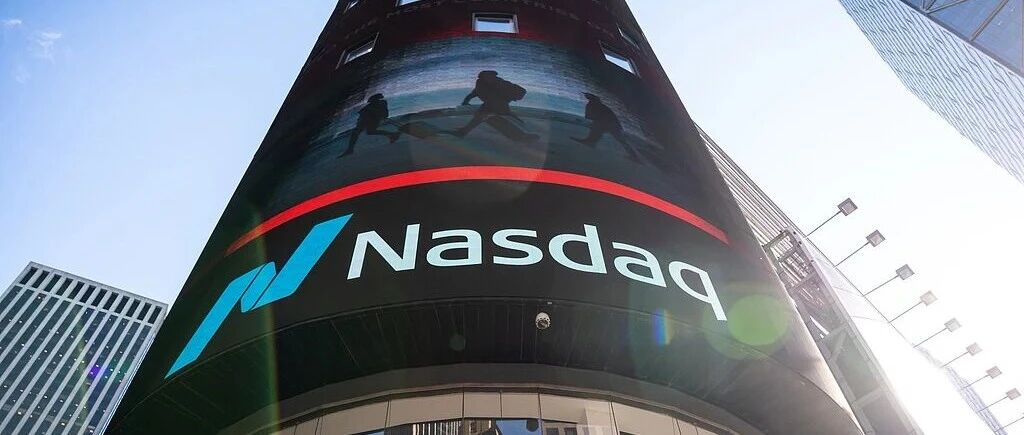
Core Viewpoint - Nasdaq is planning to introduce a new tokenization mechanism for equities aimed at enhancing issuer control and improving the experience for public companies, with a target launch in the first half of 2027 [2][5]. Group 1: Tokenization Mechanism - The new framework will allow token holders to enjoy the same governance rights as traditional shareholders [2]. - The tokenization of stocks is expected to facilitate 24/7 trading, similar to cryptocurrencies like Bitcoin and Ethereum, and enable near-instant settlement of trades while potentially reducing intermediary costs [4][5]. - Nasdaq's design for equity tokens aims to modernize corporate actions, proxy voting, and shareholder engagement processes [4]. Group 2: Participation and Regulatory Aspects - All interested issuers, including those not listed on Nasdaq, can participate in the tokenization program [5]. - Nasdaq has proposed a conversion channel in collaboration with Payward to allow tokenized stocks to transfer between regulated markets and blockchain markets [5]. - The proposal is currently awaiting approval from the U.S. Securities and Exchange Commission [6]. Group 3: Market Context and Competitors - Nasdaq's initiative is positioned to empower public companies and enhance global investor access to U.S. equities [6]. - Competitor New York Stock Exchange is also developing a blockchain-based platform for trading tokenized stocks and ETFs around the clock [7]. - Some cryptocurrency exchanges have already introduced tokenized products for popular U.S. stocks, but these products often lack the rights associated with traditional shares, leading to criticism [7].

Bitget 深度融合 TradFi,开启交易所下一阶段
Globenewswire· 2026-03-06 10:34
Core Insights - Bitget, the world's largest universal exchange (UEX), has made significant structural upgrades to its trading interface, elevating traditional financial assets such as stocks, commodities, and forex to an independent product category alongside cryptocurrency trading [2][3] - This update reflects a broader evolution in the exchange industry, where platforms are increasingly integrating traditional assets, indicating the maturation of the digital asset market [2][3] Industry Trends - The global cryptocurrency market is valued at approximately $2.4 trillion, while the traditional financial market, which includes stocks, commodities, and forex, is nearing $900 trillion [3] - The integration of tokenization technology and real-world asset (RWA) infrastructure is expected to lead to a migration of traditional financial activities to blockchain-based settlement layers [3] Bitget's Strategic Moves - Bitget's latest update aims to create an environment where cryptocurrency and traditional finance (TradFi) can operate as equal components within a unified trading ecosystem [3][5] - The platform has previously introduced on-chain trading features and tokenized stock perpetual contracts, followed by the launch of Contracts for Difference (CFD) trading, allowing users to access global markets using stablecoin-based settlement [3][4] User Experience Enhancements - The new interface design integrates cryptocurrency spot and derivatives trading under a single "Trading" tab, while traditional financial products, including CFDs and tokenized stocks, are accessible through a dedicated TradFi tab [4] - This structural change reflects a trend where modern traders manage investments across multiple asset classes rather than strictly identifying as cryptocurrency or stock traders [4] Future Outlook - Industry forecasts suggest that a significant portion of global stock trading may eventually occur through blockchain-based channels, with estimates indicating that 20% to 40% of stock trading could be conducted via cryptocurrency-native infrastructure by 2030 [5] - Bitget positions its universal exchange framework as a platform designed to support this integration on a large scale, emphasizing the diminishing importance of the distinction between cryptocurrency and traditional finance for users [5] Company Overview - Bitget serves over 125 million users and supports trading of more than 2 million cryptocurrency tokens, over 100 tokenized stocks, ETFs, commodities, forex, and precious metals [6] - The company is committed to enhancing cryptocurrency adoption through strategic partnerships, including collaborations with La Liga and MotoGP, and aims to provide blockchain education support to 1.1 million people by 2027 in partnership with UNICEF [6]
Bitget 发布 2026 年 2 月储备金证明,总储备金率保持 169%
Globenewswire· 2026-03-03 03:21
Core Insights - Bitget, the world's largest universal exchange (UEX), released its Proof of Reserves (PoR) for February 2026, confirming full backing of user assets amid increasing market volatility and cautious investor sentiment [2][3] - The report includes on-chain wallet verification and self-verification tools, allowing users to anonymously verify their assets' inclusion in the Merkle tree, ensuring transparency while protecting privacy [2] - As of the report date, Bitget maintains a total reserve ratio of 169%, significantly above the industry standard of 1:1, with specific asset reserve ratios of 352% for BTC, 147% for ETH, 100% for USDT, and 104% for USDC, confirming full coverage of user balances [2] Company Overview - Bitget serves over 125 million users, supporting trading of over 2 million cryptocurrencies, more than 100 tokenized stocks, ETFs, commodities, foreign exchange, and precious metals [4] - The company is committed to enhancing trading intelligence through AI agents, acting as a "co-pilot" for trade execution, and is expanding its influence through strategic partnerships, including collaborations with La Liga and MotoGP [4] - Bitget aims to provide blockchain education support to 1.1 million people by 2027 in partnership with UNICEF, positioning itself as a leader in the tokenized traditional finance sector with the lowest fees and highest liquidity for users across 150 regions [4]
2025 年顶级加密货币交易所中,Bitget 实现 45.5% 增长率
Globenewswire· 2026-02-06 17:10
Core Insights - Bitget, the largest panoramic exchange globally, achieved a trading volume growth of 45.5% year-on-year by the end of 2025, ranking sixth in the global market share of centralized cryptocurrency exchanges with a 6.4% market share [2][3]. Group 1: Company Performance - The CoinGecko report highlights Bitget's strong growth, attributed to its innovative product offerings and a robust security system that has built community trust over the years [3]. - Bitget has accelerated its transition to a panoramic exchange model, expanding its business from the cryptocurrency native market to multi-asset trading, including commodities, indices, forex, and precious metals [3][4]. - The introduction of tokenized stock futures has seen strong demand during global earnings seasons, enhancing Bitget's core advantages in liquidity for spot and derivatives trading [3]. Group 2: Market Trends - The report indicates a broader trend where users prefer platforms that offer depth, flexibility, and resilience, as trading activities increasingly encompass cryptocurrencies, macro assets, and on-chain products [4]. - As 2026 approaches, Bitget plans to continue its growth trajectory by expanding its product offerings, strengthening trading infrastructure, and investing in community trust and platform reliability [4]. Group 3: Company Overview - Bitget serves over 125 million users, supporting trading of more than 2 million cryptocurrency tokens, over 100 tokenized stocks, ETFs, commodities, forex, and precious metals [5]. - The company aims to enhance trading intelligence through AI agents, acting as a "co-pilot" for trade execution, and is engaged in strategic partnerships to promote cryptocurrency applications [5]. - Bitget leads the tokenized TradFi market, offering the lowest fees and highest liquidity across 150 regions globally [5].
过去一年链上 RWA 持有人数增长近 10 倍,目前已接近 80 万
Xin Lang Cai Jing· 2026-01-31 07:07
Core Insights - The number of on-chain Real World Asset (RWA) holders has increased nearly tenfold over the past year, approaching 800,000 [1] - Tokenized stocks and commodity assets account for the majority of holders, with approximately 294,000 and 206,000 holders respectively, but together they represent only about 25% of the total market capitalization of RWA [1] - At the current growth rate, the number of RWA holders is expected to surpass 1 million within a few months [1]
代币化股票项目高度依赖 Alpaca 执行底层股票交易
Xin Lang Cai Jing· 2026-01-28 21:00
Core Insights - The tokenized stock industry, although still small, is experiencing rapid growth and is largely dependent on a lesser-known brokerage firm [1] - California-based brokerage Alpaca is dominating the tokenized stock market due to the limited number of other brokerages willing to sell stocks for tokenization [1] - Several tokenized stock projects, including Ondo Finance, Kraken's xStocks, and Dinari, are routing user orders to Alpaca, which is responsible for purchasing the underlying physical stocks that support the stock tokens [1]
纽约证券交易所打造代币化股票与交易所交易基金 7×24 小时交易平台
Ge Long Hui A P P· 2026-01-20 00:56
Group 1 - The New York Stock Exchange (NYSE) is developing a trading platform utilizing blockchain technology to enable 24/7 trading of tokenized stocks and exchange-traded funds [1] - The NYSE plans to combine its existing matching technology with a private blockchain network to provide real-time trading support for tokenized securities, with the new digital trading platform expected to launch later this year, pending regulatory approval [1] - The initiative aims to broaden investor participation and create new opportunities for retail investors, particularly in markets funded by stablecoins [1] Group 2 - The platform is designed to meet the growing demand from retail investors for more flexible trading options, allowing them to complete transactions and reinvest funds almost instantaneously, which traditional trading infrastructures cannot accommodate [2] - The NYSE's efforts are focused on redefining the core aspects of stock definition, issuance, and settlement, which could determine the integration of tokenization into Wall Street's financial system [2] - As the largest stock exchange operator in the U.S. by trading volume, the NYSE's initiatives could significantly impact the future of trading in the financial markets [2]