
全球文明倡议

Search documents
外媒年终报道里的中国:可信、可爱、可敬
Xin Lang Cai Jing· 2025-12-28 06:03
Group 1 - China's global contribution is increasingly recognized for its ideological leadership, with various international media praising its role in shaping a better world [1][25] - The global innovation index ranking for China has improved from 34th in 2012 to 10th in 2025, highlighting its advancements in technology and innovation [6] - China is now seen as a leader in renewable energy technology and production, significantly impacting global energy transitions [6] Group 2 - International institutions have raised their economic growth forecasts for China for 2025, with the World Bank, IMF, and ADB increasing their projections by 0.4, 0.2, and 0.1 percentage points respectively [9] - The term "economic vitality" has been frequently mentioned in foreign media, reflecting China's robust production, trade, and investment growth [11][13] - China's commitment to open trade and international cooperation has been emphasized, with initiatives like the RCEP and the Hainan Free Trade Port attracting foreign investment [13] Group 3 - The concept of "living in tomorrow" is illustrated through advancements in technology, such as autonomous delivery vehicles and AI applications, showcasing China's innovative landscape [2][8] - The integration of AI and urban planning in cities like Shenzhen and Hangzhou is transforming lifestyles and urban environments [6] - The emergence of significant AI models like DeepSeek has attracted global investor interest in Chinese AI companies [8] Group 4 - China's proactive stance in global governance and cooperation is highlighted, particularly in addressing challenges like unilateralism and geopolitical tensions [23][25] - The country has proposed several global initiatives aimed at fostering international collaboration and addressing issues such as poverty and conflict [25] - China's approach to global issues is seen as a stabilizing force in a tumultuous world, promoting a more equitable international order [23][25]

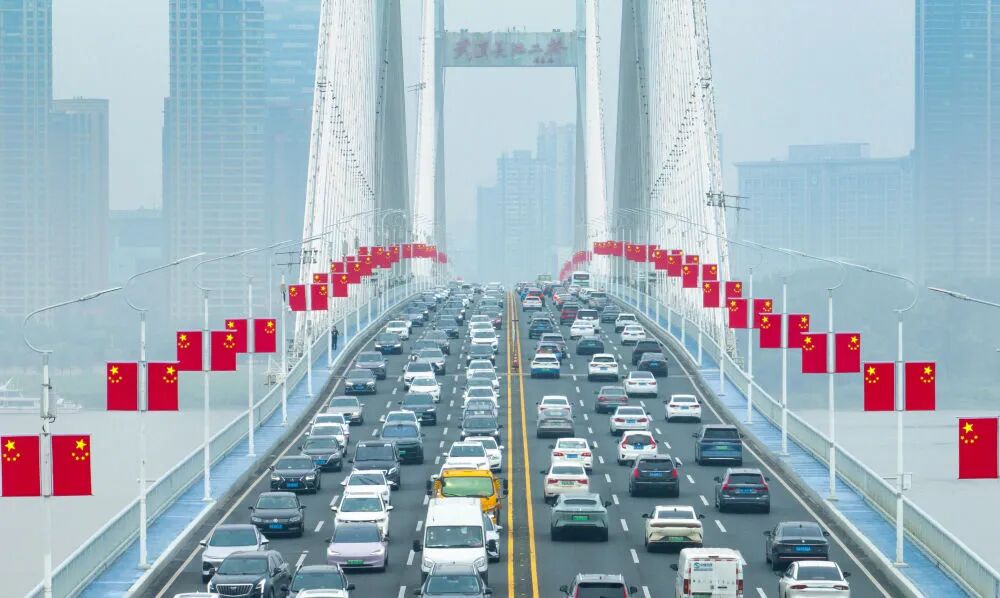
“已成全球最具雄心的现代化实践场”
Xin Lang Cai Jing· 2025-12-27 22:49
Economic Development - International media have focused on China's economic achievements, highlighting terms like "market," "trade," and "openness" in their reports [3][7] - Global institutions have raised their forecasts for China's economic growth in 2025, with the World Bank, IMF, and ADB increasing their projections by 0.4, 0.2, and 0.1 percentage points respectively [7] - Reports indicate that China's economic vitality remains strong, countering earlier pessimistic views about its economic prospects [7] Technological Innovation - A significant number of international reports have emphasized China's technological innovation, with "artificial intelligence" and "technology" being frequently mentioned [4][5] - China's global innovation index ranking has improved from 34th in 2012 to 10th in 2025, showcasing its advancements in technology [5] - China is recognized as a leading force in renewable energy technology and production, significantly influencing global trends in green technology [5][6] Modernization Practices - China is described as the "most ambitious modernization practice field," with diverse regional development models that integrate historical heritage with modern industries [8] - The concept of "development" and "confidence" emerged as high-frequency terms in international media reports, reflecting China's growing self-assurance in its governance and development path [8] Global Contributions - China's contributions to global governance are highlighted, with initiatives aimed at building a community with a shared future for humanity, providing strategic direction amid global changes [9]

特稿丨“活力势不可当”——外媒年终报道里的中国
Xin Hua Wang· 2025-12-27 12:48
Group 1: Technological Innovation - International media highlighted China's technological innovation, with reports showcasing advancements such as autonomous delivery trucks and drones, leading to a perception of "living in tomorrow" [2][3] - China's global innovation index ranking improved from 34th in 2012 to 10th in 2025, reflecting the country's rapid technological advancements [2] - China is recognized as a leading force in renewable energy technology and production, significantly influencing global transitions in this sector [2] Group 2: Economic Vitality - International institutions have raised their economic growth forecasts for China in 2025, with the World Bank, IMF, and ADB increasing their projections by 0.4, 0.2, and 0.1 percentage points respectively [4] - Reports emphasize China's robust production, trade, and investment growth, reinforcing its status as a vital global manufacturing hub [4] - The narrative around China's economic resilience has shifted from pessimism to recognition of its dynamic market and trade capabilities [4] Group 3: International Cooperation and Openness - China's commitment to international cooperation is evident through initiatives like the Regional Comprehensive Economic Partnership and the Belt and Road Initiative, promoting high-quality global partnerships [5] - The establishment of the Hainan Free Trade Port is expected to attract foreign investment and enhance trade, facilitating the free flow of goods, capital, and people [5] - China's industrial system is viewed as crucial for multinational companies to maintain global competitiveness, drawing increased investment from European firms [5] Group 4: Modernization Practices - China is recognized as a leading example of ambitious modernization, with cities like Suzhou and Hangzhou integrating technology with urban planning [6] - The governance and development strategies employed by China have garnered international admiration, reflecting a growing confidence in its political and economic systems [6][7] - Reports indicate that China's governance effectiveness contributes to high public trust, which is essential for its continued development [7] Group 5: Global Contributions - China's active participation in global issues, such as climate change, has positioned it as a stabilizing force in a tumultuous world, with its initiatives receiving international acknowledgment [8][9] - The country has proposed several global governance initiatives aimed at addressing critical challenges, including poverty and conflict, thereby contributing to a more equitable international order [9] - China's approach to international relations emphasizes cooperation and dialogue, which is seen as vital for fostering a more stable global environment [9]
“活力势不可当”——外媒年终报道里的中国
Xin Lang Cai Jing· 2025-12-27 12:30
Group 1: Technological Innovation - China is increasingly recognized for its technological innovations, with international media highlighting advancements such as autonomous delivery trucks and drones, creating a perception of "living in tomorrow" [2] - The global innovation index ranking for China has improved from 34th in 2012 to 10th in 2025, reflecting the country's growing influence in technology [2] - China is now a dominant force in renewable energy technology and production, significantly impacting global markets and leading a major transition in this sector [2] Group 2: Economic Vitality - International institutions have raised their economic growth forecasts for China in 2025, with the World Bank, IMF, and ADB increasing their projections by 0.4, 0.2, and 0.1 percentage points respectively [4] - Reports emphasize that China's economy remains robust, with strong production, trade, and investment growth, countering earlier pessimistic views [4] - The implementation of trade agreements and initiatives like the Regional Comprehensive Economic Partnership (RCEP) and the Belt and Road Initiative is enhancing China's economic engagement globally [5] Group 3: Modernization Practices - China is viewed as a leading example of ambitious modernization, with cities like Suzhou and Shenzhen integrating technology with urban planning [3] - The launch of the domestic large language model "DeepSeek" is seen as a catalyst for global investment in Chinese AI companies [3] - China's governance and development strategies are being recognized internationally, with a focus on confidence stemming from effective policy implementation [6][7] Group 4: Global Contributions - China is actively participating in global discussions on climate change, positioning itself as a stabilizing force amid global challenges [8] - The country is promoting a series of global initiatives aimed at addressing key international issues, contributing to a more equitable global order [9] - China's approach to international cooperation emphasizes collaboration and mutual benefit, which is gaining recognition as a significant contribution to global stability [9]
专家:中国穿梭调停柬泰冲突 展现亚洲安全新思路|国际识局
Xin Lang Cai Jing· 2025-12-26 12:57
Core Viewpoint - The recent military conflict at the Cambodia-Thailand border poses a significant threat to regional security and stability, prompting China to engage in diplomatic mediation as a responsible major power, enriching the Asian security concept and providing insights for regional cooperation and security order reconstruction [1][5]. Group 1: Conflict Background and Implications - The Cambodia-Thailand border conflict stems from historical territorial disputes and highlights the deep vulnerabilities in Southeast Asia's security architecture, exacerbated by increasing global geopolitical tensions [1]. - The prolonged conflict has resulted in severe casualties and a localized humanitarian crisis, undermining ASEAN's principles of consensus and peaceful dispute resolution, potentially fragmenting political trust among member states [1][2]. - Continued conflict risks creating a geopolitical vacuum that could invite external powers' intervention, hindering regional cooperation and stability, which is crucial for Southeast Asia's role as a global growth engine [1]. Group 2: Mediation Efforts and Framework - Achieving lasting peace requires moving beyond traditional mediation methods, as previous ceasefire agreements have been repeatedly violated, indicating the need for a framework supported by political trust and institutional guarantees [2]. - China's mediation in the Cambodia-Thailand conflict exemplifies a constructive approach, focusing on conflict de-escalation and advocating for resolution within the ASEAN framework, thereby supporting ASEAN's central role in regional security [2][3]. Group 3: China's Strategic Role and Initiatives - China's mediation aims to complement existing ASEAN mechanisms rather than replace them, seeking sustainable solutions through dialogue and cooperation, which aligns with China's proposed Asian security concept emphasizing common, comprehensive, cooperative, and sustainable security [3]. - The unique advantage of China's mediation stems from its deep economic ties and political trust with both Cambodia and Thailand, leveraging its development-oriented influence to guide both parties towards rational consensus amidst complex situations [3][4]. - The mediation reflects China's strategic wisdom of "building security through development," emphasizing the importance of peace and stability in the region for major cooperation projects like the Belt and Road Initiative [4]. Group 4: Broader Implications for Regional Security - China's approach to the Cambodia-Thailand conflict illustrates a systematic interpretation and practice of the Asian security concept, advocating for security rooted in cooperative frameworks rather than confrontation [5]. - In the face of rising global uncertainties, China's pragmatic actions position it as an indispensable stabilizing force for regional and global peace and development, fostering a future built on dialogue, mutual trust, and cooperation [5].
年终特稿·管窥天下丨从边缘到中枢:“全球南方”开启全球治理新篇章
Xin Lang Cai Jing· 2025-12-26 00:35
Core Viewpoint - The article emphasizes the significant role of Global South countries in global governance amidst challenges posed by unilateralism from Western nations and ongoing global conflicts, highlighting their proactive engagement in trade, climate, and artificial intelligence as a new driving force for governance reform [1][2]. Global Governance Challenges - The year 2025 is marked by heightened uncertainty in the global economy, intensified geopolitical rivalries, and an increase in regional conflicts, leading to a growing "governance deficit" [2]. - The return of Trump to power has seen the U.S. adopt a protectionist "America First" policy, undermining multilateralism and sparking a global trade war, which disrupts the post-World War II free trade framework [2]. - Ongoing conflicts, such as the Russia-Ukraine war and the Israel-Palestine situation, have led to a record high in global armed conflicts, while the UN Security Council's effectiveness is being questioned [2]. Global South's Role in Governance - In contrast to the retreat of Western nations, Global South countries are stepping up to take on governance responsibilities, becoming staunch defenders of free trade and enhancing cooperation among themselves and with other developed economies [4]. - Significant progress is noted in trade agreements, such as the African Continental Free Trade Area and free trade agreements between Latin America and Europe, alongside China's initiatives to eliminate tariffs on products from 53 African nations [4]. - The Global South is also taking the lead in climate governance, reaffirming commitments to the Paris Agreement and establishing new frameworks for climate funding, such as the "Tropical Forest Permanent Fund" [4]. Artificial Intelligence Governance - The Global South is actively proposing governance frameworks for artificial intelligence, with the BRICS summit in 2025 marking a significant step in this direction [5]. - Initiatives include the establishment of a World AI Cooperation Organization, showcasing the commitment of Global South countries to responsible AI development and sustainable growth [5]. Collective Action and Reform Initiatives - The Global South is uniting to demand changes to the unfair international order and enhance their international voice, with China proposing a comprehensive governance narrative centered on a "community of shared future for mankind" [6]. - Various agreements and action plans have been reached in areas such as political security, economic cooperation, and sustainable development, demonstrating a collective commitment to reform [7]. - The Global South is advocating for reforms in the United Nations and other international institutions to ensure fair representation and adapt to current political and economic realities [7].
全球治理倡议具有深远世界意义
Xin Lang Cai Jing· 2025-12-23 22:11
Core Viewpoint - The article discusses the need for a more just and equitable global governance system in the context of significant global changes and challenges, emphasizing the importance of cooperation among nations to address these issues effectively [1][5]. Group 1: Global Governance Initiatives - China, as the largest developing country, has taken on significant responsibilities to ensure its development and the welfare of its population, proposing various global initiatives aimed at reforming the global governance system [2][3]. - The global governance initiative proposed by China aims to address issues such as development deficits, security deficits, and governance deficits, reflecting a commitment to a more equitable international order [3][4]. Group 2: Challenges Faced by Developing Countries - Developing countries, particularly in the Global South, face structural challenges exacerbated by the adoption of Western modernization models, leading to increased economic and social inequalities [6][7]. - The article highlights the detrimental impact of hegemonic practices by some Western nations, which have further marginalized developing countries in the global economic landscape [6][8]. Group 3: Proposed Solutions and Frameworks - The global governance initiative emphasizes an action-oriented and problem-solving approach to governance, advocating for collaboration on pressing issues such as climate change and international financial system reform [8][9]. - By promoting a shared governance model, the initiative seeks to enhance the voice and agency of developing countries, allowing them to prioritize their development agendas and maintain strategic autonomy [9][10].
十年携手,中伊战略伙伴关系再续新篇
Xin Hua She· 2025-12-23 07:29
Core Viewpoint - The strategic partnership between China and Iraq, established in December 2015, has significantly strengthened over the past decade, focusing on mutual respect, political trust, and practical cooperation, serving as a model for cooperation among developing countries in a changing world [2][3]. Political Trust - Political trust has been the solid foundation for the steady development of bilateral relations, with China supporting Iraq's economic development, improving livelihoods, and combating terrorism, while opposing external interference in Iraq's internal affairs [2]. - Both countries respect each other's sovereignty and territorial integrity, accommodating core interests and major concerns, which has expanded consensus and provided crucial support for the growth of the strategic partnership [2]. Mutual Benefit and Cooperation - China has been the earliest and longest participant in Iraq's economic reconstruction, engaging in various infrastructure projects across multiple sectors, including energy, electricity, and transportation [3]. - The bilateral trade volume is expected to exceed $54 billion in 2024, covering sectors such as energy, automotive, and electronics, with Chinese electric vehicle brands gaining popularity in Iraq [3]. - Chinese-made electronic devices and smart home products have improved the convenience of daily life for Iraqi citizens, while the application of Chinese standards in electrical equipment and construction materials has enhanced public service levels [3]. Cultural Exchange - Cultural exchanges have deepened the relationship, with initiatives such as the establishment of a global civilization initiative research center in Iraq and an increase in Iraqi students studying in China [4]. - These exchanges have expanded into education, culture, academia, and youth interactions, fostering a social foundation for the strategic partnership [4]. Future Outlook - Both countries aim to continue their traditional friendship, deepen mutual trust, and elevate the strategic partnership to higher levels, broader fields, and deeper dimensions, embarking on a new chapter of high-quality cooperation under the Belt and Road Initiative for the next decade [4].
非媒:中国科技助力非洲转型发展
Huan Qiu Wang Zi Xun· 2025-12-22 22:39
Core Insights - Emerging technologies such as IoT, big data analytics, and artificial intelligence are rapidly developing and have the potential to transform global society and economy. Africa has a unique opportunity to leverage these technologies and reliable partnerships for socio-economic transformation, potentially contributing approximately $1.5 trillion to its GDP by 2030 through accelerated sustainable growth and development [1][2]. Group 1: Technological Development and Economic Impact - The advancements in renewable energy, broadband infrastructure, and digital public services are enhancing resilience and promoting inclusive technology applications to aid development [1]. - The African Union's Agenda 2063 and the African Continental Free Trade Area (AfCFTA) provide critical frameworks that can benefit from the increasing prevalence of emerging technologies and favorable tech partnerships [1][2]. - The African Digital Transformation Strategy (2020-2030) prioritizes broadband expansion, digital skills training, e-governance, data governance, and support for emerging technologies like AI and fintech, guiding Africa's related efforts [1][2]. Group 2: China-Africa Technological Partnership - China's growing partnership with Africa in the tech sector involves governments and major telecom and mobile companies, indicating that reliable partnerships can effectively bridge the digital divide and promote inclusive economic participation and growth [2]. - China is a significant force in promoting development in the Global South through various initiatives, including the Belt and Road Initiative and the China-Africa Cooperation Forum, focusing on common development, security, cultural exchange, and equitable global governance [2][3]. - Chinese government and enterprises are crucial partners in Africa's tech-driven modernization, providing ICT support that aids economic growth and public service delivery in sectors like e-governance, healthcare, and education [2][3]. Group 3: Infrastructure and Capacity Building - Chinese enterprises have piloted AI systems in urban management, fintech solutions, and hydropower operations in several African countries, with ongoing efforts to apply technology in green energy and food security [3]. - The China-Africa Technology Partnership Program 2.0 includes joint projects for building R&D centers, tech parks, and sustainable development initiatives, marking a deepening of long-term mutually beneficial development positioning [3][4]. - China has made significant investments in Africa's digital infrastructure, assisting in the construction of extensive backbone networks totaling approximately 150,000 kilometers, with over 200,000 kilometers of fiber optic laid [3][4]. Group 4: Education and Long-term Development - China supports African universities and vocational education, launching specialized technical talent training programs and establishing joint R&D innovation institutions to deepen tech cooperation [4]. - The China-Africa partnership has acted as a catalyst in bridging Africa's digital divide, with future prospects for solidifying tech cooperation as a primary frontier for sustainable socio-economic transformation and modernization [4].
一起学习四大全球倡议核心要义
Xin Hua Wang· 2025-12-22 01:49
Group 1 - The core idea of the global development initiative emphasizes prioritizing development and focusing on people-centered approaches [3][6] - The initiative includes six key principles: prioritizing development, inclusivity, innovation-driven growth, harmony between humanity and nature, and action-oriented strategies [6][12] - The global security initiative advocates for a comprehensive and sustainable security perspective, respecting national sovereignty, and resolving disputes through dialogue [9][12] Group 2 - The global civilization initiative promotes respect for cultural diversity, the importance of shared human values, and enhancing international cultural exchanges [10][12] - The global governance initiative emphasizes five core concepts: equality of sovereignty, adherence to international law, multilateralism, a people-centered approach, and action-oriented practices [14]
