
大语言模型

Search documents
民政部: 探索使用投资融资等渠道 设立民政科创基金
Zhong Guo Zheng Quan Bao· 2026-01-29 21:40
Core Insights - The Ministry of Civil Affairs has issued guidelines to promote technological innovation in civil affairs, aiming to establish a civil affairs technology innovation fund to support the research, industrialization, and application of suitable technology products by 2030 [1] Group 1: Key Objectives - By 2030, the goal is to enhance the civil affairs technology innovation system, increase technological investment, improve innovation levels and efficiency, and achieve breakthroughs in key core technologies [1] - The initiative aims to foster a batch of landmark technological achievements and significantly increase the localization rate of high-end equipment and products [1] Group 2: Strengthening Core Technology - The guidelines emphasize the need for technological support in the aging and elderly care sectors, advocating for the use of advanced technologies such as humanoid robots, brain-computer interfaces, and artificial intelligence [2] - Key areas for technological development include disability prevention, elderly care, rehabilitation, mental comfort, and emergency response, with a focus on integrating and scaling up product applications [2] Group 3: Promoting Technology Transfer - The guidelines propose leveraging urban clusters like Beijing-Tianjin-Hebei, Yangtze River Delta, and Guangdong-Hong Kong-Macau Greater Bay Area to build high grounds for civil affairs technology industry innovation [3] - There is a focus on developing the elderly care service industry, particularly in smart elderly care robots and products, and expanding the application of new technologies in the rehabilitation assistive devices sector [3] Group 4: Organizational Support - The guidelines call for improving investment mechanisms and actively seeking national science and technology projects to bolster civil affairs technology innovation [3] - Encouragement is given for local governments to establish specialized funds for civil affairs technology innovation and to effectively coordinate financial resources to support this sector [3]
探索使用投资融资等渠道设立民政科创基金
Zhong Guo Zheng Quan Bao· 2026-01-29 21:01
Core Insights - The Ministry of Civil Affairs has issued guidelines to promote technological innovation in civil affairs, aiming to establish a civil affairs technology innovation fund to support the research, industrialization, and application of suitable technology products by 2030 [1] Group 1: Goals and Objectives - The main objective is to enhance the civil affairs technology innovation system, increase technological investment, improve innovation levels and efficiency, and achieve breakthroughs in key core technologies by 2030 [1] - The initiative aims to foster a batch of landmark technological achievements and significantly increase the localization rate of high-end equipment and products [1] Group 2: Key Areas of Focus - Emphasis on strengthening technological support in the aging and elderly care sectors, utilizing advanced technologies such as humanoid robots, brain-computer interfaces, and artificial intelligence for various applications [1] - Development of critical technology equipment for elderly care, including meal assistance, mobility support, and emergency response systems [1] Group 3: Technological Innovations in Rehabilitation and Funeral Services - Focus on technological innovation in rehabilitation aids and funeral services, including the development of exoskeleton robots, smart prosthetics, and rehabilitation aids for mental health patients [2] - Promotion of the application of large language models and brain-computer interfaces in the rehabilitation of disabled children [2] Group 4: Industrial Development and Support Mechanisms - Encouragement of industrial innovation in civil affairs by leveraging the advantages of major urban clusters, aiming to create a highland for civil affairs technology industry innovation [2] - Support for the development of the elderly care service industry, particularly in smart elderly care products and services [2] Group 5: Organizational Support and Funding Mechanisms - The guidelines propose improving investment mechanisms and encouraging local governments to establish dedicated civil affairs technology innovation funds [3] - Emphasis on mobilizing social capital and establishing a diversified funding mechanism to support civil affairs technology innovation [3]
对话它石智航陈亦伦:不做 VLA,不仿真,一家具身智能公司的非主流判断
晚点Auto· 2026-01-29 14:51
Core Viewpoint - The article discusses the emergence of a new company, It Stone, founded by Chen Yilun, focusing on embodied intelligence and its unique approach to data collection and model development, diverging from mainstream methods like VLA (Vision-Language-Action) [4][38]. Group 1: Company Overview - It Stone has raised a record $1.2 billion in angel funding, marking a significant milestone in China's embodied intelligence sector [4]. - The company aims to develop its own model, AWE (AI World Engine), which emphasizes the expression of physical quantities and world information rather than relying on visual and language models [4][38]. Group 2: Data Collection Strategy - It Stone has developed wearable devices for data collection, allowing workers to gather real-world task data without the high costs associated with remote operation methods [5][24]. - The company has already collected approximately 100,000 hours of data, with plans to significantly increase this volume in the coming year [31]. Group 3: Technical Insights - Chen Yilun emphasizes that the current bottleneck in embodied intelligence is data acquisition, which is challenging and expensive compared to the vast amounts of data available for language models [15]. - The company’s approach to data collection is designed to be more efficient and scalable, aiming for a foundational scale of at least 10 million hours of data for effective training [27][28]. Group 4: Market Position and Future Outlook - It Stone is positioning itself to address complex tasks in industrial manufacturing, particularly in areas like wire harness assembly, which traditional robots struggle to perform [41]. - The company believes that the embodied intelligence sector is on the verge of significant advancements, with expectations for scaling and performance improvements in the coming years [40].


来这场沙龙,一览SGLang X 超长上下文扩展、RL后训练框架、扩散语言模型等前沿技术实践
机器之心· 2026-01-29 08:12
Core Insights - The article discusses the transition of artificial intelligence from a "chat" paradigm to an "actionable" intelligent agent era, emphasizing the need for deep collaboration and experience sharing among developers in optimizing LLM systems [2] Event Overview - A Meetup organized by SGLang community, Machine Heart, and Zhangjiang Incubator will take place on February 6, focusing on LLM system optimization and practical implementation [2] - The event will feature discussions on SGLang's technical roadmap, long-context expansion, RL post-training frameworks, and diffusion language model exploration [2] Event Schedule - The event schedule includes: - 13:30-14:00: Registration - 14:00-14:30: Keynote on SGLang roadmap by Zhang Bozhou, core developer of SGLang [5] - 14:30-15:00: Keynote on Omni-infer performance optimization by Zheng Jinhwan, core developer of Omni-infer [5] - 15:00-15:30: Keynote on slime RL scaling post-training framework by Xie Chengxing, Tsinghua University PhD student [5] - 15:30-16:00: Keynote on SGLang CPP for long-context scaling by Cai Shangming, core developer of SGLang and Mooncake [5] Guest Introductions - Zhang Bozhou: Core developer of SGLang, focusing on open-source LLM support and optimization across different CUDA hardware [8] - Zheng Jinhwan: Huawei technical expert and core contributor to Omni-infer, specializing in high-performance systems and inference optimization [9] - Xie Chengxing: PhD student at Tsinghua University and core developer of the slime RL framework, with a focus on enhancing LLM reasoning and decision-making capabilities [10] - Cai Shangming: Researcher at Alibaba Cloud, core contributor to SGLang and Mooncake, with expertise in high-performance inference systems and distributed machine learning [10] - Li Zehuan: System engineer at Ant Group and core contributor to SGLang, focusing on AI infrastructure optimization [11]

2026年,巨头疯抢这个赛道
投中网· 2026-01-29 06:38
Core Viewpoint - The AI hardware market is experiencing a competitive race, with major players like OpenAI, Google, Alibaba, and ByteDance entering the field, indicating a shift towards consumer-grade AI hardware by 2026 [5][6][7]. Group 1: AI Hardware Market Dynamics - OpenAI plans to launch its first hardware device in the second half of 2026, marking its entry into the AI hardware sector, which already has 810 million monthly active users [5][9]. - Google has restarted its AI glasses project, while Meta is updating multiple AI glasses products, showcasing a trend among foreign AI giants to focus on AI glasses [6][7]. - Domestic companies like ByteDance and Alibaba are diversifying their AI hardware offerings, including AI glasses and recording devices, indicating a more varied approach compared to their foreign counterparts [7][10]. Group 2: Product Launches and Market Trends - The frequency of AI glasses in the product lists of major AI companies highlights a consensus on this hardware type as a primary entry point into the market [11]. - Meta's Ray-Ban Meta smart glasses have sold over 2 million units, indicating strong market validation for AI glasses, with expectations of 35 million units shipped globally by 2028 [12][13]. - The AI recording device market is also gaining traction, with products like Plaud Note achieving significant sales, prompting domestic giants like DingTalk and Feishu to launch similar devices [18][20]. Group 3: Business Models and Strategies - AI hardware products are primarily sold through a buyout model combined with value-added services, with DingTalk and Feishu offering competitive pricing and subscription models [19][20]. - The entry of AI giants into hardware is driven by the need to expand beyond saturated AI applications and leverage established supply chains for quicker product launches [26][29]. - Companies are adopting a "soft-hard integration" strategy, aiming to create a cohesive ecosystem that combines AI capabilities with hardware offerings [30][31]. Group 4: Competitive Landscape and Future Outlook - The competition between domestic giants like ByteDance and Alibaba centers on who can establish a hardware entry point first, while foreign companies face different challenges [35][36]. - Meta's strong market presence in AI glasses is partly a strategy to compensate for its shortcomings in AI model performance compared to competitors [37][38]. - The future of AI hardware as a new universal entry point remains uncertain, with challenges in user adoption and market demand for products like AI glasses and phones [48][50].

专访|人工智能同样需要“终身”学习——访人工智能促进协会主席斯蒂芬·史密斯
Xin Hua She· 2026-01-29 04:13
Core Insights - The future development of artificial intelligence (AI) may hinge on the concept of "lifelong learning," similar to human learning methods [1] - The rise of large language models (LLMs) has been a significant breakthrough in AI, but they have limitations, including a lack of continuous updating and causal reasoning capabilities [1][2] - Achieving "lifelong learning" in AI presents technical challenges, particularly in fine-tuning existing LLMs without compromising their performance [2] Group 1 - The most notable breakthrough in AI is the emergence of large language models, which can understand and generate text based on extensive data training [1] - Current AI systems, primarily based on LLMs, are often "frozen" after initial training, lacking the ability to grow and adapt over time [1] - LLMs excel at identifying correlations but struggle with causal reasoning, which limits their planning abilities and can lead to nonsensical outputs [1] Group 2 - Implementing "lifelong learning" in AI could mimic human learning processes, relying on small samples and selective data rather than vast amounts of information [2] - Robotics and embodied intelligence may enhance AI development by allowing interaction with the physical world, thereby accumulating experience and understanding causal relationships [2] - The future direction of AI includes the development of autonomous agents that can make independent decisions and collaborate with other agents to solve complex problems [2]

民政部:推动大语言模型、脑机接口等技术在残疾儿童康复领域的应用
Xin Lang Cai Jing· 2026-01-29 02:20
Core Viewpoint - The Ministry of Civil Affairs has issued guidelines to promote technological innovation in the fields of rehabilitation assistive devices and funeral services, focusing on key technological advancements and environmental sustainability [1] Group 1: Rehabilitation Assistive Devices - Emphasis on strengthening technological breakthroughs in rehabilitation assistive devices, including research on precise neural regulation and human-machine collaborative control [1] - Development of advanced technologies and products such as exoskeleton robots, smart orthotics, smart prosthetics, and rehabilitation aids for patients with mental disorders [1] - Introduction of digital assessment technologies for the capabilities of assistive device users, along with the establishment of quality testing methods, standards, and evaluation systems [1] Group 2: Rehabilitation for Disabled Children - Promotion of the application of large language models and brain-machine interfaces in the rehabilitation of disabled children [1] - Focus on the development of rehabilitation technologies and equipment specifically for children with cerebral palsy and autism [1] Group 3: Funeral Services - Research on comprehensive technology related to funeral services, including the development of new green and eco-friendly body disposal technologies [1] - Creation of low-carbon, intelligent funeral products and equipment for the preservation and transportation of remains [1] - Initiatives to upgrade technologies for the disposal of remains and offerings, aiming for carbon reduction in the funeral sector [1] - Research on techniques for body preservation, pollution control, and disinfection in funeral settings, establishing a pollution prevention technology system [1]
“财”访一线|人工智能 如何进厂打工
Xin Hua Cai Jing· 2026-01-28 11:53
编辑:幸骊莎 新华财经南京1月28日电(记者常竣、斐朱程、李亭)人工智能如何在制造业深度融合应用?记者在江 苏无锡探访无锡威孚高科技集团股份有限公司、江苏省具身智能机器人工业数据采集与实训中心看到, 企业正积极在生产制造的各个环节融入人工智能相关技术,积极运用大语言模型技术提升工作效率。在 具身智能机器人的浪潮下,针对性的工业数据采集与实训变得越来越重要。具身智能机器人进厂打工的 未来正在靠近。(参与调研:谷青竹、欧阳迪娜、赵畅) ...

ClawdBot让Mac Mini卖爆了,京东年货节国补叠加以旧换新补贴到手价更低
Sou Hu Wang· 2026-01-28 02:39
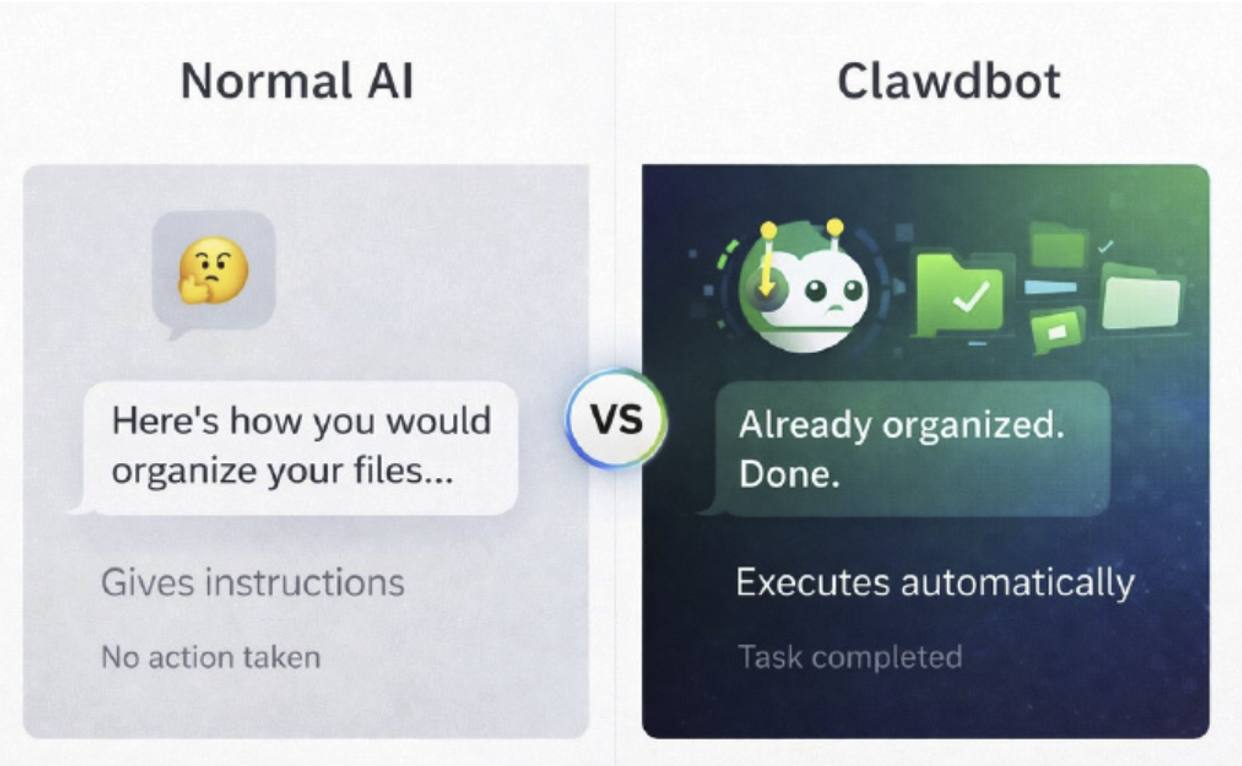
据了解,ClawdBot不是一个聊天机器人(Chatbot),而是一个智能体网关(AI Agent Gateway)。与ChatGPT 或Claude这类需要你打开网页、输入问题、等待回复的工具不同,Clawdbot是通过日常使用的消息应用 发出指令,唤起后台运行的大语言模型,从而将需求转化为本地Shell脚本并在电脑上执行。换句话 说,它不是告诉你怎么做,而是直接帮你做完一件事。这种从"AI给建议"到"AI直接行动"的转变,正是 让大家着迷的一大原因。 目前京东年货节正在火热进行中,除了Mac mini外,iPhone、MacBook、iPad、AirPods、Apple Watch等 全线产品都有优惠可享。感兴趣的果粉们,只需打开京东APP搜索"苹果大额券"即可直达活动会场,抓 住这个难得的机会,早买早享受。 如果你也想率先体验ClawdBot,不妨来京东Apple年货节下单Mac mini。以Mac mini M4 10+10核16G 256G版为例,1月27日24点前来京东下单,还可享官方直降400元福利,叠加国补15%至高1500元、以 旧换新至高再补800元后,到手价低至2804元。1月28日起下 ...
或颠覆文档处理模式,DeepSeek OCR模型再更新
Xuan Gu Bao· 2026-01-27 23:16
Group 1 - DeepSeek has launched the new DeepSeek-OCR2 model, which utilizes the innovative DeepEncoderV2 method to dynamically rearrange image components based on their meaning, rather than scanning mechanically from left to right [1] - The new model achieved a performance of 91.09%, an improvement of 3.73% over its predecessor, while reducing the maximum visual token usage from 1156 to 1120 [1] - The release of DeepSeek-OCR2 is significant as it may disrupt traditional document processing methods and pave the way for native multimodal reasoning [1] Group 2 - Haitong International states that DeepSeek-OCR represents a new generation of "compressed storage" by mapping text to visual representations and compressing it at high rates, achieving about 97% text restoration accuracy at less than 10x compression [2] - At a 20x compression rate, the model maintains approximately 60% accuracy, suitable for scenarios with higher tolerance for errors [2] - Huachuang Securities highlights DeepSeek-OCR's capability to process 33 million pages of data daily on 20 A100 nodes and its strong support for minor languages, indicating a significant advantage for global business deployment [2] Group 3 - Jin Modern has collaborated with Baidu on the development of large model applications and complementary OCR recognition capabilities [3] - Hanwang Technology has provided clients with various platforms, including a low-code development platform and an OCR platform [3]
