科产融合

Search documents
紧扣“十五五”规划实施履职尽责多作贡献
Xin Lang Cai Jing· 2025-12-25 18:26
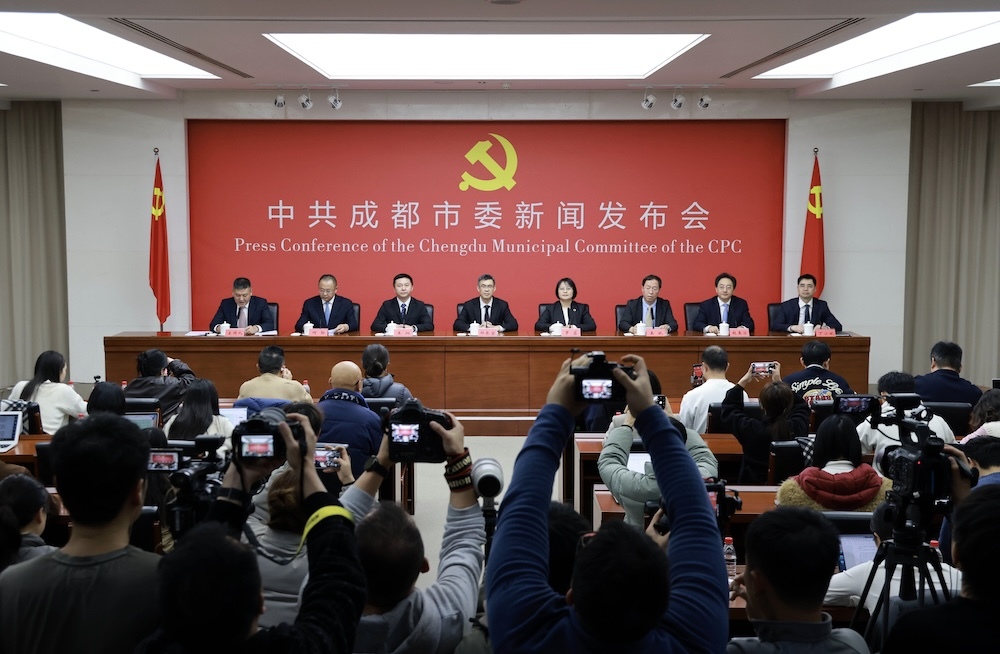
Group 1 - The study class focused on the implementation of the spirit of the Fourth Plenary Session of the 20th Central Committee of the Communist Party, emphasizing the importance of the "14th Five-Year Plan" and its strategic support role in national development [1][2] - Participants engaged in discussions about the role of land spatial planning and the domestic high-end chip industry, aligning with the development goals and strategies of Chengdu [1] - There was a consensus on the need to deepen understanding of the development strategies and key tasks outlined in the "14th Five-Year Plan," including "innovation-driven, open leadership, integration of science and industry, and strong counties and active regions" [1] Group 2 - The summary speech highlighted the Fourth Plenary Session and provincial and municipal meeting spirits as action guides for current and future work [2] - Emphasis was placed on translating the municipal requirements into practical actions, focusing on national strategy service, high-quality development, and promoting common prosperity [2] - The need for improved planning, organization, and standards in work was stressed, along with preparations for upcoming meetings and contributions to Chengdu's "14th Five-Year Plan" development [2]
高校第一省 疯狂补短板
Mei Ri Jing Ji Xin Wen· 2025-12-23 15:22
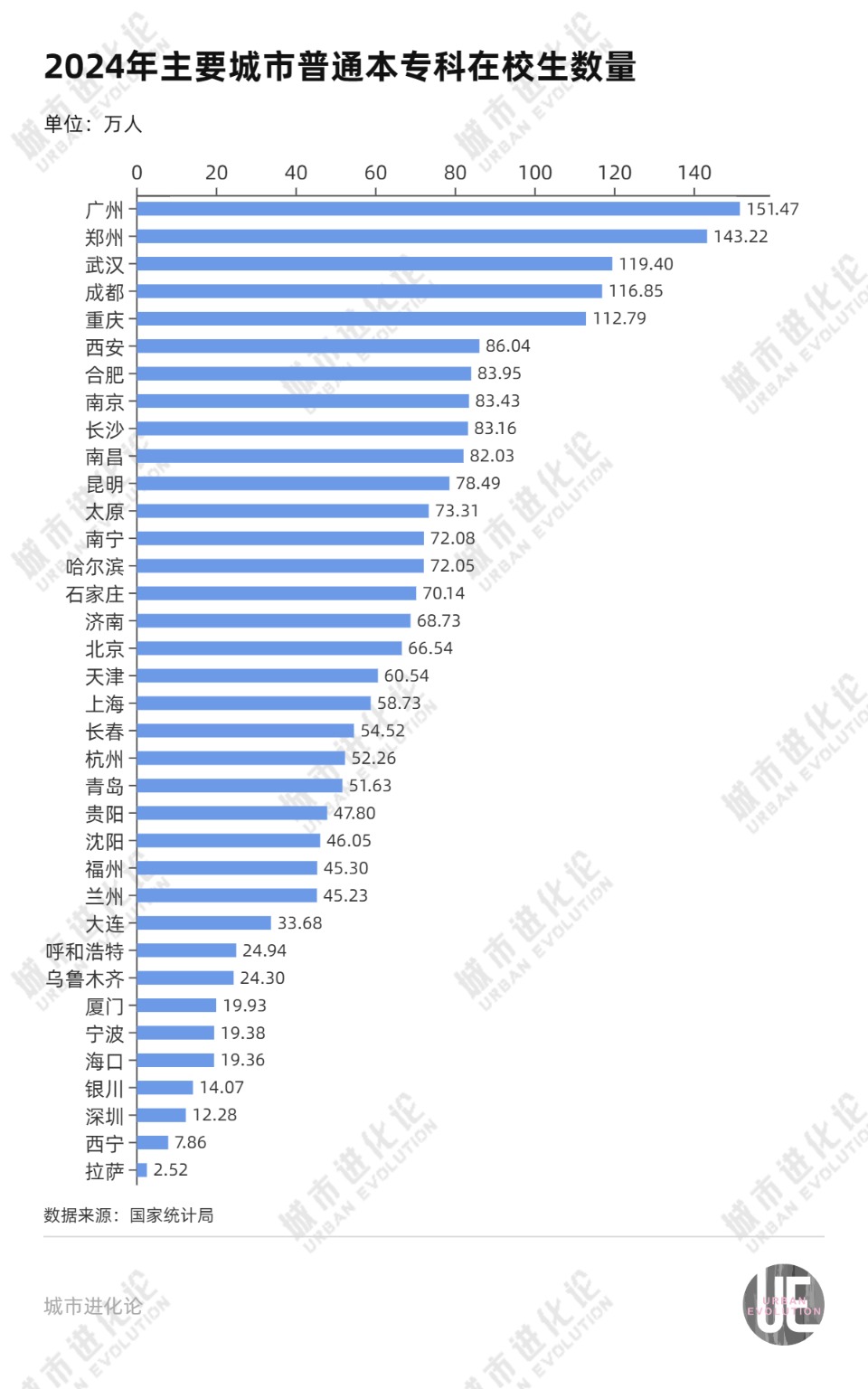
Core Viewpoint - The establishment of two new universities in Henan, namely Henan University of Electronic Technology and Zhengzhou Aerospace University, aims to address the province's shortage of high-quality higher education resources and enhance its technological innovation capabilities [1][23]. Group 1: Higher Education Landscape - Henan has become the province with the highest number of universities in China, surpassing other major educational provinces like Jiangsu, Shandong, and Guangdong, with a total of 178 universities by June 2025 [3][4]. - The rapid increase in the number of universities has been driven by the need to accommodate a large number of college entrance examination candidates, with 1.36 million candidates in 2024, nearly double that of Guangdong [9]. - Despite the increase in quantity, Henan's higher education quality remains a concern, with a significant number of newly established institutions being vocational colleges [12][9]. Group 2: Innovation and Technological Development - Henan's R&D investment intensity is relatively low at 2.01% in 2024, ranking 17th nationally, which does not align with its status as an economic province [15][19]. - The province has only five companies listed on the Science and Technology Innovation Board, indicating a lag in technological innovation compared to other central provinces [15][19]. - The establishment of the new universities is seen as a critical step in enhancing Henan's innovation capabilities, particularly in fields like electronic information and aerospace, which are essential for the province's industrial transformation [25][26]. Group 3: Strategic Goals and Future Plans - By 2025, Henan aims to achieve full coverage of undergraduate universities across all provincial cities and fill gaps in specific fields such as electronic technology and aerospace [19][20]. - The new universities are expected to play a significant role in supporting Henan's strategic industries, including new materials and new energy vehicles, by aligning educational programs with industry needs [24][25]. - The province plans to foster a deep integration of education, talent, industry, and innovation to transition from being a "large education province" to a "strong education province" and a "strong innovation province" [26][30].

跃升“十四五”科技成就|创新激活天山南北发展动能
Ke Ji Ri Bao· 2025-12-16 02:50
Core Viewpoint - Xinjiang is focusing on technological innovation as the core driving force to accelerate the construction of a modern industrial system, enhancing the integration of technological and industrial innovation [1][2]. Group 1: Innovation Platforms - Five high-level innovation platforms were unveiled at the Xinjiang Science and Technology Innovation Conference, marking a significant step in promoting high-quality regional development [3]. - Since the "14th Five-Year Plan" period, Xinjiang has established a large number of high-level innovation platforms, with a total of 1,308 various technology innovation platforms, including 23 national-level and 138 ministerial-level platforms [3][6]. - The Xinjiang Intelligent Equipment Research Institute has successfully completed the acceptance and test flight of the Cessna 172S light aircraft, indicating its capability in aircraft research and application [4]. Group 2: Integration of Science and Industry - Xinjiang is actively promoting the integration of scientific and industrial innovation, with significant projects in the oil and gas sector, including the injection of over 2 million tons of CO2 into underground oil reservoirs to enhance oil recovery [8]. - The Xinjiang Yaxin Coalbed Methane Investment and Development Group has successfully conducted a world-first underground coal gasification test, achieving dual gas extraction from difficult-to-extract coal resources [9]. - The establishment of the Tianshan Laboratory and its research institute aims to develop technologies with complete independent intellectual property rights for coal development, targeting a scale of 50 to 80 million tons [4][9]. Group 3: Funding and Projects - Over 9,000 technology plan projects have been implemented in Xinjiang, with funding exceeding 6 billion yuan, addressing key technological challenges in priority industries [6][10]. - The "Hero Post" mechanism has been effectively utilized to tackle critical technological issues in key industries, with 24 projects launched under this initiative, involving new materials, new energy, and biomedicine [10][11]. - A talent development fund of 10 billion yuan has been established, along with the initiation of the "2+5" key talent plan, aimed at attracting top talent to Xinjiang [10][11].

中央经济工作会议定调后 这些中部省份锚定了哪些重点任务?
2 1 Shi Ji Jing Ji Bao Dao· 2025-12-14 14:50
Core Points - The Central Economic Work Conference outlined eight key tasks for economic work in 2026, emphasizing domestic demand and innovation-driven growth [1] - Central provinces like Hubei, Henan, Hunan, Jiangxi, and Shanxi are focusing on stimulating domestic demand and integrating technological and industrial innovation [1][2] Group 1: Domestic Demand Expansion - The conference highlighted the importance of domestic demand as the primary driver for economic growth in 2026, with a strong focus on building a robust domestic market [1] - Provinces are making specific plans to expand consumption and investment, with Hubei aiming to lead new supply through new demand, while Henan focuses on leveraging local advantages to stimulate consumption [2] - Jiangxi is prioritizing the expansion of effective investment and consumption through targeted project planning and actions to boost consumer confidence [2] Group 2: Innovation and Industry Development - The conference emphasized the need for innovation-driven growth, with provinces like Hubei, Henan, and Hunan focusing on integrating technological advancements with industrial development [4][5] - Hubei plans to enhance the integration of technology and industry, while Henan aims to build a modern industrial system and develop new pillar industries [5][7] - Jiangxi is set to leverage its resource advantages to create a modern industrial system and a technology innovation center, focusing on key sectors like rare earth materials and traditional medicine [8] Group 3: Urban-Rural Integration and Regional Coordination - The conference called for coordinated development and urban-rural integration, with Hubei promoting a regional economic layout that emphasizes complementarity and high-quality development [9] - Hubei's strategy includes supporting key cities like Wuhan and Xiangyang to become regional centers, while also enhancing urban agglomeration and infrastructure connectivity [9][10] - Shanxi is focusing on high-quality county-level economic development and rural revitalization, aiming to improve urbanization and agricultural productivity [11][12]
紧跟中央信号!中部多省密集部署
21世纪经济报道· 2025-12-14 10:56
"十四五"即将圆满收官、"十五五"正待开启序幕之际,中央经济工作会议于12月10日至11日在 北京举行。会议明确了2026年经济工作中的八大重点任务,包括坚持内需主导,建设强大国内 市场;坚持创新驱动,加紧培育壮大新动能等。 近日,中部地区湖北、河南、湖南、江西、山西等地均召开相关会议,深入学习贯彻中央经济 工作会议精神。梳理来看, 激发内需潜力、推动科技创新和产业创新深度融合、促进城乡融 合和区域协调发展等方面成为重点,中部省份将力争结合因地制宜的谋划布局,形成更多新增 长点。 围绕贯彻落实中央经济工作会议精神,各地的部署中释放出哪些重要信号? 持续激发内需潜力 记者丨 吴文汐 编辑丨李果 其中,培育服务消费新增长点将成为"十五五"时期的重点,这也与国家层面的导向相契合。 据东方金诚宏观首席分析师王青预计,明年财政促消费资金规模会从今年3000亿上调至5000 亿,支持范围有望从耐用消费品扩大到一般消费品及服务消费,其中服务消费将成为大力提振 消费的重点。 湖北在其"十五五"规划的建议中提出了,扩大服务消费,推动基础型生活服务品质提升,促进 大健康、新文旅、泛娱乐、智能化等改善型生活服务扩量提效;河南提出, ...
中央经济工作会议定调后,这些中部省份锚定了哪些重点任务?
2 1 Shi Ji Jing Ji Bao Dao· 2025-12-14 07:49
中央经济工作会议提出,坚持内需主导,建设强大国内市场。作为明年八项工作任务之首,这也意味着 2026年我国经济增长将更多依靠内需发力。 21世纪经济报道记者吴文汐 武汉报道 "十四五"即将圆满收官、"十五五"正待开启序幕之际,中央经济 工作会议于12月10日至11日在北京举行。会议明确了2026年经济工作中的八大重点任务,包括坚持内需 主导,建设强大国内市场;坚持创新驱动,加紧培育壮大新动能等。 近日,中部地区湖北、河南、湖南、江西、山西等地均召开相关会议,深入学习贯彻中央经济工作会议 精神。梳理来看,激发内需潜力、推动科技创新和产业创新深度融合、促进城乡融合和区域协调发展等 方面成为重点,中部省份将力争结合因地制宜的谋划布局,形成更多新增长点。 围绕贯彻落实中央经济工作会议精神,各地的部署中释放出哪些重要信号? 持续激发内需潜力 中部地区位居我国经济地理版图中承东启西、连南接北的关键位置,在建设强大的国内市场中具有不可 或缺的重要作用。 在各省近日召开的深入学习贯彻中央经济工作会议精神相关会议上,均对扩大内需作出相应部署,例 如,湖北提出,要坚定不移扩大消费和投资,持续激发内需潜力,以新需求引领新供给、以新 ...
成都 “十五五”:发展有力度,幸福有温度
2 1 Shi Ji Jing Ji Bao Dao· 2025-12-13 01:12
Core Points - Chengdu aims to exceed a GDP of 3.2 trillion yuan by the end of the 15th Five-Year Plan, indicating a need for annual GDP growth of over 1.4 billion yuan during this period [2][4][5] - The development strategy for the 15th Five-Year Plan focuses on "innovation-driven, open leadership, integration of science and industry, and strong counties and active districts" to address the city's development challenges [4][5] - Chengdu's positioning includes becoming a national economic center, technology innovation center, international consumption center, and cultural creative center, while also establishing itself as a key base for advanced manufacturing and digital cultural industries [5][10] Economic Development - Chengdu's industrial revenue has crossed three trillion yuan during the 14th Five-Year Plan, with significant growth in electronic information and equipment manufacturing sectors [6][7] - The city plans to build a modern industrial system centered on advanced manufacturing, enhancing the global competitiveness of its existing industries while developing new sectors like artificial intelligence and low-altitude economy [7][9] Regional Integration - Chengdu will enhance its role in the Chengdu-Chongqing economic circle by promoting collaborative development through five key initiatives, including building an international transportation hub and a world-class advanced manufacturing cluster [9] - The "strong counties and active districts" strategy aims to foster differentiated development across urban and rural areas, enhancing overall regional balance and support for the Chengdu metropolitan area [9] Digital Cultural Industry - Chengdu is prioritizing the development of the digital cultural industry, with plans to exceed 410 billion yuan in total scale by 2025 and 600 billion yuan by 2030, positioning itself as a national leader in this sector [11][12] - The city has implemented a comprehensive policy package to support the digital cultural industry, including the establishment of a 3 billion yuan fund for sci-fi and future industries [11] Quality of Life - Chengdu has been recognized as the "most livable city" for 17 consecutive years, with initiatives aimed at enhancing quality of life through employment, education, healthcare, and environmental improvements [13][14] - The city plans to implement policies that promote happiness and well-being, focusing on sustainable urban development and ecological quality [13][14]

成都 “十五五”:发展有力度,幸福有温度
21世纪经济报道· 2025-12-13 00:54
Core Viewpoint - Chengdu aims to exceed a GDP of 3.2 trillion yuan by the end of the 15th Five-Year Plan, building on the foundation of the 14th Five-Year Plan, which requires an annual increase of over 1.4 trillion yuan during this period [1][3]. Group 1: Development Strategy - The development strategy for the 15th Five-Year Plan includes "innovation-driven, open leadership, integration of science and industry, and strong counties and active regions," addressing the constraints on high-quality development [5]. - Chengdu's development positioning includes building five centers: economic, technological innovation, international exchange, international consumption, and cultural creativity centers, along with five key areas: a major carrier for national strategic technology, an advanced manufacturing base, a digital cultural and creative industry hub, a new high ground for reform and opening up, and a high-quality livable area [5][9]. Group 2: Industrial Development - Chengdu's industrial revenue is expected to cross three trillion yuan during the 14th Five-Year Plan, with the goal of establishing a modern industrial system centered on advanced manufacturing [7]. - The city plans to enhance the resilience, advantages, and vitality of its industrial chains, focusing on global competitiveness in existing industries and developing new sectors like artificial intelligence and quantum technology [7]. Group 3: Regional Integration - Chengdu will enhance its role in the Chengdu-Chongqing economic circle and urban agglomeration, promoting collaborative development through five key initiatives, including building an international transportation hub and a world-class advanced manufacturing cluster [9]. Group 4: Digital Cultural and Creative Industry - The digital cultural and creative industry is highlighted as a new urban development focus, with plans to elevate its total scale to over 600 billion yuan by 2030, supported by a comprehensive policy framework and significant investment in related projects [11][12]. Group 5: Quality of Life and Happiness - The city emphasizes improving the quality of life, focusing on employment, education, healthcare, and social security, while also enhancing environmental quality to maintain its reputation as a "most livable city" [13].

成都在服务融入国家战略中实现更大发展
Zhong Guo Jing Ji Wang· 2025-12-11 08:16
Group 1 - The Chengdu Municipal Committee's 14th Plenary Session approved the "Suggestions for Formulating the 15th Five-Year Plan for National Economic and Social Development of Chengdu," emphasizing the need for a strategic approach to enhance the city's comprehensive strength and position in the national and provincial development landscape [1][2] - The city aims to address shortcomings that hinder high-quality development by focusing on "innovation-driven, open leadership, integration of science and industry, and revitalization of counties and districts" as key strategies for the 15th Five-Year Plan [2] - Chengdu will prioritize innovation as the primary driving force, promoting comprehensive innovation across various dimensions, and actively integrating into global innovation, industry, supply, and value chains to enhance development capabilities [2][3] Group 2 - The city is committed to implementing the decisions of the central government and provincial authorities, aiming to achieve the two-step strategy for socialist modernization while fostering a collaborative environment for societal engagement in modernization efforts [3]
谋篇“十五五” 成都如何乘势突破?
Mei Ri Jing Ji Xin Wen· 2025-12-10 14:21
Core Viewpoint - Chengdu is strategically planning its economic and social development for the "15th Five-Year Plan" period, focusing on innovation-driven growth and the establishment of five key centers and areas to enhance its competitive advantage in urban development [1]. Group 1: Economic Development Strategy - Chengdu aims to accelerate the construction of a national advanced manufacturing base, with industrial investment growth reaching an annual average of 30.4%, leading among 20 key cities in China [2]. - The city will implement the "circle-chain integration" project to enhance the resilience of industrial chains and elevate the global competitiveness of key industries such as electronic information and equipment manufacturing [2]. - Chengdu's "15th Five-Year Plan" emphasizes the integration of science and industry as a critical path to seizing opportunities from the new technological revolution and industrial transformation [7]. Group 2: Cultural and Creative Industry - The city plans to establish itself as a national cultural and creative center, with the digital cultural and creative industry expected to exceed 410 billion yuan by 2025, aiming for over 600 billion yuan by 2030 [6]. - Chengdu will enhance the development capabilities of cultural and creative industry parks, attracting major projects and quality enterprises to foster a collaborative ecosystem [6]. Group 3: International Engagement and Open Economy - Chengdu is set to become a national center for foreign exchanges and a new high ground for reform and opening up, enhancing its global resource allocation capabilities [8]. - The city will support the construction of the Asia-Europe International Railway Hub and develop a logistics hub system to strengthen international cooperation and expand its global outreach [8][9]. - Chengdu aims to improve its "Invest in Chengdu" brand and establish a comprehensive service system for foreign investment, facilitating enterprises in expanding overseas markets [9]. Group 4: Infrastructure and Connectivity - The city will promote urban agglomeration development and enhance transportation infrastructure, including the construction of high-speed railways and urban rail lines to improve connectivity [10]. - Chengdu plans to initiate the second phase of the Tianfu International Airport project and develop various economic corridors to support regional collaboration and growth [9][10].