
长三角一体化发展

Search documents
2025长三角更高质量一体化发展上海青浦宣传周启动
Zhong Guo Jing Ji Wang· 2025-12-23 07:01
Group 1 - The 2025 Yangtze River Delta (YRD) integration development week in Qingpu, Shanghai, aims to showcase the district's transformation under national strategies, focusing on becoming an innovation hub and a key entry point for businesses and tourism [1] - Qingpu has achieved positive results in implementing the YRD integration strategy through dual drives of institutional innovation and project construction, as well as the integration of technological and industrial innovation [1] - Future plans for Qingpu include establishing itself as a service benchmark for businesses entering Shanghai and a model for inbound tourism, particularly in cultural heritage [1] Group 2 - The Yangtze River Delta innovation cluster is recognized as one of the world's leading innovation clusters, with cities like Shanghai, Suzhou, and Hangzhou included in the top rankings by the World Intellectual Property Organization [2] - Qingpu's strategic advantages include its location, integration with national strategies, and its role as a transportation hub, positioning it well for becoming a key innovation center [2] - During the 14th Five-Year Plan, Qingpu is focusing on developing a modern industrial system and fostering innovation through collaboration among technology companies, research institutions, and supportive policies [2] Group 3 - The opening ceremony marked the launch of the "Most Jiangnan" International Communication Center project in Zhujiajiao, which has seen significant tourist engagement, with 5.856 million visitors recorded by November 2025, including 1.8446 million international tourists [3] - The expected number of international tourists for the year is projected to exceed 2 million, reinforcing Zhujiajiao's status as one of the top ten ancient towns favored by inbound tourists [3] - Zhujiajiao is becoming a cultural symbol that helps the world understand China, blending traditional Jiangnan charm with modern narratives [3]
杭衢高铁开通在即 杭台高铁温玉段新站亮相
Mei Ri Shang Bao· 2025-12-23 01:58
未来,从杭州西站出发的列车可经合杭高铁湖杭段、杭黄高铁转入杭衢高铁抵达衢州;从杭州东 站、杭州南站出发的列车也可借助杭衢高铁与杭黄高铁的衔接直达衢州。杭州至衢州的通行时间将显著 缩短,两地联系更加紧密。 同样迎来重要节点的还有杭台高铁温岭至玉环段(温玉铁路)。日前,该段温岭西站外立面装修工 程基本完成,整体造型首度亮相,标志着车站建设全面进入内部装饰收尾阶段。 12月22日,记者从铁路部门了解到,杭州又一条重要高铁,杭衢高铁已进入开通运营倒计时。 杭衢高铁贯穿浙江省杭州市建德市与衢州市,线路自杭昌高铁杭黄段杨村桥线路所引出,经建德 市、龙游县、衢江区、柯城区,终至江山站杭衢场。正线全长约131公里,设计时速350公里,全线桥隧 比高达83.7%。共设建德、建德南、龙游北、衢江(预留)、衢州西、江山6座车站。 作为连接杭州与衢州的快速通道,这条线路在建成后将在环杭州湾经济带与金衢丽经济带之间构筑 起一条经济与交通并重的"黄金走廊",对优化区域铁路网布局、推动长三角一体化发展、助力浙江共同 富裕示范区建设具有重要意义。 杭台高铁温玉段位于台州市南部,全长约37公里,设计时速350公里,设温岭、温岭西、玉环3座车 ...
这两条重要高铁迎来新进展
Mei Ri Shang Bao· 2025-12-22 22:18
商报讯(记者顾帅辰)昨天,记者从铁路部门了解到,杭州又一条重要高铁,杭衢高铁已进入开通运营倒 计时。 同样迎来重要节点的还有杭台高铁温岭至玉环段(温玉铁路)。日前,该段温岭西站外立面装修工程基本 完成,整体造型首度亮相,标志着车站建设全面进入内部装饰收尾阶段。 杭台高铁温玉段位于台州市南部,全长约37公里,设计时速350公里,设温岭、温岭西、玉环3座车站。 线路桥隧比达90.34%,施工难度较大,需穿越13座总长约18公里的隧道,跨越17座总长近16公里的桥 梁。 据悉,杭台高铁温玉段未来将主要承担城际客流运输任务。项目建成后,将结束玉环市不通铁路的历 史,助力台州实现"县县通铁路、铁路网全覆盖"的交通新格局。同时,该线路也将进一步织密浙江1小 时高铁交通圈,优化区域路网结构,推动沿线文旅产业协同发展。 对杭州而言,这条向南延伸的高铁也同样重要。目前正在建设的杭州机场高铁已明确将与杭台高铁衔 接。未来,从杭州萧山机场站出发的列车,可一路沿杭台高铁及温玉段直达台州南部,显著增强杭 州"空铁联运"体系的覆盖能力。 杭衢高铁贯穿浙江省建德市与衢州市,线路自杭昌高铁杭黄段杨村桥线路所引出,经建德市、龙游县、 衢江区、 ...
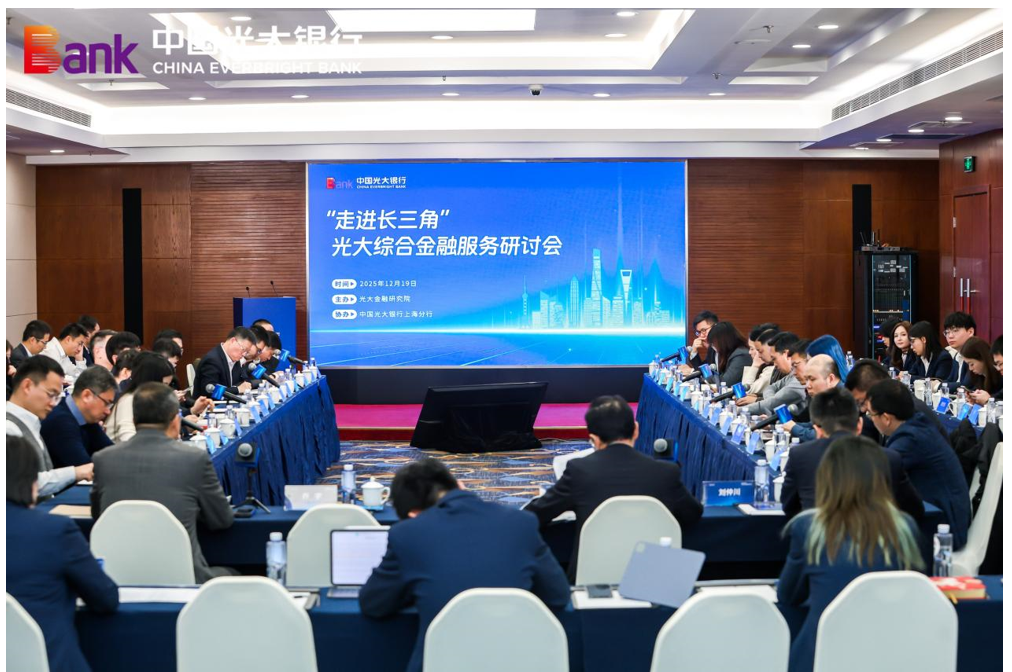
光大银行举办综合金融服务研讨会,搭建人工智能领域“产学研政金”协同交流平台
Jin Rong Jie· 2025-12-22 03:07
Core Viewpoint - The "Integrated Financial Service Plan for the Yangtze River Delta" was launched by China Everbright Bank to support the region's economic development and integration strategy, emphasizing the importance of financial services in enhancing industrial upgrades and market integration [1][3]. Group 1: Event Overview - The "Walking into the Yangtze River Delta" seminar was held in Shanghai, focusing on artificial intelligence development and application trends, with over 50 experts and representatives from various sectors participating [1]. - This seminar follows a previous event in Shenzhen titled "Walking into the Greater Bay Area," indicating a continuous effort by China Everbright Bank to engage with key national development strategies [1][3]. Group 2: Strategic Importance - The Yangtze River Delta is recognized as a crucial economic engine and competitive platform for China, with its integrated development having significant implications for national growth [3]. - The seminar aims to strengthen collaboration between technology enterprises and capital markets, enhancing the synergy between industry and finance to support high-quality development in the region [3][4]. Group 3: Financial Service Plan - The financial service plan includes three main components: 1. Tailored financial products and services for various sectors, including modern industries and traditional economies, addressing key areas like energy and materials [4]. 2. Support for the construction of global trade, logistics, and financial centers, focusing on trade finance and infrastructure modernization [4]. 3. Customized services to stimulate new consumption patterns in logistics, platform, and IP economies, while providing financial support for key sectors like integrated circuits and artificial intelligence [4]. Group 4: Industry Collaboration - Representatives from various enterprises emphasized the necessity of establishing a platform for collaboration among academia, industry, government, and finance, advocating for proactive engagement from financial institutions in linking upstream and downstream enterprises [4][5]. - China Everbright Bank's financial service plan is described as a preliminary draft, with intentions to refine it based on national and enterprise needs, aiming to enhance service delivery and innovation [5].


经济大省挑大梁│江苏南京:从“十字路口”到“世界接口”
Xin Lang Cai Jing· 2025-12-21 14:32
Core Viewpoint - Nanjing is enhancing its status as an international transportation hub through the development of a multi-modal transport system that integrates air, rail, and maritime logistics, significantly improving its connectivity and operational capacity in the Yangtze River Delta and beyond [1][12]. Air Transport Hub - Nanjing Lukou International Airport has achieved "super-large airport" status, with a passenger throughput capacity of 50 million annually after the completion of Terminal 1 renovations and ongoing expansion projects [6][8]. - The airport is expected to handle 6.5 million passengers and 90,000 tons of cargo annually after the completion of its third-phase project, with a projected cargo throughput growth of 13.4% by 2025 [8][12]. - The introduction of new international routes, including direct flights to Paris, enhances the airport's competitive edge and connectivity [6][8]. Rail Transport Hub - The Nanjing North Station project, set to begin construction in September 2024, will feature a larger capacity than Nanjing South Station, with an expected annual passenger volume of 36.5 million [4][5]. - The high-speed rail network is evolving into a "grid" pattern, significantly reducing travel times between major cities, such as a 3.5-hour journey from Nanjing to Beijing [3][5]. - By the end of 2025, Nanjing's railway operational mileage is projected to reach 510 kilometers, connecting all prefecture-level cities in the province and 25 provincial capitals nationwide [5][12]. Maritime Transport Hub - The successful launch of the Arctic shipping route has reduced transportation time from 36 days to 26 days, enhancing the competitiveness of Jiangsu's manufacturing sector [9][11]. - Nanjing Port has established a comprehensive near and far sea shipping network, with 20 routes connecting to regions such as Japan, Southeast Asia, and the Middle East [10][12]. - Ongoing infrastructure improvements at Nanjing Port, including the expansion of rail connections, aim to increase cargo handling capacity and enhance the port's role as a key logistics hub [11][12]. Multi-Modal Transport System - Nanjing's "air-rail-water-road" multi-modal transport system is a unique feature that facilitates seamless logistics operations, with a projected rail-water transport volume of 142,000 TEUs by 2024 [13]. - The integration of various transport modes is expected to create synergistic effects, enhancing the overall efficiency and capacity of Nanjing's logistics network [13].
太仓市坚持提速扩量、提质增效
Su Zhou Ri Bao· 2025-12-20 23:50
Core Viewpoint - The Taicang Municipal Committee has approved the proposal for the 15th Five-Year Plan, aiming to unify thoughts, clarify tasks, and stimulate motivation for future development [1] Group 1: Economic Development - Taicang has achieved a new enhancement in comprehensive strength, ranking 7th among the top 100 counties in China and maintaining the top position in the list of the most livable county-level cities for 10 consecutive years [1] - From January to November, Taicang introduced 431 new industrial projects with a total investment of 59 billion yuan, including several projects exceeding 1 billion yuan [1] - The completion rate for 195 key projects reached 122.7%, with 116 projects valued over 100 million yuan completed and put into operation [1] Group 2: Business Environment - Taicang has implemented a "1+10" talent policy and the "Qing Ten Articles," introducing innovative measures such as city experience benefits and talent housing vouchers [1] - The city has launched a youth talent community and improved the functionality of enterprise service centers at both municipal and town levels [1] - The enterprise (project) lifecycle management platform has been recognized as a typical experience by the General Office of the State Council [1] Group 3: Strategic Opportunities - Looking ahead to the 15th Five-Year Plan, Taicang will focus on accelerating growth and improving quality, leveraging multiple strategic opportunities such as the integration of the Yangtze River Delta and the development of the Yangtze Economic Belt [1] - The city aims to fully utilize its advantageous location near the river, Shanghai, and the sea, enhancing hard connectivity and soft integration with Shanghai [1] - Taicang is committed to becoming a national logistics hub city and a national-level platform for cooperation with Germany [1]
征求对经济工作的意见和建议中共江苏省委召开党外人士座谈会信长星主持并讲话 刘小涛通报有关情况 张义珍出席
Xin Hua Ri Bao· 2025-12-18 23:06
Core Viewpoint - The Jiangsu Provincial Committee of the Communist Party of China held a meeting to gather opinions and suggestions from various democratic parties and non-party representatives regarding the province's economic situation this year and plans for next year, emphasizing the importance of collaboration and targeted strategies for economic development [1][2]. Group 1: Economic Analysis and Future Planning - The meeting highlighted a consensus on the analysis of the province's economic situation and the planning for next year's economic work, with suggestions focusing on expanding artificial intelligence applications, developing advanced manufacturing clusters, and promoting high-quality marine economic development [1]. - The provincial leadership expressed gratitude for the constructive feedback provided by various parties, which will be considered in the decision-making process for economic strategies [2]. Group 2: Strategic Directions and Policy Implementation - The meeting underscored the importance of aligning thoughts and actions with the directives from the central government, particularly regarding the "five musts" for economic work under new circumstances, and the need to accurately grasp the overall requirements and policy orientations for next year's economic tasks [3]. - There is a call for active participation from non-party members in formulating the "14th Five-Year Plan" and contributing to the successful initiation of economic work for the upcoming year, fostering a positive atmosphere and building consensus among stakeholders [3].
充分释放长三角的辐射带动力
Xin Hua Ri Bao· 2025-12-18 07:40
Core Viewpoint - The integration and development of the Yangtze River Delta (YRD) face deep-seated issues that need to be addressed to enhance development quality, efficiency, and radiative impact [1] Group 1: Radiative Power - The radiative power of the YRD is characterized by a dual-cycle mechanism driven by regional potential differences, moving from "unidirectional diffusion" to "bidirectional co-construction" [2] - The spatial structure consists of four layers: core area, surrounding hinterland, other domestic regions, and international associated cities, with Shanghai as the core and Nanjing, Hangzhou, and Hefei as secondary hubs [2] - The radiative power encompasses both tangible (innovation, industry, infrastructure, talent, investment) and intangible (institutional, cultural, data, ecological) dimensions, forming a complete system [2] Group 2: Development Trends - The core area consists of 27 closely collaborating cities, creating a strong synergy [3] - Effective industrial transfer is being implemented to drive surrounding hinterlands like northern Anhui and northern Jiangsu [3] - By 2024, the YRD's trade with "Belt and Road" countries is expected to account for 34.9% of the national total, becoming a key growth pole for trade cooperation [3] Group 3: Tangible Dimension - Over the past decade, more than 800,000 patent transfers have occurred among the YRD provinces and cities, significantly enhancing technological innovation [4] - Infrastructure connectivity is accelerating, with Shanghai and Ningbo-Zhoushan ports forming a global logistics hub [4] - Talent mobility and technology sharing are fostering a virtuous cycle, improving talent capabilities and employment structures in surrounding areas [4] Group 4: Soft Dimension - Shanghai's Free Trade Zone has set 138 breakthrough experiences that have been widely adopted nationwide [4] - Market-oriented reforms in data elements are leading the way, with multiple cross-regional data standards forming the "YRD Norm" [4] - Ecological governance is deepening, with unified environmental standards established in the YRD ecological green integration development demonstration zone [4] Group 5: Real Constraints - The construction of a unified market faces obstacles due to regional differences in market access standards, increasing logistics costs [5] - The radiation methods among cities in the inner circle are rigid, with limited cooperation and fragmented platforms [5] - The radiation effects on outer circle regions need further deepening and expansion, with administrative policies significantly influencing enterprise layout and factor flow [5] Group 6: Enhancement Pathways - To enhance the YRD's radiative power, a collaborative system of "proactive government + effective market + system optimization" is needed [7] - Promoting differentiated development across the four layers and establishing a common data flow community are essential steps [7] - Strengthening the linkage between core cities and optimizing the port resources to create a world-class port cluster is crucial for enhancing resilience [7]
滁州,如何成了长三角的“黑马”?
Xin Hua Ri Bao· 2025-12-18 06:57
□ 解放日报 任俊锰 12月6日,2025南京都市圈党政联席会议在安徽滁州召开。会议以"协同开放谋发展、创新融合绘蓝 图"为主题,就推动南京都市圈"十五五"高质量发展进行协商谋划。 此前,记者曾就南京都市圈"十五五"规划的编制工作,采访了新一轮规划编制课题总负责人、南京大学 建筑与城市规划学院副院长甄峰。访谈中,甄峰以滁州举例称,滁州虽紧邻省会合肥,多年来却在坚持 融入南京都市圈同城化发展,成为全国城市发展中的"黑马"。 滁州这匹"黑马"成色几何?数据显示:滁州地区生产总值从2020年的2973亿元,连续跨越3000亿、4000 亿元两个台阶,排名上升至全国第85位、较"十三五"末前进5位,年均增长6.8%,增速快于全国、全 省。2025年位列中国百强城市综合实力第75位。 作为南京都市圈首批成员城市,近年来,滁州坚持以长三角一体化发展为引领,以"融圈进群"为方向, 扬"滁"所长、主动作为,宁滁同城化、一体化发展迈出新步伐、取得新成效。此次南京都市圈党政联席 会议上,吴劲指出,未来五年,滁州将聚焦都市圈共同使命任务,呼应南京大江北一体化融合发展,坚 持等高对接、协同联动,同时,不断提高滁州发展能级,加快打造联 ...
连宿高速徐圩至灌云段建成
Xin Hua Ri Bao· 2025-12-16 22:03
连云港市交通运输局副局长彭伟介绍,该路段是直接服务国家东中西区域合作示范区的重要高速通道, 实现了徐圩港区与连淮高速的无缝衔接。未来二期工程连通宿迁后,将形成全新的高等级通道,显著增 强连云港对周边的辐射力,为该市融入长三角一体化发展注入交通动能。 该项目起于连云港市徐圩新区,止于连云港花果山国际机场互通南侧与长深高速交叉处,全长40.65公 里,途经徐圩新区、海州区和灌云县。全线采用双向四车道高速公路标准建设,设计时速120公里,共 设互通式立交5处、服务区1处。 本报讯(记者田墨池)12月16日,连云港至宿迁高速公路徐圩至灌云段工程顺利通过省交通工程建设局组 织的交工验收,标志着该段高速公路正式建成。 ...