AI for Science

Search documents
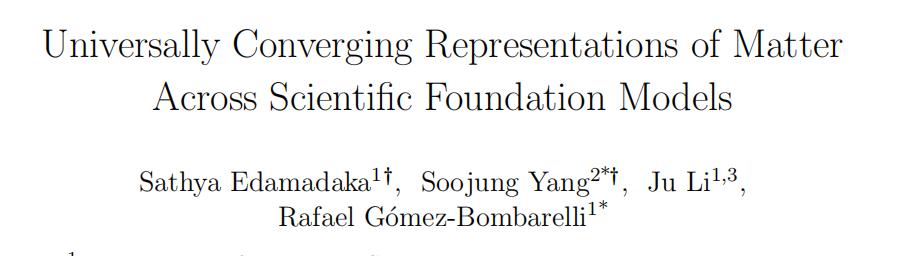
穷人福音,MIT研究:不用堆显卡,抄顶级模型作业就成
3 6 Ke· 2026-01-09 13:20
Core Insights - The study from MIT reveals that despite the diverse architectures of AI models, their understanding of matter converges as they become more powerful, suggesting a shared cognitive alignment towards physical truths [1][2][3] Group 1: Model Performance and Understanding - The research indicates that as AI models improve in predicting molecular energy, their cognitive approaches become increasingly similar, demonstrating a phenomenon known as representation alignment [3][5] - High-performance models, regardless of their structural differences, compress their feature space to capture essential physical information, indicating a convergence in understanding [5][6] Group 2: Cross-Architecture Alignment - The study highlights that models trained on different modalities, such as text and images, also show a tendency to align in their understanding of concepts, exemplified by the representation of "cats" [9][14] - This alignment suggests that powerful models, regardless of their input type, gravitate towards a unified internal representation of reality [14] Group 3: Implications for AI Development - The findings challenge the necessity of expensive computational resources for training large models, advocating for model distillation where smaller models can mimic the cognitive processes of larger, high-performance models [18][20] - The research emphasizes that the future of scientific AI will focus on achieving convergence in understanding rather than merely increasing model complexity, leading to more efficient and innovative AI solutions [22][24][25]

焦点复盘沪指放量涨近1%,全市场超150股涨逾10%,AI应用人气股实现20cm5连板
Sou Hu Cai Jing· 2026-01-09 09:53
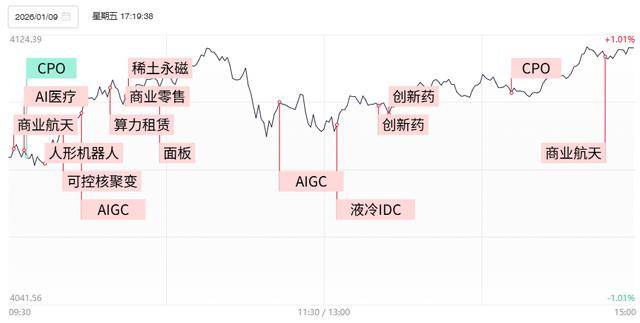
Market Overview - A total of 94 stocks hit the daily limit, with 47 stocks experiencing a limit down, resulting in a limit-up rate of 67%. The Shanghai Composite Index opened high and broke through 4100 points, while the Shenzhen Component Index rose over 1%. The total trading volume of the Shanghai and Shenzhen markets reached 3.12 trillion yuan, an increase of 322.4 billion yuan from the previous trading day, marking the fifth time in history that it surpassed 3 trillion yuan [1][8]. Stock Performance - Fenglong Co. achieved an 11-day consecutive limit-up, while Zhizhi New Materials reached a 5-day limit-up with a 20% increase. Other notable stocks include Kuaiji Elevator and Galaxy Electronics, both with 5 consecutive limit-ups, and Jiangshun Technology with 4 consecutive limit-ups. The market saw over 3900 stocks rise, with more than 100 stocks hitting the limit-up for two consecutive days [1][3][9]. Sector Analysis - The AI application, commercial aerospace, controllable nuclear fusion, and small metal sectors showed significant gains, while the insurance, photovoltaic, brain-computer interface, and banking sectors lagged behind [1][5]. - The commercial aerospace sector continued to thrive, with multiple positive developments, including Guangzhou's plan to build a strong advanced manufacturing city and the rise of satellite ETFs by over 6%. China Satellite's market capitalization surpassed 200 billion yuan for the first time [5][6]. Investment Trends - The enthusiasm for high-level stocks remains strong, with Fenglong Co. continuing its limit-up despite risk warnings. The market's risk appetite is still high, as evidenced by the strong performance of stocks like Jiangshun Technology and the ongoing interest in commercial aerospace investments [3][5]. - The AI application sector is rapidly penetrating consumer markets, with significant growth in companies like Doubao and DeepSeek. The AI advertising marketing sector is gaining attention, with stocks like BlueFocus rising over 14% [5][6]. Future Outlook - The market has ended a two-day consolidation and has shown a strong upward trend, breaking through the 4100-point mark. However, the internal structure of the market remains divided, and further gains may require digestion of profit-taking [8].
史上第六次!今天,A股成交额破3万亿元
Sou Hu Cai Jing· 2026-01-09 08:02
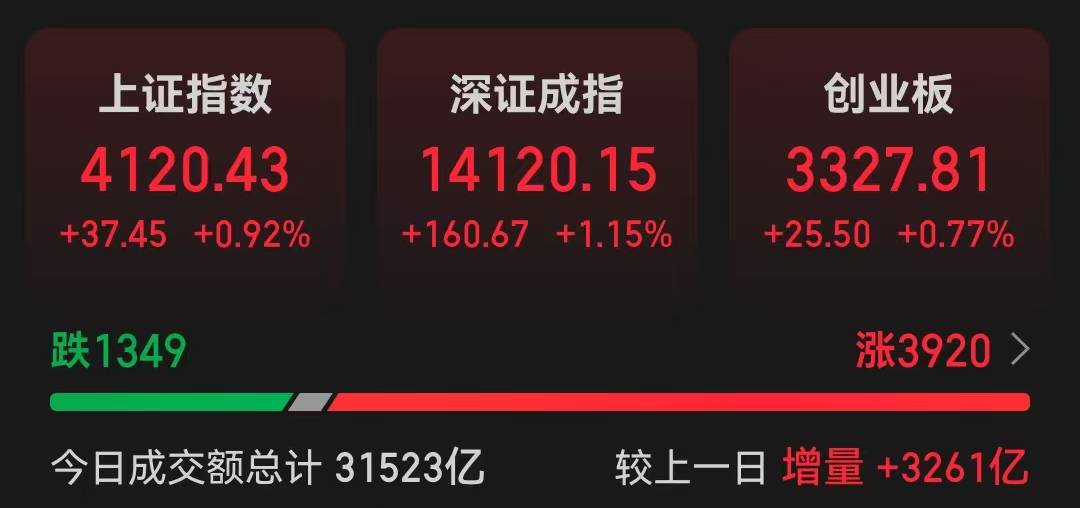
Market Performance - The A-share market experienced an increase, with the Shanghai Composite Index rising by 0.92% to 4120.43 points, the Shenzhen Component Index up by 1.15%, and the ChiNext Index increasing by 0.77% [1] - Market turnover exceeded 3 trillion yuan, reaching 31,523 billion yuan, marking the sixth occurrence in A-share history where turnover surpassed 3 trillion yuan [1] AI Application Sector - The AI application sector saw a comprehensive rise, particularly in AI + e-commerce, AI + healthcare, Sora concept, and Zhiyu AI segments [3] - The surge in AI applications was catalyzed by the recent listings of major model companies MiniMax and Zhiyu on the Hong Kong Stock Exchange [4] Industry Insights - Analysts suggest that the listings of Zhiyu and MiniMax will provide critical benchmarks for industry valuation and financing systems, marking a significant step in the "capital closed loop" for domestic large models [4] - The entry of these companies into the market signals the end of the "burn rate competition" at the large model level and the beginning of the "commercial value realization" at the AI application level [4] - The listings are expected to have a strong spillover effect on AI application firms, leading to three direct benefits: reduced computing costs, lowered procurement thresholds for B-end clients, and an explosion of standardized applications [4] Emerging Trends in AI - Two new hotspots in the AI application field have emerged: - AI for Science, which utilizes AI to accelerate scientific discovery and optimize research processes, with leading stock Zhizhi New Materials hitting a 20% limit-up for five consecutive days [5] - AI GEO (Generative Engine Optimization), which focuses on optimizing AI-driven search engines and Q&A systems to enhance content quality and brand visibility in AI-generated answers, with stocks like Yidian Tianxia and BlueFocus experiencing significant gains [5] Recent Developments - The Qwen model series was officially released and open-sourced, designed for multimodal information retrieval and cross-modal understanding, providing efficient solutions for mixed content understanding [5] - DeepSeek introduced a new architecture called mHC (manifold-constrained hyperconnection) aimed at addressing instability issues in traditional hyperconnections during large-scale model training while maintaining performance gains [6] Other Sector Performances - Other sectors such as commercial aerospace, computing power, and non-ferrous metals also saw increases [7]
AI for Science投资与创业:下一个十年的机会在哪?
3 6 Ke· 2026-01-09 05:47
Core Insights - The article discusses the transformative impact of AI in the field of science, particularly in drug development and related industries, highlighting the significant advancements made by companies like JingTai Technology in AI-driven pharmaceutical innovations [1][3]. Group 1: AI in Pharmaceutical Development - AI in pharmaceuticals has reached a "fruit-bearing" stage, with companies like JingTai securing major partnerships and contracts, such as a $3.45 billion collaboration with Eli Lilly and a nearly $60 billion agreement with DoveTree [5][11]. - The success of AI in drug development is evidenced by JingTai's MTS-004 oral disintegrating tablet reaching Phase III clinical trials, marking it as the first AI-enabled new drug in China to achieve this milestone [5][11]. - AI's ability to enhance drug discovery processes has shown efficiency improvements ranging from 20% to 80% in preclinical drug discovery [8][10]. Group 2: Future Opportunities in AI for Science - The conversation emphasizes the potential for AI to extend its capabilities beyond pharmaceuticals into fields like chemistry, materials science, and physics, suggesting that AI could drive foundational innovations in these areas [5][6]. - The "14th Five-Year Plan" indicates a strategic focus on high-tech industries, including quantum technology and bio-manufacturing, which could benefit from AI integration [6][11]. - The discussion highlights the importance of merging technological innovation with industrial applications to maximize the impact of AI in scientific research [6][11]. Group 3: Data as a Strategic Asset - The article notes that data will be a crucial asset in the AI-driven biopharmaceutical sector over the next 3-5 years, with a focus on improving data collection and quality [10][12]. - JingTai is actively working on building a competitive advantage through automated experimental platforms to enhance data acquisition and standardization [12][29]. - The importance of high-quality, rapidly feedback-capable data is emphasized, as it is essential for training AI models effectively [33][34]. Group 4: AI's Role in Drug Development Processes - The integration of AI in drug development processes is seen as a way to optimize both sequence design and modification design in nucleic acid drugs, allowing for more efficient and innovative drug development [41][44]. - The article discusses the potential for AI to redefine traditional drug development workflows, leading to new discoveries and commercial opportunities in emerging modalities [46][47]. - The need for a collaborative approach in drug development, where AI assists in both the design and clinical phases, is highlighted as a key to future success [14][41]. Group 5: Cross-Industry Innovations - The article suggests that AI's applications are not limited to pharmaceuticals but extend to materials science, energy, and agriculture, indicating a broad potential for innovation across various sectors [47][48]. - The shared technological foundations across industries allow for quicker adaptation and value realization in new fields, although the speed of data feedback and validation processes may vary [48][51]. - The potential for AI to enhance productivity in sectors like bio-manufacturing and quantum computing is also discussed, positioning China as a leader in these emerging industries [51].


AI应用有新热点!龙头股五个“20CM”涨停,行业迎加速发展
Zhong Guo Zheng Quan Bao· 2026-01-09 02:07
Group 1 - The core viewpoint of the news highlights the rapid growth and investment potential in AI applications, particularly in AI marketing and AI healthcare, with significant stock performance from companies like Yidian Tianxia and Shengguang Group reaching their daily limit [1] - ZhiTe New Materials has seen a stock price increase of over 127% this year, attributed to its development of "thin phase change high-temperature insulation and flame-retardant materials" using the AI for Science paradigm [1][2] - The AI for Science paradigm is recognized as a new model that leverages artificial intelligence to accelerate scientific discovery and optimize research processes, addressing key challenges in research-intensive industries [2] Group 2 - The concept of AI for Science is gaining traction as it is seen as the fastest area for commercializing AI applications, with a focus on solving long development cycles, high costs, and difficulties in trial and error [2] - According to Guojin Securities, AI for Science is entering an era characterized by "multi-modal large models + automated experiments," with the development of self-driving laboratories and multi-agent collaborative platforms [2] - The application scenarios of AI for Science are defined by three characteristics: long research cycles and high costs, data-driven and large-scale computation, and high-dimensional design space [2]

AI应用有新热点!龙头股四个“20CM”涨停,行业迎加速发展
Zhong Guo Zheng Quan Bao· 2026-01-08 05:50
Core Insights - The AI application sector is experiencing a strong performance, particularly in areas such as AI agents and multimodal AI, with a notable rise in the "AI for Science" segment [1] Group 1: AI for Science Overview - AI for Science is a new paradigm that utilizes artificial intelligence to accelerate scientific discoveries and optimize research processes, focusing on solving complex scientific problems through large models and intelligent agents [1] - The concept stock Zhite New Materials has seen a significant increase, with a 20% limit up and a total rise of 107.33% this year, attributed to its development of "thin phase change high-temperature insulation and flame-retardant materials" using the AI for Science paradigm [1] Group 2: Industry Trends - Industry experts indicate that AI for Science is the fastest area for commercial transformation within AI applications, addressing key pain points in research-intensive industries such as long cycles, high costs, and difficulty in trial and error [1] - According to Guojin Securities, AI for Science is entering an era characterized by "multimodal large models + automated experiments," with platforms like Self-Driving Lab accelerating development [2] - Future applications will involve close collaboration between AI and robotic experiments, creating a full-process closed-loop for scientific research, with three main characteristics: long R&D cycles and high costs, data-driven and large-scale computation, and high-dimensional design space [2]
A股新风口!四个“20CM”涨停!
天天基金网· 2026-01-08 05:18
Core Viewpoint - The article highlights the strong performance of emerging industries such as AI applications, controllable nuclear fusion, brain-computer interfaces, and commercial aerospace, while traditional financial sectors like securities and insurance experienced a downturn [2][10]. AI Applications - AI applications are gaining momentum, particularly in the area of AI for Science, which utilizes AI to accelerate scientific discoveries and optimize research processes [5][6]. - The stock of Zhite New Materials surged by 20% and has increased by 107.33% this year, driven by its development of thin-phase high-temperature insulation and flame-retardant materials using AI [6][8]. - Industry experts believe that AI for Science is the fastest area for commercializing AI applications, addressing key pain points in research-intensive industries [8]. Controllable Nuclear Fusion - The controllable nuclear fusion sector saw significant gains, with stocks like Hahwa Huaton and Hekang New Energy experiencing substantial increases [10][11]. - The sector's performance is bolstered by recent breakthroughs in nuclear fusion research, including the confirmation of the existence of a density-free zone in tokamak experiments [13][16]. Brain-Computer Interfaces - The brain-computer interface sector also showed strong performance, with companies like Aipeng Medical and Kefu Medical seeing notable stock increases [14]. - Recent funding developments, including a 2 billion RMB investment in Strong Brain Technology, highlight the growing interest and potential in this field [17]. Commercial Aerospace - The commercial aerospace sector experienced stock surges, with companies like Shaoyang Hydraulic and Tianrun Technology leading the gains [18][20]. - Analysts predict that emerging industries, including commercial aerospace and brain-computer interfaces, will continue to thrive in 2026, supported by favorable policies and technological advancements [20].

新热点!龙头股,四个“20CM”涨停
Zhong Guo Zheng Quan Bao· 2026-01-08 04:31
资料显示,AI for Science是利用人工智能技术加速科学发现、优化研究流程的新范式 ,其核心是通过大模型、智能体等工具解决复杂科学问题。 今天上午,其概念股志特新材(300986)"20CM"涨停,迎来四连板。今年以来,志特新材股价已涨107.33%。资料显示,依托AI for Science新范式,志特 新材与合作方凭借"AI+机器人"研发模式,研发出"薄型相变高温隔热阻燃材料"。 业内人士表示,AI for Science是AI应用里成果商业转化最快也是空间最可观的领域,核心源于其可以精准解决研发密集型行业"周期长、成本高、试错 难"的核心痛点,形成"技术突破—效率提升—商业闭环"的快速转化链路。 国金证券表示,AI for Science正在步入"多模态大模型+自动化实验"时代,"自驱动实验室"(Self-DrivingLab)等多智能体协同平台正加速发展。未来,AI 将与机器人实验密切配合,人机协同进行全流程闭环科学研究。其应用场景有三类特点:长研发周期与高成本、数据驱动与大规模计算、高维度设计空 间。 今天上午,AI应用、可控核聚变、脑机接口、商业航天四大新兴产业赛道联手走强。大金融回调,证 ...
强强联合!晶泰科技(02228)与晶科能源共建合资公司 AI 推进光伏效率极限
智通财经网· 2026-01-08 01:33
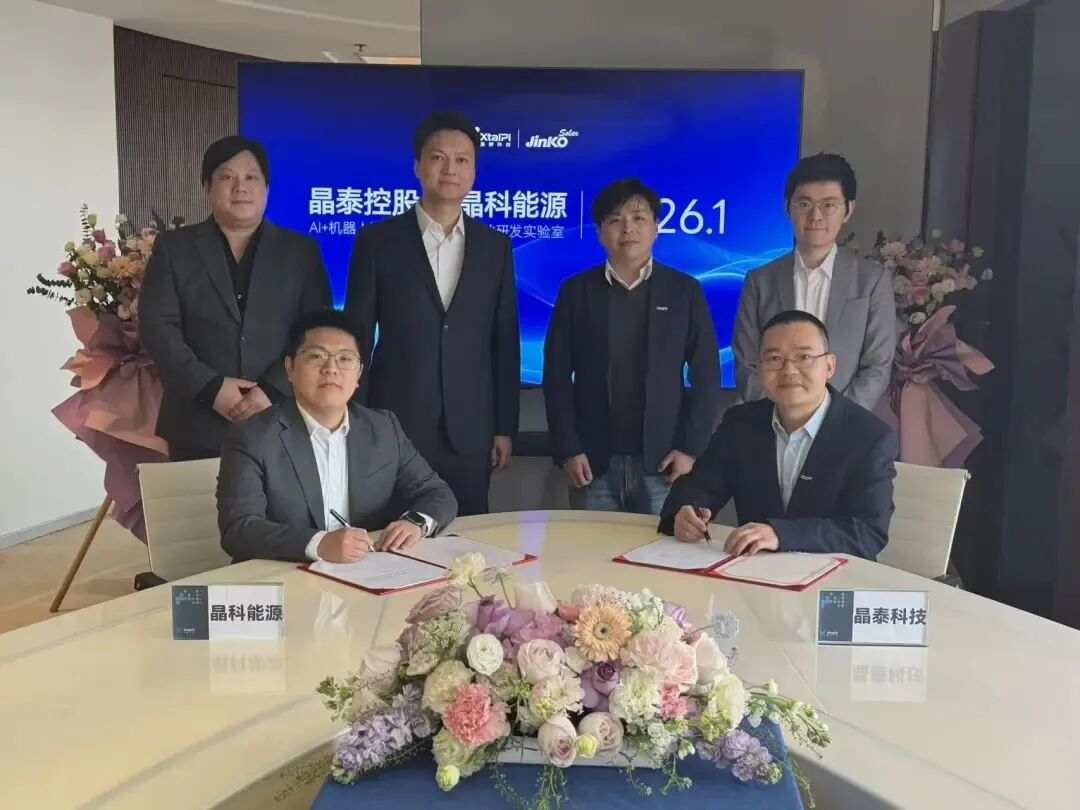
智通财经APP获悉,晶泰控股("晶泰","晶泰科技",02228)近日宣布,与晶科能源股份有限公司(688223.SH)子公司签署人工智能(AI)+自动化高通量叠层 太阳能电池研发战略合作协议,双方将共同成立合资公司,共建全球首个"AI 决策-机器人执行-数据反馈"全闭环叠层电池智造线 ,为不同的应用场景开 发高效率、高稳定性的太阳能电池产品。此举标志着两家在不同技术领域的领军者强强联合,正式开启在钙钛矿叠层等下一代光伏技术领域的深度协同。 联合实验室将突破性地通过把材料结构、配方、工艺、表征结果、器件性能等关键参数进行编码化(tokenize),实现基于大语言模型(LLM)以及多模态AI推 理和进化的迭代循环,重塑光伏研发范式,加速颠覆性技术的产业化进程。 晶泰科技:AI赋能材料创新的破局者 晶泰科技自 2015 年成立以来,始终聚焦 AI 与材料科学的交叉创新,打造了行业领先的 AI for Science (科学智能)研发平台。通过整合量子物理算法、AI 预测模型与大规模机器人自动化实验,平台实现从微观机理到宏观实验的跨尺度创新,突破虚拟算法与真实实验间的壁垒。其智能自主实验平台拥有超 200 台自动化 ...

AI for Science,有什么亮点?| 0107
Hu Xiu· 2026-01-07 13:15
Market Analysis - The semiconductor sector experienced significant gains, with the Shanghai Composite Index slightly rising by 0.05% and the Shenzhen Component Index increasing by 0.06% on January 7, marking a 14-day consecutive rise [1] - The total trading volume in the Shanghai and Shenzhen markets reached 2.85 trillion yuan, an increase of 476 billion yuan compared to the previous trading day, with trading volumes exceeding 2.8 trillion yuan for two consecutive days [1] Semiconductor Industry Developments - China initiated an anti-dumping investigation into imported dichlorodihydrosilane from Japan, a move aimed at safeguarding the semiconductor materials supply chain [7] - The investigation is expected to benefit domestic companies by improving market competition and reducing reliance on Japanese imports, particularly in the photolithography materials sector [8] AI for Science - AI for Science (AI4S) represents a new paradigm in scientific research, utilizing AI to accelerate scientific discoveries and redefine traditional research methodologies [9] - The integration of AI in scientific research enhances efficiency, allowing for significant reductions in research timelines and improved predictive capabilities [10] Company-Specific Developments - PIANO, a custom home furnishing company, underwent a control change with the semiconductor investment firm Chuxin Group acquiring a controlling stake for approximately 839 million yuan [21] - The new control by Chuxin Group, led by a prominent figure in semiconductor investments, reflects the challenges faced by traditional home furnishing companies amid a declining real estate market [22][25] Tungsten Industry Insights - Xianglu Tungsten Industry has established a complete industrial chain in tungsten, from mining to deep processing, and is focusing on the production of photovoltaic tungsten wire, which has seen significant market interest [30][33] - The company reported a substantial increase in revenue and net profit, driven by rising demand for hard alloys and the successful launch of its photovoltaic tungsten wire products [35][38]