固态电池技术

Search documents
固态电池产业调研更新
2025-06-09 15:30
Summary of Solid-State Battery Industry Research Update Industry Overview - The solid-state battery industry is experiencing significant advancements, particularly in the development of sulfide solid-state batteries, which are favored for their superior conductivity compared to oxide alternatives. Major companies like CATL and BYD are actively pursuing the sulfide route, accelerating product launches and industry progress [1][5][7]. Key Points Cost Reduction Potential - Solid-state batteries have substantial cost reduction potential by utilizing higher voltage platforms and higher capacity electrode materials. For instance, CATL's next-generation solid-state battery may achieve 500 Wh/kg, which could reduce material consumption by 60% compared to current lithium iron phosphate batteries [2][5]. Market Trends - The solid-state battery technology is transitioning from pilot to mass production, with automotive-grade batteries reaching a 60 Ah application state, indicating readiness for road testing and commercial production. CATL and BYD are expected to undergo mid-term assessments by the Ministry of Industry and Information Technology and the Ministry of Finance in September 2025 [1][8]. Sulfide Electrolyte Development - The sulfide electrolyte technology is rapidly evolving, with several companies showcasing products with conductivity nearing that of liquid electrolytes. Companies like Ruigu New Materials, Yuyuan Tianci, and Solid State Technology are leading in this field, with a 300 kg production line already operational [1][9][10]. Production Techniques - Various production techniques for sulfide electrolytes are being explored, including liquid-phase, solid-phase, carbothermal reduction, and CVD methods. The CVD method, used by Xiamen Tungsten New Energy, is noted for its potential to achieve low-cost production [1][11]. Equipment Market - Key players in the solid-state battery equipment market include Honggong Technology and Nacronor, focusing on material automation processing and rolling equipment, respectively. Investment in solid-state battery sectors should prioritize sulfide electrolyte materials and related equipment [3][12]. Investment Recommendations - Investment opportunities should focus on companies involved in sulfide electrolyte materials and related equipment, such as Xiamen Tungsten New Energy, Guanghua Technology, and Yuyuan New Materials, which show significant growth potential and reasonable valuations [3][13][14]. Industry Challenges - Smaller battery companies face challenges in leveraging solid-state technology due to strict electrochemical laws, making it difficult to achieve breakthroughs without substantial technological advancements [4]. Future Outlook - The solid-state battery industry is currently transitioning from small-scale trials to mid-scale production, with expectations for increased product output and capacity expansion in the coming year [15]. Notable Company Developments - Xiamen Tungsten is expected to achieve significant performance improvements in its lithium cobalt oxide products, while Yuyuan New Materials has made rapid advancements in high-purity lithium sulfide production, collaborating closely with major clients like CATL and Huawei [21][22][23]. Emerging Players - Companies like Sanxiang New Materials in the halide electrolyte sector are also showing promise, with significant growth expected in the coming years if breakthroughs are achieved [24][25]. Conclusion - The solid-state battery industry is poised for rapid growth, driven by advancements in sulfide technology and increasing investments in production capabilities. Key players are well-positioned to capitalize on these trends, making it a compelling area for investment.




固态电池专家系列 - 电池专家
2025-06-09 15:30
Summary of Solid-State Battery Industry Conference Call Industry Overview - The solid-state battery industry is currently experiencing stagnation in overall performance, but capital expenditures on equipment are accelerating, leading to increased recommendations and conference calls [2][3] - The industry is gradually leaning towards sulfide routes for solid-state batteries, with major domestic manufacturers like BCC actively exploring these solutions [1][6][9] Key Developments - A pilot production line for solid-state batteries is being established, expected to be completed by the end of this year, focusing on large cell production (590 mm standard length, 80-100 Ah) [2][3] - Current production capacity is limited to a few hundred batteries per day, indicating that the pilot line is not yet at gigawatt-hour scale [1][4] - Major manufacturers are planning small-scale production of high-nickel cathode batteries by 2027 and a combination of high-nickel ternary and lithium-rich manganese cathode batteries by the end of 2025 [1][9] Technical Insights - The energy density of single cells is above 400 Wh/kg, but grouping them results in a decrease in energy density. Cycle life is approaching 1,000 cycles, meeting solid-state battery goals, but requires significant pressure to ensure conductivity [10] - Fast charging technology faces bottlenecks, with current pilot lines supporting 1C fast charging, but higher rates require further optimization of material systems and interface processing [11][13] - The solid-state battery preparation routes include liquid phase, solid phase, and carbothermal reduction methods, with no clear best route established yet [3][16] Material and Design Considerations - The main cathode materials remain high-nickel ternary and lithium-rich manganese, with sulfide lithium primarily used to optimize interfaces rather than as a cathode material [14][15] - The industry is recognizing the need to integrate halides to solve cathode issues and polymers for anode problems, leading to a more practical design approach [6][9] - The current market for silicon-carbon anode materials is limited, with a small percentage of adoption in the liquid electrolyte base [31] Future Projections - Solid-state technology is expected to see small-scale production by 2027 and commercialization by 2029, with large-scale production line construction potentially accelerating in 2028 [32] - The capital expenditure for solid-state technology is anticipated to remain stable, focusing on dry coating for cathodes and other specialized equipment [33] Challenges and Risks - Lithium metal batteries face significant challenges, including dendrite formation and membrane puncture leading to short circuits, despite their high energy density potential [8][19] - The commercial viability of lithium metal anodes remains uncertain, with most companies still focusing on silicon-carbon solutions [19][20] Conclusion - The solid-state battery industry is at a critical juncture, with ongoing developments in technology and production capabilities. However, challenges in fast charging, material optimization, and commercial scalability remain significant hurdles to overcome.
第二批参会企业名单!2025(第三届)中国固态电池技术发展与市场展望高峰论坛
鑫椤锂电· 2025-06-09 07:49
关注公众号,点击公众号主页右上角" ··· ",设置星标 "⭐" ,关注 鑫椤锂电 资讯~ 2025(第三届)中国固态电池 技 术 发 展 与 市 场 展 望 高 峰 论 坛 会议主办: 鑫椤资讯 会议时间: 2025年7月8-9日(8号报到) 会议地点: 中国·上海 论坛议题 I C C S I N O | 发言嘉宾 | 发言议题 | | --- | --- | | ICC鑫椤资讯 总经理 连萍 | 欢迎致辞 | | 国联汽车动力电池研究院有限责任公司 研究院院长 杨容 | 全固态电池工程技术难点 | | 上海杉杉科技有限公司 待定 | 硅基负极在固态电池中的应用现状及前景 | | 天津国安盟固利新材料科技有限公司 待定 | 富锂锰基正极材料在固态电池上的应用 | | | 颁奖 茶歇 | | 深圳新宙邦科技股份有限公司固态子公司 董事长 王希敏 | 待定 | | 深圳市星源材质科技股份有限公司 研发总监/博士 郭辰 | 星源固态电解质膜解决方案 | | 上海恩捷新材料科技有限公司 待定 | 待定 | | 浙江金羽新能源科技有限公司 董事长 黄杜斌 | 待定 | | | 午餐 | | 中科院上海硅酸盐研究所 ...

全固态电池产业化持续推进,看好固态电解质与核心设备
2025-06-09 01:42
全固态电池产业化持续推进,看好固态电解质与核心设备 20250608 今年以来,固态电池产业链出现了显著的边际变化。首先,大厂如比亚迪和宁 德时代明确了 2027 年和 2030 年的时间节点,尤其是 2027 年小批量装车的 节点可能会提前。这些企业在全固态电池中试线布局上加速推进,预计到今年 年底,我们将看到许多头部电池企业在中试金桥方面取得进展。此外,在单品 容量方面,例如国轩高科在 5 月份推出了单体容量为 70 安时的全固态电池产 品,其他企业也在加速推出类似产品,并进行相关测试。总体来看,固态电池 的发展时间表有望提前,加速实现市场布局。 固态电池相较于其他新型技术方向有哪些优势? 固态电池相较于其他新型技术方向具有显著优势。首先,其确定性较强,并且 市场容量和目标导向明确。在材料端和设备端方面,与历史高位相比,目前调 当升科技超高镍三元正极材料领先,为辉能科技、清陶能源、蔚来汽车 和赣锋锂业等客户提供配套,半固态电池正极材料工作量接近千吨,受 益于半固态电池市场扩大。 长阳科技固态定制基膜孔隙率达 75-85%,孔径达 85-100 纳米,可压 缩率大于 50%,满足全固态电池对隔膜的要求,获下 ...
固态电池产业链追踪 - 电池制造
2025-06-09 01:42
Summary of Solid-State Battery Industry Conference Call Industry Overview - The solid-state battery industry is experiencing significant advancements in research and development, with mainstream battery companies actively pushing pilot production lines, expected to achieve gigawatt-hour capacity by the end of next year and small-scale production by 2027 [1][3][4]. Key Developments - The cost of sulfide solid electrolyte materials has significantly decreased, with the number of suppliers increasing, leading to self-synthesized costs dropping to a few thousand yuan per kilogram, providing a cost advantage for commercializing solid-state batteries [1][3]. - The number of equipment manufacturers has increased significantly, with domestic manufacturers developing core equipment, which reduces production costs and enhances competitiveness [1][3]. - Both dry and wet film formation processes are maturing, allowing for continuous production of solid-state cells, with technological breakthroughs exceeding expectations [1][3]. - The National 718 Project is accelerating the development of solid-state batteries, with strict acceptance standards and broad participation from companies, laying the foundation for large-scale applications [1][5]. Performance Metrics - The Ministry of Industry and Information Technology (MIIT) has set performance metrics for mid-term acceptance, with companies achieving energy densities of approximately 350 watt-hours per kilogram, indicating significant industry progress [1][6][7]. Challenges and Bottlenecks - The solid-state battery industry faces challenges in material costs and manufacturing processes, particularly with lithium sulfide, which is sensitive to environmental conditions [8]. - Manufacturing difficulties arise from the need for high-pressure forming to address interface issues and ensure product performance [8]. Future Trends - The solid-state battery market is expected to see a shift towards lithium metal anodes to enhance energy density, with potential advancements in vacuum coating technology to address interface issues [2][10][12]. - The industry anticipates achieving small-scale vehicle deployment by 2027 and large-scale applications around 2030, with ongoing evaluations of energy density improvements and safety performance [25]. Company-Specific Updates - Companies like CATL and BYD are making rapid progress in pilot line construction and process validation, while others like Geely are establishing relevant laboratories [14][15]. - CATL's ultra-low dew point pilot line has achieved continuous production, although specific gigawatt-hour capacity details remain unclear [15]. Conclusion - The solid-state battery industry is on a promising trajectory, with significant advancements in technology, cost reductions, and increased competition among suppliers. The upcoming years are critical for achieving production milestones and addressing existing challenges to ensure successful commercialization.
以半固为阶 向全固而行
Zhong Guo Qi Che Bao Wang· 2025-06-09 01:31
Core Viewpoint - Solid-state batteries are a hot topic in the electric vehicle industry, but their commercialization faces significant challenges despite recent advancements by leading battery companies [2][6]. Group 1: Industry Trends - Leading battery companies are adopting a dual strategy of developing both solid-state and semi-solid-state batteries to accelerate technological breakthroughs and market positioning [3][6]. - CATL has launched a semi-solid-state battery with an energy density of 500Wh/kg and plans to achieve small-scale production of solid-state batteries by 2027 [3][4]. - BYD has been developing solid-state batteries since 2016, with plans to launch a 60Ah solid-state battery in 2024 and achieve mass production by 2030 [4][5]. - Guoxuan High-Tech has completed its first solid-state battery production line with a design capacity of 0.2GWh and a yield rate of 90% [4][5]. Group 2: Technical Challenges - The transition from laboratory samples to mass production of solid-state batteries is expected to take 8 to 10 years, with many current offerings being semi-solid or quasi-solid-state batteries [6][7]. - The industry lacks a clear and suitable production technology for solid-state batteries, with various technical routes each having distinct advantages and disadvantages [6][7]. - High production costs and low yield rates hinder the large-scale adoption of solid-state batteries, with significant modifications required for existing production lines [7][8]. Group 3: Market Outlook - Semi-solid-state batteries are projected to have a stronger commercial viability in the short term, with expectations that they will dominate the market in the next five years [8][9]. - The energy density of semi-solid-state batteries ranges from 350 to 450Wh/kg, supporting rapid charging and stable performance across a wide temperature range [8][9]. - Several automakers have already begun mass production of semi-solid-state batteries, indicating a growing acceptance and integration of this technology in the market [9][10]. Group 4: Strategic Implications - The dual approach of advancing semi-solid-state batteries while continuing to invest in solid-state technology is seen as a strategic advantage for companies in the industry [10][12]. - Solid-state batteries are viewed as a potential game-changer for the electric vehicle market, but their development is still in the early stages, requiring time for the industry to mature [11][12].




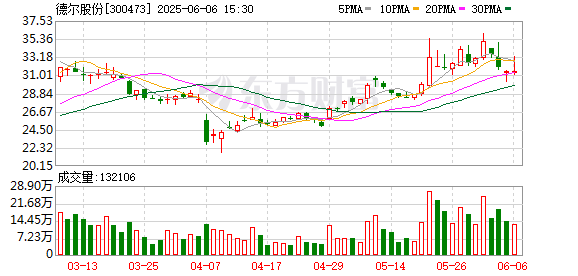
德尔股份投资3亿元加码固态电池中试线 抢占氧化物路线量产先机
Zheng Quan Shi Bao Wang· 2025-06-08 14:01
近年来,德尔股份固态电池研发成果显著。2023年,公司在日本开发的固态电池样品已通过第三方机构 多项严苛安全测试,包括针刺、加热和过充电实验,安全性表现突出。2025年,德尔股份固态电池技术 攻关持续突破,在今年2月举行的东京国际二次电池展上,公司展示了第二代固态电池产品,能量密度 达到260Wh/kg,而第三代固态电池产品的目标能量密度将突破400Wh/kg。 今年年初,德尔股份在上海设立的试制线成功完成国内首款固态电池样品的制备,验证了核心涂覆工艺 在国内生产环境下的可复制性,具备为新能源汽车、无人机、机器人等多应用场景进行定制化开发的能 力。 当前行业普遍认为,全固态电池的商业化应用预计将于2027年左右在部分高端车型上实现装车,并有望 在2030年进入更大规模的量产阶段,从而有力推动新能源汽车实现续航里程突破1000公里、充电时间缩 短至10分钟以内的目标。如今,国内外主流电池企业均已跑步入场,全力抢占技术制高点和产业化先 机。中泰证券指出,固态电池将在"政策引导+市场需求+技术迭代"三重驱动力的共同作用下,带动锂 电池行业完成新一轮升级革命。 (文章来源:证券时报网) 德尔股份微信公众号日前发文表示 ...

报告领取!《50+国内外固态电池重点企业分析报告(2025)》
DT新材料· 2025-06-08 12:07
固态电池技术路线 液态锂电技术路径的区分要点在于正极材料,而固态锂电技术路径的区分要点在于电解质。按照电解质区分,固态电池路径可 分为四类,包括:氧化物、硫化物、聚合物和卤化物,前三类电解质为当前的主流技术路线,三大体系各有优势: 【DT先进电池】 整理了 《 国内外固态电池企业盘点报告(2025.5)——企业信息、技术路线与产品、 最新动态 》 PPT (持续更新), 共56页 ,涵盖 50 家重点企业分析 (相关布局、近期事件等) 等内 容。 需要本份产业报告的朋友:扫码联系领取(PS:工作人员将于24小时内与您取得联系,并邀请加入专业交 流群) 报告部分内容如下: | 固体电解质 | 离子电导率 | 锂金属兼容性 | 长期运行稳定性 | 高电压兼容性 | 隔膜适用性 | 正极电解质适用障 | | --- | --- | --- | --- | --- | --- | --- | | | 相对适中,介于硫化物和聚 | 比硫化物和聚合物有更好的电 | 易碎,电化学稳定性好。 | 宽的电化学窗口可造弱高 | 可用作隔膜材料 | 无法用作高容量和厚电极 | | 氧化物 | 合物之间、 | 化学和力学稳定性 | ...
报告领取!《国内外固态电池企业分析报告(2025)》
DT新材料· 2025-06-06 15:51
【DT先进电池】 整理了 《 国内外固态电池企业盘点报告(2025.5)——企业信息、技术路线与产品、 最新动态 》 PPT (持续更新), 共56页 ,涵盖 50 家重点企业分析 (相关布局、近期事件等) 等内 容。 需要本份产业报告的朋友:扫码联系领取(PS:工作人员将于24小时内与您取得联系,并邀请加入专业交 流群) 报告部分内容如下: 液态锂电技术路径的区分要点在于正极材料,而固态锂电技术路径的区分要点在于电解质。按照电解质区分,固态电池路径可 分为四类,包括:氧化物、硫化物、聚合物和卤化物,前三类电解质为当前的主流技术路线,三大体系各有优势: | 固体电解质 | 离子电导率 | 锂金属兼容性 | 长期运行稳定性 | 高电压兼容性 | 隔膜适用性 | 正极电解质适用障 | | --- | --- | --- | --- | --- | --- | --- | | | 相对适中,介于硫化物和聚 | 比硫化物和聚合物有更好的电 | 易碎,电化学稳定性好。 | 宽的电化学窗口可造弱高 | 可用作隔膜材料 | 无法用作高容量和厚电极 | | 氧化物 | 合物之间、 | 化学和力学稳定性 | 不易于分解和氢化 ...
每日速递 | 中国电气装备超736万支电芯集采启动
高工锂电· 2025-06-06 09:45
Group 1: Industry Events - The 2025 High-Performance Sodium Battery Industry Summit is scheduled for June 9, 2025, at the Shangri-La Hotel in Suzhou, organized by GGII and sponsored by Zhongna Energy [2] - The 2025 High-Performance Solid-State Battery Technology and Application Summit will take place on June 10, 2025, at the same venue, organized by GGII and sponsored by Liyuanheng [3] Group 2: Battery Procurement and Projects - China Electrical Equipment Group announced a large-scale procurement project for energy storage battery cells on June 5, covering four segments with a total expected procurement of 7,365,604 units, amounting to 7,248 MWh capacity [3] - Chang'an, in collaboration with BYD and local government, signed an agreement to establish a new energy vehicle parts distribution center, focusing on logistics, infrastructure, and battery recycling [5] Group 3: Technological Advancements - A second-generation semi-solid-state battery developed by Funeng Technology has an energy density of 330-350 Wh/kg, capable of supporting over 1,000 km single-charge range, positioning it as an industry leader [7] - Shengxin Lithium Energy's lithium salt project in Indonesia is expected to begin bulk supply in Q3 2024, with a production capacity of 60,000 tons [13][14] - Hunan Mengxing Nano Material Technology's lithium manganese iron phosphate project is set to commence production by the end of June, with an annual output of 40,000 tons and an estimated annual revenue of 2 billion yuan [17] Group 4: Market Developments - Youyou Green Energy officially listed on the Shenzhen Stock Exchange's ChiNext on June 5, with a closing price of 151.06 yuan, reflecting a 68.64% increase, focusing on the development and production of DC charging equipment for electric vehicles [10] - Lucid Motors has signed a long-term supply agreement with Graphite One for natural graphite, starting in 2028, to support its battery supply chain [19]