
创新药

Search documents
医药外包概念普遍走高 药明生物(02269)涨6.11% 机构看好看好CXO在业绩和估值端迎来...
Xin Lang Cai Jing· 2025-12-19 12:49
Group 1 - The pharmaceutical outsourcing sector is experiencing a general increase, with notable stock price rises for companies such as WuXi Biologics (6.11%), Kelun Pharmaceutical (5.52%), and others [1] - A recent report from Century Securities indicates that the NDAA bill has been implemented, leading to a reduction in geopolitical risks [1] - In the first three quarters, the total amount of license-out agreements for innovative drugs in China reached a historical high, indicating a continuous improvement in the innovative drug industry [1] Group 2 - The performance and new orders for CXO companies are showing signs of improvement, with the market beginning to focus on preclinical safety evaluation assets [1] - CXO companies, as part of the upstream of the innovative drug industry chain, are expected to benefit from the enhanced competitiveness of domestic innovative drugs, leading to a recovery in industry prosperity [1] - The industry is anticipated to see a dual recovery in both performance and valuation for CXO companies [1]
交银国际:年末国产创新药出海交易密集落地 2026年向上趋势中价值回归可期
Zhi Tong Cai Jing· 2025-12-19 08:49
Group 1 - The core viewpoint of the report is that there is a trend of increasing domestic innovative drug transactions as the year-end approaches, with a positive outlook for value recovery by 2026 [1] - Since October, the proportion of domestic investors holding pharmaceutical stocks through the Hong Kong Stock Connect has slightly decreased, while foreign investment remains stable, indicating a continued focus on innovative drug layouts by both domestic and foreign investors [1] - This week, multiple business development (BD) transactions exceeding $1 billion have been completed, involving both multinational corporations (MNCs) and small to medium-sized biotech companies, suggesting a concentration of new BD opportunities as the year ends [1] Group 2 - The report recommends focusing on specific segments: 1) Innovative drugs such as 3SBio (01530), Eucure Biopharma (06996), and BeiGene (06160), which have rich catalysts and valuations that do not yet reflect the core value of major products; 2) CXO companies like WuXi AppTec (02269) that benefit from high downstream demand and marginal recovery in financing; 3) Hospital, medical device, and diagnostics sectors that may have reversal opportunities as regulatory uncertainties gradually ease [2]


港股收评:恒指涨0.75%,科技股普涨,医药类股活跃,免税龙头中国中免大涨近7%
Ge Long Hui· 2025-12-19 08:24
Core Viewpoint - The US CPI annual rate decline has led to a rally in US stocks, boosting risk market sentiment, which positively impacted the Hong Kong stock market with significant gains in major indices [1] Group 1: Market Performance - The Hang Seng Index rose by 0.75%, while the National Enterprises Index and the Hang Seng Technology Index increased by 0.68% and 1.12%, respectively [1] - Major technology stocks such as Tencent, Kuaishou, NetEase, Meituan, and Baidu all saw gains exceeding 1% [1] Group 2: Sector Performance - Pharmaceutical stocks were notably active, with expectations of continued growth in innovative drugs through 2026, leading to significant increases in related stocks [1] - The gambling sector experienced substantial gains, with MGM China leading the charge with a 6.6% increase [1] - The official launch of the Hainan island closure led to a nearly 7% rise in China Duty Free Group, boosting the duty-free concept stocks [1] - AI-driven demand for fiber optic cables resulted in a 12% surge in Yangtze Optical Fibre and Cable, positively affecting the optical communication sector [1] Group 3: Other Sector Movements - The automotive sector saw a rebound after a period of decline, while wind power, vocational education, photovoltaic, insurance, and Apple-related stocks all experienced gains [1] - Conversely, heavy machinery stocks faced declines, with China National Heavy Duty Truck falling over 6%, and gold stocks generally performed weakly due to lower gold prices [1] - Other sectors such as sports goods, ports and shipping, and oil stocks showed mixed performance, with some remaining sluggish [1]

疫苗ETF(159643)涨超0.8%,创新主线结构性机会受关注
Mei Ri Jing Ji Xin Wen· 2025-12-19 07:37
Core Viewpoint - The report highlights the strong performance of structural innovation in the healthcare sector, particularly in CXO and innovative drugs, while blood products, retail pharmaceuticals, vaccines, and IVD indices have seen declines [1]. Summary by Categories Innovation in Pharmaceuticals - The focus is on innovative drugs, particularly companies with strong commercialization capabilities and rich pipelines in BioPharma and Pharma, as well as cutting-edge technologies like gene therapy and small nucleic acids [1]. Medical Devices - The medical device sector is expected to see opportunities post-2025 after inventory clearance, with a focus on endoscopy and robotics. Innovative consumables in neurointervention and peripheral intervention are also highlighted as key areas supported by national policies [1]. Domestic Consumption in Pharmaceuticals - Companies related to domestic consumption in the pharmaceutical sector are expected to benefit from policies emphasizing domestic demand, as outlined in the Central Economic Work Conference [1]. External Demand Recovery - Following the Federal Reserve's interest rate cuts and the passage of the new Biosecurity Act in the House, uncertainties in policies are expected to diminish, leading to a potential recovery in overseas orders for external demand-oriented CXO companies, which may alleviate valuation pressures in the sector [1]. Vaccine ETF - The Vaccine ETF (159643) tracks the Vaccine Biotechnology Index (980015), which selects listed companies involved in vaccine research, production, and sales, reflecting the overall performance of the biotechnology sector, particularly in vaccines. This index focuses on bioproducts and medical research, showcasing high growth and innovation potential, making it suitable for investors interested in the biopharmaceutical industry [1].
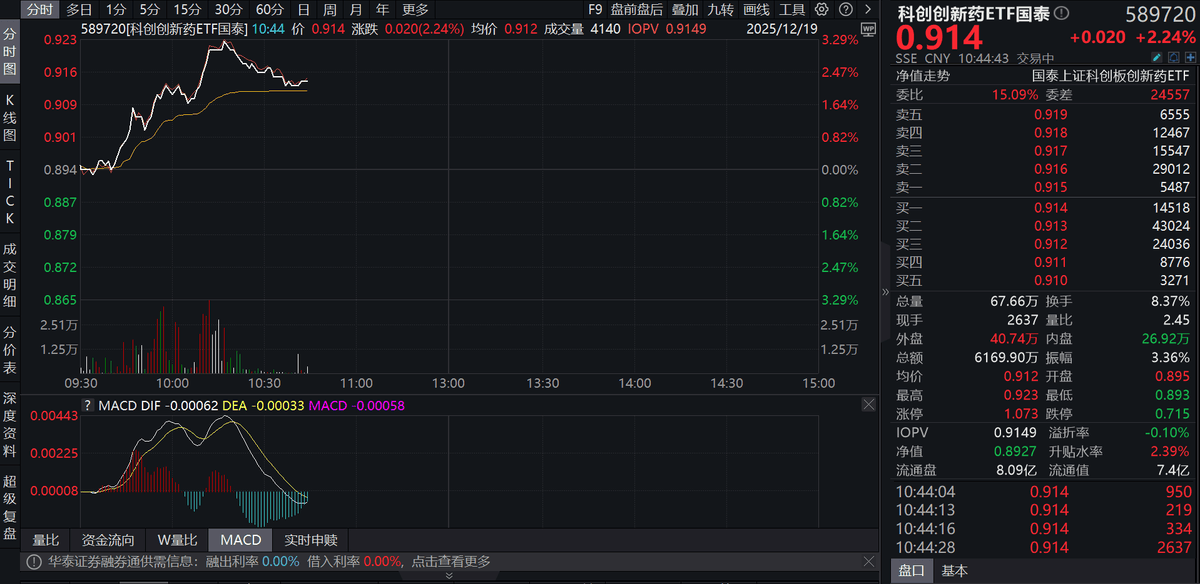
聚焦硬核科技,创新助力成长,20cm标的科创创新药ETF(589720)涨超2%
Sou Hu Cai Jing· 2025-12-19 05:34
Group 1 - The core point of the news is that BeiGene's self-developed drug BGB-B2033 has received FDA Fast Track designation for the treatment of hepatocellular carcinoma, indicating significant progress in the small nucleic acid drug field and positive catalysts for the innovative drug sector, leading to a 2% increase in the innovative drug ETF (589720) [1][2] Group 2 - BeiGene's BGB-B2033 is currently undergoing a global multi-center Phase I clinical trial to verify its technical feasibility [2] - Eifang Biotech's TYK2 inhibitor D-2570 has shown promising Phase II clinical data, with a PASI 90 response rate of 77.5% and PASI 100 response rate of 50% in the high-dose group after 12 weeks, outperforming Takeda's Zasocitinib Phase III data [2] - The National Healthcare Security Administration of China announced the addition of 114 new drugs to the National Basic Medical Insurance Drug List, including 50 innovative drugs, with an overall success rate of 88%, higher than the 76% success rate in 2024 [2] Group 3 - The innovative drug sector is experiencing accelerated development due to technical breakthroughs and business development (BD) efforts, with a notable increase in the number of approved domestic innovative drugs and overseas licensing transactions [5] - The small nucleic acid drug field is on the verge of significant growth, driven by delivery technology breakthroughs and the expansion of indications, indicating a golden development period for the industry [6] Group 4 - The innovative drug ETF (589720) has outperformed Hong Kong's innovative drug sector by nearly 10 percentage points since the "924 market" began, showcasing higher performance recovery elasticity [7] - Historical performance data shows that the innovative drug ETF has achieved a return of 111.08% compared to 102.88% for Hong Kong's innovative drug sector [8]
20cm速递|科创创新药ETF国泰(589720)涨超2.1%,行业回暖信号受关注
Sou Hu Cai Jing· 2025-12-19 04:10
Group 1 - The core viewpoint of the news highlights a positive outlook for the pharmaceutical and biotechnology industry in China, with multiple favorable trends expected by 2025 [1] - The medical device procurement market is recovering, with a year-on-year growth of 29.8% in Q3 2025, indicating a turning point in revenue for medical device companies [1] - The domestic centralized procurement and normalization of anti-corruption in healthcare are driving companies to seek high-margin markets abroad [1] Group 2 - The innovative drug sector is entering a period of significant pipeline development, with the market size expected to exceed 400 billion yuan in 2024 and 113 domestic innovative drugs approved during the "14th Five-Year Plan" period [1] - Record amounts of license-out agreements for Chinese innovative drugs have been achieved, with 68% of preclinical projects focusing on emerging therapies such as ADCs and bispecific antibodies [1] - The government is actively supporting brain-computer interface policies, with technological advancements from companies like Neuralink accelerating industrialization [1] Group 3 - The industry valuation is approaching the 10-year average level, with public fund holdings gradually increasing [1] - The commercial health insurance payment system is improving, which is expected to facilitate the transition of innovative drug payments from a single medical insurance model to a multi-payment model [1] - The chemical pharmaceutical sector is leading the market, driven by innovative drugs and AI healthcare, with noticeable differentiation in sub-sectors [1]
近4700只个股上涨
第一财经· 2025-12-19 03:47
Core Viewpoint - The A-share market shows positive momentum with significant gains in major indices, particularly in the retail and consumer sectors, driven by government initiatives to boost new consumption models [3][6]. Market Performance - As of midday, the Shanghai Composite Index rose by 0.59% to 3899.31, the Shenzhen Component Index increased by 0.93% to 13175.13, and the ChiNext Index climbed by 0.99% to 3137.73 [4]. - The retail sector led the market with a 4.01% increase, followed by duty-free shops and dairy industries, indicating strong consumer sentiment [5]. Sector Highlights - The consumer sector, including retail and food and beverage, continues to perform well, with several stocks reaching their daily limit up [6]. - The business environment is supported by a recent notice from the Ministry of Commerce and the Ministry of Finance to pilot new consumption models in 50 cities, which is expected to further stimulate growth in the consumer sector [6]. Stock Movements - Notable stock performances include Horizon Robotics rising nearly 7% and XPeng Motors increasing by nearly 5% within the technology sector [8]. - The innovative pharmaceutical sector saw a rebound, with stocks like Yifang Bio rising nearly 10% [9]. Trading Volume - The total trading volume in the Shanghai and Shenzhen markets reached 1.09 trillion yuan, an increase of 42.1 billion yuan compared to the previous trading day, with nearly 4700 stocks rising [5].

创新药板块飙升,恒生创新药ETF(159316)标的指数涨超2%,各地支持政策密集出台
Sou Hu Cai Jing· 2025-12-19 03:29
Core Viewpoint - The Hong Kong innovative drug sector is experiencing a significant rise, driven by supportive government policies and a focus on high-quality development in the pharmaceutical industry [1][2]. Group 1: Market Performance - The Hang Seng Hong Kong Stock Connect Innovative Drug Index rose by 2.0% as of 11:05 AM, with notable gains in stocks such as InnoCare Pharma-B, which increased by over 7%, and Lepu Biopharma-B, Innovent Biologics, and 3SBio, each rising by over 4% [1]. - The Hang Seng Innovative Drug ETF (159316) recorded a trading volume of nearly 400 million yuan [1]. Group 2: Policy Support - Xi'an has released the "Implementation Plan for Promoting the Capacity Enhancement of the Biopharmaceutical Industry (2025-2027)," aiming to achieve breakthroughs in key drug development technologies in areas such as stem cell drugs, peptide drugs, liver-targeted innovative drugs, and anesthetics [1]. - Various regions, including Beijing, Shanghai, Chongqing, and Sichuan, have introduced policies this year to promote high-quality development in the innovative drug sector [1]. Group 3: Industry Outlook - Changjiang Securities notes that the pharmaceutical industry is experiencing a policy cyclical trend, with comprehensive support policies for the innovative drug industry being gradually implemented [1]. - The industry is entering a new cycle of policy support, with a focus on "hard innovation" assets and those with strong overseas potential [1].
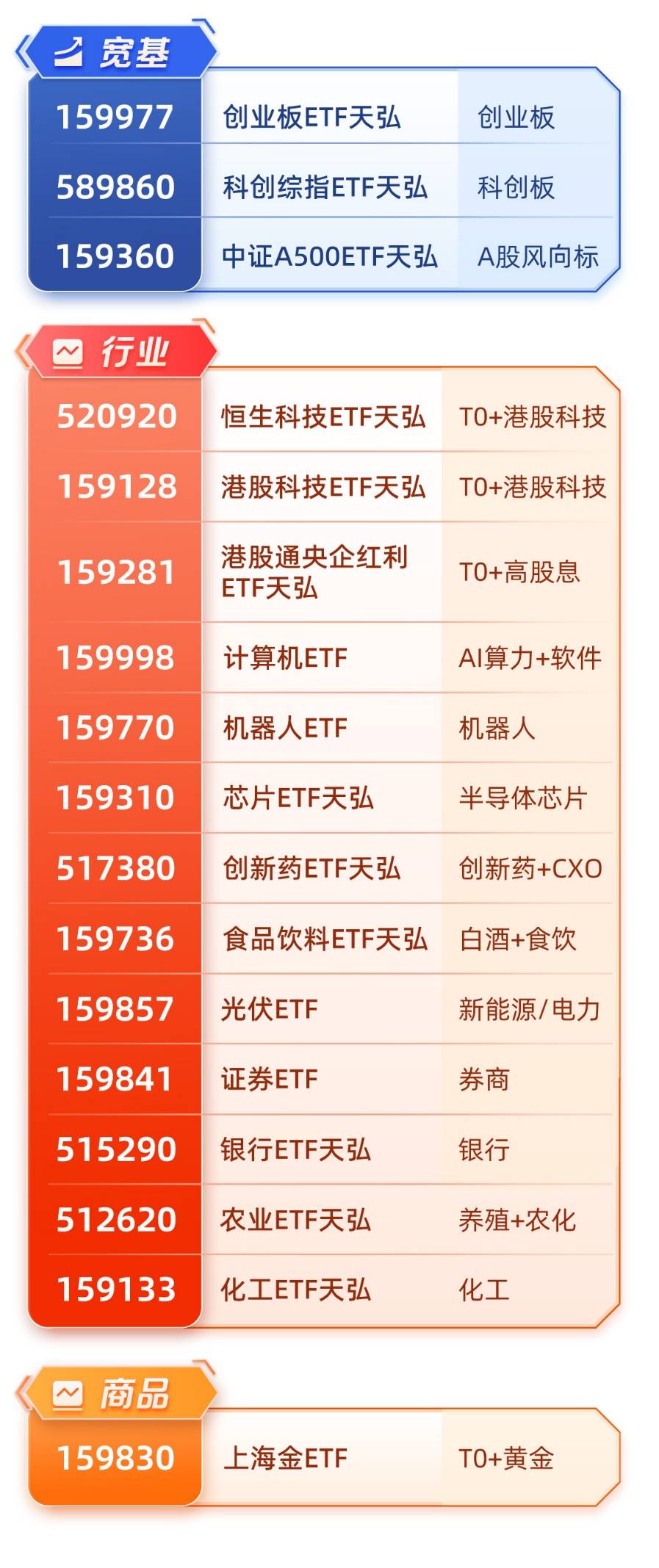
强势冲击三连阳!全市场孤品·创新药ETF天弘(517380)跟踪指数强势涨近3%,政策红利释放,创新药板块行情有望延续
Sou Hu Cai Jing· 2025-12-19 03:23
Core Insights - The article highlights the performance of the Tianhong Innovation Drug ETF (517380), which has seen a trading volume of 14.27 million yuan and a nearly 3% increase in the tracked Hang Seng Shanghai-Shenzhen Hong Kong Innovation Drug Select 50 Index (HSSSHID) [1] - The article discusses a new three-year enhancement plan for the biopharmaceutical industry in Xi'an, indicating a new policy support cycle for the innovative drug sector [1][2] Product Highlights - The Tianhong Innovation Drug ETF (517380) spans the Shanghai, Hong Kong, and Shenzhen markets, selecting 50 leading innovative drug companies, with 40% from Hong Kong and 60% from A-shares, covering core areas such as biopharmaceuticals and chemical pharmaceuticals [1] - Related products include the Tianhong Innovation Drug ETF and its corresponding off-market connection funds (Class A: 014564, Class C: 014565) [1] Industry Developments - Xi'an's government has released an implementation plan for 2025-2027, aiming to achieve breakthroughs in key drug development technologies in areas such as stem cell drugs, peptide drugs, liver-targeted innovative drugs, and anesthetics [2] - By 2027, Xi'an aims to have one clinically approved drug and one production-approved drug in the innovative drug R&D field, along with 40 Class III and 400 Class II medical devices approved [2] - The innovative drug sector is entering a new policy support cycle, with various cities like Beijing and Shanghai implementing supportive policies for the pharmaceutical and health industry [2] Institutional Perspectives - Zhongtai Securities views innovative drugs as the most important theme in the pharmaceutical sector, noting that the recent 2-3 month market adjustment has brought stock prices, market expectations, and capital allocation back to relatively reasonable and low levels, highlighting investment safety margins and return value [2]
ETF盘中资讯|反攻来了!AH创新药齐升,高弹性港股通创新药ETF(520880)冲击3%!全市场唯一药ETF溢价上涨
Sou Hu Cai Jing· 2025-12-19 03:12
Core Viewpoint - The Hong Kong stock market's innovative pharmaceutical sector is experiencing a rebound, with significant gains in various stocks and ETFs, indicating renewed investor interest and potential growth opportunities in the sector [1][3][4]. Group 1: Market Performance - The Hong Kong stock innovation pharmaceutical ETF (520880) saw a notable increase, with stocks like InnoCare Pharma-B rising by 8% and Lepu Biopharma-B by over 5% [1]. - The ETF reached a peak of 3% during trading, reflecting strong market activity and investor confidence [1]. - The ETF has experienced a continuous net subscription for nine days, with the latest fund share reaching a record high of 4.178 billion shares [3]. Group 2: Industry Outlook - Analysts expect positive catalysts for the industry, including clinical data advancements and significant business development transactions, particularly looking forward to the first quarter of 2026 [4]. - The innovative pharmaceutical sector is seen as a low-entry point for investors, with a focus on the largest Hong Kong stock innovation pharmaceutical ETF (520880) and its associated funds [4]. Group 3: ETF Characteristics - The Hong Kong stock innovation pharmaceutical ETF (520880) is characterized by its pure focus on innovative drug companies, excluding CXO firms, and covers a comprehensive range of companies in drug development [4]. - The top ten leading innovative drug companies account for over 72% of the ETF's weight, showcasing the strength of the sector [4]. - The ETF is designed to manage risks effectively by reducing the weight of less liquid component stocks, thus controlling tail risks [4]. Group 4: New Drug Approvals - The latest national medical insurance directory has added 111 new drugs launched within the last five years, with 50 classified as category 1 new drugs, marking a record high in both proportion and quantity [7].
