战略金属

Search documents
紫金矿业:内生外延助力金矿增长,战略金属蓄势待发-20260401
Huaan Securities· 2026-04-01 07:30
Investment Rating - The investment rating for the company is "Buy" (maintained) [1] Core Insights - The company achieved a revenue of 349.08 billion yuan in 2025, representing a year-on-year increase of 14.96%, and a net profit attributable to shareholders of 51.78 billion yuan, up 61.55% year-on-year [3][17] - The company is focusing on both organic growth and acquisitions to enhance its gold mining assets, with significant projects underway to increase production capacity in strategic metals like lithium and molybdenum [6][8] Financial Performance - In Q4 2025, the company reported a revenue of 94.88 billion yuan, a year-on-year increase of 29.54%, and a net profit of 13.91 billion yuan, up 80.86% year-on-year [3][17] - The company’s gold revenue reached 64.68 billion yuan in 2025, a substantial increase of 83.25% year-on-year, while copper revenue was 57.83 billion yuan, up 20.06% year-on-year [5][23] - The average selling price for gold was 778 yuan per gram, an increase of 49.4% year-on-year, while copper averaged 65,000 yuan per ton, up 11.8% year-on-year [5][46] Production and Capacity Expansion - The company plans to produce 2.55 million tons of lithium carbonate in 2025, with a target capacity of 270,000 to 320,000 tons by 2028, positioning itself as a major global lithium producer [8][58] - The company’s molybdenum production is expected to reach 11,500 tons in 2025, with plans to increase this to 25,000 to 35,000 tons by 2028 [8][58] Strategic Acquisitions - The company has acquired 100% of Canadian United Gold for approximately 28 billion yuan, which is expected to significantly boost its gold production from 11.1 tons in 2024 to 25 tons by 2029 [7][51] - The company has also become the largest shareholder of Chifeng Gold, enhancing its resource base and potential for future growth [7][55] Earnings Forecast - The forecasted net profits for the company from 2026 to 2028 are 72.28 billion yuan, 88.17 billion yuan, and 107.70 billion yuan, respectively, with corresponding P/E ratios of 12.04, 9.87, and 8.08 [9][61]

铜-加冕战略金属-价值焕新重塑
2026-03-11 08:12
Summary of Key Points from the Conference Call Industry Overview - The focus is on the copper market, particularly influenced by geopolitical tensions in the Middle East, which affect sulfur supply, a critical component for copper production [1][2]. Core Insights and Arguments - **Sulfur Supply Impact**: The Middle East accounts for 24% of global sulfur production, and disruptions could lead to increased sulfur prices, impacting the wet copper smelting process, which relies on sulfuric acid [1][2]. - **Copper Supply Constraints**: The copper mining supply is entering a rigid bottleneck phase, with capital expenditures leaning towards slight expansions rather than new projects. The global copper production forecast for 2026 has been revised downwards, predicting a supply gap of 650,000 tons [1][4]. - **Strategic Metal Classification**: The U.S. has classified copper as a critical mineral, with expectations of a 15% tiered tariff and strategic reserve needs, shifting the pricing logic from industrial commodity to strategic resource [1][6]. - **Market Balance**: The market is expected to maintain a tight balance from 2027 to 2028, with demand growth projected to exceed 3%, driven by both traditional industrial recovery and emerging AI sectors [1][5]. Inventory and Market Dynamics - **Inventory Accumulation**: The increase in visible inventories, particularly in LME warehouses, aligns with market expectations. The U.S. is projected to import 1.65 million tons of electrolytic copper in 2025, necessitating inventory support [3][4]. - **Price Sensitivity**: Downstream enterprises show sensitivity to copper prices, with a psychological support level identified at 100,000 RMB/ton, which influences their replenishment behavior [4]. Long-term Price Drivers - **Supply and Demand Dynamics**: The long-term upward trend in copper prices is driven by persistent supply-demand tightness and the enhanced strategic attributes of copper. Supply growth is expected to be limited to 0-3% in the coming years [4][5]. - **Geopolitical Factors**: The geopolitical landscape, particularly U.S. policies regarding tariffs and strategic reserves, is expected to further support copper prices [6]. Investment Strategy and Valuation - **Investment Focus**: The copper sector is seen as having strong beta characteristics, with potential for increased profitability. Companies with growth potential, such as Zijin Mining and Minmetals Resources, are highlighted for their low current valuations [7]. - **Valuation Metrics**: Current valuations for certain companies are around 10 times earnings, with potential for significant upside if copper prices rise to 14,000 USD/ton, which could lower valuations to the six or seven times range [7]. Additional Important Points - **Emerging Demand**: The demand from new sectors, particularly AI, is expected to provide structural elasticity to copper demand, complementing traditional industrial recovery [4][5]. - **Market Sentiment**: The copper market is anticipated to benefit from positive feedback loops during demand peaks, particularly for smelting companies with expected copper production increases [7].
钨-锑-铀-锗-战略矿产资源属性凸显-价格中枢有望稳步抬升
2026-03-09 05:18
Summary of Strategic Minerals Conference Call Industry Overview - The conference call focused on strategic minerals including tungsten, antimony, uranium, and germanium, highlighting their resource attributes and price trends expected to rise steadily [1][2]. Key Points on Tungsten - **Price Surge**: Tungsten prices increased by 5.5 times to 919,000 CNY/ton over 8 months, driven by a 6% supply reduction in 2025 and a $500 million strategic reserve plan from the U.S. [1][3]. - **Demand Drivers**: Key demand contributors include photovoltaic tungsten wire and military applications, with military demand accounting for approximately 20% of total demand and growing at double-digit rates [3][4]. - **Supply Constraints**: Domestic tungsten supply is projected at 107,000 tons for 2025, down from 114,000 tons in 2024, marking a significant trend change not seen in over a decade [3][4]. - **Market Dynamics**: The market is relatively small, with a total size nearing 200 billion CNY, and is sensitive to funding, which can create price elasticity [4]. Key Points on Antimony - **Current Pricing**: Antimony ingot prices are at 172,000 CNY/ton, down from a peak of 240,000 CNY/ton in June 2025 [5]. - **Export Controls Impact**: Export controls have led to a significant drop in antimony oxide exports, with current levels at about 1/10 of historical averages [5]. - **Future Catalysts**: Anticipated catalysts include the completion of export approval processes and increased demand from the photovoltaic sector in Q1 2026 [5]. Key Points on Germanium - **Market Size and Pricing**: Germanium prices are currently at 12.7 million CNY/ton, with annual demand around 220 tons, leading to a market size of approximately 3 billion CNY [6]. - **Supply Dependency**: About 70% of global germanium production comes from China, making it a critical resource for U.S. strategic reserves, with the U.S. planning to procure over 20% of its annual demand [6]. Key Points on Uranium - **Supply and Demand Outlook**: The uranium market is expected to see a compound annual growth rate (CAGR) of 4%-5% over the next decade, with supply recovery nearing completion [7][8]. - **Price Structure**: Current long-term contract prices are at $90 per pound, reflecting true supply-demand dynamics, while spot prices are more volatile [8]. - **Future Catalysts**: The easing of financing costs due to interest rate cuts is expected to boost uranium purchases, with significant procurement planned by North American buyers [8]. Strategic Implications - The current market dynamics are influenced by de-globalization and resource nationalism, with a shift from traditional commodity cycles to a focus on supply chain restructuring [2]. - Companies to watch include Xiamen Tungsten, Hunan Gold, Chihong Zn & Ge, and China General Nuclear Power for potential investment opportunities [1][4][5][6][8].
战略金属价值发现之路-供需紧张难解-钨价有望持续上行
2026-03-04 14:17
Summary of Strategic Metals Conference Call Industry Overview - The strategic metals sector is experiencing significant price increases driven by geopolitical factors and new production capabilities. The U.S. plans to allocate $19.5 billion for critical mineral procurement from 2025 to 2026, making national reserves a core beta factor [1][3]. Key Points on Tungsten Supply and Demand - **Supply Constraints**: Global tungsten production from 2014 to 2024 has a CAGR of -0.7%. Starting in 2025, domestic quotas will decrease, and illegal mining will face stricter regulations, leading to a projected supply gap of 20,000 tons [1][4]. - **Price Surge**: Tungsten prices have increased from approximately 210,000 CNY/ton to over 800,000 CNY/ton within a year, representing a rise of over 400%. APT smelters are now profitable, indicating strong price transmission throughout the industry [1][7]. - **Demand Dynamics**: The inventory cycle is at a low point, with emerging applications in photovoltaic tungsten wire, nuclear fusion, and aerospace engines providing incremental demand. Military and strategic reserve needs are also showing strong demand [1][5]. Investment Insights - **Valuation Metrics**: At a tungsten price of 800,000 CNY/ton, companies like Xiamen Tungsten and Jaxin International are valued at around 11 times earnings, suggesting potential for further valuation absorption as prices rise [1][8]. - **Market Participation Strategy**: Current market conditions are not seen as a "very cost-effective buying point," but there is no clear sell signal. A holding strategy is recommended as long as the price trend remains upward [1][9]. Risks and Monitoring - **Key Risk Indicators**: The profitability of APT smelters should be closely monitored. A negative shift in this metric could indicate increased resistance to price increases from downstream sectors [1][10]. - **Geopolitical Events**: The potential for peace talks, such as Trump's visit to China, could impact market dynamics. However, immediate large-scale peace is not anticipated [1][10]. Macro Context and Future Outlook - The strategic metals sector is expected to remain a long-term theme over the next 2-3 years, influenced by geopolitical tensions and advancements in AI-driven production capabilities. The price increase logic is supported by several factors, including global stockpiling and supply disruptions due to geopolitical conflicts [2][3]. Conclusion - The strategic metals market, particularly tungsten, is poised for continued growth driven by supply constraints and strong demand from various sectors. Investors are advised to monitor key indicators and geopolitical developments closely while considering strategic positions in the market [1][12].
有色周报:地缘溢价抬升,战略金属表现可期-20260301
Orient Securities· 2026-03-01 15:20
Investment Rating - The report maintains a positive outlook on the non-ferrous metals industry [6] Core Viewpoints - Geopolitical premiums are rising, and the performance of strategic metals is expected to be promising. The ongoing risks from the Israel-Iran conflict are significant, which is likely to support precious metal prices due to their safe-haven attributes. In the industrial metals sector, there was a substantial accumulation of copper and aluminum inventories during the Spring Festival. As downstream production resumes, the demand during the peak season will be tested, with a focus on the speed of inventory reduction post-holiday, which will determine the strength of industrial product prices [3][9] Summary by Sections 1. Cycle Assessment - Geopolitical premiums are increasing, and strategic metals are expected to perform well. The recent military actions between the US and Israel against Iran have led to a halt in oil tanker movements in the Strait of Hormuz, which may elevate inflation expectations due to rising oil prices. The ongoing conflict poses uncontrollable risks, supporting precious metal prices. In the industrial metals sector, significant inventory accumulation was noted during the Spring Festival, and the demand will be evaluated as production resumes [9][13] 2. Industry and Stock Performance - The non-ferrous metals sector saw a weekly increase of 9.77%, ranking second among all industries [27][19] 3. Precious Metals - Precious metals are supported by rising geopolitical premiums. As of February 27, SHFE gold rose by 3.41% to 1,147.90 CNY per gram, while COMEX gold increased by 4.12% to 5,280.00 USD per ounce. The inventory levels for SHFE gold decreased slightly, while SPDR gold holdings increased by 726,000 ounces [14][30][57] 4. Copper - Copper prices increased by 3.53% to 103,920 CNY per ton on SHFE, with significant inventory accumulation during the Spring Festival. The global visible copper inventory totaled approximately 1.4545 million tons, with a notable increase in domestic copper social inventory [17][72][28] 5. Aluminum - Aluminum prices rose by 2.76% to 23,835 CNY per ton on SHFE. Concerns over supply disruptions due to geopolitical tensions are expected to support aluminum prices. The average profit for the aluminum industry is around 7,151.65 CNY per ton [16][85][87]
港股异动 | 稀美资源(09936)涨超14%再创新高 战略金属或迎重估 公司为中国钽铌冶金产...
Xin Lang Cai Jing· 2026-02-27 07:22
Core Viewpoint - The stock of Simax Resources (09936) has surged over 14%, reaching a new high, driven by the announcement of the U.S. planning to set reference prices for global critical mineral trade [1] Group 1: Company Overview - Simax Resources is identified as a core producer of tantalum and niobium metallurgical products in China [1] - Ganfeng Lithium currently holds a 15.79% stake in Simax Resources, making it the second-largest shareholder [1] Group 2: Industry Insights - Niobium and tantalum are recognized as strategic resources with irreplaceable roles in the defense and military sectors [1] - The domestic demand for niobium and tantalum has surged, highlighting the importance of self-sufficiency in these resources [1] - The niobium and tantalum industry in China is entering a rapid growth phase due to increasing governmental focus and investment in rare metal industries [1] - Tantalum and niobium are critical materials in high-end fields such as semiconductors and aerospace, aligning with lithium resources as part of the strategic metals category [1] - Ganfeng Lithium's investment in Simax Resources may aim to expand its strategic metal portfolio and enhance synergy in the high-end materials sector [1]
稀美资源涨超14%再创新高 战略金属或迎重估 公司为中国钽铌冶金产品核心生产商
Zhi Tong Cai Jing· 2026-02-27 07:12
Group 1 - The core viewpoint of the article highlights the significant rise in the stock price of Ximei Resources (09936), which increased over 14% and reached a new high, currently trading at 15.42 HKD with a transaction volume of 13.6647 million HKD [1] - The U.S. plans to establish reference prices for global critical mineral trade, emphasizing the strategic importance of niobium and tantalum in the defense and military sectors [1] - The domestic demand for niobium and tantalum has surged, making the control of these resources increasingly vital, especially as the country places greater emphasis and investment in the rare metals industry [1] Group 2 - Huayi Securities reports that Ximei Resources is a core producer of tantalum and niobium metallurgical products in China [1] - Ganfeng Lithium (002460) holds a 15.79% stake in Ximei Resources, making it the second-largest shareholder, and is focused on expanding its strategic metal portfolio [1] - Tantalum and niobium are critical materials in high-end sectors such as semiconductors and aerospace, aligning with lithium resources as strategic metals [1]

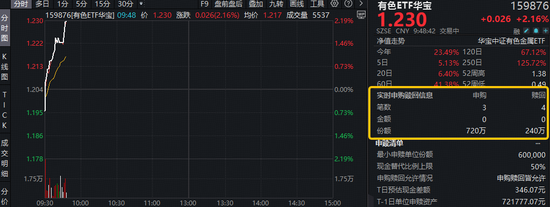
小金属领涨!宝武镁业涨停!有色ETF(159876)强势拉升2.16%,获资金实时净申购480万份
Xin Lang Ji Jin· 2026-02-27 01:56
Group 1 - The core viewpoint of the news is that the non-ferrous metal sector continues to perform strongly, with the non-ferrous ETF (159876) seeing a price increase of 2.16% and a net subscription of 4.8 million units on February 27 [1] - The leading stocks in the small metal sector have shown significant gains, with Baowu Magnesium Industry hitting the daily limit, Yunnan Zinc Industry rising over 7%, and other companies like Tin Industry Co. and Xiamen Tungsten Co. increasing by more than 6% [1][3] - The U.S. White House plans to use an AI model developed by the Department of Defense to set reference prices for critical minerals, which is expected to enhance market expectations regarding the scarcity and pricing power of related strategic metals [3] Group 2 - Key minerals have become a focus for many countries due to concerns over supply chain security, leading to an increase in their resource attributes and making prices more likely to rise [4] - The non-ferrous ETF covers a wide range of industries including copper, aluminum, gold, rare earths, and lithium, allowing investors to capture the overall sector's beta performance effectively [4] - The tungsten raw material supply is tight, contributing to frequent historical highs in tungsten prices, with black tungsten concentrate seeing a 66.37% increase since 2026 [3]


有色金属-岁启新章-金属为王
2026-02-13 02:17
Summary of Key Points from Conference Call Industry Overview - The conference call primarily discusses the non-ferrous metals industry, focusing on lithium, rare earths, copper, aluminum, and strategic metals [2][3][4][8][9]. Core Insights and Arguments Lithium Market - The lithium market shows strong fundamentals, with short-term supply weakness and strong demand. Inventory levels are low, with a significant price tolerance for lithium at 200,000 CNY/ton, yielding an IRR of over 8% [2][5]. - The impact of regulatory changes in Yichun and strict requirements for tailings storage may delay the resumption of production [2][5]. - Demand for lithium remains robust, with production in March expected to increase by 23% month-on-month and over 50% year-on-year [5]. Rare Earths - The rare earth sector demonstrates resilience, with prices continuing to rise, particularly in Wuxi where prices exceed 900,000 CNY. The market has not fully reflected the improvements in the fundamentals of rare earth prices [2][8]. - Supply tightness is expected to continue, with the overall price center projected to reach 800,000 CNY or higher in 2026 [8]. Copper Market - The outlook for the copper sector is optimistic, supported by macroeconomic trends and structural demand increases from AI data centers and strategic reserves [4][15]. - Supply remains rigid, with several companies lowering their production guidance for 2026 due to various constraints, leading to a projected supply gap of over 650,000 tons [16][17]. Aluminum Sector - The aluminum supply is expected to increase by approximately 70,000 tons this year, with global demand growth projected at 2.5% [21]. - The cost of alumina is anticipated to decrease, enhancing the profitability of Chinese electrolytic aluminum enterprises [24]. Strategic Metals - Investment in strategic metals is recommended due to their industrial applications and low cost ratios, with potential candidates including tungsten, oil, and antimony [10][11][12]. - The strategic metal sector is expected to benefit from geopolitical tensions and military applications, making it a compelling investment opportunity [9][10]. Additional Important Insights - The gold market is viewed as undergoing a technical correction, with expectations of a narrative consolidation period ahead [9]. - The copper market is influenced by China's actions to enhance its copper resource reserve system, which may increase demand and valuation [19]. - Companies to watch include major players in the non-ferrous metals sector such as Zijin Mining, Jiangxi Copper, and others that are expected to benefit from the current market dynamics [20][30]. This summary encapsulates the key points discussed in the conference call, providing insights into the current state and future outlook of the non-ferrous metals industry.
战略金属:钨供给收缩后的市场需求分析(附报告)
材料汇· 2026-02-12 13:07
Group 1 - The core viewpoint of the article is that tungsten concentrate prices are reaching new highs in 2024 and 2025, driven by supply constraints and regulatory measures in China [4][12]. - In Q2 2024, tungsten concentrate prices hit a historical high of 158,000 CNY/ton, surpassing the previous peak in 2013, with a year-to-date increase of 29.26% [4]. - By December 17, 2025, prices further escalated to 423,000 CNY/ton, marking a staggering year-to-date increase of 195.80% [4]. Group 2 - The supply of tungsten is tightening due to three main factors: regulatory controls, over-extraction management, and declining ore grades [16][26]. - China holds over 50% of global tungsten production and reserves, making it a critical player in the tungsten supply chain [16][19]. - The production of tungsten concentrate in China has been on a downward trend, with a projected output of 66,300 tons in 2024, a 1% decrease from the previous year [26]. Group 3 - Demand for tungsten is steadily increasing, with consumption projected to rise from 57,969 tons in 2018 to 70,769 tons in 2024, reflecting a stable growth trend [62]. - The increase in tungsten prices is not expected to significantly impact demand, as the market remains resilient [3][62]. - The main applications for tungsten include hard alloys, which account for 58.51% of consumption, and tungsten materials, which represent 22.61% [51]. Group 4 - The article highlights the importance of recycled tungsten as a future supply source, with a projected increase in waste tungsten production to 15,108 tons by 2027, accounting for 19.77% of total tungsten supply [59][61]. - The recycling rate of tungsten in China is currently around 17%, which is below the global average of 35% [52][58]. - The development of a more efficient recycling system is crucial for improving tungsten recovery rates and meeting future demand [54][55].