物理AI

Search documents
“新大脑”要来!一图梳理英伟达机器人概念
天天基金网· 2025-08-26 11:26
Core Viewpoint - Nvidia's announcement regarding its new robotics initiative has sparked significant market interest, particularly in related stocks, indicating a growing focus on the robotics sector and its potential for future growth [4][5]. Group 1: Nvidia's Robotics Strategy - Nvidia has been deepening its strategic focus on robotics technology, with CEO Jensen Huang emphasizing that the next wave of AI will be in the form of physical AI, which pertains to robotics [4][5]. - The company is introducing a new product referred to as a "new brain" for robots, which is expected to enhance the capabilities of humanoid robots [4]. - Huang has predicted that significant advancements in robotics technology will occur within the next two to three years, with humanoid robots becoming as common as cars [5]. Group 2: Market Reaction - Following Nvidia's announcements, related stocks such as Dongfang Precision, Qihua Data, and others saw notable increases, with Dongfang Precision hitting the daily limit up and Qihua Data rising over 9% [4]. - The market's positive response reflects investor optimism regarding the potential growth and applications of robotics technology [4].



黄仁勋的“物理AI”野心:英伟达机器人“最强大脑”上线
2 1 Shi Ji Jing Ji Bao Dao· 2025-08-26 09:58
Core Insights - NVIDIA has launched Jetson Thor, a next-generation supercomputer for robotics, which significantly enhances AI computing power and energy efficiency compared to its predecessor, Jetson Orin [2][3] - Jetson Thor offers 7.5 times the AI computing power and 3.5 times the energy efficiency, supporting various generative AI models and specialized robotics models [2][4] - The product is priced at $3,499 for the developer kit and $2,999 per unit for bulk purchases of the Jetson T5000 module, with several leading robotics companies already adopting it [2][4] Group 1: Product Features and Capabilities - Jetson Thor integrates "large models + real-time sensing + control" at the edge, providing up to 2070 FP4 TFLOPS of AI computing power [3][5] - The platform allows for parallel execution of multimodal models, reducing reliance on cloud computing and latency [3][5] - It supports a wide range of robotic applications, including humanoid robots, surgical assistance robots, and industrial robotic arms, enhancing real-time inference capabilities [4][6] Group 2: Strategic Positioning and Market Impact - NVIDIA positions itself as a supporter of the robotics ecosystem rather than a manufacturer, focusing on providing a comprehensive hardware and software platform [3][4] - The introduction of Jetson Thor is seen as a critical step in advancing "Physical AI," which aims to enable robots to perform complex tasks in real-world environments [5][6] - Market analysts view Jetson Thor as a potential new growth curve for NVIDIA, with the robotics sector expected to have long-term potential despite current challenges [6][7]

马斯克起诉苹果和OpenAI/17万起,最便宜「华为车」来了/高管再次质疑小米空调排名
Sou Hu Cai Jing· 2025-08-26 09:40
Group 1 - Nvidia launched the Jetson AGX Thor high-performance computing platform, featuring a 7.5 times increase in computing performance and a 3.5 times improvement in energy efficiency compared to the previous generation [3][4] - Jetson Thor supports real-time interaction capabilities and is designed for generative inference models, enabling edge devices to run multiple AI models simultaneously [3][4] - The platform has attracted a prestigious client base, including Agility Robotics, Amazon Robotics, and Boston Dynamics, indicating strong market interest [4] Group 2 - The humanoid robot market in China is projected to exceed 10,000 units in sales this year, with a market size potentially reaching trillions [5] - The humanoid robots are moving from experimental stages to real-world applications, with significant growth expected by 2025 [5][6] Group 3 - Elon Musk's X company and xAI have filed a lawsuit against Apple and OpenAI, alleging anti-competitive practices that harm other AI products [8][9] - The lawsuit seeks monetary compensation and a court order to prevent Apple and OpenAI from continuing their alleged illegal agreement [9][10] Group 4 - Gree's marketing director responded to claims that Xiaomi surpassed Gree in air conditioner sales, questioning the credibility of the data presented by Xiaomi [12][13] - Gree maintains that it still leads in the online market despite Xiaomi's claims of a higher market share [12][13] Group 5 - Huawei's ADS 4 is expected to achieve pilot commercial capabilities for high-speed L3 and urban L4 testing by the end of this year, with plans for further advancements by 2027 [14] - As of August 22, over 1 million vehicles equipped with Huawei's intelligent driving solutions have been deployed [14] Group 6 - ByteDance has no immediate plans to release AI glasses, despite rumors of a product in development [15][16] - The company is reportedly working on a lightweight mixed-reality device expected to be unveiled in 2027 [15][16] Group 7 - AI hardware company Haivivi has completed a 200 million yuan financing round, with plans to release multiple IP products in the coming months [17][18] - The company has secured licenses for popular IPs and aims to launch its second-generation AI toy product soon [18] Group 8 - NIO's sales director emphasized the importance of not disparaging competitors and focusing on customer engagement as competition intensifies in the electric vehicle market [21][22] - NIO's new ES8 pre-sale has attracted significant customer interest, contributing to increased foot traffic in showrooms [22] Group 9 - DingTalk launched several AI products, including its first AI hardware, DingTalk A1, which offers advanced features for real-time transcription and analysis [34][35] - The launch event saw high demand, with the initial stock of DingTalk A1 selling out quickly [37] Group 10 - The HarmonyOS Intelligent Mobility event showcased multiple new vehicles, with the ADS 4 system being a key feature across models [38][41] - The new models are designed to enhance driving experience and safety with advanced autonomous driving capabilities [44]

英伟达3499美元机器人“大脑”发售 宇树、优必选等已率先使用!关键财报前夕 华尔街急需新故事
Mei Ri Jing Ji Xin Wen· 2025-08-26 08:28
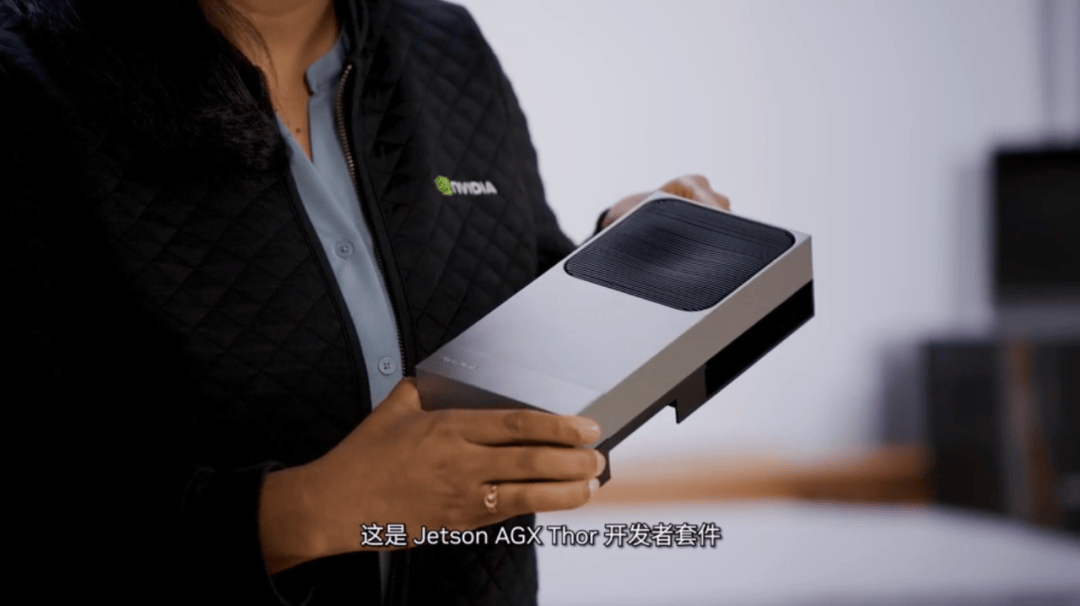
Core Insights - NVIDIA is extending its dominance in data centers to the physical world with the launch of the Jetson Thor robot computing platform, which features a significant performance leap of 7.5 times compared to its predecessor [2][3] - The release of Jetson Thor is seen as a critical move for NVIDIA to initiate its "second growth curve," with expectations of substantial growth in its automotive and robotics segments, projected to increase by 80% year-over-year [2][9] Product Launch - Jetson Thor, priced at $3,499, boasts an AI computing power of 2070 TFLOPS and is designed to run complex generative AI models locally on robots, enhancing their real-time perception and decision-making capabilities [2][3] - The platform introduces multi-instance GPU (MIG) technology, allowing for the safe operation of high-safety motion control tasks alongside non-critical AI applications, thereby improving reliability [3] Ecosystem Development - NVIDIA is building a comprehensive ecosystem around Jetson Thor, which includes a triad architecture: AI factories for training, digital twins for simulation, and the Jetson Thor for deployment in physical environments [4][5] - Major companies, including Boston Dynamics, Amazon Robotics, and OpenAI, are early adopters of Jetson Thor, signaling its importance in developing advanced robotics [5][6] Market Expectations - The upcoming Q2 earnings report is highly anticipated, with analysts predicting total revenue of approximately $45.8 billion, a year-over-year increase of about 52% [8][9] - The automotive and robotics sectors are expected to be the main highlights of the earnings report, with a projected acceleration in growth from 72% to 80% [9][10] Challenges Ahead - Despite the powerful capabilities of Jetson Thor, the broader robotics industry faces challenges in achieving human-like flexibility and functionality, which may delay widespread adoption [8] - The success of Jetson Thor as a growth engine depends on the scalability of robotics applications and the maturity of the physical environment [8][10]
英伟达通用机器人芯片来了:AI算力提升7.5倍,宇树、银河通用已搭载
机器之心· 2025-08-26 04:11
Core Viewpoint - Nvidia has launched its new robot-specific chip, Jetson Thor, which significantly enhances computing power compared to its predecessor, Jetson Orin, to support advanced humanoid robots and other forms of embodied intelligence [4][12]. Group 1: Product Features - Jetson Thor features a new Blackwell architecture GPU with AI computing capabilities up to 2070 FP4 TFLOPS, which is 7.5 times more powerful than the previous generation [4][8]. - The power consumption of Jetson Thor is 130W, with an energy efficiency improvement of 3.5 times compared to the previous model [4]. - Memory capacity has doubled to 128GB, and memory bandwidth is 273GB/s [4][8]. - The chip is designed for generative AI models and supports real-time operations with minimal reliance on cloud computing [8][12]. Group 2: Software and Ecosystem - Jetson Thor supports all major generative AI frameworks and inference models, enabling developers to conduct local experiments and run inferences efficiently [9][11]. - The product includes a developer kit priced at $3,499 and a module priced at $2,999 for bulk orders [12]. Group 3: Market Impact and Partnerships - Major robotics companies, including Yushu Technology and Galaxy General Robotics, have announced plans to adopt Jetson Thor for their products [14][15]. - Nvidia's strategy includes a focus on the trillion-dollar markets of robotics and autonomous vehicles, with a significant portion of its revenue coming from major tech companies [18][19].
英伟达推出的“大脑”, 能让机器人变聪明吗?
第一财经· 2025-08-26 03:25
Core Viewpoint - Nvidia has launched the Jetson Thor platform, significantly enhancing the computational power for robotics, which is essential for running advanced AI models and improving robot efficiency [2][3][4]. Group 1: Product Launch and Specifications - The Jetson Thor platform offers a computational power of 2070 TFLOPS at FP4 precision, a substantial increase compared to previous models like Jetson TK1 and Jetson Orin [2]. - Jetson Thor's AI performance is 7.5 times greater than that of Jetson Orin, with energy efficiency improved by 3.5 times [3]. - The platform is built on the Blackwell architecture, aligning with Nvidia's latest GPU architecture used in data centers [2]. Group 2: Market Demand and Applications - There is a growing demand for higher computational power in robotics, as many developers are currently using multiple Orin chips to meet their needs [4]. - The Jetson platform has around 2.2 million developers and over 7,000 companies utilizing Orin, indicating a strong market presence [5]. - Companies in China, such as Zhiyuan Robotics and Youbix, are already preparing to adopt the Thor platform [5]. Group 3: Industry Trends and Future Outlook - The global humanoid robot market is projected to reach 2.562 billion yuan in 2024, with significant growth expected by 2031 [6]. - Nvidia is focusing on three areas in robotics: humanoid robots, autonomous vehicles, and robotic applications in large spaces like factories and cities [5]. - The competition in the robotics "brain" sector is intensifying, with companies like Tesla also developing their own computing solutions for humanoid robots [6].

助力机器人应用设计!英伟达(NVDA.US)推出新计算平台Jetson Thor
Zhi Tong Cai Jing· 2025-08-26 02:24
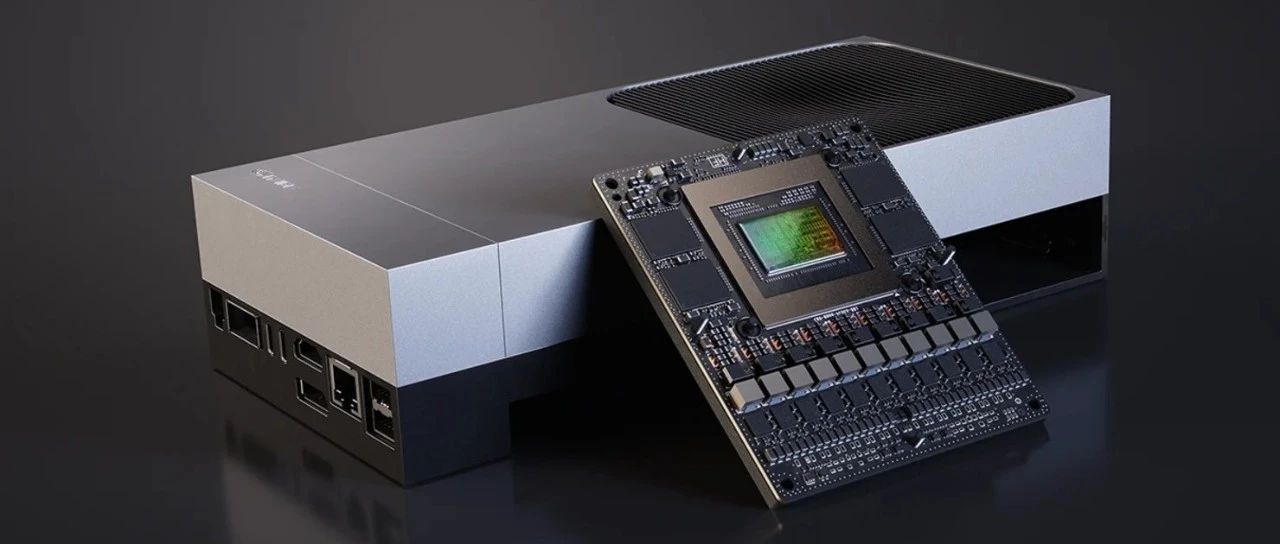
Core Insights - Nvidia officially launched its Jetson Thor computing platform designed for robotics applications, along with the Jetson AGX Thor developer kit and the Jetson T5000 production module [1][2] - The new Jetson AGX Thor developer kit starts at $3,499, and it is built on Nvidia's Blackwell architecture, offering significant performance improvements over the previous Jetson Orin products [1] - AI computing performance has increased by 7.5 times compared to the previous generation, with CPU performance up by 3.1 times and memory capacity doubled to 128GB [1] Performance Enhancements - The Jetson Thor platform allows developers to process high-speed sensor data and perform visual inference in real-time within dynamic environments, addressing previous speed limitations [1] - It is specifically designed for generative inference models, supporting next-generation physical AI agents powered by large transformer and visual language models to operate in real-time at the edge [1] Market Impact and Adoption - Nvidia's CEO highlighted that Jetson Thor is aimed at millions of developers to help build robotic systems that can interact with and even change the physical world [2] - The platform addresses significant challenges in the robotics field, enabling real-time operation of multiple AI workflows for intelligent interaction with humans and the physical environment [2] - Over 2 million developers are currently using Nvidia's Jetson platform and robotics technology stack across various industries, including manufacturing, logistics, healthcare, and agriculture [2] - Jetson Thor has already been adopted by leading companies in the industry, such as Agility Robotics, Amazon Robotics, Boston Dynamics, and Figure [2] - Nvidia is set to announce its earnings report on Wednesday after the market closes, with expectations that its performance and outlook will significantly influence market direction [2]
售价2.5万!英伟达机器人“最强大脑”AI性能暴涨750%,宇树、银河通用、Meta等都在用
Tai Mei Ti A P P· 2025-08-26 01:00
Core Insights - NVIDIA has launched the powerful new robot supercomputer NVIDIA Jetson AGX Thor, aimed at powering next-generation general and humanoid robots across various sectors including manufacturing, logistics, construction, and healthcare [3][4] - The Jetson AGX Thor offers up to 2070 FP4 teraflops of AI computing power, with a performance increase of up to 7.5 times and energy efficiency improvement of 3.5 times compared to its predecessor, Jetson Orin [3][10] - NVIDIA's CEO Jensen Huang emphasized that Jetson Thor is designed for developers creating robotic systems that interact with the physical world, marking a significant leap in physical AI capabilities [6][9] Product Launch and Features - The Jetson AGX Thor developer kit is priced at $3499 and has already been adopted by several companies including Agility Robotics, Amazon Robotics, and Boston Dynamics [4][6] - The new system supports real-time inference and is capable of running multiple generative AI models, addressing one of the major challenges in robotics [10][12] - Jetson Thor is built on NVIDIA's Blackwell architecture and features a 14-core Arm Neoverse V3AE CPU, enhancing real-time control and task management [9][10] Market Impact and Adoption - NVIDIA's Jetson platform has attracted over 2 million developers and has a growing ecosystem of over 150 hardware and software partners [8][15] - The introduction of Jetson Thor is expected to significantly enhance the capabilities of humanoid robots, with predictions of a market growth that could exceed $100 billion in the coming years [16][20] - Companies like BYD, GAC, and Xiaomi are already developing products based on NVIDIA's DRIVE AGX Thor developer kit for autonomous driving [4][18] Future Outlook - Analysts predict NVIDIA's market capitalization could reach $9 trillion by 2030, with annual revenues potentially hitting $600 billion, driven by the demand for AI infrastructure [18][20] - The company is focusing on creating a new industry that supports AI factories, AI agents, and robotics, positioning itself as a leader in the physical AI and general robotics space [20][17]
英伟达机器人新“大脑”来了!Jetson Thor AI算力提高6.5倍,解锁物理AI实时推理
美股IPO· 2025-08-26 00:31
Core Viewpoint - Nvidia's Jetson Thor platform significantly enhances AI computing power and efficiency, enabling real-time processing for robotics and physical AI applications [1][3][5]. Group 1: Product Features and Specifications - Jetson Thor offers up to 2070 FP4 TFLOPS of AI computing power with a power consumption of 130 watts, and features 128GB of memory [1][3]. - The platform's AI computing performance is 7.5 times greater than its predecessor, Jetson Orin, while CPU performance has increased by 3.1 times [5][7]. - The developer kit, Jetson AGX Thor, is priced at $3499, with a bulk purchase price of $2999 for orders over 1000 units [1][3]. Group 2: Applications and Industry Adoption - Jetson Thor is designed to support various generative AI models, enabling real-time processing of high-speed sensor data and visual reasoning in dynamic environments [7][12]. - Major industry players such as Agility Robotics, Amazon Robotics, and Boston Dynamics have adopted Jetson Thor for their next-generation robotics [3][12]. - The platform is expected to enhance the agility, decision-making speed, and autonomy of robots, making it crucial for navigation and interaction in real-world scenarios [13]. Group 3: Ecosystem and Support - Jetson Thor is supported by a complete Nvidia Jetson software platform, compatible with major AI frameworks and generative AI models [11]. - The platform has attracted over 2 million developers and more than 150 hardware and software partners since its launch in 2014 [11]. - Research institutions like Stanford University and Carnegie Mellon University are leveraging Jetson Thor to advance capabilities in perception, planning, and navigation models [11]. Group 4: Autonomous Driving Applications - Nvidia has also launched the DRIVE AGX Thor developer kit for autonomous vehicles, which is now available for pre-order and expected to ship in September [4][14]. - Leading automotive companies, including BYD and Volvo, are developing solutions based on the DRIVE AGX Thor platform [14][15].
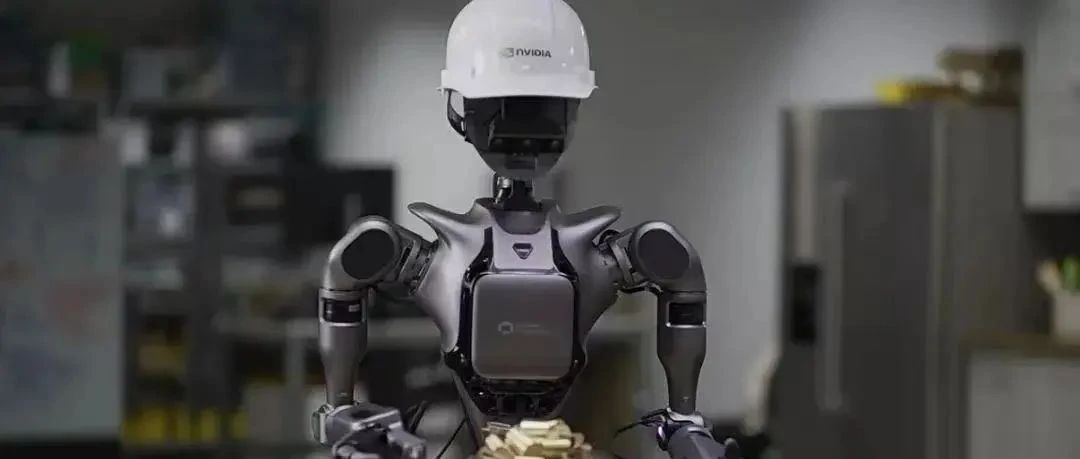
英伟达具身机器人“新大脑”即将揭晓
自动驾驶之心· 2025-08-25 23:34
Core Insights - Nvidia is preparing for a significant announcement related to robotics, scheduled for August 25, 2025, as indicated by a teaser post on their social media [1][3] - The company has recently introduced an open-source physical AI application and a robot vision reasoning model called Cosmos Reason, which enables robots to reason like humans and take actions in the real world [3][5] Group 1: Physical AI Development - Nvidia's CEO Jensen Huang has emphasized that the next wave of AI will be Physical AI, which involves using motion skills to understand and interact with the real world [5] - Physical AI models are typically embedded in autonomous machines such as robots and self-driving cars, allowing them to perceive, understand, and execute complex operations in real-world scenarios [5][6] Group 2: Market Potential and Industry Trends - At the 2025 World Robot Conference, Nvidia's VP highlighted that Physical AI could unlock a trillion-dollar market, with advancements in technology and industry standards driving growth in the robotics sector [6] - Major companies, both domestically and internationally, including Huawei, ByteDance, BYD, Xiaomi, and Tesla, are intensifying their focus on embodied intelligence, indicating a competitive landscape in the humanoid robot industry [6] Group 3: Humanoid Robot Applications - The humanoid robot industry is entering a phase of rapid development, with a clear trend towards commercialization and practical applications in industrial settings [6] - Analysts suggest that the emergence of companies like DeepSeek is facilitating the development of general-purpose humanoid robot models, leading to a flourishing ecosystem in the humanoid robotics sector [6]