
智能制造

Search documents
久立特材(002318) - 2025年12月26日投资者关系活动记录表
2025-12-26 10:58
Group 1: Market Development - The company has a diverse range of nuclear power products, covering various equipment and core products, and is positioned as a key supplier of high-value products like evaporator tubes [2] - The company aims to enhance its research and development efforts in nuclear-grade products and explore new application scenarios in the nuclear power sector [2] - The composite pipe business is focused on resource integration and optimizing synergies, with significant contract deliveries completed this year [2][3] Group 2: Alloy Materials Business - The alloy subsidiary emphasizes material research and technological innovation, ensuring stable product quality through a comprehensive production control system [3] - The company plans to support the alloy subsidiary's capacity ramp-up and market expansion, aiming for business transformation and high-quality development [3] Group 3: Oil Well Pipe Business - Continuous efforts in new customer development and application exploration have led to improved production line utilization and product sales [3] - The company intends to focus on international markets and enhance sales channel expansion to increase global market share for oil well pipes [3] Group 4: Future Outlook - The company maintains confidence in its short-term goals and long-term strategic vision for the "14th Five-Year Plan" period [3] - Plans include deepening core business, advancing smart manufacturing and digital transformation, and overcoming technological innovation bottlenecks [3] - The company aims to strengthen industry chain collaboration and prioritize high-value-added business segments, particularly in high-performance alloy materials [3]

久立特材(002318) - 2025年12月25日投资者关系活动记录表
2025-12-26 10:58
Group 1: Company Overview - The company showcases its overall scale, factory layout, entrepreneurial history, industry positioning, and core application areas of its products [2] - The exhibition includes a display of production equipment, testing devices, research outcomes, management systems, and humanistic care [2] Group 2: Market Development Progress - The product system includes seamless pipes, welded pipes, composite pipes, fittings, and flanges, focusing on high-performance materials for key energy sectors like oil and gas, nuclear power, and aviation [2] - The nuclear power business covers various equipment and piping products, with the company positioned as a major supplier of high-value products like evaporator tubes [3] Group 3: Composite Pipe Business - The company is enhancing resource integration with EBK, achieving high-quality and efficient contract fulfillment, positively impacting the composite pipe business [3] - Ongoing internal projects in high-performance pipe materials align with long-term strategic planning and customer needs, supporting future growth [3] Group 4: Alloy Materials Business - The subsidiary focuses on material research and technology innovation, ensuring product quality through a comprehensive production control system [3] - The company aims to support the alloy subsidiary's capacity ramp-up and market expansion, enhancing core customer relationships [3] Group 5: Oil Well Pipe Business - Continuous efforts in new customer development and application exploration have led to improved production line utilization and sales [4] - The company plans to enhance its global market share for oil well pipes through expanded sales channels [4] Group 6: Future Outlook - The company maintains confidence in its short-term goals and long-term strategic vision for the "14th Five-Year Plan" period [4] - Focus areas include technological innovation, especially in high-temperature and corrosion-resistant materials, and strengthening the supply chain [5] - The company aims to maximize the synergy of its business segments and solidify its long-term development foundation [5]
机械设备行业双周报(2025、12、12-2025、12、25):加强关注机器人板块回调机遇-20251226
Dongguan Securities· 2025-12-26 09:37
Investment Rating - The mechanical equipment industry maintains a standard rating of "Neutral" [1] Core Views - The report emphasizes the need to focus on the opportunities arising from the recent pullback in the robotics sector, driven by government support and accelerated technological advancements [5][66] - The engineering machinery sector is expected to enter a new cycle due to increasing penetration in mining, the commencement of major national projects, and favorable policies [5][66] Market Review - The mechanical equipment industry saw a bi-weekly increase of 3.82%, outperforming the CSI 300 index by 1.84 percentage points, ranking 10th among 31 industries [3][12] - Year-to-date, the industry has risen by 39.45%, surpassing the CSI 300 index by 21.46 percentage points, ranking 6th [3][12] - The specialized equipment sub-sector had the highest bi-weekly increase of 6.00%, while the engineering machinery sub-sector experienced a decline of 1.37% [3][18] Valuation - As of December 25, 2025, the price-to-earnings (PE) ratio for the mechanical equipment sector is 32.98 times, with specialized equipment at 34.58 times and general equipment at 46.29 times [4][24] Recommendations - The report suggests focusing on specific companies: - Huichuan Technology (300124) for its strong market position in servo products [67] - Greentech Harmonic (688017) as a leading company in harmonic reducers benefiting from smart manufacturing [67] - Sany Heavy Industry (600031) due to expected demand growth in excavators [67] - Hengli Hydraulic (601100) for its established market share in hydraulic cylinders [67]




康欣新材子公司拟实施年产12万m3现代运输装备用新型复合材料产线升级改造项目
Zhi Tong Cai Jing· 2025-12-26 09:13
Core Viewpoint - Kangxin New Materials (600076.SH) is responding to national policies on green low-carbon and intelligent manufacturing by upgrading its product structure and technology to enhance competitiveness and profitability in the container flooring business [1] Group 1: Project Details - The wholly-owned subsidiary, Jiaxing Xinhua Chang Wood Industry Co., Ltd. (referred to as "Xinhua Chang Wood Industry"), plans to implement a new production line upgrade project for modern transportation equipment with an annual output of 120,000 m3 of new composite materials [1] - The total investment for this project is 50.4 million yuan, with a construction period of 9 months [1] Group 2: Strategic Alignment - This production line upgrade project aligns with the company's overall strategic development plan and complies with relevant policies and legal regulations, demonstrating clear necessity and feasibility for implementation [1] - The implementation of this project is expected to improve the company's operating performance and enhance overall competitiveness, laying a solid foundation for achieving long-term sustainable development goals [1]

康欣新材(600076.SH)子公司拟实施年产12万m3现代运输装备用新型复合材料产线升级改造项目
智通财经网· 2025-12-26 09:10
Core Viewpoint - Kangxin New Materials (600076.SH) is upgrading its production line for modern transportation equipment using new composite materials, with a total investment of 50.4 million yuan and a construction period of 9 months, in response to national policies on green low-carbon and intelligent manufacturing [1] Group 1 - The project aims to optimize the product structure and enhance the competitiveness and profitability of the company's container flooring business [1] - The upgrade project aligns with the company's overall strategic development plan and complies with relevant policies and legal regulations, demonstrating clear necessity and feasibility [1] - Implementation of this project is expected to improve the company's operating performance and strengthen its overall competitive strength, laying a solid foundation for achieving long-term sustainable development goals [1]
总投资10亿元 箱箱共用全球首个智能工厂落地浙江仙居
Yang Guang Wang· 2025-12-26 07:51
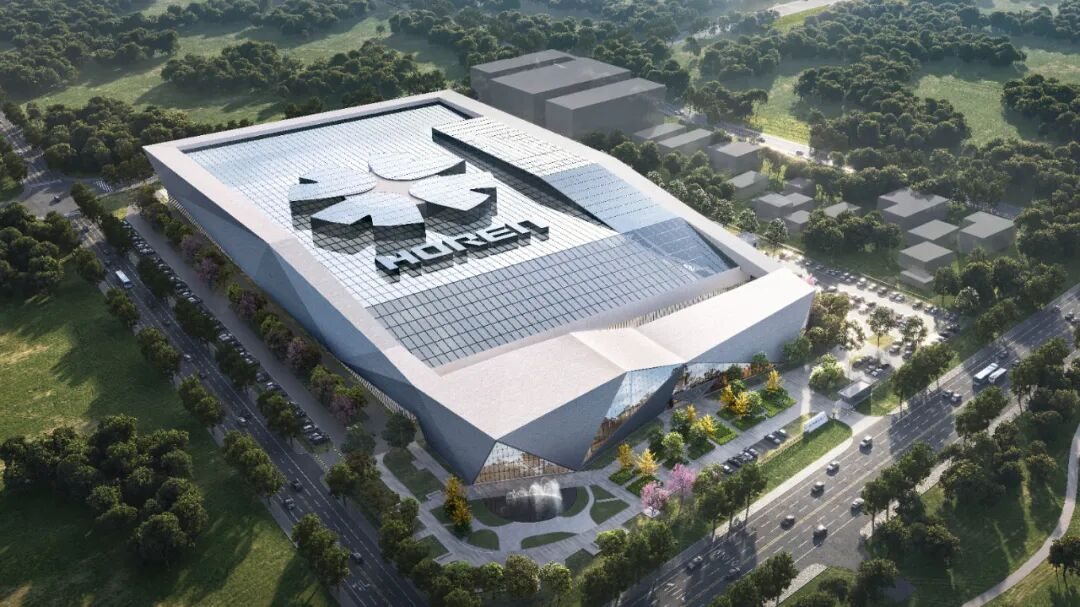
Core Insights - The establishment of a global smart factory by the company in Xianju, Zhejiang, represents a significant investment of 1 billion yuan, aimed at creating a world-class industrial benchmark that integrates modern aesthetics, zero-carbon ecology, and digital intelligence [1][2] Investment and Capacity Expansion - The Xianju factory, covering an area of 112 acres, is the company's largest single strategic investment to date, expected to enhance production capacity and serve as a key support for an integrated ecosystem of technology research, project incubation, and autonomous manufacturing [2][4] - The factory is projected to achieve an annual production capacity of 300,000 sets of bulk liquid IBCs, 10 million sets of fresh cold chain foldable RPCs, 200,000 sets of automotive and home appliance component boxes, and 2 million sets of special valves and liquid bag consumables upon reaching full production [4] Design and Aesthetic Philosophy - Named "Green Ark," the factory's design reflects the company's journey of transformation and innovation, emphasizing a harmonious coexistence of humanity, technology, and nature [5][6] - The factory's architectural design spans 100,000 square meters, equivalent to 14 standard football fields, featuring a three-story main factory and a four-story office building [5] Sustainability and Smart Manufacturing - The project incorporates zero-carbon principles throughout its energy management, from spatial layout to material selection, aiming for net-zero carbon emissions during its operational phase [6] - The factory will implement industrial IoT technologies, integrating various systems such as PLC+SCADA, ERP, MES, and WMS, along with AI deep learning for enhanced production transparency and intelligent control [6] - The focus on lean manufacturing aims to drive significant improvements in production quality and efficiency through automation and standardized operations [6] Future Outlook - The company plans to leverage the Xianju global smart factory as an innovation engine to further integrate smart manufacturing with green supply chain services, collaborating with ecological partners to provide sustainable solutions for global low-carbon transitions [6]

机械ETF(516960)涨超1.7%,数据中心电力需求扩张引关注
Mei Ri Jing Ji Xin Wen· 2025-12-26 07:00
Core Viewpoint - The mechanical ETF (516960) has risen over 1.7%, driven by the expanding power demand in data centers and the anticipated recovery in the domestic power equipment industry by 2026 [1] Industry Summary - The domestic power equipment industry is expected to maintain high installation levels by 2026, with the delivery of "anti-involution" orders and stabilization of bidding prices leading to overall profit recovery in the supply chain [1] - Global offshore wind power is entering an accelerated expansion phase due to technological advancements and policy support, resulting in a continuous decrease in the cost per kilowatt-hour [1] - Key segments such as offshore wind power infrastructure and submarine cables will directly benefit from the expanding demand [1] - The overseas demand for wind power is beginning to increase, and domestic companies are expected to see rapid growth in overseas orders due to their mature supply chains and manufacturing capabilities, accelerating their international expansion [1] Company Summary - The mechanical ETF (516960) tracks a specialized mechanical index (000812), which selects listed company securities from the Shanghai and Shenzhen markets involved in specialized equipment and general machinery sectors [1] - The index focuses on high-end manufacturing and intelligent manufacturing, reflecting the overall performance of competitive and high-quality enterprises within the mechanical equipment industry [1]
跟着摩根、巴克莱抄作业!机器人唯一低估大龙头被锁定,还是军工隐形王炸
Xin Lang Cai Jing· 2025-12-26 05:16
Group 1 - The article discusses a company whose shareholder list includes top international investment banks, indicating potential credibility and interest in its business related to robotics and military applications [5][6][26] - The company reported a significant revenue increase of 46.87% year-on-year for Q3 2025, reaching 98.42 million yuan, surpassing the total revenue of the previous year [7][28] - The gross profit margin improved to 21.91%, reflecting enhanced product competitiveness and effective cost control [9][30] Group 2 - The company has a negative bad debt provision of -5.0465 million yuan, indicating strong asset quality and effective management of receivables [11][32] - The inventory balance increased by 5.93% to 1.082 billion yuan, suggesting robust order fulfillment and production readiness [13][34] - The company primarily focuses on intelligent equipment systems based on robotics and IoT technologies, with applications in automotive and agricultural sectors [14][35] Group 3 - The company claims to have a minor presence in military equipment, which does not currently contribute significantly to its revenue [17][37] - New customer orders amounted to 788 million yuan, showing a slight decline of 0.29% year-on-year, which may raise concerns about future growth [16][39] - Overall, the company is portrayed as a solid manufacturer in the robotics sector, with a focus on operational quality and growth potential [41][43]

贾屹会见国机数科总经理李伟一行
Xin Lang Cai Jing· 2025-12-26 01:22
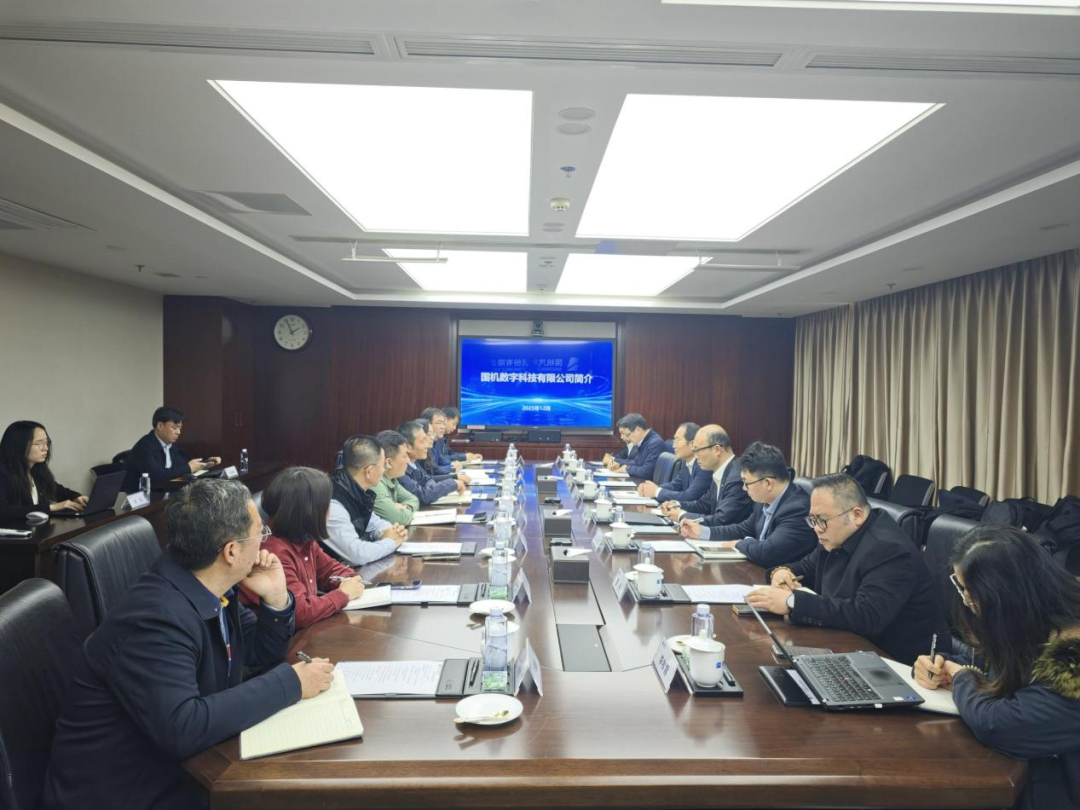
Group 1 - The companies are exploring collaboration opportunities in areas such as digital transformation, AI empowerment, smart manufacturing, and smart factory applications [2][4] - Key participants in the discussions include leaders from Guojin Digital Technology, Guojin Internet, and various departments of Guojin Automotive, including subsidiaries like China Automotive Engineering and China Jin Leasing [2][4]

徐州用产业“换新”迎接城市“焕新”
Xin Hua Ri Bao· 2025-12-25 23:55
这三家企业的转型实践,是徐州市近年来强化数实融合、助力企业转型升级的集中体现。作为老工业基 地,徐州实施新一轮"智改数转网联",坚持"政府引导、产业聚焦、平台支撑、规模推广",加速推进新 型工业化。 转型不是"零敲碎打",而是"全局谋划"。为进一步促进实体经济和数字经济深度融合,今年,徐州市印 发《徐州市深化制造业智能化改造数字化转型网络化联接行动计划(2025—2027年)》,提出到2027 年,全市规上工业企业基本完成改造,建成100家智能工厂,形成较为完备的装备、网络、软件、数 据、安全等供给支撑能力。这一清晰目标,彰显了徐州加快建设全国先进制造业强市的坚定决心与十足 信心。 工程机械产业是徐州重要的支柱产业。 过去五年是徐州发展历程中极不平凡的五年。徐州上下牢记嘱托、感恩奋进,各项事业发展取得重要阶 段性成果,中国式现代化徐州新实践迈出新的坚实步伐。我们聚焦产业、消费、文化、民生等四个方 面,展现徐州在"十四五"时期取得的重要成就,记录徐州向着"万亿之城"扎实迈进的奋进姿态。 11月27日至29日,2025世界智能制造大会在南京举行。大会开幕前夕,徐州重型机械有限公司作为全国 首批15家"领航级智能工 ...