人类命运共同体

Search documents
展现跨越时空的魅力(权威论坛)
Ren Min Ri Bao· 2025-09-28 22:28
Core Viewpoint - The concept of "common values for all humanity" is gaining international recognition and serves as a guiding principle for building a community with a shared future for mankind, emphasizing peace, development, fairness, justice, democracy, and freedom as universal aspirations [8][10][12]. Group 1: Theoretical Foundation - The "common values for all humanity" is rooted in the inclusive nature of Chinese civilization, breaking away from the Western-centric view of global civilization and addressing issues like global governance deficits and underrepresentation of the Global South [8][9]. - It emphasizes a logical and organic integration of six key elements: peace, development, fairness, justice, democracy, and freedom, which are interdependent and essential for global governance [9][10]. Group 2: Practical Implications - The promotion of "common values for all humanity" is seen as a framework for dialogue and cooperation, transcending ideological and cultural differences, and is crucial in addressing global challenges such as climate change and public health crises [10][14]. - China's commitment to these values is reflected in its initiatives like the Belt and Road Initiative, which aims to foster global connectivity and mutual prosperity among developing countries [16][17]. Group 3: Global Governance - The "common values for all humanity" align with China's global governance initiatives, advocating for a more just, balanced, and inclusive international order, countering unilateralism and protectionism [18]. - The framework encourages multilateral cooperation to tackle global issues, providing a platform for countries to engage in dialogue and collaboration based on mutual respect and shared interests [11][12].

铭记历史 共护和平
Ren Min Ri Bao· 2025-09-28 22:28
Group 1 - The Peace Conference held in Beijing on September 26 commemorated the 80th anniversary of the victory in the Chinese People's Anti-Japanese War and the World Anti-Fascist War, emphasizing the importance of remembering history to maintain peace and stability [1][2] - Representatives from nearly 60 countries attended the conference, highlighting a collective commitment to safeguarding peace and learning from historical experiences [2][3] - The conference served as a platform for international dialogue, with participants discussing the significance of China's contributions to global peace and development [3][4] Group 2 - Former Thai Prime Minister Abhisit emphasized that the current international order was established through the sacrifices of past generations, urging the younger generation to remain vigilant in defending peace [2][5] - The conference included visits to historical exhibitions, enhancing understanding of China's role in promoting world peace [2][3] - The discussions underscored the need for mutual respect among nations to foster a stable and peaceful global environment [5][6] Group 3 - The conference highlighted China's development as a model for other developing countries, showcasing initiatives like the Belt and Road Initiative that aim to alleviate poverty and promote prosperity [3][4] - Participants noted that China's achievements in various sectors, including agriculture and technology, contribute significantly to global welfare [3][6] - The call for a more democratic global governance system was reiterated, emphasizing the need for equitable treatment of all nations [6]
“一带一路”——凝结中国智慧的国际公共产品(高质量发展故事汇·第11期)
Ren Min Wang· 2025-09-28 22:25
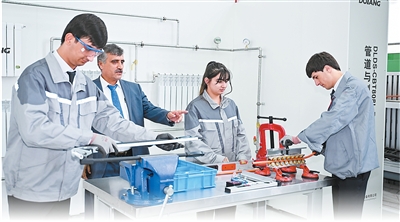
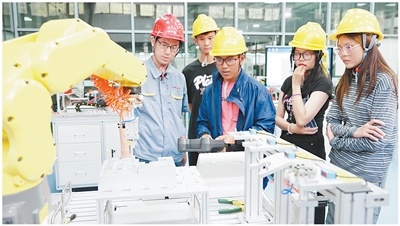
Core Viewpoint - The "Belt and Road Initiative" (BRI) has evolved into the largest and most influential international economic cooperation platform globally, addressing various global challenges and enhancing international collaboration [5][9][10]. Group 1: Infrastructure Development - The BRI focuses on "hard connectivity" through infrastructure projects, forming an integrated network of land, sea, and air transport, which enhances regional logistics efficiency and industrial collaboration [6]. - Significant projects, such as cross-border highways, railways, ports, and aviation hubs, have been accelerated, improving energy security and development foundations [6]. Group 2: Regulatory and Standards Cooperation - The BRI emphasizes "soft connectivity" by deepening regulatory and standards alignment among participating countries, establishing a framework for cooperation [6]. - Over 150 countries and 30 international organizations have signed cooperation documents related to the BRI, with trade volume projected to reach 22.1 trillion yuan in 2024, accounting for over 50% of China's total imports and exports [6]. Group 3: Cultural and People-to-People Exchanges - The initiative fosters cultural, tourism, and educational cooperation, enhancing mutual understanding and interaction among the peoples of participating countries [6][9]. Group 4: New Areas of Cooperation - The BRI is expanding into new areas such as green and innovative development, establishing international alliances for green development and implementing technology innovation action plans [7][9]. Group 5: Global Economic Impact - The BRI addresses developmental bottlenecks in participating countries through infrastructure projects, improving local living conditions and economic capabilities [9]. - It enhances global economic vitality by promoting international cooperation and investment, facilitating the flow of information, capital, technology, and goods [9]. Group 6: Global Governance and Civilizational Exchange - The BRI offers new solutions for global governance, advocating for genuine multilateralism and promoting a fairer global governance system [10]. - It emphasizes cultural exchange and mutual learning, fostering a new landscape of human interaction and cultural integration [10]. Group 7: Case Studies - A logistics company in Xi'an benefits from the BRI by facilitating efficient cross-border trade, connecting Central Asia and Europe [12]. - The Oasis Energy Storage Project in South Africa, supported by China Bank, showcases financial backing for green development initiatives [15]. - The Thailand Luban Workshop exemplifies successful vocational training collaboration, enhancing skills and economic conditions for Thai students [16].
刚果(金)媒体:全球治理倡议为动荡变革中的世界指明方向
Xin Hua Wang· 2025-09-28 09:13
Core Viewpoint - The article emphasizes that China's global governance initiative provides direction for a world undergoing turmoil and transformation, advocating for principles such as sovereign equality, adherence to international law, multilateralism, and a people-centered approach [1][1][1] Summary by Relevant Categories Global Governance - The current state of global governance is at a crossroads, facing new challenges and transformations [1] - China's global governance initiative is timely and aims to guide the world towards cooperation rather than unilateralism and intimidation [1][1] Principles of Governance - The core principles of China's initiative include equal treatment of all countries regardless of size, strength, or wealth, and the necessity for adherence to the UN Charter and other recognized norms of international relations [1][1] - It is essential to ensure that international law and rules are applied equally and uniformly, avoiding double standards or the imposition of domestic rules of certain countries on others [1][1] Multilateralism and Cooperation - The article highlights that global governance is crucial for the interests of all nations, requiring coordination and cooperation [1] - China's commitment to multilateralism aims to build a community with a shared future for humanity, continuously providing global public goods through various initiatives [1][1]
新华时评:以多边主义之光照亮全球治理新未来
Xin Hua She· 2025-09-28 05:29
Core Points - The 80th United Nations General Assembly is addressing the challenges facing the international order and the erosion of multilateralism [1] - Geopolitical conflicts, such as the Israel-Palestine conflict and the Ukraine crisis, highlight the inadequacies of the global governance system [1] - The need for a return to genuine multilateralism and the strengthening of the UN's authority is emphasized [1][3] Group 1 - The international community must enhance the representation and voice of developing countries in global governance [2] - Despite accounting for over 40% of the global economy, developing countries lack sufficient representation in international systems [2] - The concept of "selective multilateralism" undermines true multilateralism and contributes to the current challenges in the global governance system [2] Group 2 - China has made significant contributions to global southern development and governance reform through initiatives like the Belt and Road Initiative [3] - The concept of a community with a shared future for mankind has gained international consensus, reflecting China's commitment to global cooperation [3] - China's announcement of comprehensive national contributions to address climate change demonstrates its role as a responsible major power [3] Group 3 - The deep integration of multilateralism into the fabric of international society over the past 80 years is irreversible [4] - The international community is urged to uphold the principles of the UN Charter and defend multilateral mechanisms for a better future in global governance [4]
和音:坚定弘扬全人类共同价值
Ren Min Ri Bao· 2025-09-28 05:29
Group 1 - The 80th United Nations General Assembly is themed "Working Together: Promoting Peace, Development, and Human Rights for 80 Years, Continuing the Journey and Writing a New Chapter," highlighting the global desire for peace, development, fairness, justice, and the pursuit of democracy and freedom [1] - The concept of "common values for all humanity," introduced by President Xi Jinping, emphasizes the importance of peace, development, fairness, justice, democracy, and freedom as shared goals of humanity and the United Nations [1][2] - The international community increasingly recognizes that peace and development are the only paths to overcoming conflicts and security dilemmas, while fairness and justice are essential for bridging development gaps and protecting the rights of the Global South [2] Group 2 - China is a staunch advocate and practitioner of the common values for all humanity, promoting initiatives such as the Global Development Initiative, Global Security Initiative, Global Civilization Initiative, and Global Governance Initiative [3] - China's commitment to true multilateralism and the promotion of an open world economy reflects its responsibility as a major power and its dedication to the common values for all humanity [3] - The country aims to work with all parties to uphold and promote these common values, striving towards the lofty goal of building a community with a shared future for mankind [3]
2025白塔夜话系列活动启幕,两大文化项目落户西城
Xin Jing Bao· 2025-09-28 03:19
Group 1 - The "Cultural Exchange and Dialogue Base for a Community with a Shared Future for Mankind" has been established in Xicheng, supported by the China Media University and the local government, aiming to enhance cultural international communication and tourism integration [1] - The "Duzhishi" Cultural Heritage Protection Special Fund has been launched, focusing on the protection and utilization of historical cultural districts, cultural heritage education, and the promotion of intangible cultural heritage [1] - The "Baita Night Talk" event includes three historical cultural districts and aims to promote the integration of culture, commerce, and tourism, enhancing consumer engagement through cultural activities [2] Group 2 - The street renewal initiative will utilize historical cultural districts such as Baita Temple, Dajixiang, and Fayuan Temple to drive consumption and promote the synergy between cultural preservation and urban renewal [2] - The initiative will involve cultural influencers visiting key cultural relic revitalization projects in Xicheng, encouraging public participation in cultural heritage practices and exploring new paths for revitalization [2]
习近平文化思想国际学术研讨会在广州举行黄坤明傅华王伟中洪大用出席
Nan Fang Ri Bao Wang Luo Ban· 2025-09-28 02:41
Core Ideas - The Xi Jinping Cultural Thought International Academic Seminar held in Guangzhou focuses on promoting cultural prosperity through mutual learning among civilizations [1][2] - The seminar emphasizes the importance of Xi Jinping Cultural Thought as a guiding ideology for cultural development and international humanistic exchange [1][3] Group 1: Key Statements from Officials - Huang Kunming highlighted that Xi Jinping Cultural Thought serves as a guiding principle for building a culturally strong nation and contributes to a harmonious world of diverse civilizations [1] - Fu Hua stated that Xi Jinping Cultural Thought is a theoretical summary of the Communist Party's cultural construction practices and aims to promote human civilization progress globally [2] - Gao Song from Sun Yat-sen University emphasized the need to explore effective paths for cultural thought dissemination in higher education, aligning with national strategic needs [2] Group 2: Perspectives on Civilizational Exchange - Tursunali Kuziyev from Uzbekistan stressed the growing necessity of promoting mutual learning among civilizations for establishing equal and understanding partnerships [2] - Zhang Zhiqiang from the Chinese Academy of Social Sciences noted that the prosperity of civilizations and human progress are inseparable from civilizational exchanges [3] - Participants expressed that discussing Xi Jinping Cultural Thought enhances international exchanges and mutual learning, advocating for shared human values and addressing global common issues [3] Group 3: Seminar Structure and Reports - The seminar was co-hosted by the Xi Jinping Cultural Thought Research Center, Xinhua News Agency, Sun Yat-sen University, and the Guangdong Provincial Publicity Department [4] - A think tank report titled "Theory of Civilizational Development - Constructing a New Civilization View Centered on Development" was released during the forum [4] - Four sub-forums were held focusing on cultural prosperity, heritage protection, media transformation in the context of artificial intelligence, and global civilizational exchange [4]
新华时评丨以多边主义之光照亮全球治理新未来
Xin Hua Wang· 2025-09-28 00:50
Group 1 - The article emphasizes the need for a return to genuine multilateralism to address global challenges and maintain the authority of the United Nations [2][3] - It highlights the erosion of multilateralism due to geopolitical conflicts and unilateral actions, which have led to a weakened global governance system [1][2] - The article calls for increased representation and voice for developing countries in international affairs, acknowledging their significant contribution to global economic output [2][3] Group 2 - The concept of "pseudo-multilateralism" is criticized, as it serves specific geopolitical goals and undermines the fairness and effectiveness of international rules [3] - China's initiatives, such as the Belt and Road Initiative and various global governance proposals, are presented as efforts to enhance collective voice and development opportunities for the Global South [4] - The article asserts that multilateralism is deeply embedded in international relations and calls for a collective commitment to uphold the principles of the UN Charter [4]
发展之光照亮文明之路——聚焦智库报告《文明发展论——构建以发展为核心的新型文明观》
Xin Hua She· 2025-09-28 00:22
Core Viewpoint - The report "Civilization Development Theory" emphasizes a new type of civilization view centered on development, rooted in deep cultural traditions, and validated through practice, aiming to provide insights into humanity's future direction and purpose in the face of global challenges [2][4][6]. Group 1: Civilization Development Theory - The report presents a dual interpretation of human civilization progress through "Civilization Integration Theory" and "Civilization Development Theory," both rooted in a profound understanding of cultural diversity [4][22]. - It identifies four principles for the continuity and development of civilization: independence, multi-dimensional coexistence, governance for the people, and innovation [6][7]. - The report argues that the essence of Chinese modernization is a dual process of "civilization development" and "development of civilization," breaking away from traditional linear modernization theories [2][11]. Group 2: Global Context and Implications - The report highlights the increasing global governance deficit and the intensification of civilization conflicts, suggesting that a development-centered civilization view can provide important answers to humanity's questions about purpose and direction [6][8]. - Experts believe that the shift from "civilization integration" to "civilization development" reflects a deep insight into the laws of civilization development and serves as a guide to navigate contemporary civilization dilemmas [2][22]. - The report posits that China's approach to modernization, which emphasizes the alignment of economic growth with social development, offers a valuable reference for other developing countries [11][19].