医疗AI

Search documents
医生版ChatGPT,估值120亿美元
量子位· 2025-12-18 04:40
Core Viewpoint - The article discusses the rapid growth and significant valuation of OpenEvidence, a medical AI company designed for doctors, which has recently raised $250 million in funding, doubling its valuation to $12 billion [1][4][5]. Group 1: Company Overview - OpenEvidence has become a dominant player in the U.S. ToC medical AI market, processing over 60,000 clinical queries daily, with 45% of U.S. doctors as users [2][24]. - The company has experienced a meteoric rise in valuation, from $100 million in its Series A round in February 2025 to $12 billion in its latest funding round [6][5]. - Notable investors include Google Ventures, Sequoia Capital, KKR, and Blackstone [7]. Group 2: Product and Technology - OpenEvidence aims to reduce decision-making costs for doctors by providing a specialized AI that addresses complex clinical cases lacking standard answers [9][19]. - The AI utilizes a curated medical knowledge base, including exclusive content from top medical journals, ensuring high-quality and traceable data sources [20]. - The model is specifically trained for medical tasks, allowing it to perform more accurately in clinical scenarios compared to general-purpose models [21][22]. Group 3: Market Position and Financials - OpenEvidence is reported to generate approximately $150 million annually from advertising, with the potential to exceed $1 billion in annual recurring revenue if fully commercialized [26][29]. - The company boasts a gross margin close to 90%, significantly higher than many AI startups, due to lower training and inference costs associated with its smaller model [29][30]. - OpenEvidence's unique position allows it to leverage its user base to negotiate favorable terms with medical journals, enhancing its competitive edge [30][31]. Group 4: Competitive Landscape - While OpenEvidence leads the market, several domestic competitors are emerging, including Yilian, Baichuan Intelligence, Zero Hypothesis, Yisheng Jiankang, and Lingxi Medical, although none have reached a valuation as high as OpenEvidence [32][33]. - Yilian, for instance, has developed MedGPT, which has been recognized for its clinical safety and effectiveness, serving over 20 million registered users [34][36].


数千万B+轮!医疗大模型企业一年完成三轮融资
思宇MedTech· 2025-12-18 03:19
Core Viewpoint - Hangzhou Quanzhen Medical Technology Co., Ltd. has completed a B+ round financing of several tens of millions, led by PwC Capital, with the funds aimed at deepening the research and development of its core product, the "Quanzhen Medical Large Model and Clinical Application," and expanding into overseas markets [1][13]. Company Overview - Quanzhen Medical, founded in Hangzhou, is one of the earliest innovative companies in China focusing on the post-training and clinical application of medical large models, with a mission to "enhance doctors' capabilities through AI" [2]. - The founder, Dr. Xue Chong, has a dual background as a clinical doctor and AI researcher, which provides a deep understanding of AI's value in healthcare, emphasizing that AI should assist rather than replace doctors [4]. Product and Technology - The flagship product, "Quanzhen Tong (Trizen AI)," is the first intelligent medical record and clinical assistance system for doctors in China, featuring automatic medical record generation, clinical decision support, and patient service [6]. - The system significantly improves medical record writing efficiency by over 65% and supports various types of medical documents, with accuracy and logical language superior to similar products in the industry [6][10]. - Quanzhen Medical is expanding its product from a single medical record tool to a comprehensive "AI Doctor Assistant" platform, covering the entire process from pre-diagnosis to follow-up [6]. Technical System - Since 2023, Quanzhen Medical has established a complete "foundation-model-application" technical system, focusing on post-training methods tailored for medical scenarios [7]. - The system utilizes localized large model deployment, compressing general models into medical-specific models with parameters ranging from 1 billion to 10 billion, enhancing response speed and reducing inference costs [10]. - The company has developed a multi-dimensional training system, including supervised fine-tuning, reinforcement learning, and generative adversarial networks, significantly reducing common issues like "hallucinations" and misjudgments in medical large models [10][11]. Industry Trends - The global medical AI sector continues to heat up, with companies like Abridge and Open Evidence seeing rising valuations, driven by the need for valuable medical large models to be deeply integrated into real "diagnostic processes" [12]. - Quanzhen Medical exemplifies this trend by focusing on the practical application of AI in clinical settings, aiming to provide world-class intelligent solutions [12].

蚂蚁阿福”进湾区 明年将有“大动作
Shen Zhen Shang Bao· 2025-12-17 23:44
Core Insights - Ant Group has upgraded its organizational structure, transforming the "Digital Healthcare Division" into the "Healthcare Group," marking a significant shift in its AI strategy towards healthcare [1] - The AI health application AQ has been rebranded as "Ant Aifu," which has seen a surge in downloads, reaching the third position on the Apple App Store shortly after its release [1] Group 1: Product Features and User Engagement - The new version of "Aifu" introduces features like "Health Diary," "Health Goals," and "Health Reminders," focusing on user engagement and emotional connection with the AI [2] - Approximately 55% of "Aifu" users are from third and fourth-tier cities, with a significant portion being over 40 years old, indicating a diverse user base [2] - The company emphasizes the need for personalized, automated, and professional healthcare solutions, highlighting that the AI healthcare sector is still underdeveloped in addressing user pain points [2] Group 2: Data and Expert Collaboration - Ant Group's advantages in the medical AI field include high-quality medical data, a professional evaluation system, and deep collaboration with top experts [3] - The company has established a medical multimodal model system since 2023, which supports its AI health manager AQ and ranks first in authoritative lists like HealthBech and MedBech [3] - A team of 30,000 real doctors provides online consultation services on the "Aifu" platform, with over 500 renowned doctors, including six academicians, having their "AI avatars" on the platform [3] Group 3: Future Plans and Market Strategy - Ant Group is actively expanding its presence in the Guangdong-Hong Kong-Macao Greater Bay Area, with significant announcements expected in January [6] - The "Aifu" app has already launched versions in Hong Kong and Macau, with city-level intelligent systems in Guangzhou and Shenzhen now operational [6] - The company is exploring partnerships with hardware manufacturers to integrate AI into medical devices, such as blood pressure monitors and glucose meters [6] - The commercial model for these services remains under discussion, with the belief that value creation will lead to a viable business model [6]
深耕肿瘤AI深水区 京东健康(06618)“医疗级”专病大模型引领专科新突破
智通财经网· 2025-12-15 05:55
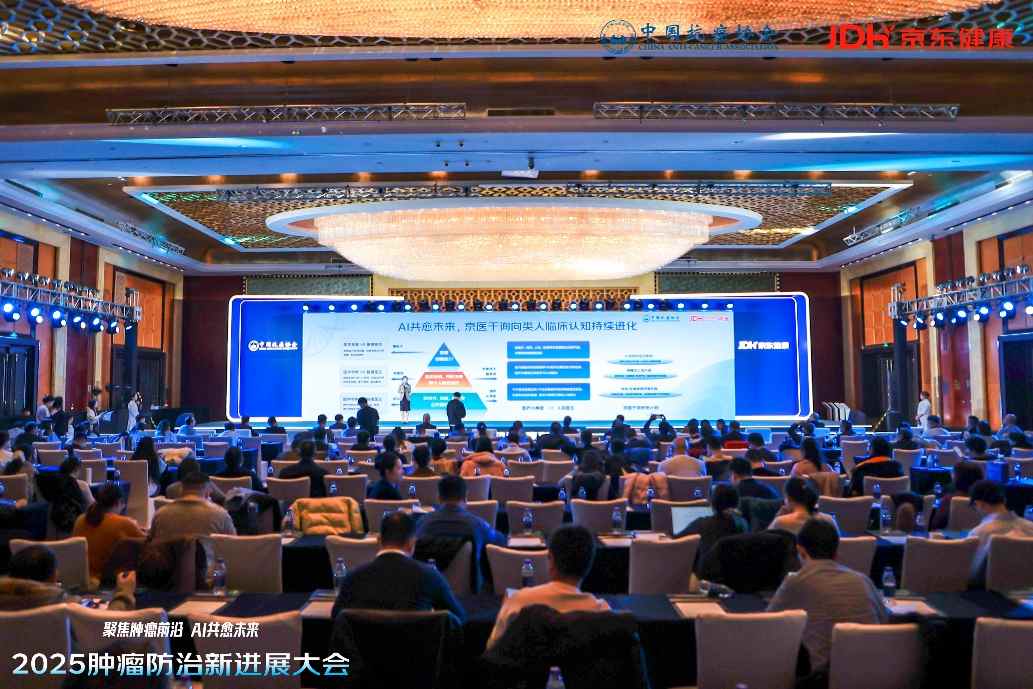
Core Viewpoint - JD Health is advancing its medical AI capabilities through the "Jingyi Qianxun" model, focusing on specialized disease models for cancer treatment and chronic diseases, collaborating with top medical institutions in China to enhance clinical practices and patient management [1][3][4]. Group 1: Technological Advancements - JD Health's "Jingyi Qianxun" medical AI model has evolved from a general model to specialized disease models, demonstrating significant technological progress since 2018 [4]. - The model integrates high-quality clinical data from JD's online healthcare services and collaborates with national medical data centers to optimize its foundational model [4][5]. - The specialized disease models are developed using real-world clinical data, ensuring alignment with actual clinical needs and incorporating insights from over 1,000 experts across more than 400 top-tier hospitals [5][6]. Group 2: Collaborative Initiatives - JD Health, in partnership with the China Anti-Cancer Association, launched the "Cancer Integration Prevention and Treatment Project (2025-2030)" to create a comprehensive cancer prevention and treatment system [3]. - Collaborations with leading hospitals, such as Peking University Cancer Hospital and Sun Yat-sen University Cancer Center, focus on developing specialized models for various cancer types, including gastrointestinal and respiratory cancers [5][6]. Group 3: AI Integration in Clinical Practice - The AI-driven tools, such as the AI doctor assistant, have improved the efficiency of oncologists, achieving over 90% resolution of repetitive queries and enhancing diagnostic processes by more than 50% [8]. - JD Health's research platform utilizes AI to streamline data collection and patient follow-up, significantly improving research efficiency and data quality for ongoing studies [8]. Group 4: Future Directions - JD Health aims to enhance its medical AI model towards human-like clinical cognition and will continue to foster open collaborations with medical institutions and experts [9]. - The company is committed to building a specialized cancer prevention and treatment system that ensures accessible resources, reliable decision-making, and effective patient management, contributing to the "Healthy China 2030" initiative [9].

AI“看懂”影像、“理解”病历:“京医千询”大模型以多模态能力推动医疗普惠
Zheng Quan Ri Bao Zhi Sheng· 2025-12-12 10:14
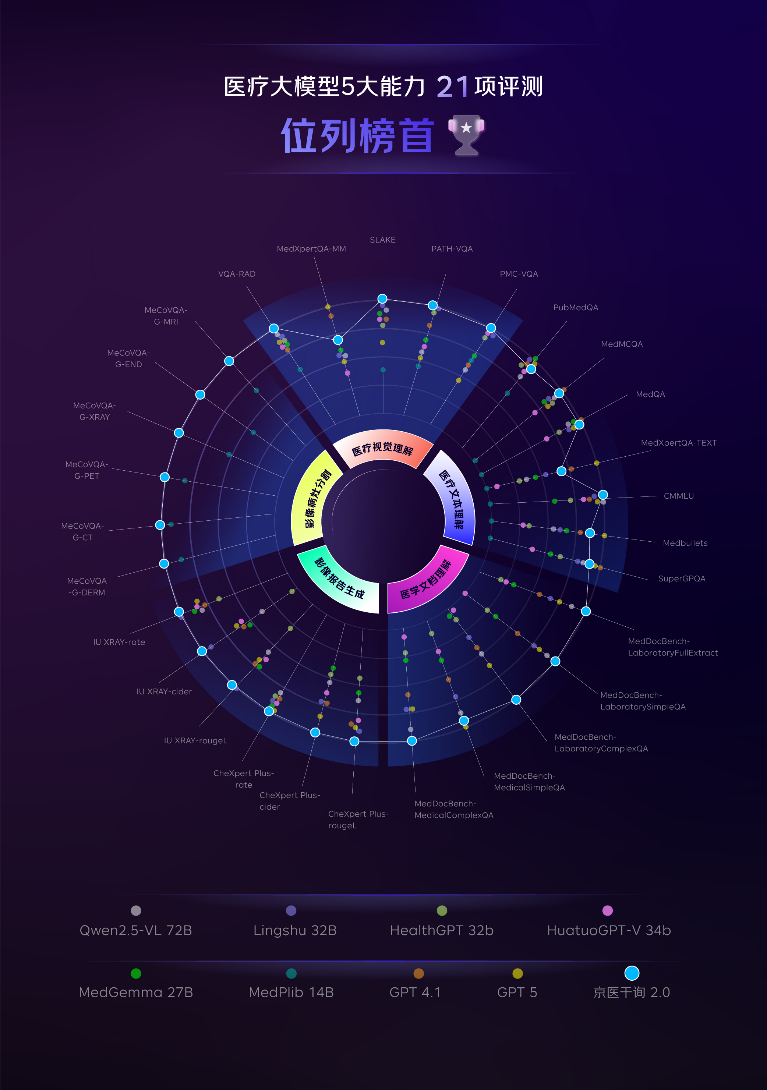
Core Insights - The 2025 Medical Value Healthcare Conference and the 6th Taishan Award Ceremony were recently held in Shanghai, focusing on the theme of "AI-driven diagnostic transformation and industry integration" [1] - JD Health showcased its breakthrough achievements in the medical AI field, particularly through its "Jingyi Qianxun" medical model, which emphasizes collaborative innovation and aims to address the challenges of medical accessibility [1] Group 1: Technological Advancements - "Jingyi Qianxun" has achieved comprehensive integration of information from text to imaging, enabling precise extraction of key information from medical records and orders, and constructing complete health profiles [2] - The model demonstrates advanced pixel-level image analysis capabilities, accurately identifying anatomical structures or lesions in medical images, including MRI, endoscopy, and ultrasound [2] - The multi-modal reasoning ability of "Jingyi Qianxun" simulates human diagnostic logic, allowing for reliable diagnostic outputs even from complex medical test results [2] Group 2: Performance Metrics - In authoritative assessments, "Jingyi Qianxun" has shown outstanding performance, achieving 99% in medical calculation ability, 91% in medical Q&A ability, and 91% in text summarization ability, placing it at the forefront of the industry [2] - The model has been validated against a comprehensive evaluation set based on clinical task data from JD Internet Hospital, confirming its leading capabilities in core medical functions [2] Group 3: Future Directions - "Jingyi Qianxun" has evolved from a general base model to a comprehensive model and then to specialized models for specific diseases, reflecting JD Health's long-term commitment to specialized fields [3] - The company plans to continue developing specialized models through technological innovation to enhance medical accessibility, professionalism, and efficiency, aiming to extend quality medical resources to a broader population [3]
AI“看懂”影像、“理解”病历:“京医千询”大模型推动医疗普惠
Yang Zi Wan Bao Wang· 2025-12-12 06:56
Core Insights - The "Jingyi Qianxun" medical AI model by JD Health showcases significant advancements in the healthcare AI sector, particularly in its core capabilities and ecosystem development [1][2]. Group 1: Core Capabilities - "Jingyi Qianxun" is built on three core capabilities: multimodal perception, human-like dialogue, and reliable reasoning, which form the technical foundation for the model [2]. - The upgraded "Jingyi Qianxun 2.0" integrates information from various modalities, including text and imaging, enabling comprehensive health record construction and advanced pixel-level image analysis [2]. - The model's reasoning ability simulates human diagnostic logic, allowing it to analyze complex medical data and provide reliable second opinions, even from distorted medical reports [2]. Group 2: Dialogue and Interaction - The human-like dialogue capability allows "Jingyi Qianxun" to understand vague patient descriptions and provide tailored responses based on individual patient characteristics [3]. - A patient simulator has been developed to enhance dialogue realism, enabling the model to train on diverse user expressions and disease severities, thereby improving interaction quality [3]. Group 3: Performance Metrics - "Jingyi Qianxun" has demonstrated outstanding performance in authoritative evaluations, achieving 99% in medical calculation, 91% in medical Q&A, and 91% in text summarization, positioning it as a leader in the industry [3][4]. - The model has outperformed competitors in 21 evaluation metrics across five major capabilities, confirming its superior medical AI capabilities [4]. Group 4: Specialized Development - JD Health has focused on specialized models by leveraging high-quality online diagnosis data from its internet hospital, ensuring alignment with clinical tasks [5]. - The evolution from a general model to specialized models is supported by collaborations with top medical institutions and the integration of diverse clinical data for training [5]. Group 5: Future Prospects - The ongoing development of "Jingyi Qianxun" aims to bridge the gap between AI capabilities and human clinical cognition, potentially providing high-quality medical services to users in remote areas [6].
2026年医药行业策略报告:黄金赛道:寻找中国的GlobalPharma-20251211
Western Securities· 2025-12-11 05:52
Group 1 - The core viewpoint of the report highlights that the pharmaceutical industry in China is experiencing a reversal in 2025, driven by innovative drugs, with significant benefits observed in the CXO and upstream supply chain sectors, particularly in the Hong Kong stock market where innovative drugs have seen a rise of over 80% year-to-date [1][4] - The report emphasizes that the core catalyst for innovative drugs comes from policy support and the realization of business development (BD) opportunities abroad, with notable transactions exceeding 1 billion USD, validating the international competitiveness of Chinese innovative drugs [1][2] - A significant reform in the payment sector is underway, with the introduction of a dual-track system for medical insurance, allowing for the inclusion of high-value innovative drugs in commercial insurance, addressing the gap in coverage for expensive treatments [1][2] Group 2 - The report indicates a rapid growth trend in the number of license-out transactions by Chinese pharmaceutical companies, with total upfront payments reaching 6.298 billion USD, a 53% year-on-year increase, and total transaction amounts reaching 118.862 billion USD, a 125% increase [2] - Looking ahead to 2026, the report suggests a shift from "BD-driven" to "data-driven" investment in innovative drugs, emphasizing the importance of clinical data validation and commercial capabilities for revenue growth [2] - Recommended stocks for investment include Heng Rui Medicine, Kelun-Biotech, and Teva Biopharmaceuticals, among others, while companies like Kangfang Biotech and Innovent Biologics are suggested for further attention [2][3] Group 3 - The overall profitability of the pharmaceutical sector remains stable, with a gradual improvement in the profitability of the pharmaceutical manufacturing industry, despite a slight decline in revenue growth [11][15] - The report notes a significant divergence within the industry, with the medical services sector performing well, while the profits of the biopharmaceutical sector have seen a substantial decline [28][29] - The report highlights that the medical insurance fund's income and expenditure growth rates are stabilizing, indicating a long-term trend towards cost control in medical insurance, which is essential for the sustainable development of the innovative drug industry [31][36]


2025年中国医疗AI解决方案行业政策、产业链、市场规模、细分产品结构、竞争格局、代表企业经营现状及发展趋势分析研判:应用广泛且持续深入,市场格局愈加多元化[图]
Chan Ye Xin Xi Wang· 2025-12-11 01:34
Core Insights - China is a significant market for global medical AI solutions, benefiting from technological advancements, high-quality medical data accumulation, supportive national policies, and growing market demand, leading to rapid growth in AI applications in healthcare [1][4]. Market Size and Growth - The market size for medical AI solutions in China is projected to grow from 9.1 billion yuan in 2021 to 16.4 billion yuan in 2024, with L1 solutions increasing from 5.8 billion yuan to 9.4 billion yuan, L2 solutions from 3.3 billion yuan to 6.9 billion yuan, and L3 solutions at 0.1 billion yuan [1][4]. - By 2025, the market size is expected to reach 18.2 billion yuan, with L1 solutions at 9.8 billion yuan, L2 solutions at 7.8 billion yuan, and L3 solutions at 0.6 billion yuan [1][4]. Industry Definition and Applications - Medical AI solutions utilize AI technologies such as machine learning, deep learning, natural language processing, and big data analysis to enhance various medical processes, including diagnosis, treatment, drug development, and hospital management [2][3]. - The industry is evolving from L1 and L2 solutions, which provide supportive insights, to L3 and L4 autonomous agents capable of executing tasks independently [2][3]. Industry Development Status - The integration of general large model capabilities with medical knowledge bases is driving the transition of medical AI solutions towards higher levels of autonomy [3][4]. - The global market for medical AI solutions is expected to grow from 23.2 billion yuan in 2021 to 40 billion yuan in 2024, with L1 solutions increasing from 13.9 billion yuan to 21.1 billion yuan, L2 solutions from 9.3 billion yuan to 18.7 billion yuan, and L3 solutions at 0.2 billion yuan [4]. Industry Chain - The medical AI solutions industry chain includes upstream data supply, hardware providers (chips, servers), cloud services, operating systems, and algorithms, with midstream companies providing AI solutions and downstream applications in healthcare institutions, pharmaceutical companies, and individual patients [5]. Policy Environment - The Chinese government has prioritized the application of AI in healthcare, implementing policies to support AI in medical diagnosis, health management, and insurance regulation, which are expected to accelerate the development of AI in healthcare [5]. Competitive Landscape - The industry features a competitive landscape with local giants, vertical startups, and multinational companies. Key players include iFlytek Medical, Baidu, United Imaging, CloudWalk, Weining Health, and Mindray Medical [7]. - iFlytek Medical is a leading company in the AI healthcare sector, leveraging its large model to empower various healthcare stakeholders and has developed comprehensive AI solutions for hospitals and primary care institutions [9][11]. Revenue Structure of Key Players - iFlytek Medical reported a revenue of 299 million yuan in the first half of 2025, with contributions from various solutions: 84 million yuan from primary care solutions, 58 million yuan from regional solutions, 53 million yuan from hospital solutions, and 104 million yuan from patient management services [11]. - The company aims to build a robust B-end ecosystem to strengthen its commercial channels [9]. Future Trends - The development of the medical AI industry will be driven by a combination of technology, data, scenarios, and regulation, leading to a more mature, deeper, and broader market landscape [12].




鑫海快步布局澳交所金矿板块:(ASX:AA2)获山东鑫海矿业重磅投资 冲刺Dokwe黄金项目最终可行性研究
Sou Hu Cai Jing· 2025-12-10 12:32
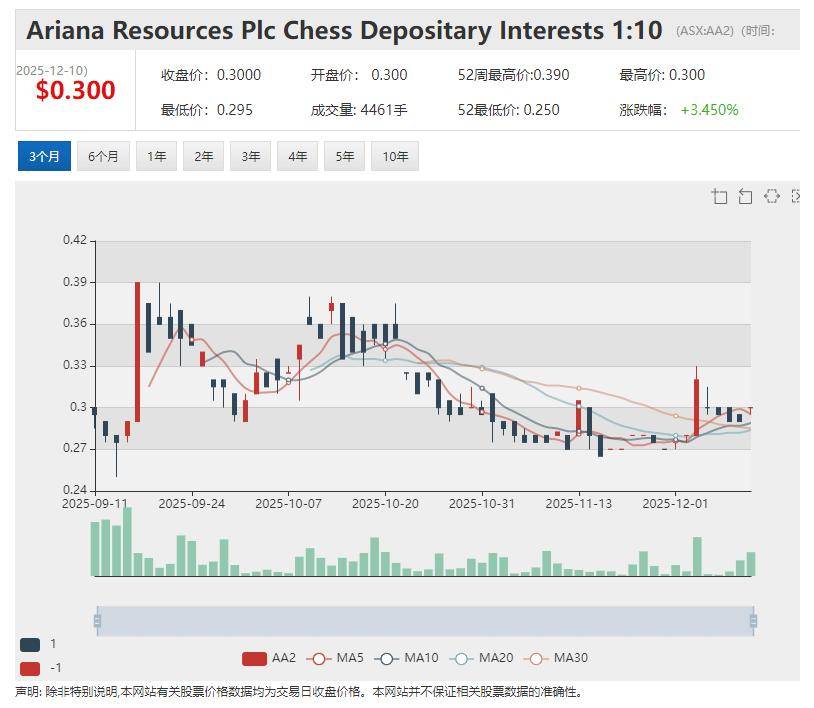
Core Viewpoint - The article discusses the strategic investment by Shandong Xinhai Mining in Ariana Resources, aimed at advancing the Dokwe gold project in Zimbabwe, amidst a booming gold market where gold prices have surged over 60% this year, making it the best-performing year for gold since 1979 [3][4]. Group 1: Investment and Strategic Partnerships - Shandong Xinhai Mining plans to invest AUD 11 million in Ariana Resources to support the Dokwe gold project, focusing on metallurgical sampling and feasibility studies [4]. - The final agreement between Xinhai and Ariana is expected to be signed by January 31, 2026, with Xinhai nominating a director to Ariana's board [4]. - Ariana intends to raise an additional AUD 2 million through a follow-on placement after the completion of the transaction to bolster its cash reserves [5]. Group 2: Project Potential and Market Dynamics - The Dokwe gold project has a mineralized strike length of 12 kilometers, with only about 10% of the area explored, indicating significant potential for resource expansion beyond the currently identified over 1 million ounces of gold [4]. - The ASX gold sector is experiencing high liquidity and profitability, with smaller gold developers gaining attention for their potential to rapidly advance projects and become significant producers [3]. - The collaboration with Xinhai is seen as a crucial step for Ariana, enhancing its exploration and development capabilities while establishing a long-term partnership [6]. Group 3: Market Context and Company Performance - Gold prices are currently hovering around AUD 4,200 per ounce, reflecting a substantial increase this year, which has positively impacted gold producers and developers on the ASX [3]. - Ariana Resources' stock is currently priced at AUD 0.29, with a market capitalization of AUD 77.71 million [7].
问诊单量下降40%,线上问诊会是第一个被AI干掉的医疗赛道吗?
虎嗅APP· 2025-12-09 23:47
Core Viewpoint - The article discusses the significant decline in online consultation volumes, with a reported drop of 40% for some doctors, attributed to the rise of AI tools that are replacing basic medical inquiries and consultations [4][5][6]. Group 1: Impact of AI on Online Consultations - A prominent doctor experienced a 40% reduction in online consultations after the introduction of an AI health management product [4]. - Other platforms also reported a decrease in consultation volumes, averaging around 20% [5]. - A senior industry expert indicated that approximately 80% of standard consultations could be replaced by AI, highlighting a major shift in the online medical consultation landscape [5]. Group 2: Industry Trends and Developments - Two significant events in the internet healthcare sector reflect this trend: Spring Rain Doctor sold 78.29% of its shares for a valuation of 340 million yuan, and WeDoctor launched an international cloud pharmacy [6]. - The penetration of AI into online consultations is evident, with AI tools covering various functionalities from basic inquiries to more complex medical needs [6][10]. Group 3: User Behavior Changes - A user noted a shift in her consultation habits, moving from traditional online doctors to AI tools for basic health inquiries, indicating a change in consumer preferences [9]. - The introduction of AI online consultation products by various companies, including Spring Rain Doctor and MedGPT, has led to a proliferation of AI health management tools [10][11]. Group 4: Future of Online Consultations - The emergence of specialized AI models for specific medical fields is expected to enhance the quality of online consultations, with 22 new specialized models launched in the first half of 2025 [11]. - The transition to AI-driven consultations poses a challenge for traditional online consultation platforms, as they face a decline in user engagement and revenue [12][15]. Group 5: Economic Implications - The free nature of AI health management tools addresses a significant issue in the monetization of online consultations, as users have shown reluctance to pay for services [16][17]. - The article suggests that while the demand for online consultations will decrease, it will not disappear entirely, raising questions about how this demand will be met in the future [17].