现代农业

Search documents
致全区科技工作者的一封信
Guang Xi Ri Bao· 2025-05-30 01:53
习近平总书记对广西科技创新寄予厚望,指出广西是富有创新传统的热土,勉励我们解放思想、创 新求变,向海图强、开放发展,明确要求发展新质生产力,力争在新领域新赛道迎头赶上。当前,广西 正处于高质量发展成型起势的关键阶段,迎来了历史最好发展时期。希望全区广大科技工作者牢记习近 平总书记嘱托,坚持"四个面向",大力弘扬科学家精神,坚守科技报国初心,砥砺科技强国使命,积极 承担国家和自治区重大科技创新任务,勇闯"无人区",敢啃"硬骨头",解锁"黑科技",勇当高水平科技 自立自强排头兵。坚持实干为要、创新为魂,用业绩说话、让人民评价,抢抓人工智能发展时代机遇, 围绕建设"一区两地一园一通道"、中国—东盟人工智能创新合作中心等重点任务,聚焦人工智能、数字 经济、现代农业等关键领域,向"新"发力、朝"质"而行,把论文写在八桂大地上,创造更多有分量的科 技创新成果,为谱写中国式现代化广西篇章贡献智慧力量。 科技是第一生产力,人才是第一资源,创新是第一动力。全区各级党委、政府要把科技创新和人才 工作放在更加突出的位置,聚焦因地制宜发展新质生产力,统筹推进教育科技人才体制机制一体改革, 深入实施科教兴桂战略、人才强桂战略和创新驱动 ...
山东政商要情(5.19—5.25)
Jing Ji Guan Cha Bao· 2025-05-25 12:38
Group 1: Investment and Economic Cooperation - The 2025 Hong Kong-Macao Shandong Week was held in Hong Kong, resulting in the signing of 27 key cooperation projects with a total investment of $2.98 billion, covering various sectors including digital economy, green energy, healthcare, intelligent manufacturing, modern agriculture, and financial services [1] - Shandong's trade with Hong Kong reached 88.5 billion yuan in 2024, marking a year-on-year increase of 35.1%, with 739 new Hong Kong-invested enterprises established in Shandong [1] - The Shandong provincial government aims to leverage its industrial advantages and market potential in collaboration with Hong Kong's capital and innovation capabilities to enhance its global openness [1] Group 2: Talent Development and Education - Shandong Province has developed measures to address the structural employment contradiction of "having jobs but no workers" and "having workers but no jobs," with a focus on high-quality vocational education [2] - The total number of skilled talents in Shandong has reached 4.6 million, with 22 recipients of the China Skill Award and 70 enjoying special government allowances [2] - The new measures include 17 initiatives aimed at cultivating a high-quality workforce and enhancing vocational training [2] Group 3: International Cooperation and Events - The "2025 Shandong International Friendship Cities Cooperation and Exchange Week" is scheduled for May 26-30, 2025, in Shandong, with an expected participation of around 1,200 individuals from various sectors [3] - The event will feature 26 activities aimed at promoting comprehensive exchanges and cooperation between Shandong and its international partner cities [3] Group 4: Talent Attraction Initiatives - Jinan City held its fifth graduation ceremony for university students, emphasizing its commitment to attracting and retaining young talent [4] - The city has implemented innovative measures, including graduation ceremonies and talent policy packages, to attract over 100,000 young talents in recent years [4] - Jinan ranks 11th among the top 100 cities for talent attraction and has been recognized as an excellent city for talent recruitment for three consecutive years [4] Group 5: Port Efficiency and Technological Advancements - Shandong Port's Qingdao Port set a new world record for automated container terminal efficiency, achieving an average operational efficiency of 62.62 natural boxes per hour [5] - The port's advancements in software systems and hardware equipment have solidified its position as a leader in global automated ports [5] - The integration of AI algorithms and intelligent control systems has significantly improved operational efficiency and reduced turnaround rates [5]
沃野千重浪 中原正担当
He Nan Ri Bao· 2025-05-24 23:26
Core Viewpoint - The article emphasizes the importance of grain production in ensuring food security and economic stability in Henan province, highlighting the government's commitment to modernizing agriculture and enhancing the agricultural industry chain. Group 1: Grain Production and Food Security - Henan province is a major agricultural area, with grain production being crucial for national food security, as it has maintained a total grain output exceeding 1.3 trillion jin for eight consecutive years [7] - The province aims to achieve a summer grain total of 757.14 billion jin in 2024, ranking first in the nation, and a total grain output of 1.344 trillion jin, ranking second [22] - The government stresses the need for self-reliance in seed technology to ensure food security, with initiatives to strengthen seed technology and innovation [10][11] Group 2: Agricultural Modernization and Technology - The construction of high-standard farmland is a priority, with plans to build and upgrade over 5 million mu of high-standard farmland by the end of 2024, covering 78% of the total arable land [8] - The integration of technology in agriculture is highlighted, with over 1.3 million grassroots agricultural technicians providing support to enhance crop yields [13] - The mechanization rate for crop farming in Henan is expected to reach 89%, surpassing the national average by 14 percentage points, indicating significant advancements in agricultural machinery [15] Group 3: Agricultural Industry Chain Development - Henan is focusing on the entire agricultural industry chain, aiming to transform from a grain-producing region to a comprehensive agricultural processing hub, enhancing the value chain [21] - The province has established a robust agricultural product processing industry, with over 1,284 key agricultural enterprises, including 122 national-level leading companies [25] - The development of a modern logistics system is crucial for connecting production with demand, leveraging Henan's strategic transportation advantages [24] Group 4: Rural Revitalization and Urban-Rural Integration - Urban-rural integration is essential for rural revitalization, with nearly 60% of Henan's population living in rural areas, necessitating coordinated economic development [27] - The province is implementing initiatives to create beautiful and livable rural areas, focusing on unique local characteristics and sustainable development models [28] - County-level economic development is being promoted to enhance income for rural households, with successful examples of integrated industry chains boosting local economies [29]
第二十届西博会开幕在即 甘孜州多维度展示发展成果与产业优势
Zhong Guo Jing Ji Wang· 2025-05-23 07:46
Core Insights - The 20th China Western International Expo is set to showcase the achievements and opportunities of Ganzi Tibetan Autonomous Prefecture, emphasizing its economic and social development, particularly in tourism, energy, and organic industries [1][2]. Group 1: Exhibition Overview - Ganzi's exhibition area is innovatively designed with a "1+3+N" model, focusing on the achievements of the 14th Five-Year Plan, highlighting three core industries: tourism, energy, and organic products, and showcasing diverse cultural elements [2]. - The exhibition will feature three main halls: an achievement exhibition, a highland ecological specialty agricultural products exhibition, and an intangible cultural heritage exhibition, using colors to represent the region's development [2]. Group 2: Energy Sector Highlights - Ganzi Prefecture possesses significant energy resources, with a total potential of 250 million kilowatts, including 150 million kilowatts of solar energy, ranking first in Sichuan Province [3]. - The region has established a clean energy capacity of 20.58 million kilowatts and is currently constructing an additional 22.69 million kilowatts, with notable projects like the world's largest water-solar complementary power station [3]. Group 3: Agricultural Development - Ganzi has developed 977,600 acres of modern highland characteristic agricultural bases and created 50 modern agricultural parks, with 361 agricultural products certified under the "three products and one standard" [3]. - The exhibition will prominently feature high-quality organic products, showcasing the region's strengths in green and organic agricultural development [3]. Group 4: Tourism Achievements - Ganzi Prefecture has 115 A-level scenic spots, attracting 152 million visitors and generating a total revenue of 167.185 billion yuan [4]. - The exhibition will highlight the rich cultural heritage and natural beauty of Ganzi, including immersive experiences at significant cultural sites [4]. Group 5: Supporting Activities - The expo will include various supporting activities aimed at fostering cooperation and investment, such as the signing of projects and promotional events for agricultural products [5]. - A series of promotional activities will leverage social media influencers to enhance the visibility of Ganzi's exhibition area and products [5]. Group 6: Interactive Experiences - An interactive area featuring highland specialty products will allow visitors to experience local delicacies and cultural performances, enhancing engagement with Ganzi's unique cultural identity [6][7].
习近平的民生之问|“是增,是稳,还是降?”
Zhong Guo Xin Wen Wang· 2025-05-23 02:29
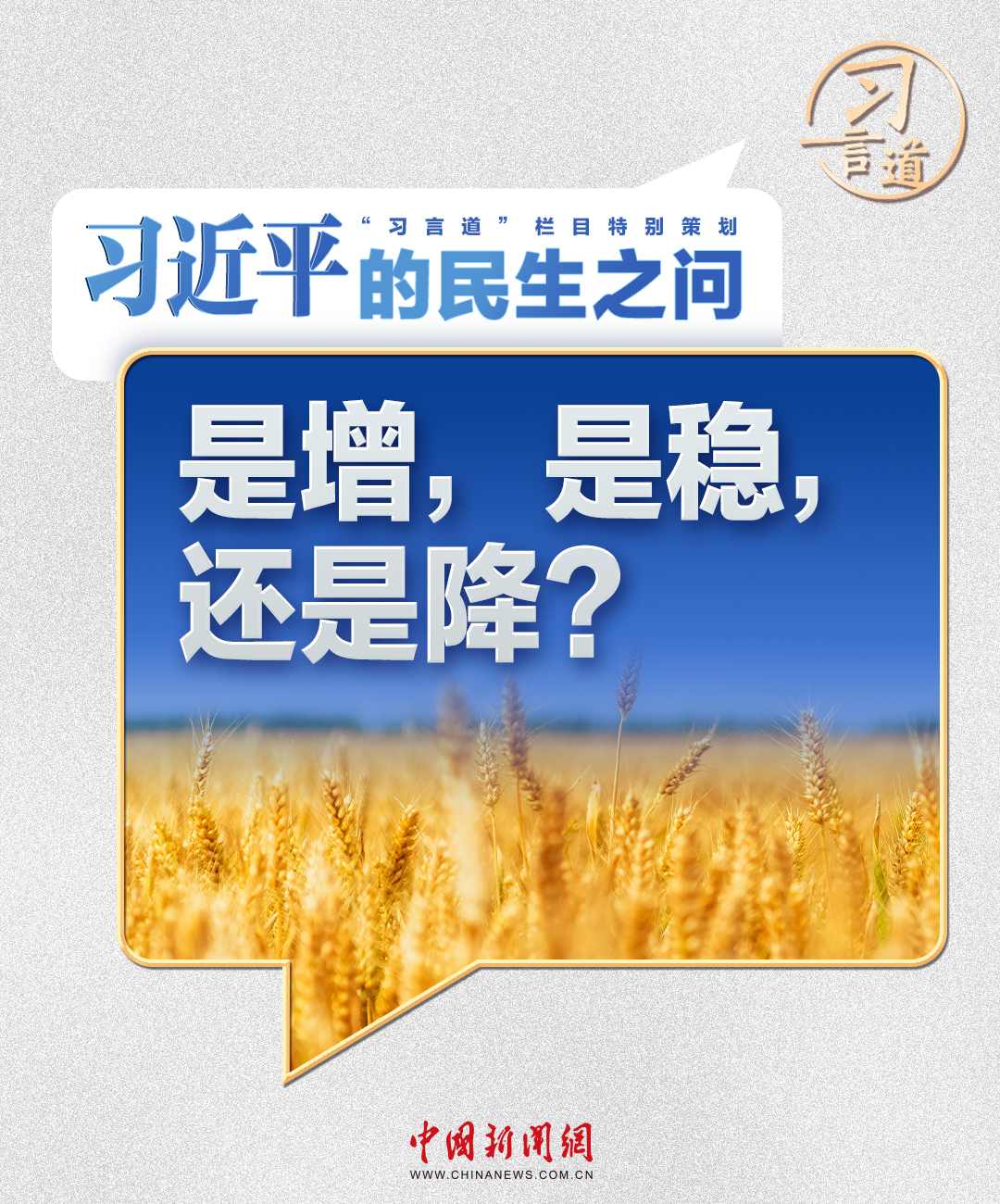
中新网5月23日电题:习近平的民生之问|"是增,是稳,还是降?" 三夏时节,广袤的中原大地上,金黄的麦田静待收获。 这些年来,总书记多次对耕地保护工作作出重要指示批示,强调实行最严格的耕地保护制度,"像保护大熊猫一样保护耕地""确保18亿亩耕地实至名归"。 今年的政府工作报告和中央一号文件,都对耕地保护作出明确要求,其目的就是坚决守住守好18亿亩耕地红线。 这次来到河南,总书记再次要求,"要加强耕地保护和建设,扛牢粮食安全责任"。 "今年的小麦种植面积,是增,是稳,还是降?这次旱情,会不会影响你们的收成?" 5月20日,在河南省委和省政府工作汇报会上,习近平总书记尤为关心粮食安全问题。 他还特别关注当前我国一些地区出现的旱情,"相关部门要密切配合,加强用水调度,确保城乡居民供水和农业灌溉需求"。 确保中国人的饭碗牢牢端在自己手中,这一直都是习近平总书记念兹在兹的"国之大者"。 河南是名副其实的粮食大省,粮食总产量连续8年超1300亿斤,用不到6%的耕地生产了全国近10%的粮食,是全国粮食安全的"压舱石"。 一组数字就能直观反映这个"压舱石"的作用:河南生产了全国1/2的火腿肠、1/3的方便面、1/4的馒头、3 ...

全省农业农村重点项目建设暨项目招引推进会举办
Xin Hua Ri Bao· 2025-05-21 22:37
Core Insights - Jiangsu province is advancing rural revitalization and agricultural modernization, emphasizing the importance of leading agricultural enterprises in driving development [1] - The province offers a favorable investment environment with extensive market opportunities, strong research capabilities, and excellent logistics [1] - New technologies and business models are being leveraged to create new growth engines and opportunities in agriculture [1] Group 1 - The provincial government held a key project construction and investment promotion meeting, attended by various agricultural enterprises [1] - Jiangsu is committed to implementing the spirit of Xi Jinping's important speeches, focusing on optimizing the business environment and enhancing service support [1] - The province aims to strengthen cooperation with private enterprises to promote agricultural modernization [1] Group 2 - Thirteen cities presented their resources, industrial foundations, and investment directions during the meeting [2] - A cooperation agreement was signed between the Nanjing National Agricultural High-tech Zone and the National Federation of Industry and Commerce Agricultural Industry Chamber [2] - Financial institutions signed agreements to support comprehensive rural revitalization in Jiangsu [2]
开着“飞机”去种田
Jin Rong Shi Bao· 2025-05-20 03:13
Group 1 - The article highlights the transformation of agriculture in Shandong's Penglai region through mechanization and the establishment of large-scale farming operations, exemplified by the success of a local farmer, Sun Liangzu [1][2] - Sun Liangzu has expanded his farming operation to manage up to 765 acres, producing over 130,000 pounds of high-quality corn and wheat annually, while also providing agricultural services to over 2,500 acres of surrounding farmland [2] - The introduction of smart agricultural technologies, such as agricultural drones, is seen as a significant advancement, allowing for more efficient farming practices and reducing labor intensity [2] Group 2 - Penglai Rural Commercial Bank has actively supported local farmers by providing quick financial assistance, exemplified by the rapid approval of a 300,000 yuan "entrepreneurial guarantee loan" to Sun Liangzu within three days [3] - The bank has implemented innovative service models and optimized product offerings to support rural revitalization, focusing on integrating new agricultural production capabilities with green, smart, and digital agriculture [3] - As of now, the total agricultural loans in the city have reached 108.775 billion yuan, an increase of 1.7 billion yuan since the beginning of the year, indicating strong financial support for the agricultural sector [3]
效率提升6倍!茂名高州无人机运输荔枝首飞成功
Nan Fang Nong Cun Bao· 2025-05-16 02:00
效率提升6倍! 茂名高州无人机 运输荔枝首飞成 功_南方+_南方 plus 5月15日上午, 由高州市农业农 村局主办,中国 电信高州分公司 承办,平山镇党 委、平山镇人民 政府和市融媒体 中心协办的"智 飞优果 创新未 来"高州低空无 人机运输荔枝首 飞仪式在平山镇 仁耀垌村成功举 行。满载荔枝的 农用无人机从山 头果园腾空而 起,沿着预定航 线精准飞抵冷链 中心,这标志着 荔枝运输正式迈 入"低空经济"新 赛道,为茂名高 州荔枝产业智能 化升级按下加速 键。 茂名高州运用无人机运输荔枝。 平山镇作为高州 荔枝核心产区之 一,其荔枝以果 头大、甜度高、 上市时间早等优 势常年抢占早熟 市场,但丘陵地 形导致传统运输 方式效率低、损 耗高,果品价格 易受影响。随着 科技的飞速发 展,低空经济领 域的无人机技术 展现出快速配 送、灵活路径选 择的独特优势。 精度定位系统的 无人机在北斗 +5G网络的支持 和飞行控制平台 的监控下,以厘 米级精度飞行至 1公里外的冷链 中心。抵达后, 工人们迅速卸 货、入库、预 冷、打包、发 车,确保荔枝果 品以最佳状态发 往全国市场。 "今天我们这个 活动用到的技 术,第一个就 ...


小麦也有“身份证” 丰收和播种在这里“同框”
Yang Shi Xin Wen· 2025-05-15 13:52
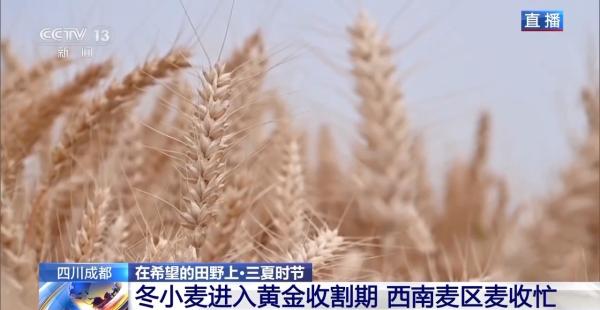
我国是全球最大的小麦生产国,每年的5月中旬至6月是冬小麦的黄金收割期,率先开镰收割的是西南麦 区,然后是长江中下游麦区、黄淮海麦区、西北麦区。西南麦区冬小麦面积1500万亩左右、占我国冬小 麦面积的4.5%。总台央视记者蒋树林在西南麦区的四川天府粮仓麦收现场,来连线他看看现场的情况↓ 总台央视记者 蒋树林:这里是天府粮仓国家级现代农业产业园,整个园区是90多平方公里,我所在的 集中连片高标准农田项目区有10万亩之多。 这里的麦子颗粒饱满,可以说是丰收在望。除了有风吹麦浪的浪漫之外,我们还有实力的展示。一边是 成熟后正在收割的小麦,另一边是已经整理好的稻田正在插秧,可以说稻麦同框。 当丰收和播种同框,当水稻和小麦相遇,在这样的情况下,农机和人力如何精准调配,大数据和机械化 如何精准服务于我们的农民?今天在现场和我一同见证这场收获和收割的还有来自四川农业大学的马均 教授,他也是长期蹲守在这个园区,来请他给我们进行分享。 四川农业大学教授 马均:以前从城里到这里要一个多小时,现在只需半个小时,交通十分便捷。而且 在农村,国家也修建了很多的乡村公路,还有机耕道,交通四通八达,保证人力物力和机器迅速准确地 到达田间地头 ...
潍坊联通智慧服务,保障2025寿光国际蔬菜博览会顺利举行
Qi Lu Wan Bao· 2025-05-15 07:02
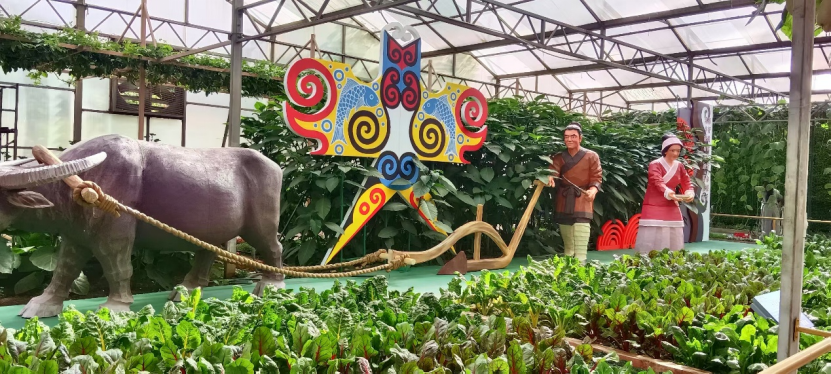
Core Insights - The 26th China (Shouguang) International Vegetable Technology Expo has commenced, themed "Green, Technology, Future," showcasing a blend of agricultural technology and cultural art [1] - The expo covers an area of 450,000 square meters with 11 themed pavilions, featuring over 2,600 vegetable varieties, including more than 400 new varieties making their debut [1] - Over 100 cutting-edge technologies are displayed, highlighting innovations in modern agriculture, from smart cultivation to ecological cycles [1] Company Contributions - Shandong Unicom Weifang Branch has played a crucial role in ensuring robust communication networks for the expo, initiating a "Spring Plowing Action" in early April with a dedicated team for network optimization and emergency response [3] - The company conducted three rounds of network stress tests in key areas of the venue, deploying 5G micro base stations and IoT devices to enhance user experience [3] - Emergency communication vehicles were stationed at the venue, capable of supporting 15,000 simultaneous connections, ensuring seamless media broadcasting and mobile payments [5] Technological Achievements - On the first day of the expo, the peak 5G download speed reached over 900 Mbps, facilitating high-definition live broadcasts for major media outlets [8] - The mobile payment success rate was reported at 99.98%, demonstrating the effectiveness of the communication infrastructure [8] - The integration of technology and human services has created a new landscape of spring agriculture, showcasing the synergy between innovation and service [9] Future Outlook - The Weifang Branch emphasizes its commitment to continuous innovation and service excellence, aiming to support the digital transformation of the agricultural sector [10] - The integration of gigabit optical networks and 5G-A technology into rural areas is expected to enhance agricultural productivity and sustainability [10] - The company's efforts are not only focused on the expo but also on empowering the local agricultural landscape for long-term growth [10]