
零碳园区

Search documents
十年绿色实践!长江经济带18个典型零碳园区与碳达峰试点
Zhong Guo Dian Li Bao· 2026-01-16 04:07
Core Viewpoint - The development of the Yangtze River Economic Belt emphasizes ecological priority and green development, contributing significantly to China's GDP and carbon emissions reduction efforts [1]. Group 1: Achievements in Green Development - Over the past decade, the Yangtze River Economic Belt has promoted the green transformation of traditional industries such as steel, petrochemicals, and building materials [1]. - The region has established 24 national carbon peak pilot cities and parks, along with 14 zero-carbon parks, showcasing its leading role in ecological and green development [1]. - Sichuan province, a key ecological barrier, has achieved an annual clean energy generation of over 4,000 billion kilowatt-hours, accounting for over 80% of its total energy output, and has seen a nearly fourfold increase in new energy installations over five years, reaching 25.19 million kilowatts [1]. Group 2: Specific Pilot Cities and Parks - Leshan, located in Sichuan, is a national carbon peak pilot city with abundant hydropower resources, featuring 327 hydropower stations and an annual generation of approximately 26.5 billion kilowatt-hours [3]. - The Yibin Lingang Economic and Technological Development Zone aims to create a zero-carbon park, with over 70% of its industries being green and low-carbon [5]. - The Chongqing Jiulong New City Park serves as a national carbon peak pilot park, focusing on an aluminum industry chain and innovative green logistics [7]. Group 3: Regional Contributions - Hubei province plays a pivotal role in the central region's rise, hosting two national carbon peak pilot cities and a zero-carbon park, with a focus on green transformation in the automotive industry [10][12]. - Jiangsu province, located in the Yangtze River Delta, has four national carbon peak pilot cities and parks, promoting a circular economy and low-carbon development through various initiatives [18]. - Zhejiang province has three national carbon peak pilot cities and a zero-carbon park, emphasizing the integration of green manufacturing and renewable energy [24][26]. Group 4: Innovative Practices - The Suzhou Industrial Park has established a market-based voluntary emission reduction trading system, serving over 500 enterprises and promoting sustainable development practices [20]. - The Shanghai Lingang New Area Zero Carbon Bay has attracted major industries and aims to create a comprehensive zero-carbon system integrating various renewable energy sources [23]. - The Guizhou Big Data Science and Technology Innovation City focuses on green energy and advanced manufacturing, with a significant portion of its energy coming from renewable sources [39].
零碳园区用能结构怎么转型?凡鹏飞:采取“3+2”互补供电方式
2 1 Shi Ji Jing Ji Bao Dao· 2026-01-15 11:30
Core Viewpoint - The construction of national-level zero-carbon parks in China is set to begin, with a target of establishing around 100 parks during the 14th Five-Year Plan period, with the first batch of 52 parks expected to be completed by 2027 [1][10]. Group 1: Zero-Carbon Park Construction - The first batch of zero-carbon parks will focus on transforming energy consumption structures, with a goal of achieving at least 50% of electricity supply from renewable sources [1][4]. - The parks will serve as experimental fields for a new energy system, utilizing various green electricity supply models, including direct supply, nearby access to distribution networks, and distributed generation [2][9]. - The construction of these parks will be guided by a combination of local resource endowments, economic feasibility, technological viability, and policy environments [9][10]. Group 2: Green Electricity Supply Models - Three main models for green electricity supply have been identified: direct connection of green electricity, nearby access to incremental distribution networks, and distributed self-consumption [5][6][7]. - In addition to these models, parks can supplement their green electricity supply through green certificate trading and virtual power plants [8][9]. Group 3: Regional Distribution and Industry Types - The first batch of parks will cover all 31 provinces and regions, ensuring a diverse representation of both resource-rich and industrially advanced areas [10]. - The parks will primarily focus on low-energy, low-pollution, and high-value-added industries, while also addressing the decarbonization of traditional high-energy-consuming sectors [10]. Group 4: Challenges and Opportunities - The transition to zero-carbon parks faces challenges such as high initial investment costs and the need for systemic innovation in mechanisms and business models [15]. - Zero-carbon parks can help enterprises meet international low-carbon standards and enhance their competitiveness in global markets, particularly in light of evolving green trade rules [13][14].

12月116项储能政策发布,15省电力市场规则更新
中关村储能产业技术联盟· 2026-01-14 02:59
Policy Data Overview - A total of 116 energy storage-related policies were released by December 2025, with 11 at the national level. The most significant policies are categorized as very important, with 51 items, primarily from Shaanxi, Qinghai, Sichuan, and Fujian. The majority of policies focus on electricity market and ancillary service policies [2]. Important Policy Overview - The National Development and Reform Commission and the National Energy Administration issued a notice to establish a national unified electricity market evaluation system, promoting the development of new business formats like energy storage and virtual power plants, and encouraging private sector participation [5]. - The National Development and Reform Commission and the National Energy Administration released the basic rules for the medium- and long-term electricity market, stating that no artificial price levels will be set for market participants [5]. - The first batch of national zero-carbon park construction includes 52 parks, with completion deadlines set for 2027 to 2030 [5]. - The National Development and Reform Commission published a notice expanding the scope of infrastructure REITs to include energy storage facilities [6]. Electricity Price Policies - Hebei Province adjusted its time-of-use electricity pricing policy, adding deep valley periods in winter and shifting peak periods in summer [8]. - Shandong Province announced that its time-of-use pricing for industrial and commercial customers will remain unchanged from 2025 [8]. - Shanxi Province is seeking opinions on further improving its time-of-use pricing policy, adjusting peak and valley periods [9]. - Hubei Province established a new pricing mechanism for energy storage, including capacity compensation for grid-side independent storage [9]. Electricity Market Policies - The National Energy Administration's Central China Regulatory Bureau revised the Jiangxi Province electricity market rules, detailing price limits for different time segments [11]. - Beijing plans to arrange a total electricity market transaction volume of 950 billion kWh for 2026, with direct market transactions accounting for 350 billion kWh [12]. - The Tianjin Industrial and Information Technology Bureau set a direct trading volume of 375 billion kWh for 2026 [12]. - The Sichuan Electricity Trading Center released its overall trading plan for 2026, maintaining time-of-use pricing for wholesale and retail users [14]. Ancillary Services Policies - The National Energy Administration's Hunan Regulatory Office published implementation details for ancillary services, requiring independent new energy storage capacities of no less than 2MW/2MWh [22]. - The Sichuan Electricity Trading Center clarified that various market functions will no longer operate during the trial period of the electricity market settlement [22]. - Yunnan Province's auxiliary service market implementation details set compensation for frequency regulation mileage [23]. Subsidy Policies - The Longgang District Development and Reform Bureau in Shenzhen issued guidelines to support high-quality development in the new energy industry, including energy storage [28]. - The Gansu Provincial Development and Reform Commission announced a reliable capacity compensation mechanism for grid-side independent new energy storage [28]. - The Henan Provincial Development and Reform Commission publicized the results of fiscal rewards for newly built non-independent new energy storage projects [28]. Management Norms - The Shaanxi Provincial Development and Reform Commission issued a notice to strengthen the management of new energy storage projects, emphasizing the need for scientific assessment of storage demand [30]. - The Sichuan Provincial Energy Bureau highlighted safety management for electrochemical storage stations, identifying common risk points [31]. - The Qinghai Provincial Government released fire safety management measures for electrochemical storage stations [31]. Demonstration Projects - The Qinghai Provincial Development and Reform Commission announced the first batch of green electricity direct connection pilot projects, including various renewable energy sources [35]. Virtual Power Plant Policies - The Qinghai Provincial Energy Bureau published management plans for virtual power plants, setting performance requirements for regulation capacity [37]. - The Jiangsu Provincial Development and Reform Commission aims to promote high-quality development of virtual power plants, targeting a regulation capacity of over 5 million kW by 2030 [38]. - The Guangxi Zhuang Autonomous Region Development and Reform Commission set goals for virtual power plant regulation capacity by 2027 and 2030 [38].

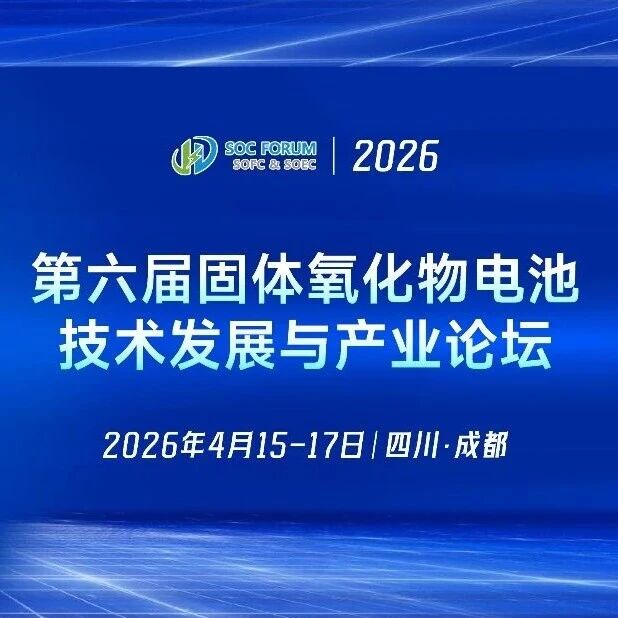
论坛启动 | 2026(第六届)固体氧化物电池技术发展与产业论坛(4月15-17日,成都)
DT新材料· 2026-01-13 16:05
Group 1 - The article emphasizes the importance of Solid Oxide Cells (SOC) technology, specifically Solid Oxide Fuel Cells (SOFC) and Solid Oxide Electrolyzer Cells (SOEC), in achieving carbon neutrality goals and transforming the energy system [2][3] - SOFCs are noted for their wide fuel applicability, enhancing power generation efficiency while reducing CO2 capture costs, whereas SOECs are efficient in hydrogen production and CO2 electrolysis [2] - The upcoming 2026 Solid Oxide Battery Technology Development and Industry Forum aims to discuss breakthroughs and long-term development in the SOC industry, promoting industrial chain integration and contributing to energy structure transformation under carbon neutrality goals [3] Group 2 - The forum will feature discussions on the current state and trends of SOC technology development both domestically and internationally, as well as the demand for SOC in a carbon-neutral environment [8] - Key topics include SOC material technology, battery technology, and the integration of AI in SOC technology development and operational management [10][11] - The event will also include specialized workshops and training sessions focused on SOC stack design and testing, as well as opportunities for industry leaders to discuss market trends and challenges [12][13]
工信部:聚焦冶金、化工、轻工、纺织、机械、船舶等领域 研究制定改造提升方案
Jin Rong Jie· 2026-01-13 12:26
Group 1 - The Ministry of Industry and Information Technology, led by Minister Li Lecheng, will implement a traditional industry revitalization action plan focusing on sectors such as metallurgy, chemicals, light industry, textiles, machinery, and shipbuilding [1] - The plan includes developing tailored transformation and upgrading schemes for each industry and implementing the "Artificial Intelligence +" initiative to promote smart manufacturing and green manufacturing [1] - The goal is to explore the creation of a number of zero-carbon factories and zero-carbon parks, allowing traditional industries to "sprout new buds" [1]
四平新开区召开零碳园区建设交流会
Zhong Guo Hua Gong Bao· 2026-01-12 23:31
中化新网讯 1月5日,吉林省四平新型工业化经济开发区组织召开零碳园区建设专题交流会。 与会代表一致认为,虚拟电厂与零碳园区的深度融合,是破解园区能源转型难题、实现绿色低碳发展的 关键抓手。新开区应抢抓政策机遇,加快推动相关技术与项目落地,助力区域经济高质量发展。 四平新开区相关负责人表示,下一步,新开区将以此次会议为契机,加强与行业龙头企业、科研院所的 合作对接,加速推进虚拟电厂试点建设与零碳园区规划落地。 入驻园区企业代表结合自身工作实际与发展需求,就虚拟电厂的运行模式、技术难点、市场机制,以及 零碳园区建设中的政策支持、项目落地、协同发展等话题展开讨论。 ...
多部门联合举办座谈会:规范动力和储能电池产业竞争丨碳中和周报
2 1 Shi Ji Jing Ji Bao Dao· 2026-01-12 03:45
Group 1: Industry Developments - The meeting held on January 7 by multiple departments aims to regulate competition in the power and energy storage battery industry, addressing issues like blind construction and irrational price competition that disrupt market order [2] - The National Energy Administration released the "Implementation Rules for the Management of Renewable Energy Green Power Certificates," which outlines a comprehensive management mechanism for green certificates, enhancing the scientific and operational aspects of the green certificate system [3][4] - The Ministry of Ecology and Environment plans to release 12 methodologies for voluntary greenhouse gas emission reduction projects by 2025, marking a significant expansion of the voluntary reduction market [5][6] Group 2: Regional Highlights - Inner Mongolia is set to increase its new energy installed capacity to over 170 million kilowatts by 2025, with wind power capacity exceeding 100 million kilowatts, and aims to enhance its hydrogen energy and storage systems [7] - The "Xinjiang Power to Chongqing" project has successfully connected its first batch of wind turbine units to the grid, expected to deliver approximately 24 billion kilowatt-hours of green electricity annually, significantly impacting the energy structure in Chongqing [8] Group 3: Future Trends - Roland Berger's report predicts that by 2026, comprehensive energy services will focus on solutions, ushering in a new era of zero-carbon parks, driven by supportive policies and technological advancements [9][10] - The report highlights three major opportunities for comprehensive energy services: demand release through policy support, market configuration driven by new energy market entry, and model upgrades encouraging distributed resource aggregation [10]
工信部部长李乐成:将实施传统产业焕新行动,分行业研究制定改造提升方案
Xin Lang Cai Jing· 2026-01-12 03:35
工业和信息化部党组书记、部长李乐成在接受采访时表示,传统产业是现代化产业体系的基底。我们将 实施传统产业焕新行动,分行业研究制定改造提升方案。实施"人工智能+"行动,探索创建一批零碳工 厂和零碳园区。(新华社) ...
储能+融合发展供需对接会在南京举行
Zhong Guo Qi Che Bao Wang· 2026-01-12 01:42
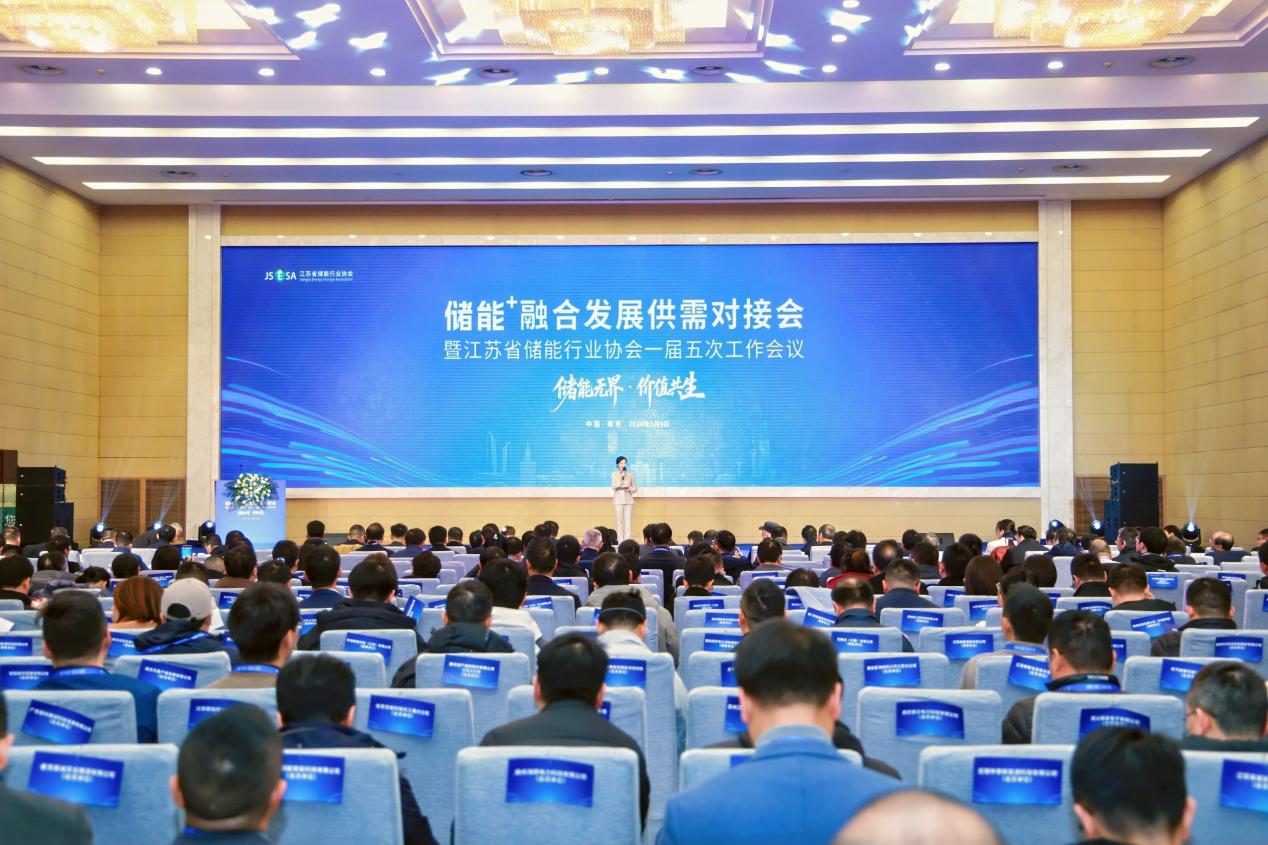
2026年1月9日,由江苏省储能行业协会主办的"储能+融合发展供需对接会"在南京成功举行。 会议以"储能无界,价值共生"为主题,汇聚"政、产、学、研、用、金"各方力量,共商储能融合发展大计,共促产业供需高效对接,共建开放协同的行 业生态。 会议上,《储能先进技术及应用指南2025》正式发行。中国科学院电工研究所研究员、《储能先进技术及应用指南2025》主编唐西胜介绍并启动发行。 他表示,本书由中国工程院院士舒印彪指导作序,编写团队涵盖清华大学、中国电科院等顶尖机构专家,历时一年打磨,系统梳理了电化学储能、压缩空气 储能、氢储能等核心技术原理与进展。 同时,会上《储能先进技术与应用指南(2026)版》优秀案例征集工作同步启动,将继续秉持"收录行业标杆、赋能产业升级"的宗旨,打造权威性与实 操性兼具的储能领域标杆著作。 江苏省工信厅二级巡视员卢载贵在致辞中指出,当前全球能源格局正经历深刻调整,储能产业已成为推动能源转型的关键力量。江苏作为经济与制造强 省,在储能领域已形成显著优势:产业规模上,企业数量超2000家,2025年产业链开票销售规模突破千亿元;技术创新上,发明专利超6万件,前沿技术成 果丰硕;应用场景上 ...
奋力谱写肥乡现代化建设崭新篇章
Xin Lang Cai Jing· 2026-01-10 00:53
Group 1 - The core message emphasizes the importance of the 20th Central Committee's Fourth Plenary Session in advancing China's modernization and national rejuvenation, highlighting the historical economic milestone of surpassing 20 billion yuan in total economic output in Feixiang District [1] - Feixiang District has successfully completed key projects such as the Beijing-Hong Kong-Macao Expressway interchange and the Shenhui gypsum retarder, contributing to its recognition as a model for high-quality development [1] - The district aims to deepen interaction with Handan's central urban area and establish itself as a demonstration zone for integrated urban and industrial development, ecological livability, and regional collaboration [1] Group 2 - The focus is on developing new productive forces and constructing a modern industrial system, with plans to create a "double hundred billion" characteristic industrial cluster centered on the chemical new materials industry [2] - The strategy includes enhancing the scale and capability of the industrial chain, particularly in the electronic gas sector, and promoting green and low-carbon transformation through initiatives like "green electricity direct connection" [2] - The district is also prioritizing the development of modern commercial logistics and energy-efficient projects, such as molten salt energy storage, to establish a circular economy [2] Group 3 - The emphasis is on deepening reform and innovation to stimulate development vitality, including the establishment of high-level scientific and technological innovation platforms and the promotion of leading enterprises' technology centers [3] - The district plans to create a comprehensive incubation system for technology innovation, aiming to cultivate more technology-based SMEs and achieve breakthroughs in unicorn enterprises [3] - Efforts will be made to enhance the business environment and attract investment, particularly in electronic special gases and circular economy sectors [3] Group 4 - The focus is on urban-rural integration and comprehensive rural revitalization, with infrastructure improvements such as the construction of the Handan-Fei Expressway and the G515 national road [4] - The district aims to enhance urban living conditions and public services while promoting agricultural innovation and brand recognition for local products [4] - Initiatives to develop collective rural economies and improve rural living environments are also highlighted, aiming to create quality living spaces in rural areas [4]