
生成式AI

Search documents
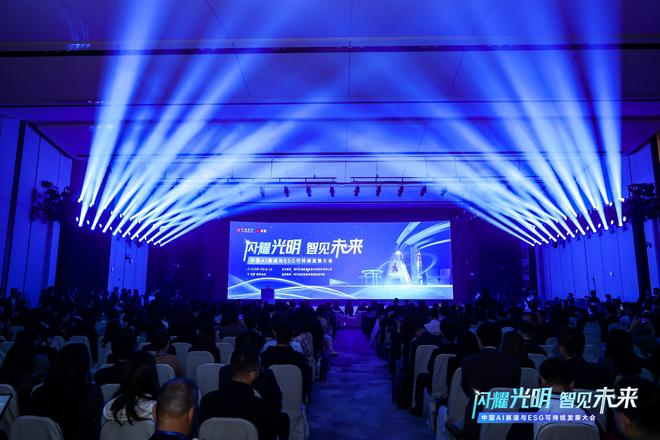
聚焦AI赛道与ESG可持续发展,这场盛会在深圳光明区举办
Nan Fang Du Shi Bao· 2025-12-02 09:44
Group 1 - The conference titled "Shining Bright, Seeing the Future - China AI Track and ESG Sustainable Development Conference" commenced in Shenzhen, focusing on "AI Track Investment Opportunities" and "ESG Governance Practices" [1] - The event featured multiple segments including a main venue, three parallel thematic sub-forums, roadshows by listed companies, and visits to Guangming District, aimed at fostering collaboration between technology, industry, and finance [1] - Keynote speakers included prominent figures such as Jim Rogers, who emphasized the significant position of the "China track" in the global investment landscape [3] Group 2 - A roundtable discussion on "Investment Trends in the China Track" allowed experts to share insights on industry hotspots and engage with investors [5] - Three thematic sub-forums focused on "ESG and Sustainable Investment Empowering High-Quality Development of Listed Companies," "AI Empowering Sustainable Development in Green Energy," and "Innovative Paths for Value Restructuring in Capital Management" [5] - The "ESG Governance Practice" was a main theme, with awards presented for the "2025 Sustainable Development Merit Entrepreneur" and the release of the "2025 Yi Dong Value 100" rating based on ESG governance, innovation capability, and value creation [9][10] Group 3 - Over ten representatives from AI companies showcased their technological innovations and business applications during the "AI+" industry chain roadshow [7]

海通国际给予知乎(02390)“优于大市”评级,看好其社区价值和AI应用前景
智通财经网· 2025-12-02 09:31
Core Viewpoint - Haitong International initiated coverage on Zhihu (02390) with an "Outperform" rating, highlighting its unique positioning in the Q&A community and the potential of AI applications [1][2] Financial Performance - Zhihu's total revenue for Q3 2025 is projected to be approximately 659 million yuan, with a non-GAAP operating loss narrowing by 16.3% year-on-year, indicating improved operational efficiency and quality [1] - The company reported a slight loss in Q3 due to proactive optimization efforts aimed at eliminating inefficiencies and solidifying sustainable long-term operations [1] - As of the end of Q3, Zhihu's cash and cash equivalents, along with short-term investments, totaled 4.58 billion yuan, indicating a strong cash reserve [1] AI Application and Growth - Zhihu's AI product, Zhihu Zhidao, has seen a significant increase in usage, with penetration rates exceeding 15%, nearly quadrupling from the same period last year [1] - Future upgrades for Zhihu Zhidao will enhance AI capabilities across various scenarios, including search, content creation, and consumption, further increasing AI penetration within the community [1] Market Position and Revenue Forecast - Haitong International believes Zhihu's high engagement and trust in the "professional discussion" space will continue to attract high-value users and brand budgets [2] - The firm forecasts Zhihu's total revenue for Q4 2025 and the fiscal year 2025 to be 640 million yuan and 2.75 billion yuan, respectively, with a target price of 14.8 HKD based on a price-to-sales ratio of 1.2 times for FY 2025 [2]

银河证券:AI赋能协商交易成效显著 多业务规模实现跨越式增长
Xin Lang Cai Jing· 2025-12-02 08:57
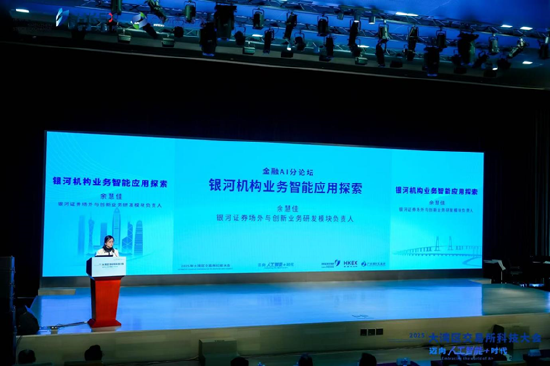
在11月29日"2025年大湾区交易所科技大会"上,银河证券场外与创新业务研发模块负责人余慧佳表示, 综合市场数据,在生成式AI浪潮下, 88%的企业已在至少一个业务职能中使用AI。但仅31%实现规模 化落地。高绩效企业多将AI作为增长引擎,当中有55%的企业会依托AI重构核心业务流程,比例是普通 企业的2.8倍。 银河证券自2022年起研究大模型应用,目前处于从试点向规模化迈进的阶段。银河证券将AI定位为"伙 伴"而非"工具",强调共享目标、资源与能力,共创业务价值。 基于"以产出为导向、小步快跑、业务技术联合共创"的思路,银河证券聚焦机构业务推进AI应用,采用 逐步拓展的策略。先聚焦优势业务中ROI最高的场景,再打通业务链上下游、跨业务整合数据,最终构 建立体的用户画像赋能风控与新业务。 专题:2025年大湾区交易所科技大会 其中,选择"协商交易"为银河证券首个重点突破场景。该场景服务上千家多家机构客户为其提供风险管 理、资产配置或做市服务,希望解决传统模式依赖交易员沟通,受交易员数量限制,复杂产品报价慢等 痛点。 基于"以产出为导向、小步快跑、业务技术联合共创"的思路,银河证券聚焦机构业务推进AI应用, ...

奥特曼计划全力强化ChatGPT竞争力 或推迟OpenAI广告业务
Huan Qiu Wang Zi Xun· 2025-12-02 08:21
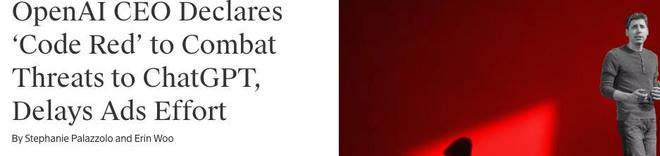
来源:环球网 此前,OpenAI被曝已在ChatGPT安卓测试版中秘密测试广告功能,代码中涉及"搜索广告""集市内容"等 模块,暗示其曾计划通过分级模式(付费用户免广告、免费用户接受赞助内容)实现商业化。(青山) 备忘录显示,奥特曼明确指出,谷歌等对手在生成式AI领域的快速迭代已对OpenAI构成"直接威胁"。 为巩固市场地位,公司决定暂停广告业务的公开推进,转而优先投入模型安全、平台稳定性及用户体验 优化。 【环球网科技综合报道】12月2日消息,据The Information披露,OpenAI首席执行官萨姆·奥特曼(Sam Altman)在内部备忘录中宣布,公司已进入"红色警报"状态,将集中资源全力改进旗舰产品ChatGPT, 并推迟包括广告业务在内的多项非核心计划。 ...
库克怒换苹果AI一号位:谷歌系不行、找微软高管救火,Siri藏“大雷”全靠OS团队翻盘?
3 6 Ke· 2025-12-02 08:19
Core Insights - Apple has appointed Amar Subramanya as the new head of AI, replacing John Giannandrea, amid ongoing challenges with Siri's major upgrade [1][3][5] - Giannandrea's departure marks a significant structural change within Apple's AI team, which has struggled to keep pace with competitors in the AI space [3][4][6] - The transition reflects a shift in strategy, integrating AI more closely with the core operating systems team rather than operating as an independent unit [6][7] Leadership Changes - Giannandrea has been relieved of his duties as Senior Vice President of Machine Learning and AI Strategy, with his independent AI organization being dissolved [3][4] - Subramanya, previously at Microsoft and Google, will report directly to Craig Federighi, indicating a more integrated approach to AI development within Apple's software engineering team [5][6] Strategic Implications - The restructuring aims to embed AI capabilities across all operational levels of the company, with other department heads taking over Giannandrea's remaining responsibilities [7] - Apple is focusing on rebuilding the Siri architecture, with a new timeline pushing advanced features to the spring of 2026, which is significantly behind competitors [8][9] Competitive Landscape - Apple has been criticized for lagging behind in generative AI, entering the field two years after OpenAI's ChatGPT became a benchmark [3][4] - Competitors like Google and Amazon have already launched advanced AI products, putting pressure on Apple to accelerate its development efforts [9][10] Internal Challenges - The AI team has faced high turnover, with key members leaving, including the founding chief scientist of the foundational models team [10] - Technical issues with Siri's integration of generative AI have led to significant operational challenges, described internally as a "disaster" [8]

马斯克:人类活在虚拟世界概率极高
Sou Hu Cai Jing· 2025-12-02 08:13
Core Viewpoint - The article discusses the blurring lines between reality and virtuality, highlighting a recent incident involving a video of Elon Musk and Nikhil Kamath that sparked debates about authenticity and AI-generated content [1][3][4]. Group 1: Impact of AI and Technology - The emergence of deepfake technology and generative AI has led to a societal shift where individuals struggle to discern reality from simulation, resulting in a collective psychological crisis [4][6]. - AI, originally intended as a tool, has evolved into a participant in the information environment, complicating the search for truth as it outputs probabilities rather than facts [7][9]. Group 2: Social Media and Human Behavior - Social media interactions are increasingly algorithm-driven, leading to a perception of freedom that is, in reality, a scripted experience, contributing to the NPC-like behavior of individuals [6][9]. - The phenomenon of questioning the authenticity of real-life events reflects a broader societal anxiety about the loss of control over reality, exacerbated by the capabilities of deepfake technology [9][10]. Group 3: Philosophical Implications - The article raises existential questions about human agency in a world where virtual experiences may become indistinguishable from real ones, suggesting a future where individuals may feel trapped in predetermined paths [9][10]. - The 39-second video serves as a metaphor for the current state of human consciousness, prompting reflection on the nature of existence and the essence of being in an increasingly simulated environment [10].

大行评级丨高盛:服务器需求上升可推动收入增长 维持联想“买入”评级
Ge Long Hui· 2025-12-02 07:47
Group 1 - Goldman Sachs maintains a positive outlook on Lenovo Group (0992.HK), highlighting its leading position in the personal computer market and its product portfolio upgrade towards AIPC [1] - The firm also expresses a positive view on Lenovo's server business, believing that the growth in generative AI demand will create opportunities in AI infrastructure and edge AI devices [1] - Goldman Sachs has set a target price of HKD 13.25 for Lenovo and maintains a "Buy" rating [1] Group 2 - Following the second fiscal quarter results ending September, Goldman Sachs has raised Lenovo's revenue forecasts for fiscal years 2026 to 2028 by 1% to 2% due to increased server demand [1] - Adjusted operating income forecasts have been increased by up to 1%, considering the relatively low gross margin of the server business [1] - Adjusted net profit forecasts for fiscal years 2027 and 2028 have been raised by 4% respectively [1]
高盛:服务器需求上升可推动收入增长 给予联想目标价13.25港元
Zhi Tong Cai Jing· 2025-12-02 07:23
近日,知名大行高盛发布研报称,维持对联想集团(00992)的正面看法,看好其在个人电脑市场的领先 地位,产品组合正向AIPC升级,以及在全行业面对内存成本上升时展现出更佳的供应链管理能力。高 盛对联想服务器业务发展看法同样正面,相信生成式AI需求增长,将为联想在AI基础设施及边缘AI设 备领域带来机遇,维持"买入"评级,目标价13.25港元。 计及截至今年9月底止第二财季业绩,该行将联想2026至2028财年收入预测上调1%至2%,以反映服务 器需求上升,考虑到服务器业务毛利率相对较低,将经调整经营收入预测上调最多1%,2027及2028财 年经调整净利润预测分别上调4%。 ...

高盛:服务器需求上升可推动收入增长 给予联想(00992)目标价13.25港元
智通财经网· 2025-12-02 07:21
智通财经APP获悉,近日,知名大行高盛发布研报称,维持对联想集团(00992)的正面看法,看好其在个 人电脑市场的领先地位,产品组合正向AIPC升级,以及在全行业面对内存成本上升时展现出更佳的供 应链管理能力。高盛对联想服务器业务发展看法同样正面,相信生成式AI需求增长,将为联想在AI基 础设施及边缘AI设备领域带来机遇,维持"买入"评级,目标价13.25港元。 计及截至今年9月底止第二财季业绩,该行将联想2026至2028财年收入预测上调1%至2%,以反映服务 器需求上升,考虑到服务器业务毛利率相对较低,将经调整经营收入预测上调最多1%,2027及2028财 年经调整净利润预测分别上调4%。 ...
有什么软件可以看基金实时估值?这款APP能满足你的投资需求
Xin Lang Cai Jing· 2025-12-02 06:53
基金实时估值功能下架后,投资者对新浪财经APP的使用时长增加了近四成,这只"买基金神器"正以精 准数据重塑基金投资体验。 当你在下午三点前焦急地查看今日基金涨跌,却发现曾经依赖的实时估值功能已经消失,这成了许多基 金投资者的日常困扰。2024年6月,监管正式要求各平台下架基金盘中估值服务。 实时估值并非真实净值,而是基于往期持仓的估算。 其与净值的偏差可能源于多方面:基金季报只公布前十大重仓股,对于其他持仓并无参考来源;基金经 理可能会根据市场变化调仓,但这些精细的调仓信息很难及时获取。 01 需求变迁 基金实时估值的消失让投资者重新思考投资工具的价值。曾经,这个功能让投资者能够大致了解当天基 金的表现,特别在市场剧烈波动时,能给予心理预期。 然而监管的下架决定背后有更深的考量。有公募基金人士指出,实时估值本质上迎合了追涨杀短的心 理,可能导致不理性的投资行为。随着距离最新季报公布的时间越久,估值与实际净值的偏离度就会越 大。 在新的市场环境下,投资者需要的不再是一个简单的盘中数字,而是更全面、更准确、更有深度的基金 信息和分析工具。 这种需求正推动金融科技平台从提供单一功能向打造全面投资决策辅助系统转型。 ...