能源转型

Search documents
中国石油经研院上调全球石油需求峰值预期 预计达峰时点将推迟
Xin Hua Cai Jing· 2025-12-12 09:37
新华财经北京12月12日电(江宇娟、安娜)2025国际能源发展高峰论坛于12月11日至12日在北京举行。 论坛期间发布的《2060世界和中国能源展望报告(2025版)》(以下简称"报告")预计,全球石油需求 将于2040年达峰,较2024年预测推迟10年;全球石油需求峰值将达到48亿吨左右,较2024年预测提高 5.2%。 随着人工智能与新型高载能行业的快速发展,报告预计,到2060年,我国电力需求将突破20万亿千瓦 时,较2025年水平翻一番;终端电气化率将达到62%,年均提升0.9个百分点。 标普全球副主席丹尼尔·耶金在论坛上也指出,石油天然气在较长时期仍将扮演重要角色。能源转型背 景下全球能源需求持续增长,人工智能对电力的需求将推动天然气发电、核电等快速发展。他还表示, 能源转型正从能源密集型向矿产密集型演进,同时也面临着关键矿产开发周期长、政治因素复杂等问 题。 从国内来看,报告预计,在经济发展和产业升级带动下,我国一次能源需求将于2035年达到50亿吨标准 油(约71吨标准煤)的峰值,较2024年预测上调1亿吨标准油,较2025年增长约20%。到2060年,我国 能源需求将保持在45亿吨标准油(约6 ...


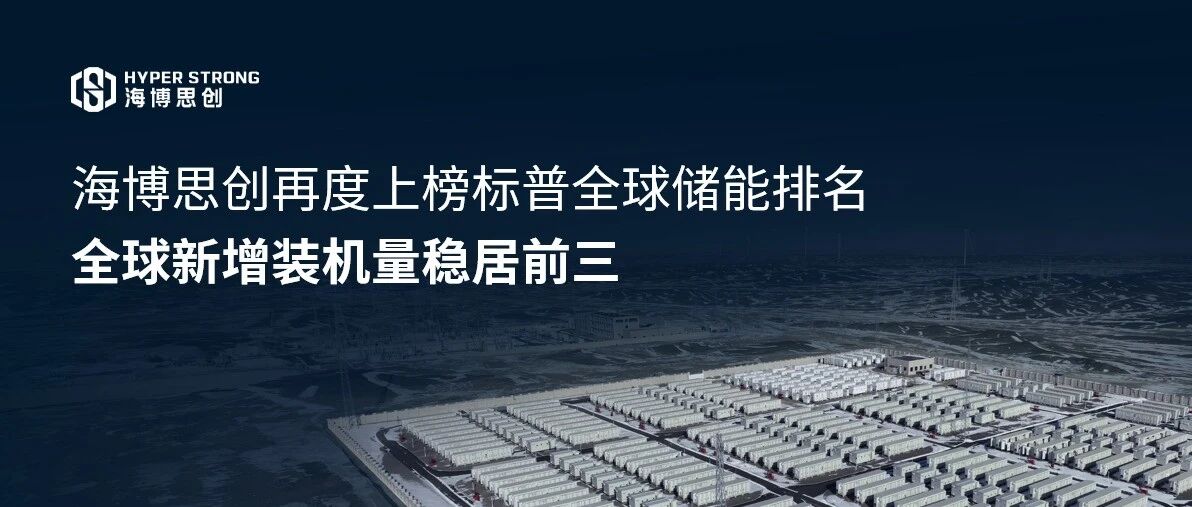
海博思创再度上榜标普全球储能排名,全球新增装机量稳居前三
海博思创· 2025-12-12 08:13
Core Insights - S&P Global Energy's latest report ranks Haibo Sichuang among the top three global energy storage system integrators, highlighting its strong project delivery capabilities and comprehensive strength in the global energy storage market [1][3] - In the Chinese market, Haibo Sichuang maintains its leading position, ranking first in cumulative energy storage installations and contracted projects [1] Group 1 - The global demand for energy storage is increasing, prompting Haibo Sichuang to accelerate its international expansion, with operations now covering over 20 countries across five continents [3] - In Europe, Haibo Sichuang signed a 1.6GWh large-scale energy storage project with German energy company LEAG, which will support local energy transition efforts [3] - In the Americas, Haibo Sichuang has successfully delivered over 420MWh of energy storage projects in the U.S., focusing on energy dispatch needs for grid storage [3] Group 2 - In the Asia-Pacific region, Haibo Sichuang is advancing energy storage projects in countries like the Philippines, offering customized and reliable storage solutions tailored to local environmental conditions [3] - The company has established localized teams in Europe, the Americas, and Asia-Pacific, enhancing its project delivery, on-site commissioning, digital monitoring, and long-term operation and maintenance capabilities [3] - Haibo Sichuang's founder and CEO, Dr. Zhang Jianhui, emphasized the company's comprehensive advantages in product technology, safety performance, system delivery, and globalization capabilities [4]
未来规划:统一股份深耕低碳赛道,拥抱能源转型寻新机
Jing Ji Guan Cha Wang· 2025-12-12 07:56
Core Viewpoint - Future planning for Unity Co., Ltd. (600506) focuses on two main directions: deepening its existing lubricating oil sector and embracing national energy transition opportunities [1] Group 1: Existing Business Development - The company aims to promote low-carbon products in the lubricating oil sector, striving for "carbon neutrality" by achieving net-zero emissions across all stages, including raw materials and production [1] - Plans include gradually reducing emissions by increasing the proportion of self-generated solar power to maintain international market competitiveness [1] Group 2: New Business Opportunities - The company is looking to explore new opportunities in the fields of photovoltaic and wind energy as part of the national energy transition [1] - There is a focus on testing green lubricating solutions in the energy storage sector, leveraging its advantages to expand business boundaries and achieve diversification [1]

17亿千瓦新能源如何破局“单打独斗”?
Zhong Guo Dian Li Bao· 2025-12-12 07:16
Core Viewpoint - The introduction of a new policy by the National Development and Reform Commission and the National Energy Administration marks a significant shift in the participation of renewable energy in the electricity market, allowing for "consolidated bidding" instead of the previous "individual bidding" approach [2][4]. Group 1: Policy Implementation - The new policy allows renewable energy plants within the same group and province to consolidate their market participation, addressing operational pain points and reducing transaction costs [2][4]. - The policy sets strict eligibility criteria for consolidated bidding and imposes a scale limit to prevent regional market dominance, ensuring fair competition [2][4]. - The policy aims to provide a clear framework for renewable energy enterprises, facilitating a transition from high-speed growth to high-quality development [2][4]. Group 2: Market Structure Optimization - As of October 2025, China's cumulative installed capacity for wind and solar power is projected to reach 1.73 billion kilowatts, transitioning renewable energy from a supplementary role to a primary one in the electricity system [4]. - The traditional bidding model has become inadequate for the dispersed nature of renewable energy, creating an asymmetric competitive landscape that hinders market participation [4][5]. - The new policy establishes a clear set of rules and guidelines to prevent monopolistic practices while promoting collaborative strategies among renewable energy enterprises [5][6]. Group 3: Operational Efficiency - The shift to consolidated bidding is expected to transform the cost center of trading into a value engine by allowing resource integration and unified strategies [8][9]. - The policy reduces the need for dedicated trading personnel for each renewable site, lowering operational costs and enhancing market negotiation capabilities [8][9]. - By enabling a unified trading strategy, the policy allows for better risk management and market analysis, improving overall operational efficiency [9][10]. Group 4: Energy Transition Support - The policy is a crucial step in restructuring the electricity market, promoting multi-energy collaboration and enhancing system efficiency [10][11]. - It lays the groundwork for a unified national electricity market, addressing supply-demand imbalances caused by regional resource disparities [11][12]. - The implementation of this policy is expected to stimulate market vitality and innovation in renewable energy, supporting the transition to a low-carbon economy [12][13].
【环球财经】非洲能源互联网与中非能源合作研讨会在非盟举行
Xin Hua Cai Jing· 2025-12-12 06:54
新华财经亚的斯亚贝巴12月12日电 非洲能源互联网与中非能源合作研讨会11日在位于埃塞俄比亚首都 亚的斯亚贝巴的非洲联盟(非盟)总部举行。来自中非双方的政府、企业、智库等代表就非洲能源发 展、电网互联互通、中非合作等话题展开讨论。 中国驻非盟使团团长蒋烽在致辞时表示,作为全球最大的可再生能源生产国和消费国,中国已构建起全 球最大的可再生能源体系,为全球能源转型和绿色发展做出了巨大贡献。"中国的相关经验和技术可以 为非洲国家提供借鉴和帮助。" 非洲能源委员会执行主任拉希德·阿卜杜拉(Rashid Abdallah)指出,非洲正处于能源转型的关键节点。 尽管非洲拥有丰富的可再生能源资源以及不断完善的能源与电力基础设施,但是非洲仍需更充分的规划 和更大的投资,才能更好地释放这些潜能。 据悉,此次研讨会由中国驻非盟使团、全球能源互联网发展合作组织和非洲能源委员会共同主办。与会 人员介绍了非洲国家能源发展的政策与规划,并探讨了非洲大陆绿色能源项目的机遇与挑战,旨在搭建 中非沟通协作的桥梁、携手推动中非能源领域的可持续发展。 (文章来源:新华财经) 全球能源互联网发展合作组织副秘书长李宝森说,中非友谊源远流长,绿色能源是 ...
午评:创业板领涨,电网设备异军突起!
Sou Hu Cai Jing· 2025-12-12 05:11
不过,这钱流向了哪里,才是关键。今天的盘面,可以说是 "新老交替"与"冷热分化" 的生动写照。一 边,是 "电网设备"板块异军突起,多只个股涨停。这绝非偶然,其背后是"新基建"和能源转型的宏大 叙事在支撑。无论是特高压建设、电网智能化改造,还是服务于新能源消纳的配套升级,这都是未来几 年确定性极高的投资主线,有实实在在的政策和订单支撑。另一边,贵金属板块的持续活跃,则是对美 联储降息预期的直接反应,属于全球宏观逻辑的映射。 朋友们,我是帮主郑重。上午收盘,这盘面走得有点意思,三大指数涨跌互现,像个不太整齐的合唱 团。创业板指领涨0.6%,而上证指数几乎平盘。但有一个数据很提气——全市场成交额半天就达到了 1.26万亿元,比昨天同一时间放量了超过900亿!有量就有戏,这说明市场的交投活跃度在回升,有资 金在行动了。 而另一边,前几天还风光无限的零售、海南等板块,今天则明显进入了调整。这种快速的轮动告诉我 们,当前市场很难有全面持续的普涨行情,资金正在不同的逻辑与故事间快速切换,寻找阻力最小、共 识最强的方向。这也解释了为什么指数看起来波澜不惊,但板块间却是冰火两重天。 第一,紧跟资金,聚焦主线。上午放量,且资金 ...

全球化建行业步入深度调整期
Zhong Guo Hua Gong Bao· 2025-12-12 04:12
Group 1 - The global chemical industry is experiencing a structural imbalance leading to a mismatch in supply and demand, resulting in a significant reduction in the number and total value of energy chemical project contracts, with the industry entering a deep adjustment cycle by 2025 [1] - The chemical sector is underperforming despite overall resilience in the global engineering construction industry, with new awarded and announced EPC contracts totaling only $7.65 billion in early 2025, down over 40% from $12.8 billion in 2024, which itself was nearly halved from $24.5 billion in 2023 [2] - Key drivers of the low sentiment in the chemical engineering construction industry include geopolitical conflicts, tariff barriers, slower-than-expected energy transition, and intensified market competition, leading to a "more monks than porridge" competitive landscape [2] Group 2 - WSP Global's chemical business accounted for 24% of its annual sales, while its resource business (including fertilizers and energy transition materials) made up 26%, with energy being the core revenue pillar at 50%. The company reported $12 billion in sales, a 4% year-on-year increase, but its chemical business saw a 14% decline to $3.05 billion [3] - The energy transition sector is facing a project halt, exemplified by Shell's termination of its biofuel plant in Rotterdam due to high construction costs and insufficient market competitiveness, and Fertiglobe's postponement of its low-carbon ammonia project in Abu Dhabi [4][5] - The construction cost pressures are significant, with a projected annual growth rate of 4% to 5% starting in 2025, driven by rising material and labor costs, exacerbated by tariffs on imported steel and geopolitical tensions affecting global supply chains [6][7]

世界能源行业就业矛盾凸显
Zhong Guo Hua Gong Bao· 2025-12-12 04:05
Group 1 - The global energy sector is creating jobs at an unprecedented rate, with employment expected to exceed 76 million by 2024, reflecting a growth rate of 2.2%, nearly double the overall economic growth rate [1] - The electricity sector is the largest employer in the energy industry, contributing nearly three-quarters of new jobs, driven primarily by the solar photovoltaic industry, along with nuclear power, grid construction, and energy storage [1] - The traditional energy sector shows resilience, with coal industry employment in countries like India, China, and Indonesia recovering to 8% above 2019 levels, while the oil and gas sector has largely regained jobs lost during the pandemic [1] Group 2 - Employment growth in the energy sector is projected to slow to 1.3% by 2025, reflecting ongoing labor market tensions and increased geopolitical and trade uncertainties [2] - There is a significant shortage of skilled labor in the energy sector, with over half of the 700 surveyed energy-related organizations reporting recruitment bottlenecks for key positions, particularly technical roles [2] - To address the skills gap, the global energy sector needs to increase the number of qualified new entrants by 40% by 2030, requiring an estimated annual investment of $2.6 billion, which represents only 0.1% of global education spending [2] Group 3 - Solutions to the skills shortage require collaboration across multiple sectors, with barriers to energy training including cost, income loss, and limited awareness of training programs [3] - Recommendations include targeted learning incentives, expanded apprenticeship programs, and continuous investment in training facilities, along with internal reskilling within the energy sector [3] - China's talent cultivation model, which integrates government guidance, enterprise leadership, and institutional participation, serves as a significant reference for global energy talent development [3]
壳牌与Equinor成立合资公司
Zhong Guo Hua Gong Bao· 2025-12-12 03:56
Core Insights - The joint venture Adura has been established by Shell and Equinor, integrating 12 core oil and gas assets in the UK North Sea, making it the largest independent producer in the region, with an expected production exceeding 140,000 barrels of oil equivalent per day by 2026 [1] Group 1: Joint Venture Formation - The formation of Adura aims to enhance operational efficiency, extend the lifespan of oil fields, and ensure the security of energy supply in the UK [1] - The asset portfolio of Adura includes producing oil fields and development projects such as Mariner, Rosebank, Buzzard, and Shearwater, along with some exploration licenses [1] Group 2: Asset Retention and Strategic Focus - Equinor retains its interests in cross-border oil fields, offshore wind projects, and new energy assets like hydrogen and carbon capture and storage [1] - Shell retains its interests in the UK SEGL gas processing system, Bacton terminal, and some decommissioned oil fields [1] Group 3: Industry Implications - The establishment of Adura signifies a shift towards specialized operations in traditional oil and gas assets in the North Sea, focusing on enhancing the value and sustainability of existing assets amid the energy transition [1]

电力变革将至,背后浮现这三大主线丨每日研选
Shang Hai Zheng Quan Bao· 2025-12-12 02:49
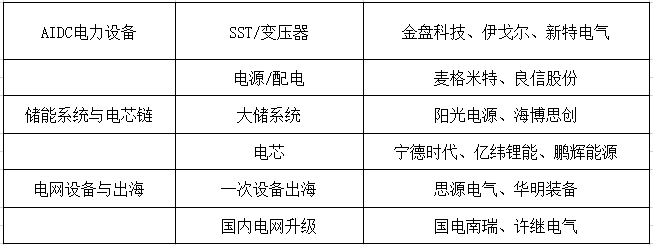
储能方面,当前储能行业呈现供需两旺态势,国内外需求共振,新型储能"一芯难求",头部电池企业持 续满产,电池价格延续上涨趋势,供应链整体具备价格传导能力。需求支撑、供给紧缺、上游挺价,储 能景气度有望持续。兼具规模交付能力、技术创新能力和全生命周期服务能力的头部企业具备显著竞争 优势。 12月11日,风电设备和电网设备获主力大幅加仓,资金净流入额居申万二级行业前两位。随着AI算力 需求的激增,海外电力缺口仍在持续扩大,国内相关企业面临历史性机遇。应关注哪些主线机会?请看 机构最新研判。 近日,高工产业研究院(GGII)发布《2025年中国AIDC储能行业发展蓝皮书》并分析称,全球AIDC储 能市场正迎来爆发式增长,预计到2030年AIDC储能锂电池出货量将突破300GWh,相当于2025年 15GWh的20倍。 与AIDC相关的能源解决方案板块关注度持续升温。一方面,全球范围内电网升级投资与能源数字化趋 势为产业提供了长期方向;另一方面,以美国为代表的地区出现的严峻电力缺口,为SOFC等分布式供 电方案提供了爆发性增长的现实土壤。 从产业趋势看,电网升级与出海浪潮构成长期支撑。全球能源转型与AI算力增长,正驱动 ...