
大数据

Search documents
超级未来完善中国算力底座建设,贵州核心算力数据中心落地实施
Jin Tou Wang· 2025-12-19 10:18
Core Insights - The article discusses the strategic expansion of Super Future Technology Co., Ltd. in the Chinese market, focusing on the construction of a national computing power hub system to support the digital economy and intelligent industries [1][5]. Group 1: Company Strategy - Super Future Technology is establishing a presence in China by setting up a subsidiary in Shenzhen to oversee the construction of a computing power network and local operations [1][5]. - The company is not adopting a centralized approach but is instead promoting a nationwide computing power hub system that includes small data center nodes in each province and large computing power output centers in key regions [2][3]. Group 2: Infrastructure Development - The company plans to build small data center nodes across various provinces to connect local demands and facilitate data resource aggregation, rather than focusing solely on large-scale computing power output [2][3]. - Large data centers in regions like Guizhou and Xinjiang will serve as core computing power output bases, handling high-load applications such as AI model training and large-scale data processing [2][3]. Group 3: Regional Significance - The Guizhou large data center project is highlighted as a significant initiative, leveraging the region's advantages in energy, climate, and digital industry foundation [3]. - The collaborative model of "provincial nodes + regional large computing centers" aims to enhance resource utilization efficiency and reduce cross-regional computing costs [3]. Group 4: Industry Impact - The construction of the national computing power hub system is expected to provide stable support for industries such as AI, big data, and cloud computing, facilitating broader application across various sectors [4]. - The development of computing power infrastructure will also stimulate related industries, including data center operations, information security, and system integration, thereby enhancing the regional digital industry ecosystem [4]. Group 5: Future Outlook - Super Future Technology aims to deepen its market presence in China by steadily advancing the implementation of provincial nodes and large data center projects [5]. - The company seeks to contribute to the construction of an efficient and collaborative new computing power system, supporting the development of the digital economy and AI industry in China [5].
AI养鸡来了!“智慧蛋鸡大模型S1”正式发布
Xin Hua She· 2025-12-19 09:49
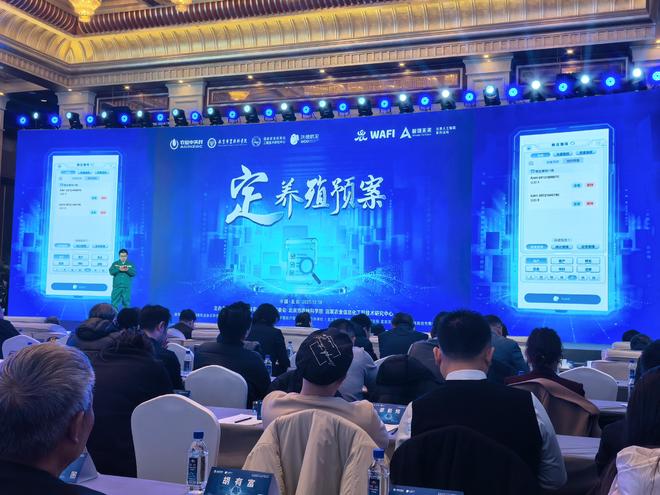
打开智慧蛋鸡App,蛋价、成本、盈利、进鸡四项指数,每日9点准时发布,并同步生成行情报告,帮 助产业链参与者精准有效规避市场风险;38种蛋鸡常见疾病智能诊断、基于问诊数据搭建的疾病智能预 警模型自动生成分级预警信息,以及24小时在线"智慧兽医"帮助养殖户搭建养殖安全防线;依托AI算法 智能推送养殖管理要点,养殖全流程在智慧体系下精准把控……家禽行业正突破传统数字化的边界,实 现从"精准养殖"向"智能决策"转变。 "传统养殖是'靠经验、看天时',如今以人工智能、大数据等现代信息技术重构产业生态,为家禽产业 数智化转型提供了可操作、可落地的实践路径。"中国畜牧业协会智能畜牧分会会长刘爱巧表示,该大 模型可智能服务于育种、养殖、消费者、科研、金融等9类用户,持续推动产业数智化转型。 图为2025中国·平谷农业中关村数字经济论坛现场。新华社记者 余佩璇 摄 新华社北京12月19日电(记者余佩璇)"小慧小慧,近7天全国蛋价指数走势怎么样?""我家的鸡群偏 瘦,不爱吃食怎么办?""请帮我制定一份鸡群养殖预案"……从前,蛋价指数依靠"搜寻式"查询,蛋鸡 生病需要等待专业兽医上门诊治,养殖经验依靠"口口相传"。如今,动动手指 ...

打造“1+2+N+X”智能系统,山东构建“数字地质”全局一体化智慧中枢
Feng Huang Wang Cai Jing· 2025-12-19 07:16
Core Viewpoint - Shandong Province is accelerating the construction of a geological key technology system to support high-quality development, focusing on digital transformation and the integration of geological technology with artificial intelligence and big data [2][4]. Group 1: Integrated Smart Hub Construction - Shandong is building an integrated information management platform that connects key business scenarios, creating a "1+2+N+X" intelligent system, which includes one unified platform, two core support systems, and multiple applications tailored to common needs [5]. - The innovative scenarios include an online monitoring system for geothermal energy development, which integrates core data for scientific and efficient resource utilization, and a system for identifying hidden disaster factors in mining, which uses multi-source geological data to create high-precision 3D models for risk assessment [5]. Group 2: Digital Intelligent Innovation Practices - Shandong is deploying a smart well site management system based on IoT, 5G, edge computing, and cloud platforms in field exploration projects, enhancing safety and efficiency in coalbed methane exploration [6]. - The province has developed an intelligent platform that combines machine learning with traditional geological methods for rapid assessment and customized improvement of land quality, along with a database for mining rescue cases to support quick response [6]. Group 3: Underground Data Mining and Digital Resource System - Shandong has implemented standardized and digital geological exploration projects, completing over 17,000 standardized borehole checks and digitizing more than 11,000 borehole data entries [7]. - The province has created a digital archive system, cataloging over 2,000 geological documents and developing a management system for efficient lifecycle management of over 800 digital results, significantly enhancing geological data management efficiency [7].

中物联何辉:2025年全社会物流总额预计达380万亿元
Xin Hua Cai Jing· 2025-12-19 06:15
Core Insights - The total logistics volume in China is expected to reach approximately 380 trillion yuan by 2025, with the sales of bulk commodity production materials projected to exceed 1 trillion yuan for the first time, highlighting the market's resilience against external risks and its role as a core engine for global bulk commodity trade growth [1][4]. Group 1: Current Logistics Performance - From January to October this year, China's total social logistics volume reached 293.7 trillion yuan, marking a year-on-year increase of 5.1%, indicating steady expansion in logistics demand and ongoing structural optimization [4]. - The total revenue of the logistics industry was 11.8 trillion yuan, reflecting a year-on-year growth of 4.5%, demonstrating steady improvement in the quality and efficiency of industry development [4]. - The China Bulk Commodity Price Index (CBPI) stood at 114.1 points in November 2025, with a month-on-month increase of 0.8% and a year-on-year increase of 1.6%, indicating a recovery in supply-demand relationships and enhanced business confidence [4]. Group 2: Challenges and Opportunities - The global bulk commodity supply chain has developed an interdependent structure, but challenges from global economic uncertainties, geopolitical tensions, and financial market fluctuations remain significant [4]. - Trust deficits in trade are increasingly seen as a major constraint on global economic growth, necessitating a restructured international trade rule system centered on trust to promote sustainable global economic development [4][5]. Group 3: Future Development Strategies - To enhance the global bulk commodity supply chain, three key strategies are proposed: 1. Accelerate the development of new productive forces in bulk commodities, integrating modern supply chains and digital economies while fostering high-quality talent skilled in AI, big data, and blockchain [5][6]. 2. Improve global resource allocation capabilities by leveraging China's vast market advantages and enhancing the competitiveness of bulk commodity circulation enterprises through various financial strategies [6]. 3. Establish a fair, stable, and sustainable global supply chain by utilizing digital technologies to create new mechanisms for shared interests and risk-sharing, while promoting green and low-carbon development [6].

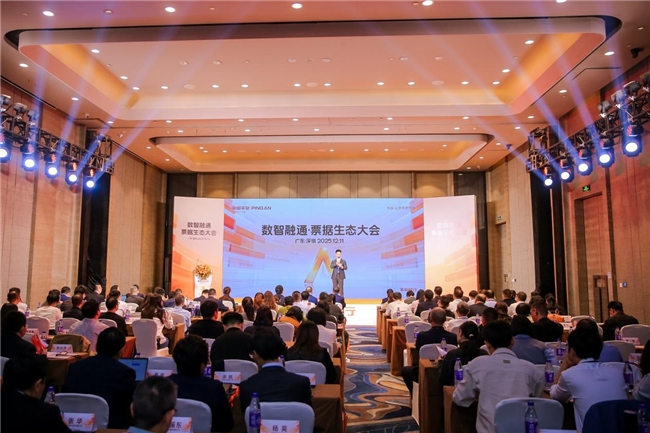
平安银行举办“数智融通·票据生态大会”,携手各方共绘票据生态数智化新蓝图
Cai Fu Zai Xian· 2025-12-19 06:10
Core Insights - The conference hosted by Ping An Bank focused on leveraging technology to empower enterprises for high-quality development through cost reduction, quality improvement, and efficiency enhancement [1][4][8] Group 1: Digital Transformation and Economic Trends - Digital economy is identified as a core engine for social development, with digital transformation becoming a necessity for enterprises [3] - Experts provided a forward-looking analysis of the global macroeconomic situation, highlighting a new landscape of opportunities and risks for 2026 [4] Group 2: Empowering Enterprises through Smart Services - Ping An Bank is committed to empowering enterprises' digital transformation by focusing on three main areas: smart treasury, smart supply chain, and smart management [5] - The bank's digital asset management solutions aim to enhance financial control and efficiency for enterprises [5] Group 3: Practical Experiences and Innovations - Several benchmark enterprises shared their experiences in building a bill ecosystem and digital practices, showcasing successful collaborations with Ping An Bank [7] - The integration of advanced technologies such as AI, big data, and blockchain is emphasized as a means to enhance enterprise treasury management [8] Group 4: Future of Bill Business and Financial Management - The future of bill business and enterprise financial management is expected to evolve towards ecological, digital, and intelligent integration [8] - Ping An Bank aims to create an open, collaborative, and win-win new ecosystem for bills, supporting enterprise transformation and enhancing industry chain efficiency [8]

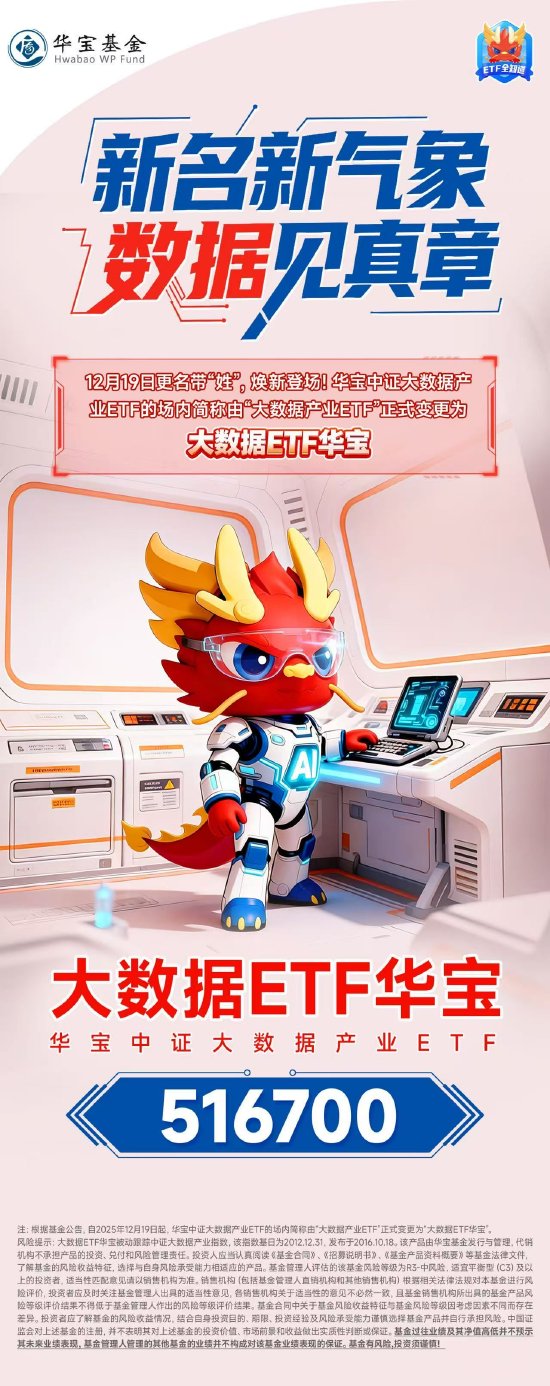
新名新气象,数据见真章!大数据产业ETF正式更名为“大数据ETF华宝”!
Xin Lang Cai Jing· 2025-12-19 05:34
Group 1 - The name of the Huabao Zhongzheng Big Data Industry ETF has officially changed from "Big Data Industry ETF" to "Big Data's Own ETF" [1] Group 2 - MACD golden cross signals have formed, indicating a positive trend for certain stocks [3][6]
“迎峰度冬保供应”系列报道 守护百姓冬日温暖 我国能源保供韧性足
Ren Min Wang· 2025-12-19 05:33
Core Viewpoint - The stability of winter energy supply is crucial for the smooth development of the economy and society, with coal being the primary energy source in China, ensuring sufficient supply is essential for residential heating and industrial production [1][2]. Group 1: Energy Supply Measures - Various regions are implementing energy supply assurance measures to increase production, ensure transportation, and optimize scheduling to enhance energy supply capabilities [1]. - In November, national railways delivered a total of 184 million tons of coal, a year-on-year increase of 0.3%, with thermal coal accounting for 128 million tons [1]. - By the end of November, coal stockpiles at power plants reached 88.23 million tons, with a consumption duration of 35.8 days, an increase of one day compared to the previous year [1]. Group 2: Multi-Modal Transportation and Renewable Energy - In Xinjiang, a multi-modal transportation system has been established, with coal exports expected to reach 10 million tons, a 10% increase year-on-year [2]. - The Daqin Railway in Shanxi is undergoing capacity expansion and integrating AI technology, maintaining a daily transport volume of 1.3 million tons since November [2]. - Renewable energy sources, particularly wind and solar, are increasingly contributing to winter energy supply, with renewable energy installations reaching 332 million kilowatts in the first ten months of 2025, accounting for nearly 60% of total installed capacity [2]. Group 3: Technological Advancements in Energy Management - The integration of AI, big data, and digital twin technologies is enhancing the complexity and reliability of the power system, allowing for more precise and rapid adjustments [3]. - Smart inspection technologies, such as drones and robots, are being utilized for efficient monitoring and fault detection in power grids [3]. Group 4: Recommendations for Energy Stability - To ensure energy stability, it is recommended to increase coal supply, promote flexibility in coal power, and accelerate the construction of pumped storage and new energy storage systems [4]. - Upgrading the distribution network and building ultra-high voltage transmission networks are essential for transporting clean energy from the northwest to the eastern regions [4]. - Encouraging demand-side flexibility through pricing mechanisms and enhancing digital capabilities for better forecasting and scheduling are also suggested [4].
1-11月全国网上零售额增长9.1% 智能穿戴、智能机器人分别增长22.1%和19.4%
智通财经网· 2025-12-19 03:28
Group 1 - The core viewpoint of the article highlights the growth and potential of China's e-commerce sector, emphasizing its role in boosting domestic consumption and innovation [1][2] - In the period from January to November, the national online retail sales increased by 9.1%, with digital products monitored by the Ministry of Commerce growing by 8.2% [2][3] - The growth in online retail has significantly boosted the express delivery business, with the volume of express deliveries exceeding 180 billion pieces by November 30, marking a historical high [2][3] Group 2 - E-commerce platforms are enhancing innovation and driving transformation, with nearly 450 industry e-commerce events held to support the digital transformation of small and medium-sized enterprises in agriculture and industry [2] - The average R&D intensity of major e-commerce platforms reached 8.3% in the first three quarters, positioning them among the world's leaders in AI cloud and self-developed models [2] - Revenue from cloud computing and big data services grew by 13.4% from January to October, while e-commerce platform technology service revenue increased by 12.1% [2] Group 3 - The "Silk Road E-commerce" initiative promotes cooperation and mutual benefits, with the "Silk Road Cloud Products" e-commerce month event leading to over tenfold sales growth for featured products [3] - The retail sales of imported goods on key monitored platforms increased by 5.6% from January to November, demonstrating the effectiveness of e-commerce in connecting domestic and international markets [3] - Capacity-building initiatives, such as online training sessions in Thailand and Laos, have engaged over 150 representatives from government, industry, and SMEs, contributing to regional cooperation [3]

政策密集加码 2025年“投资于人”进入全方位推进期
Zhong Guo Jing Ji Wang· 2025-12-19 02:40
Group 1 - The core focus of the 2025 Central Economic Work Conference emphasizes the integration of investment in physical assets and human capital, marking a shift towards enhancing population quality and human potential as a sustainable driver for high-quality economic development [1] - In 2025, the government work report includes "investment in people" for the first time, highlighting the establishment of a comprehensive population service system covering all demographics and life cycles [1] - The Central Economic Work Conference stresses the importance of optimizing expenditure structure and ensuring financial support for major national strategies, directing more resources towards human capital investment [1] Group 2 - Local governments are accelerating the construction of housing supply systems tailored to the needs of young people, utilizing innovative models to alleviate housing burdens and stabilize development intentions [2] - The education sector is focusing on aligning higher education talent cultivation with market demands, implementing a "Double Thousand" plan to enhance employment capabilities through the introduction of 1,000 "micro-majors" and 1,000 vocational training courses [2] - Policies are evolving to support key demographics, particularly in the silver economy, promoting community elderly care and age-friendly renovations, while also developing human resources for the elderly [2] Group 3 - Digital transformation is creating new directions for talent investment, with multiple ministries advocating for the development of data-related disciplines and vocational education to support the data industry [3] - There is a notable shift from focusing on physical investments to emphasizing investments in human capital, including intellectual property and research, which are essential for building a robust domestic market [3] - The comprehensive approach to "investment in people" spans various sectors, from childcare to vocational training, indicating a collaborative effort between policies and industries to accelerate human capital accumulation [3]
衢州发展涨2.09%,成交额5054.93万元,主力资金净流入371.05万元
Xin Lang Cai Jing· 2025-12-19 02:22
今年以来衢州发展已经4次登上龙虎榜,最近一次登上龙虎榜为8月18日,当日龙虎榜净买入-4.25亿 元;买入总计4.87亿元 ,占总成交额比9.73%;卖出总计9.12亿元 ,占总成交额比18.22%。 资料显示,衢州信安发展股份有限公司位于浙江省杭州市创景路500号衢州发展大厦18层,成立日期 1993年2月23日,上市日期1999年6月23日,公司主营业务涉及科技投资和地产开发。主营业务收入构成 为:房地产88.53%,其他8.77%,其他(补充)2.71%。 衢州发展所属申万行业为:房地产-房地产开发-住宅开发。所属概念板块包括:创投、低价、券商相 关、大数据、乡村振兴等。 12月19日,衢州发展盘中上涨2.09%,截至10:02,报3.91元/股,成交5054.93万元,换手率0.15%,总市 值332.70亿元。 资金流向方面,主力资金净流入371.05万元,特大单买入131.25万元,占比2.60%,卖出361.63万元,占 比7.15%;大单买入1413.01万元,占比27.95%,卖出811.57万元,占比16.06%。 衢州发展今年以来股价涨32.09%,近5个交易日跌3.69%,近20日涨0 ...
