
多边主义

Search documents
潘功胜会见世界银行行长彭安杰和非洲开发银行行长西迪·乌尔德·塔赫
Jin Rong Shi Bao· 2025-10-20 01:39
Core Insights - The global economic situation is becoming increasingly complex and severe, with unilateralism and protectionism impacting international trade order [1] - China emphasizes the importance of multilateral cooperation and aims to support multilateral development institutions in promoting sustainable development in low-income and vulnerable countries [1] - China calls for the World Bank and African Development Bank to advocate for multilateral cooperation and improve the global governance system based on multilateral rules [1]
特朗普滥施关税渐失法律依据
Di Yi Cai Jing· 2025-10-19 12:07
Group 1 - The core viewpoint emphasizes that the unilateral imposition of tariffs by the U.S. is a form of protectionism that undermines international trade principles and poses threats to the stability of global supply chains and economic relations between China and the U.S. [1][2][4] - The Chinese government maintains a consistent stance on trade disputes, asserting that it will respond firmly to U.S. tariffs while remaining open to dialogue and cooperation [1][2][3] - The U.S. courts have ruled against the legality of many of Trump's tariff policies, indicating a potential shift in the legal framework governing trade practices and the limits of presidential authority [2][3] Group 2 - The ongoing trade tensions and tariff policies have led to adverse effects on the U.S. economy, including inflation pressures on consumers and increased costs for domestic manufacturers [4][5] - The U.S. government's approach to trade, characterized by unilateral actions, is seen as a departure from multilateralism, which could lead to systemic disruptions in global supply chains [4][5] - The upcoming Supreme Court hearings on tariff policies will be crucial in determining the future of U.S. trade authority and its implications for international trade relations [3]
聚焦联大第2758号决议 联合国成立80周年国际学术研讨会在武汉开幕
Xin Hua She· 2025-10-19 05:18
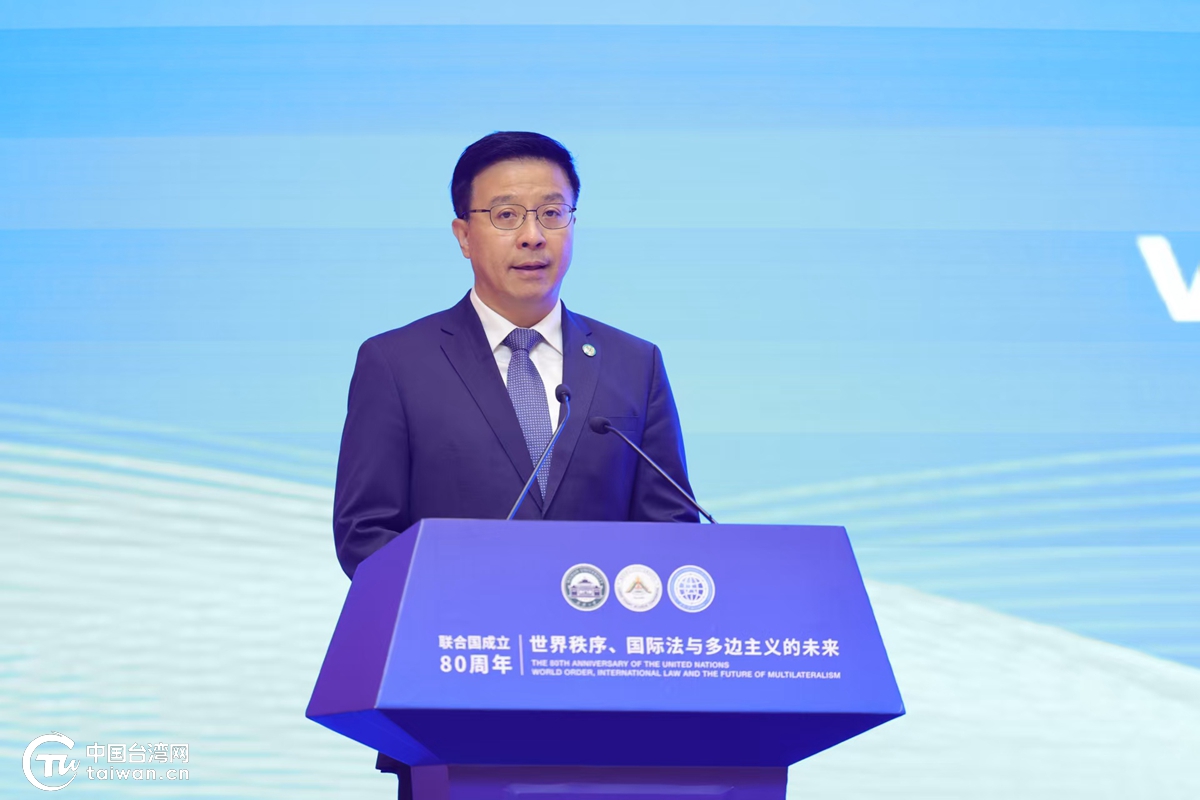
国务院台办副主任赵世通在开幕式上致辞。(中国台湾网发) 新华社武汉10月18日电(记者李寒芳、乐文婉、侯文坤)由武汉大学与埃及本哈大学共同主办的"联合国成立80周年:世界秩序、国际法与多边主义的未 来"国际学术研讨会18日在湖北武汉开幕。 联合国前副秘书长苏亚雷斯、亚非法协秘书长卡玛琳、埃及本哈大学校长纳赛尔·吉扎维、武汉大学韩德培讲席教授睿思来等嘉宾表示,纪念联合国成立80 周年必须坚决捍卫二战胜利成果和战后国际秩序,坚定维护《联合国宪章》宗旨和原则,承认《开罗宣言》《波茨坦公告》、联大第2758号决议等国际法文 件确认的台湾是中国一部分的历史和法理事实,坚持主权平等、不干涉内政等国际法基本原则,支持联合国在国际事务中发挥核心作用,共同践行真正的多 边主义。 国务院台办副主任赵世通、武汉大学党委书记朱孔军致辞表示,台湾回归祖国是二战胜利成果和战后国际秩序的重要组成部分,一个中国原则是国际关系基 本准则和国际社会普遍共识。任何歪曲挑战联大第2758号决议的行径,不仅威胁中国主权和领土完整,也在挑战联合国权威,妄图动摇战后国际秩序。希望 国际社会充分理解并积极支持中国政府与中国人民反对"台独"分裂、早日完成国家 ...

多国专家共话全球发展:在差异中寻求和谐共生之道
Zhong Guo Xin Wen Wang· 2025-10-19 03:34
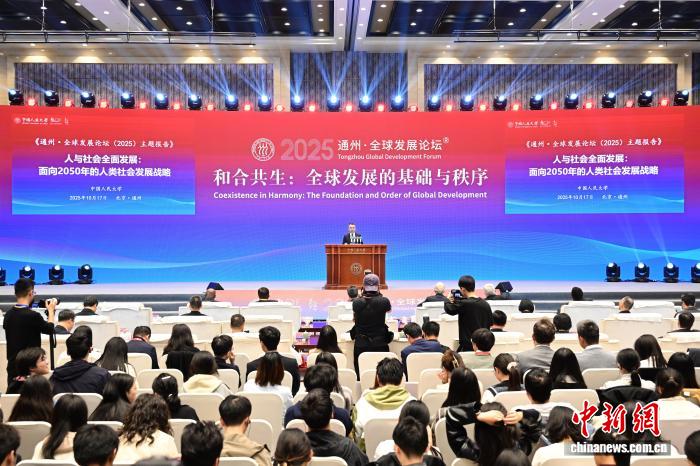
多国专家共话全球发展:在差异中寻求和谐共生之道 中新网北京10月19日电(记者 国璇) "人类历史告诉我们,可持续发展源于各国人民在差异中共存的能 力,文化、政治、经济、精神的多样性不应受到威胁,它是创新、对话与和平的财富。" "当前,全球各个领域正在发生巨大而深刻的变化。世界卫生组织、世界贸易组织等多边机构的功能遭 到削弱。"意大利前总理、欧盟委员会前主席罗马诺·普罗迪在主旨演讲中称,如今全球化进程面临诸多 问题,各方不能通过冲突的方式打破旧国际秩序、建立新国际秩序。作为全球重要力量,欧洲和中国应 共同承担推动和谐共存的责任,应对贸易不平衡等现实挑战,推动社会政策改革,真正推动欧中关系向 前发展。 巴西巴伊亚联邦大学副校长佩尼尔登·菲略结合巴西的社会实践表示,收入和财富分配的失衡、气候变 化、政府的信任危机和数字鸿沟等新旧问题交织叠加,人类有必要更新发展理念,建立一种推动经济、 社会、生态转型,更为全面的新范式。 与会嘉宾认为,在一个失序动荡的世界,坚定捍卫多边主义,推动各国平等参与、贡献并共享发展成果 尤为重要。德国前财政部长约尔格·库基斯表示,各国应深化跨领域、跨区域合作,促进全球贸易的自 由化、公平化 ...
生态环境部部长黄润秋出席昆明生物多样性基金理事会会议
Zheng Quan Shi Bao Wang· 2025-10-19 01:13
Core Viewpoint - The Kunming Biodiversity Fund emphasizes international cooperation and multilateralism in its operations, focusing on transparency and effective project management [1] Group 1: Meeting Highlights - The meeting was co-chaired by the Minister of Ecology and Environment, Huang Runqiu, and the UN Under-Secretary-General and Executive Director of the UN Environment Programme, Andersen [1] - Huang Runqiu stressed the importance of continuous tracking and evaluation of approved projects to ensure effective implementation [1] Group 2: Strategic Initiatives - The fund aims to strengthen publicity and experience sharing, highlighting innovative practices and successful experiences in biodiversity conservation and sustainable development [1] - There is a focus on developing financing schemes and broadening financing channels to create a diversified and sustainable financing system [1] - The fund plans to expand partnerships and enhance collaboration with relevant international funding mechanisms for resource integration and project implementation [1] Group 3: Project Support - The fund intends to increase support for projects, particularly by designing and implementing a series of "small but beautiful" projects to assist developing countries in executing the "Kunming-Montreal Global Biodiversity Framework" [1]
中国副财长出席二十国集团和金砖国家财金渠道系列会议
Zhong Guo Xin Wen Wang· 2025-10-18 14:24
Group 1 - The G20 finance ministers and central bank governors meeting took place in Washington from October 15 to 16, focusing on global macroeconomic conditions, international financial architecture, and development challenges in Africa [1] - China emphasized the importance of maintaining multilateralism and free trade, advocating for inclusive economic globalization and structural reforms to boost global economic recovery [1] - The meeting highlighted the need for improved global economic governance and resource mobilization to address debt vulnerabilities faced by developing countries [1] Group 2 - During the meeting, China’s Vice Minister of Finance, Liao Min, engaged in bilateral discussions with finance officials from South Africa, the UK, the US, France, Germany, Canada, and Pakistan, focusing on macroeconomic conditions and financial cooperation [2] - Liao also held talks with organizations such as the US-China Business Council and the Peterson Institute for International Economics to exchange views on economic issues [2]
潘功胜会见国际货币基金组织总裁格奥尔基耶娃
Zhong Guo Ji Jin Bao· 2025-10-18 12:56
(原标题:潘功胜会见国际货币基金组织总裁格奥尔基耶娃) 2025年10月16日,中国人民银行行长潘功胜在出席国际货币基金组织/世界银行年会期间会见了国际货 币基金组织(以下简称基金组织)总裁格奥尔基耶娃。中国人民银行副行长宣昌能参加会见,并在会前 会见了基金组织第一副总裁卡茨。 潘功胜指出,受地缘政治与技术变革等因素影响,全球经济格局正 发生深刻变革。基金组织作为全球最主要的多边金融机构,应旗帜鲜明地反对保护主义,倡导对话与合 作,捍卫多边主义。习近平总书记在今年9月提出全球治理倡议。中方将积极参与全球治理,为建设更 加公平、公正、包容、有韧性的全球治理体系贡献力量。双方并就人民银行与基金组织合作的一些具体 问题交换了意见。 来源:中国人民银行 ...
潘功胜:基金组织应调整份额占比,增加新兴市场和发展中国家代表性
Sou Hu Cai Jing· 2025-10-18 09:49
Core Viewpoint - The global multilateral trading system is facing unprecedented challenges, necessitating a strong stance against protectionism and a call for dialogue and cooperation to defend multilateralism [2] Summary by Relevant Sections Global Economic Risks - The International Monetary Fund (IMF) should objectively assess the major risks faced by the global economy and individual countries, providing timely and targeted policy recommendations to help member countries better respond to various shocks [2] Policy Coordination - There is a pressing need to strengthen macroeconomic policy coordination among countries to maintain the stability of the international financial system, especially in light of trade tensions impacting global financial stability [2] Global Financial Safety Net - The IMF, as the core of the global financial safety net, must continue to promote quota reforms to enhance its legitimacy, effectiveness, and representativeness [2] - It is crucial to adjust the quota shares to reflect the relative positions of member countries in the global economy, thereby increasing the representation of emerging markets and developing countries [2]
潘功胜:基金组织应继续推动份额改革,尽快实现份额占比调整
Jin Rong Shi Bao· 2025-10-18 07:41
Core Viewpoint - The global multilateral trading system is facing unprecedented challenges, necessitating a strong stance against protectionism and a call for dialogue and cooperation to uphold multilateralism [1] Group 1: Global Financial Stability - The International Monetary Fund (IMF) should objectively assess the major risks faced by the global economy and individual countries, providing timely and targeted policy recommendations to help member countries respond to various shocks [1] - There is an urgent need to strengthen the global financial safety net due to the impact of trade tensions on global financial stability [1] Group 2: IMF's Role and Reforms - The IMF is central to the global financial safety net and should continue to promote quota reforms, which are crucial for enhancing the legitimacy, effectiveness, and representativeness of the organization [1] - It is essential to adjust the quota shares to reflect the relative positions of member countries in the global economy, thereby increasing the representation of emerging markets and developing countries [1]
潘功胜:坚定维护多边主义,倡导开放、规则为基础的多边贸易体系,为世界经济注入更多稳定性与确定性
Jin Rong Shi Bao· 2025-10-18 07:37
Core Viewpoint - The global economic landscape is undergoing profound changes due to geopolitical factors and technological transformations, leading to weakened growth momentum worldwide [1] Economic Challenges - Trade frictions and geopolitical uncertainties are dragging down global economic growth [1] - Concerns are rising regarding the fiscal sustainability of developed economies and its spillover effects [1] - Financial market volatility may increase, posing severe challenges for emerging markets and developing economies [1] Call for Cooperation - Countries should enhance macroeconomic coordination and cooperation to maintain multilateralism [1] - There is a need to advocate for an open, rules-based multilateral trading system to inject more stability and certainty into the global economy [1] China's Role in Global Governance - China has recently proposed a global governance initiative and is willing to actively participate in building a fair, just, inclusive, and resilient global governance system [1] - China aims to deepen cooperation with the International Monetary Fund (IMF) to support its role in maintaining global economic and financial stability [1]