
中小金融机构兼并重组

Search documents
锦州银行被工行收购承接!存款人合法权益不受影响
券商中国· 2025-10-28 13:09
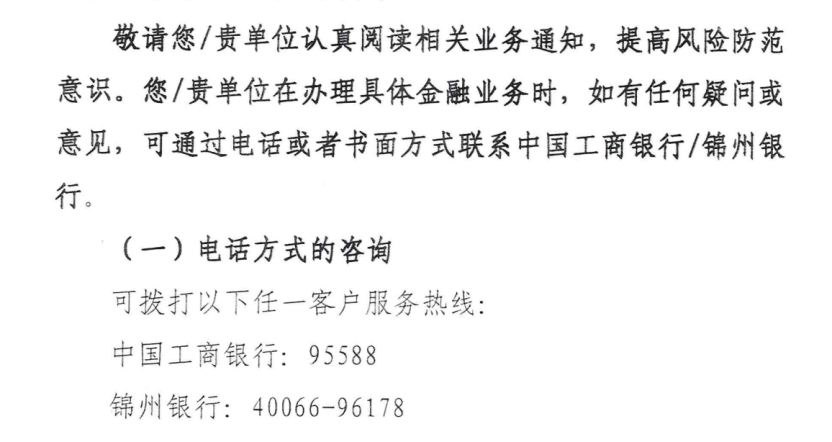
Core Viewpoint - Jinzhou Bank has announced the approval of its assets, liabilities, business, branches, and personnel to be acquired by Industrial and Commercial Bank of China (ICBC), ensuring that the legal rights of depositors will not be affected [1][2]. Group 1: Acquisition Details - The acquisition marks a recent case of consolidation among small and medium-sized banks, with ICBC previously engaging in similar actions with other banks [2]. - The transfer agreement has been signed, and the business migration will begin 15 working days after the notification date of October 26 [3]. - The business migration includes various services such as corporate banking, online banking, payroll services, and personal banking services [3]. Group 2: Impact on Customers - During the system migration, certain payment services linked to Jinzhou Bank's debit cards will be temporarily suspended for about two days [4]. - Customers are advised to contact the bank for any inquiries regarding specific financial transactions during this transition period [5]. Group 3: Historical Context - Jinzhou Bank was established in 1997 and was listed on the Hong Kong Stock Exchange in 2015, becoming the third city commercial bank from Northeast China to do so [8]. - The bank faced a severe liquidity crisis in 2019, leading to a financial restructuring involving significant asset sales and capital injections from various institutions [8][9]. - Following the restructuring, Jinzhou Bank's capital adequacy ratios improved, but its operational performance has not shown significant recovery, with a reported net profit decrease of 23.5% year-on-year as of mid-2022 [9]. Group 4: Regulatory Environment - The financial regulatory authority has prioritized the reform and risk management of small and medium-sized financial institutions, with a focus on reducing the number of such banks while enhancing their quality [10][11]. - As of mid-2023, the number of small and medium-sized banks has decreased significantly, indicating ongoing consolidation efforts in the sector [11].



锦州银行被工行收购承接!存款人合法权益不受影响
Zheng Quan Shi Bao Wang· 2025-10-28 09:19
Core Viewpoint - Jinzhou Bank has announced the approval of its assets, liabilities, business, branches, and personnel to be acquired by Industrial and Commercial Bank of China (ICBC), ensuring that the rights of depositors remain unaffected [1] Group 1: Acquisition Details - The acquisition involves a formal agreement between Jinzhou Bank and ICBC, with the transfer of various banking operations and assets [1] - The business migration will include unit customer accounts, online banking, payroll services, and various personal banking services, with adjustments to account numbers for affected customers [2] - The migration process will take place 15 working days after the notification date, with a temporary suspension of certain payment services during the transition [3] Group 2: Background and Historical Context - Jinzhou Bank was established in 1997 and was listed on the Hong Kong Stock Exchange in 2015, becoming the third city commercial bank from Northeast China to do so [4][5] - The bank faced a severe liquidity crisis in 2019, leading to a significant restructuring involving the acquisition of 150 billion yuan in non-performing assets and a capital injection from various institutions [5][6] - Following the restructuring, Jinzhou Bank's capital adequacy ratios improved, but its operational performance has not shown significant recovery, with a reported net profit decline of 23.5% year-on-year as of mid-2022 [6] Group 3: Regulatory Environment - The Financial Regulatory Bureau has emphasized the importance of stabilizing the financial system and has made the reform of small and medium-sized financial institutions a priority in recent years [8][10] - As of mid-2023, the number of small and medium-sized banks has decreased significantly, indicating ongoing consolidation in the sector [8]
锦州银行被工行收购承接!存款人合法权益不受影响
证券时报· 2025-10-28 09:10
Core Viewpoint - Jinzhou Bank has announced the approval of its assets, liabilities, business, branches, and personnel to be acquired by Industrial and Commercial Bank of China (ICBC), ensuring that the rights of depositors remain unaffected [1] Group 1: Acquisition Details - The acquisition involves a formal agreement between Jinzhou Bank and ICBC, marking a significant case of consolidation among small and medium-sized banks [1] - The transfer includes various banking services such as corporate accounts, online banking, payroll services, and personal banking services [3] - The migration of services will require adjustments to account numbers for depositors, with specific changes to debit cards and other banking instruments [2][3] Group 2: Regulatory Context - The Financial Regulatory Bureau has emphasized the importance of risk management and the orderly advancement of mergers and restructuring among small financial institutions [9][11] - Recent data indicates a reduction in the number of small banks, with a total of 3,505 institutions reported as of mid-2023, a decrease of 222 from the previous year [9] Group 3: Historical Background - Jinzhou Bank faced a severe liquidity crisis in 2019, leading to a significant restructuring involving the acquisition of 1.5 trillion RMB in non-performing assets [7] - Following the restructuring, Jinzhou Bank's capital adequacy ratios improved, with a non-performing loan ratio dropping to 1.95% [7][8] - The bank's operational performance has not shown significant improvement post-restructuring, with a reported net profit decline of 23.5% year-on-year as of mid-2022 [8]

【早知道】王毅同美国国务卿鲁比奥通电话;证监会印发《合格境外投资者制度优化工作方案》
Sou Hu Cai Jing· 2025-10-28 00:07
Group 1 - Wang Yi had a phone call with US Secretary of State Rubio [1] - The China Securities Regulatory Commission (CSRC) issued opinions on strengthening the protection of small and medium investors in the capital market [1] - The CSRC released a plan to optimize the Qualified Foreign Institutional Investor (QFII) system [1] Group 2 - Wu Qing announced the initiation of deepening reforms in the Growth Enterprise Market (GEM) [1] - Pan Gongsheng stated that the People's Bank of China will resume open market operations for government bonds [1] - Li Yunzhe emphasized the need to steadily and orderly promote the merger and restructuring of small financial institutions, focusing on quality over quantity [1] Group 3 - Zhu Hexiong indicated that nine new policy measures will be introduced soon to further promote trade innovation and development [1] - The China Interbank Market Dealers Association will enhance the regulatory work on the fundraising of debt financing instruments [1] - In the first three quarters of this year, China's foreign-related income and expenditure reached a record high of 1.16 trillion USD [1] Group 4 - Since October, various regions have introduced 16 policies related to housing provident funds [1]
2025金融街论坛|着力提升经济金融适配性!李云泽发声将推动构建金融服务新模式
Bei Jing Shang Bao· 2025-10-27 14:45
Core Viewpoint - The speech by Li Yunzhe emphasizes the need to enhance the adaptability of the financial system to the economy, promote a new model of financial services that balances direct and indirect financing, and ensure systemic financial risk prevention [1][4][11]. Group 1: Financial Service Model - The focus is on constructing a new financial service model that coordinates direct and indirect financing, balances investment in physical assets and human capital, aligns financing terms with industry development, and links domestic and international markets [4][5]. - The financial system should shift from prioritizing investments in hard assets like infrastructure to supporting human capital accumulation, including vocational training and talent development in technology [5]. Group 2: Financial Institution Development - Four large banks have established financial asset investment companies (AIC) in Beijing, with Postal Savings Bank also in the process of establishing one, aimed at converting bank funds into long-term capital for technology innovation and industrial upgrades [6][7]. - The National Financial Supervision Administration plans to continue promoting financial policies in Beijing to attract quality financial resources to support high-quality economic development [6]. Group 3: Financial Opening and Reform - Financial opening is entering a new stage characterized by comprehensive, multi-level, and wide-ranging reforms, which are essential for enhancing the vitality and dynamism of the financial sector [8][9]. - The administration aims to deepen supply-side structural reforms in finance, improve institutional layouts, and enhance the quality and resilience of financial development [8][9]. Group 4: Risk Management and Institutional Restructuring - The administration is committed to risk prevention and will promote the merger and restructuring of small and medium-sized financial institutions to enhance their operational efficiency and competitiveness [11][12]. - There is a focus on improving corporate governance and management capabilities of small banks, especially in economically weaker regions, to address issues like asset quality deterioration and credit risk [11][12].



事关公开市场国债买卖、数字人民币,潘功胜、李云泽、吴清、朱鹤新重磅发声速览
Sou Hu Cai Jing· 2025-10-27 14:43
Core Viewpoint - The 2025 Financial Street Forum Annual Meeting in Beijing highlighted key financial policies and reforms aimed at stabilizing the financial market, enhancing credit systems, and promoting investment opportunities. Group 1: Central Bank Policies - The People's Bank of China (PBOC) will resume public market operations for government bonds after a pause due to market imbalances and risks [1] - A preliminary plan for monitoring and assessing systemic financial risks has been established, with a list of systemically important insurance companies to be released [1] - The PBOC aims to balance financial market stability and moral hazard prevention, exploring liquidity provision mechanisms for non-bank institutions in specific scenarios [1] - The central bank will continue to combat domestic virtual currency operations and closely monitor the development of overseas stablecoins [1] - The digital RMB management system will be optimized to support more commercial banks as operational entities for digital RMB [1][2] Group 2: Financial Regulatory Reforms - The Financial Regulatory Administration will promote the merger and restructuring of small and medium financial institutions in a prudent manner [3] - There will be a deepening of structural reforms on the financial supply side to enhance institutional layout, quality, resilience, and international influence [3] - Efforts will be made to strengthen funding supply for major projects to boost consumption [4] - Increased focus on the disposal of non-performing assets and capital replenishment to ensure the stability of the financial system [5] Group 3: Capital Market Developments - The China Securities Regulatory Commission (CSRC) has launched the "Qualified Foreign Investor System Optimization Work Plan" to improve access management and investment efficiency for foreign investors [6] - The CSRC will enhance the interconnectivity mechanism and improve the efficiency of overseas listing filings, fostering cooperation between mainland and Hong Kong markets [7] - Continuous promotion of high-quality development of the Beijing Stock Exchange and improvement of differentiated listing and trading systems for the New Third Board [7] - The CSRC will initiate reforms for the Growth Enterprise Market to set listing standards that align with emerging industries [8] - A refinancing framework will be introduced to broaden support channels for mergers and acquisitions [9] Group 4: Foreign Exchange Management - The State Administration of Foreign Exchange will deepen reforms in foreign exchange management for direct investment, cross-border financing, and securities investment [10] - Policies for integrated currency pools for multinational companies and management of domestic enterprises' overseas listing funds will be implemented [11] - The use of AI and big data will enhance smart regulation and monitoring of cross-border capital flows [12]

金融监管总局李云泽:稳妥有序推进中小金融机构兼并重组、减量提质
Xin Lang Cai Jing· 2025-10-27 10:04
Core Viewpoint - The Financial Regulatory Administration emphasizes its commitment to risk prevention and management, aiming to maintain systemic financial stability while adapting to changes in the financial landscape [1] Group 1: Risk Management - The administration will firmly uphold its primary responsibility of risk prevention, ensuring that systemic financial risks do not occur [1] - There will be a focus on strengthening risk protection measures and consolidating risk disposal achievements [1] - The approach includes a careful and orderly advancement of mergers and restructuring among small and medium-sized financial institutions, alongside efforts to improve quality while reducing quantity [1] Group 2: Asset Management - Increased efforts will be made in the disposal of non-performing assets and capital replenishment, enhancing the resources and methods available for asset management [1] - The goal is to ensure the stable operation of the financial system through effective asset management strategies [1] Group 3: Financing and Debt Management - The administration aims to accelerate the establishment of a financing system that aligns with the new model of real estate development, assisting in the resolution of local government debt risks [1] - Continuous improvement in financial regulatory efficiency is a priority, with a focus on revising and optimizing financial laws and regulations [1] Group 4: Regulatory Framework - The administration will enhance the clarity and effectiveness of regulatory policies, implementing a tiered and categorized regulatory approach [1] - There will be a strong emphasis on leveraging technology to optimize resource allocation, providing robust support for the "five major regulations" [1]