交易的艺术

Search documents
牛弹琴:这个狠人,去了白宫
Xin Lang Cai Jing· 2026-02-04 00:01
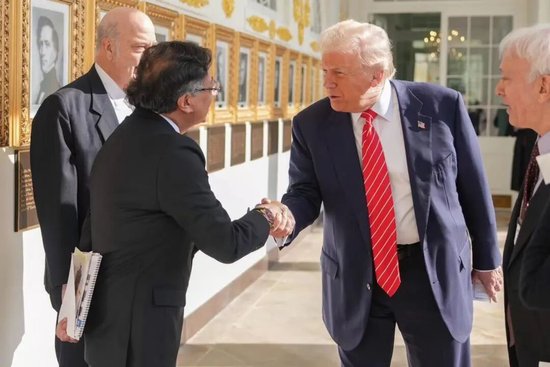
Core Viewpoint - The political dynamics between Colombian President Gustavo Petro and former U.S. President Donald Trump have dramatically shifted from hostility to cordiality within a month, highlighting the unpredictable nature of international politics [2][30]. Group 1: Meeting Dynamics - On February 3, Petro visited the White House, where he received a warm welcome from Trump, who praised him and gifted him a signed copy of his book "The Art of the Deal" [31][34]. - The meeting took place in a positive atmosphere, contrasting with previous humiliations faced by other leaders, indicating a significant change in diplomatic relations [34][42]. - Following the meeting, Petro expressed his happiness on social media and revealed that Trump agreed to mediate the trade conflict between Colombia and Ecuador [34][42]. Group 2: Historical Context - Previously, Petro was one of Trump's most vocal critics in Latin America, especially after the U.S. imposed heavy tariffs on Colombian goods and revoked Petro's visa [37][39]. - The tensions escalated when Trump threatened military action against Colombia, showcasing the high stakes involved in their relationship [41][42]. - Petro's strong criticisms of U.S. policies, including drug enforcement strategies, had led to significant diplomatic fallout, including the revocation of his visa [41][57]. Group 3: Political Strategy - The sudden shift in relations suggests a strategic maneuvering by both leaders, where personal animosities are set aside for potential political gains [42][57]. - Trump's approach, characterized by negotiation and pressure tactics, reflects a broader strategy in international relations where perceived threats can lead to unexpected alliances [50][53]. - The ongoing political landscape in Colombia, with its leftist government, remains a point of contention for Trump, indicating that future relations may still be fraught with challenges [55][57].

果然不出所料,中国送欧洲一句“能救命”的话后,特朗普态度秒变
Sou Hu Cai Jing· 2026-01-24 12:48
Group 1 - The core point of the article is the unexpected reversal of Trump's decision to indefinitely suspend tariffs on Europe, which was initially set to take effect on February 1, highlighting the dynamic nature of international trade negotiations [1][3][15] - Trump's sudden change in stance reflects a strategic adjustment in response to the geopolitical landscape, particularly the potential for Europe to strengthen ties with China [3][15][24] - The article emphasizes that Trump's decision was influenced by a broader concern about the U.S. facing challenges on multiple fronts, particularly with China, and the need to stabilize relations with European allies [17][20][24] Group 2 - The article discusses the implications of Trump's tariff suspension as a tactical move to prevent Europe from aligning more closely with China, which could undermine U.S. influence [9][15][24] - It highlights the role of NATO Secretary General Jens Stoltenberg in facilitating this diplomatic shift, indicating that U.S. interests still dominate European security discussions [32][39] - The analysis suggests that while Europe may perceive a temporary victory in avoiding tariffs, the underlying power dynamics indicate a loss of autonomy as U.S. military presence in Europe could increase [40][42][44] Group 3 - The article concludes that the evolving relationship between the U.S. and Europe reflects a new paradigm where alliances may come at a cost, with the U.S. adopting a "subscription model" for its influence [55][59] - It points out that Europe must navigate its dependence on both the U.S. for security and China for economic recovery, leading to a complex and precarious position in international relations [49][51] - The piece ultimately suggests that the current geopolitical climate necessitates that countries maintain multiple options to ensure their sovereignty and security in the face of great power competition [53][57]
格陵兰岛,原来又是一场“交易的艺术”【播客】
Datayes· 2026-01-20 11:42
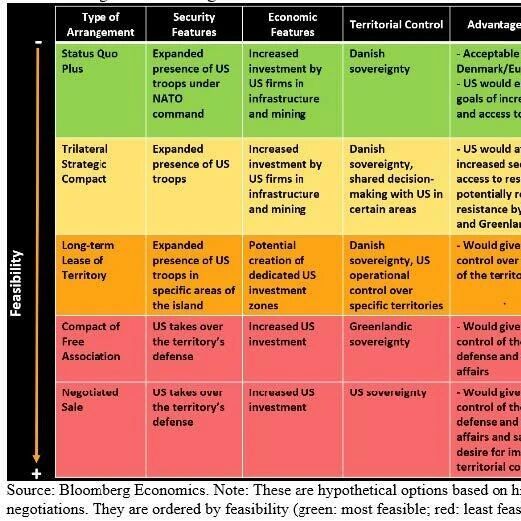
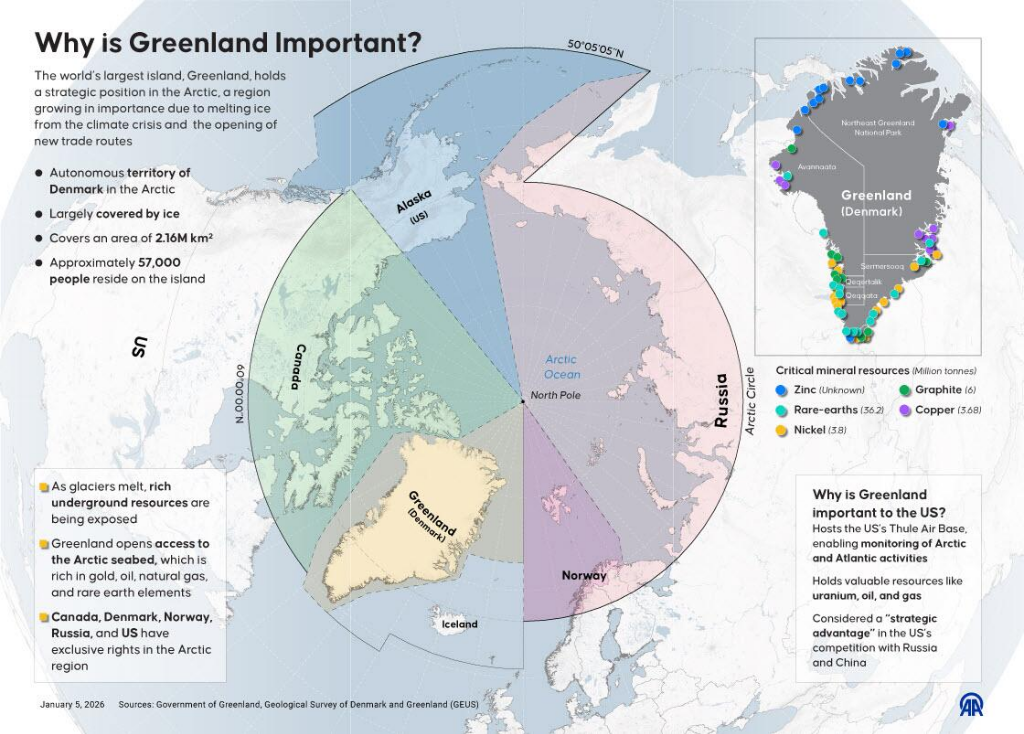
Group 1 - The core interpretation framework uses Trump's "art of the deal" to analyze the current tensions surrounding Greenland [3] - The extreme rhetoric from the U.S. (Trump) is seen as a deliberate negotiation strategy aimed at creating noise, leverage, and urgency to trigger and dominate negotiations [3] - The geopolitical shock occurs at a dangerous time, with multiple market risk indicators (such as TPM and bull-bear indicators) signaling an "orange alert," indicating a risk of market pullback [3] Group 2 - The most likely outcome is expected to be a "negotiation arrangement" that satisfies U.S. security and economic interests, rather than a formal territory sale or extreme invasion [3] - The judgment on the event predicts a "last-minute compromise," aligning with Morgan Stanley's conclusion of a "negotiation arrangement," but provides more specific domestic political arguments [3] - Domestic public opinion constraints are highlighted, with only 17% support for the action, indicating low likelihood of pursuing this political risk in an election year [3] Group 3 - The current market's real issue lies not in the geopolitical outcome but in the extremely crowded position structure [3] - Data shows that total exposure, net exposure, and futures positions in the U.S. market are at multi-year highs [3] - Funds are observed to be rotating from the U.S. to Europe and cyclical sectors, while U.S. tech stocks, particularly software, are experiencing significant sell-offs [3] Group 4 - The implicit conclusion is that regardless of how geopolitical issues are resolved, the market remains very fragile due to extreme position crowding, where any minor disturbance could trigger significant volatility based on position adjustments [3]
摩根大通:别慌!格陵兰岛危机可能在达沃斯就会解决
华尔街见闻· 2026-01-20 11:17
Core Viewpoint - The current market turmoil is expected to downgrade into a "negotiated arrangement" rather than escalate into a full-blown crisis, as interpreted by JPMorgan's international market intelligence team [1]. Group 1: Market Dynamics - The EU's response to potential retaliatory tariffs and the use of anti-coercion tools is seen more as a strategic posture rather than a genuine threat [2]. - JPMorgan analyst Federico Manicardi believes the situation is not fundamentally difficult to resolve, with potential solutions emerging during the World Economic Forum (WEF) [3]. - Despite the volatility caused by "Trumpism," JPMorgan maintains a positive outlook on the market, indicating that a moderate single-digit market decline would be unexpected [4][5]. Group 2: Strategic Insights - The threats surrounding Greenland have caused market fluctuations, but JPMorgan remains cautiously optimistic [6]. - Manicardi elaborates that the most likely outcome is a "negotiated arrangement" that expands U.S. security and economic presence in Greenland while allowing Denmark to retain sovereignty [8]. - The possibility of "selling" Greenland is deemed low, as the U.S. can achieve its strategic goals without formal territorial control, and any invasion scenario is considered a very low-probability tail risk [8]. Group 3: Key Catalysts - Key catalysts for investors include Trump's speech scheduled for January 21 at the WEF, which may focus on potential candidates for the Federal Reserve Chair and affordability issues [8]. - The U.S. Supreme Court is set to hear oral arguments regarding Federal Reserve Governor Lisa Cook, which could impact market sentiment [8]. Group 4: Macroeconomic Outlook - JPMorgan observes a strong start to the year, with industries and regions leading, as investors anticipate an economic reboot by 2026 [9].


摩根大通:别慌!格陵兰岛危机可能在达沃斯就会解决
Hua Er Jie Jian Wen· 2026-01-20 07:09
Core Viewpoint - Despite market volatility surrounding the Greenland issue and potential tariffs from the U.S. on certain EU countries, JPMorgan remains cautiously optimistic, believing that the current chaos will ultimately de-escalate into a "negotiated arrangement" rather than evolve into a full-blown crisis [1]. Group 1: Market Analysis - JPMorgan's International Market Intelligence team suggests interpreting the current market turmoil from the perspective of "the art of negotiation," with the U.S. adopting a tough stance to trigger negotiations and create leverage [1]. - The firm notes that the EU's response, including potential retaliatory tariffs and warnings about the impact on the U.S.-EU trade agreement, is more of a strategic posturing than a genuine threat [1]. - Analyst Federico Manicardi believes that the situation is not fundamentally difficult to resolve, with a potential solution emerging during the upcoming World Economic Forum (WEF) [1][3]. Group 2: Risk Assessment and Predictions - JPMorgan has ruled out extreme scenarios that could arise from the Greenland situation, such as the sale of Greenland or an invasion, deeming them highly unlikely due to the complexities involved and the unpopularity of such actions among voters [3]. - The firm has identified key catalysts for investors to watch, including President Trump's speech scheduled for January 21 at the WEF, which may focus on potential candidates for the Federal Reserve Chair and issues of affordability [3]. - On a macro level, JPMorgan observes a strong start to the year, with industries and regions in a leading position, and investors anticipating an economic reboot by 2026 [3].
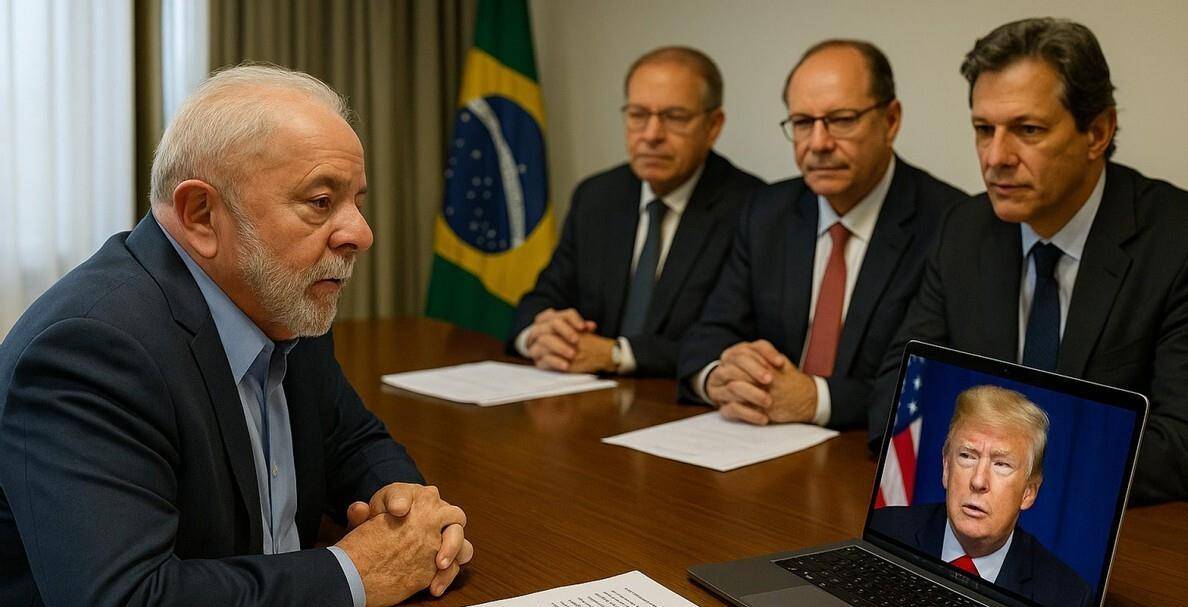
跟卢拉通话后,特朗普变脸,愿对巴西让步,考虑取消加征40%关税
Sou Hu Cai Jing· 2025-10-09 05:45
Group 1 - Trump's sudden shift from a hardliner to a compromiser after a phone call with Brazilian President Lula on October 6, 2025, highlights his unpredictable nature in international relations [1][3] - Trump's business background influences his approach to international relations, treating negotiations like a marketplace where he adapts based on the situation and perceived benefits [3][5] - Brazil holds significant leverage over the U.S. due to its status as the second-largest holder of rare earth reserves, which are crucial for the U.S. high-tech industry [5][6] Group 2 - The trade deficit between Brazil and the U.S. reached $1.77 billion in the first nine months of 2025, while Brazil redirected 26.5% of its exports (valued at $28.5 billion) to China [5][6] - Rising prices of coffee and beef in U.S. supermarkets due to tariffs have led to public discontent, prompting Trump's team to act quickly to negotiate with Brazil [6][8] - Lula's push for diversified diplomacy and reduced reliance on the U.S. indicates a shift in geopolitical dynamics, with the U.S. losing influence in Latin America [6][8]