
智谱大模型

Search documents
AI进化速递丨全球人工智能应用场景中心落户深圳华强北
Di Yi Cai Jing· 2026-02-12 13:03
Group 1 - The global artificial intelligence application scenario center has been established in Huaqiangbei, Shenzhen [1] - The first "AI + humanoid robot" technology innovation bond in the country has been issued [2] - Shenzhen is promoting the application of artificial intelligence technology in key areas of the semiconductor industry chain [3] Group 2 - The Beijing Humanoid Robot Innovation Center and UBTECH Technology have launched the humanoid robot "Tian Gong Xing Zhe DEX" [4] - Moore Threads' MTT S5000 has completed adaptation to the latest large model from Zhiyu [5] - Calet and Wuwen Chip have reached a strategic cooperation to expand AI application fields [6] Group 3 - Alipay's AI payment transactions have exceeded 120 million [7] - Wanxing Technology's subsidiary, Wanxing Film Factory, has integrated with Kling 3.0 [8] - Kakao and Google have reached a strategic cooperation in the field of artificial intelligence [9] - ByteDance stated that Seedance 2.0 is still far from perfect and will continue to explore deep alignment between large models and human feedback [10]

IBM大中华区董事长陈旭东:第一个用的大模型就是智谱
Xin Lang Cai Jing· 2026-01-29 10:49
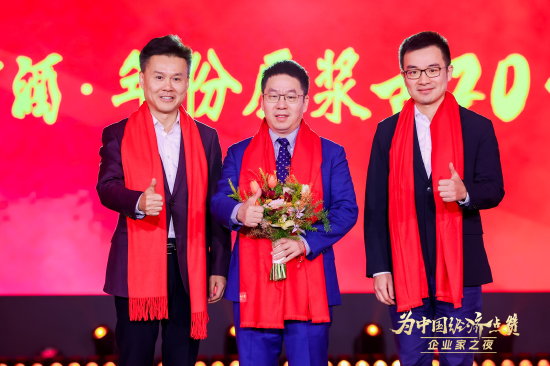
Core Insights - The event "Praise for China's Economy - Entrepreneur Night" was held on January 29 in Beijing, where Liu Debing, Chairman of Zhipu, received recognition [1][7] - The event highlighted the significant contributions of Zhipu in artificial intelligence (AI) foundational research and key technologies, emphasizing their commitment to independent R&D [3][9] Group 1: Company Achievements - Zhipu has made remarkable efforts in AI foundational research, establishing a strong presence in the global market with their open-source models [3][9] - The company launched its algorithm architecture GLM in 2021, and the release of GLM4.7 this year has positioned their model among the world's leading technologies, laying a solid foundation for pursuing Artificial General Intelligence (AGI) [6][12] Group 2: Leadership Perspectives - Liu Debing expressed that the honor received is a collective achievement of the entire Zhipu team, highlighting their long-term commitment and investment in making machines think like humans [5][12] - Chen Xudong, Chairman of IBM Greater China, acknowledged Zhipu's pioneering role in the market with their large model, wishing them continued success [3][9] - Chen Wei, Chairman of CITIC Publishing Group, emphasized the importance of having outstanding entrepreneurs and tech leaders in the new wave of technology [4][10]

兴通股份:公司已接入智谱大模型,逐步开展船舶作业环境风险识别等场景应用
Zheng Quan Ri Bao Zhi Sheng· 2026-01-08 12:09
Core Viewpoint - The shipping industry is accelerating its transformation towards intelligence, and the company is actively embracing technological changes to enhance safety management through AI applications [1] Group 1: Company Initiatives - The company has integrated the Zhipu large model to gradually develop applications for risk identification in ship operational environments [1] - The company aims to explore the integration of artificial intelligence technology with the shipping industry to drive innovative development [1] Group 2: Industry Trends - The shipping industry is undergoing a shift towards smart transformation, indicating a broader trend in the sector towards increased automation and intelligence [1] - The focus on enhancing safety management through intelligent solutions reflects the industry's commitment to improving operational standards and risk management [1]

智谱突击上市背后:烧钱百亿却赚不过小团队,模型神话该破了
Sou Hu Cai Jing· 2025-12-30 03:30
Core Viewpoint - The article discusses the urgent need for Chinese AI large model companies to go public in Hong Kong due to financial difficulties, highlighting that technological superiority does not guarantee product success in the industry [1]. Group 1: Urgency for IPO - AI companies like Zhipu and MiniMax are rapidly submitting their prospectuses and have passed the Hong Kong Stock Exchange's hearing, aiming to list within four weeks [3]. - The speed of their IPO process is facilitated by the Hong Kong Stock Exchange's "Tech Company Fast Track," which lowers entry barriers and allows for confidential submissions [3]. Group 2: Financial Struggles - Zhipu has only 25.5 billion in cash left and incurred a loss of 24 billion in the first half of the year, indicating a critical financial situation [5]. - MiniMax has a better cash position with 74 billion but has faced significant losses, including 33 billion last year and 36 billion in the first nine months of this year, risking insolvency without further funding [5]. Group 3: Revenue Discrepancies - The spending in the AI sector is substantial, with high salaries for talent and expensive model training, leading to a cash burn rate that is unsustainable [6]. - Zhipu's total revenue last year was only 3.12 billion, while MiniMax's was even lower at 2.18 billion, which is drastically less compared to OpenAI's projected revenue of 13 billion this year [8]. Group 4: Market Competition - Smaller teams in the AI sector are outperforming larger companies like Zhipu and MiniMax in terms of revenue, despite having fewer resources [10]. - Companies like Lovart and Genspark are generating significant income by leveraging existing models rather than developing their own, challenging the notion that owning a model equates to market success [11]. Group 5: User Preferences - The success of AI products is increasingly determined by their usability rather than the sophistication of the underlying models, as evidenced by user preferences shifting between different AI tools based on functionality [13].

To B的智谱和To C的MiniMax,大模型生意都很难做
经济观察报· 2025-12-24 13:48
Core Viewpoint - The two companies, Zhipu and MiniMax, represent distinct commercialization paths in the AI large model sector, with Zhipu focusing on the B-end market and achieving a gross margin of 50%, while MiniMax targets the C-end market with over 70% of its revenue coming from overseas [2][4]. Group 1: Financial Performance - From 2022 to mid-2025, Zhipu accumulated revenue of 685 million yuan, with cumulative losses exceeding 6.2 billion yuan [4]. - MiniMax reported cumulative revenue of 86 million USD (approximately 600 million yuan) and cumulative losses of about 1.32 billion USD (approximately 9.3 billion yuan) from 2022 to September 2025 [5]. - Both companies operate at a revenue scale in the billion range, with MiniMax's revenue for the first nine months of 2025 being 53.4 million USD (approximately 376 million yuan) and Zhipu's revenue for the same period being 190 million yuan [6]. Group 2: Market Position and Competition - Zhipu's B-end business primarily serves large domestic government and enterprise clients, while MiniMax's C-end business relies on overseas individual users [5][10]. - Zhipu's revenue from enterprise deployments has decreased from 95% to 85% over the past three years, indicating increased competition in the B-end market [8]. - MiniMax's average monthly active users reached 27.6 million, with 1.77 million paying users, but still lagging behind major internet companies [8][9]. Group 3: Investment and Costs - Both companies face significant capital requirements, with Zhipu and MiniMax's cumulative R&D investments being 4.4 billion yuan and 500 million USD (approximately 3.5 billion yuan), respectively [6]. - In the first half of 2025, Zhipu's computing power expenditure was 1.1 billion yuan, while MiniMax's was 140 million USD (approximately 987 million yuan) [7]. - The high costs associated with computing power present a challenge for both companies, as they need to balance low revenue with substantial operational expenses [7]. Group 4: Future Outlook and IPO Strategy - Both companies are vying for the title of the first AI large model stock, with the urgency to go public for financing and providing an exit for external shareholders [12]. - MiniMax has a more robust cash position, with cash reserves of 1.04 billion USD (approximately 733.4 million yuan) as of September 30, 2025, compared to Zhipu's 2.5 billion yuan [12]. - The cash burn rate for Zhipu increased to approximately 2.21 million yuan per month in the first half of 2025, indicating a growing financial strain [12].

技术突围与资本共振: 人工智能赛道涌现上市潮
Zhong Guo Zheng Quan Bao· 2025-12-22 20:37
Core Insights - The Chinese AI industry is experiencing a significant capital market influx, with companies like Zhipu and MiniMax aiming for IPOs, indicating a critical phase of commercialization in AI technology [1][2] - The AI sector is projected to grow rapidly, with the core industry expected to exceed 900 billion yuan in 2024 and potentially surpass 1.2 trillion yuan in 2025, reflecting a 24% growth rate [1][6] - Despite the rapid growth, challenges such as high costs and low returns in AI applications persist, necessitating patience from investors [1][7] Company Summaries - Zhipu, established in 2019, has empowered over 12,000 enterprise clients and 80 million terminal devices, leading the independent general-purpose AI model market in China with a 6.6% market share [2] - MiniMax, founded in early 2022, has rapidly developed a product matrix for both C-end and B-end users, reaching over 2.12 million personal users and 130,000 enterprise clients across more than 200 countries [2] - Both Zhipu and MiniMax have shown substantial revenue growth, with Zhipu's revenue increasing from 57.4 million yuan in 2022 to 312.4 million yuan in 2024, and MiniMax's revenue projected to grow from 3.46 million USD in 2023 to 30.52 million USD in 2024 [5] Market Trends - The demand for AI models is surging, with daily token consumption in China exceeding 30 trillion by mid-2023, reflecting a 300-fold increase within a year [5] - The AI chip market is also thriving, with companies like MoEr Thread and MuXi achieving significant market valuations, indicating a robust demand for underlying computational power [2][3] - The global AI market is expected to reach 900 billion USD by 2026, with China being one of the fastest-growing markets, projected to exceed a 30% growth rate [6] Application Challenges - The integration of AI into various industries is facing structural challenges, particularly in manufacturing, where AI's penetration remains limited due to data accessibility and reliability issues [7][8] - The high consumption of data and computational resources raises concerns about the unclear commercial return paths for AI investments, with many companies currently operating at a loss [8][9] - There is a pressing need for improved data sharing and high-quality datasets to enhance AI model performance and facilitate broader adoption, especially among SMEs [7][8]
技术突围与资本共振:人工智能赛道涌现上市潮
Zhong Guo Zheng Quan Bao· 2025-12-22 20:19
Core Insights - The article highlights the rapid growth and capital market entry of domestic AI companies, particularly focusing on the unicorns Zhiyu and MiniMax, as they aim to become the first publicly listed companies in the large model AI sector in Hong Kong [1] - The AI industry is experiencing a critical phase of capitalization, with significant revenue growth and high R&D investments, although many companies are still operating at a loss [1][8] - The Chinese AI market is projected to exceed 1.2 trillion yuan by 2025, with a growth rate of 24% in 2024, indicating a robust expansion of the industry [1][6] Company Summaries - Zhiyu, established in 2019, has empowered over 12,000 enterprise clients and 80 million end-user devices, leading the independent large model developers in China with a market share of 6.6% [2] - MiniMax, founded in early 2022, has rapidly developed a product matrix for both C-end and B-end users, reaching over 2.12 billion personal users and 130,000 enterprise clients across more than 200 countries [2] - Both companies have shown impressive revenue growth, with Zhiyu's revenue increasing from 57.4 million yuan in 2022 to 312.4 million yuan in 2024, and MiniMax's revenue projected to grow from 3.46 million USD in 2023 to 30.52 million USD in 2024 [5] Industry Trends - The demand for AI models is surging, with China's daily token consumption reaching over 30 trillion by mid-2023, reflecting a growth of over 300 times in just a year and a half [4] - The AI chip market is also thriving, with domestic GPU manufacturers like Moer and Muxi seeing significant stock price increases and market valuations exceeding 300 billion yuan and 280 billion yuan, respectively [2] - The AI industry is expected to continue expanding, with projections indicating that the global AI market could reach 900 billion USD by 2026, driven by technological innovations and applications across various sectors [6] Application Challenges - Despite the rapid growth, the AI sector faces structural challenges, particularly in integrating AI into core industrial processes, where the adoption rate remains uneven [7] - The high costs and low returns associated with AI applications are limiting widespread adoption, especially among small and medium-sized enterprises [8] - The need for improved data sharing and high-quality datasets is critical for enhancing AI model performance and achieving better commercial outcomes [7][8]
亏损62亿,估值超240亿,腾讯阿里参投,大模型第一股来了
2 1 Shi Ji Jing Ji Bao Dao· 2025-12-20 08:25
Core Viewpoint - Beijing Zhiyu Huazhang Technology Co., Ltd. (Zhiyu) has submitted its prospectus to the Hong Kong Stock Exchange, marking the first complete financial disclosure among the "AI Six Tigers" [1][2]. Financial Performance - Zhiyu's revenue for 2022, 2023, and 2024 is projected to be RMB 57.4 million, RMB 124.5 million, and RMB 312.4 million, respectively, with a compound annual growth rate (CAGR) of 130% [2]. - The company reported net losses of RMB 1.43 billion, RMB 7.88 billion, and RMB 29.58 billion for 2022, 2023, and 2024, respectively, with a cumulative loss exceeding RMB 6.2 billion [2][4]. - Gross margins have remained above 50%, with figures of 54.6%, 64.6%, 56.3%, and 50.0% for the years 2022, 2023, 2024, and the first half of 2025 [2][4]. Business Model - Zhiyu operates a dual-driven business model focusing on localized deployment for B-end and G-end clients, which accounted for 84.5% of revenue in 2024, while cloud deployment contributed 15.5% [5]. - The company aims to increase the revenue share from its API business to 50% [7]. Market Position - According to Frost & Sullivan, Zhiyu ranks first among independent general model developers in China and second overall, with a market share of 6.6% in 2024 [2]. Client Base and Growth - As of the first three quarters of 2025, Zhiyu has served over 12,000 institutional clients, showing significant growth [3]. - The company anticipates a revenue increase of over 60% year-on-year for Q3 2025, despite expected widening net losses due to substantial R&D expenditures [3]. Strategic Initiatives - Zhiyu has initiated the "Z Plan" to foster an ecosystem for large model entrepreneurs, providing resources and technical support to early-stage startups [8][9]. - The company has also established a venture capital fund, "Z Fund," with a management scale of RMB 1.5 billion, investing in several startups [9]. International Expansion - Zhiyu is actively expanding its overseas business, particularly in Southeast Asia, where it has begun generating revenue from localized deployment services [10]. - The company is involved in building international alliances for AI infrastructure, positioning itself as "China's OpenAI" [8][10]. Funding and Valuation - Since its inception, Zhiyu has completed eight rounds of financing, raising over RMB 8.3 billion, with a post-financing valuation of approximately RMB 24.38 billion [11][12].
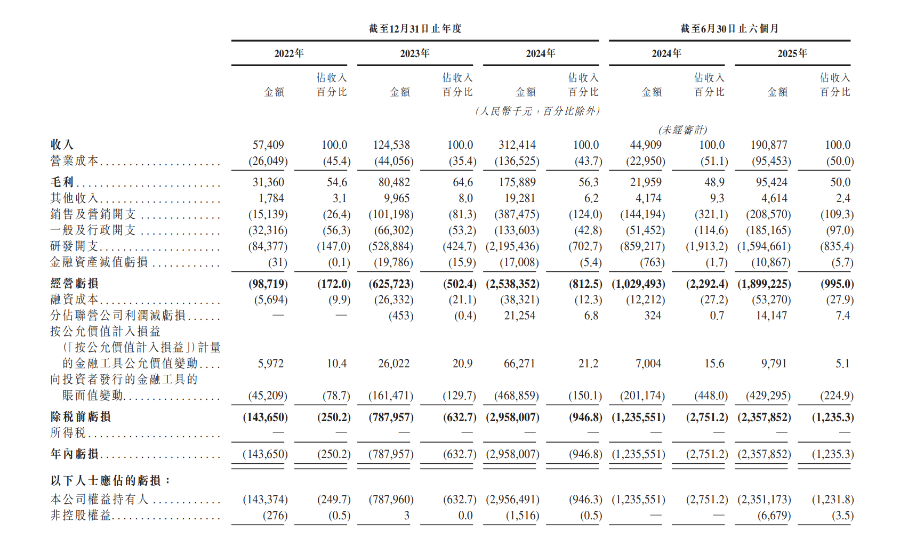
智谱毛利率稳定保持50%以上 港股迎来“全球大模型第一股”
Zheng Quan Ri Bao Wang· 2025-12-19 14:14
Core Insights - The article discusses the financial performance and growth trajectory of a company specializing in large models, highlighting its significant revenue growth and high gross margins. Group 1: Financial Performance - The company reported revenues of 57.4 million, 124.5 million, and 312.4 million for the years 2022, 2023, and 2024 respectively, achieving a compound annual growth rate of 130% over these three years [1] - The gross margins for the years 2022, 2023, and 2024 were 54.6%, 64.6%, and 56.3% respectively, with a gross margin of 50% reported for the first half of 2025 [2] Group 2: Market Position and Technology - The company has empowered over 12,000 enterprise clients, more than 80 million end-user devices, and over 45 million developers, making it the largest independent general-purpose large model vendor in China [2] - Established in 2019, the company is recognized for its original GLM pre-training architecture and has developed a comprehensive model matrix covering language, code, multimodal, and intelligent agents [2] - The company has a high R&D investment, with expenditures of 84.4 million, 528.9 million, and 2.1954 billion for the years 2022, 2023, and 2024, and 1.5947 billion in the first half of 2025, totaling approximately 4.4 billion in R&D investments [2] Group 3: Investment and Industry Impact - The company has received recognition from various investment institutions, including state-owned enterprises and venture capital firms, completing eight rounds of financing totaling over 8.3 billion [3] - As the first company among the "six small dragons" of large models to initiate an IPO, it aims to become the "first global large model stock," marking a significant milestone in the transition of China's AI large model industry from a technology race to capital validation [3] - The IPO is expected to provide global investors with an opportunity to share in the technological dividends of China's AI foundational layer, potentially reshaping the valuation logic of Chinese tech stocks in the capital market [3]
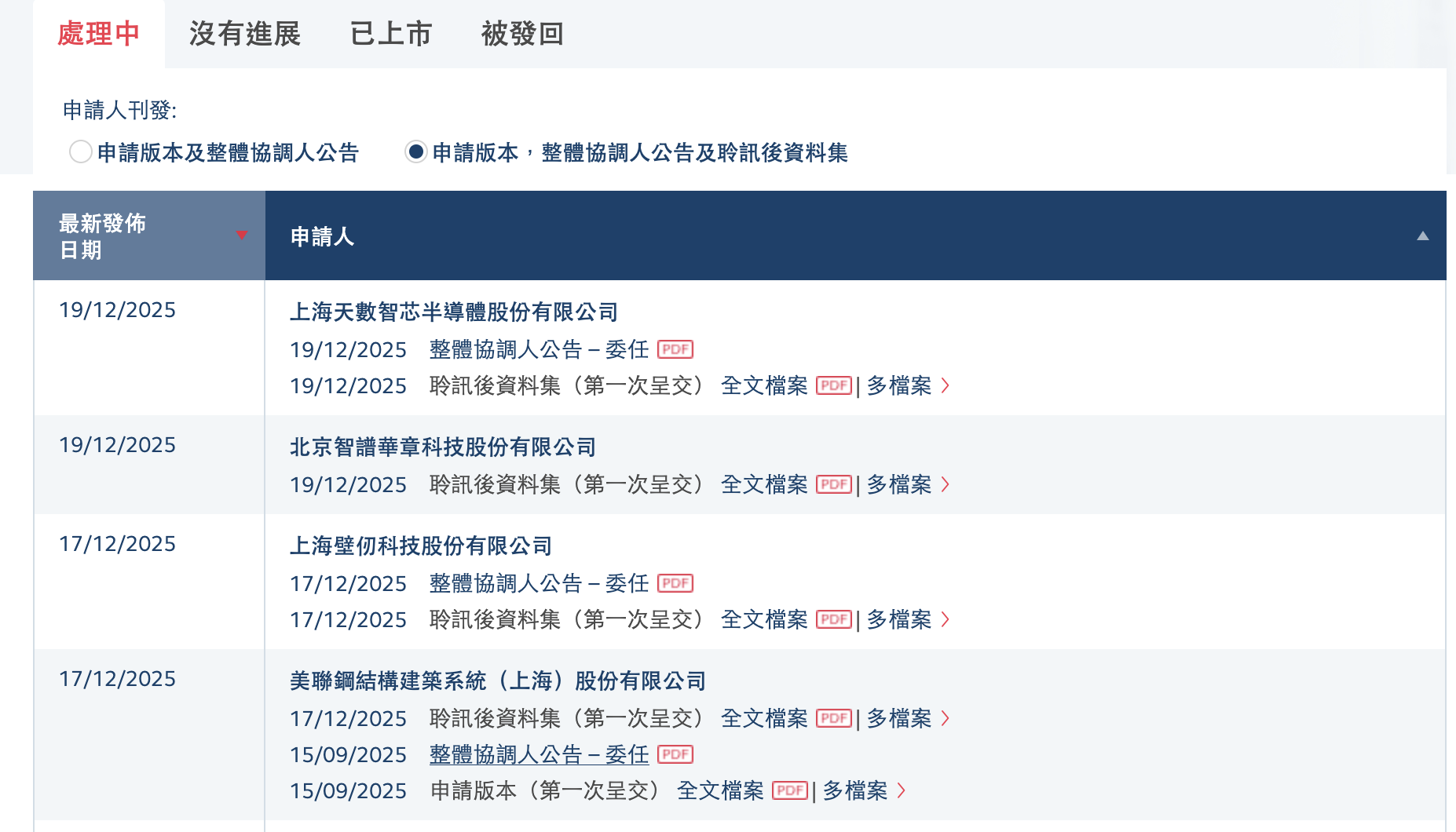
智谱正式披露招股书 或将成“全球大模型第一股”
Zheng Quan Shi Bao Wang· 2025-12-19 13:50
Core Viewpoint - Beijing Zhipu Huazhang Technology Co., Ltd. (referred to as Zhipu) officially disclosed its prospectus on December 19, marking a significant step towards its IPO, with a strong revenue growth forecast for the coming years [1] Financial Performance - Revenue projections for Zhipu are as follows: 57.4 million in 2022, 124.5 million in 2023, and 312.4 million in 2024, indicating a doubling of revenue for three consecutive years [1] - The compound annual growth rate (CAGR) from 2022 to 2024 is expected to reach 130% [1] - Gross margin has consistently remained above 50%, with specific rates of 54.6% in 2022, 64.6% in 2023, and 56.3% in 2024, and a projected 50% for the first half of 2025 [1] Market Position - Zhipu has empowered over 12,000 enterprise clients globally, with more than 80 million terminal user devices and over 45 million developers, making it the largest independent general-purpose large model vendor in China [1] - Established in 2019, Zhipu is one of the earliest companies in China to develop large models and is positioned to potentially become the "first stock of global large models" [1]