人才本地化

Search documents
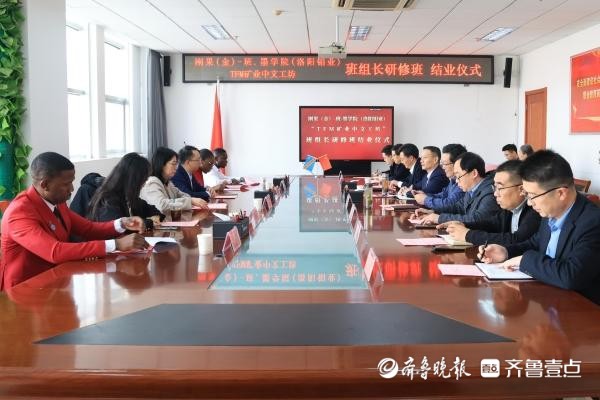
枣科举行“TFM矿业中文工坊”班组长研修班结业仪式
Qi Lu Wan Bao· 2026-01-20 07:18
Group 1 - The training program for Congolese team leaders at the Banmo Academy, organized by Luoyang Molybdenum Co., Ltd., is part of the "Vocational Education Going Global" strategy and aims to deepen school-enterprise cooperation and international exchange [3][4] - The program lasted for two months and included a unique training system that combines "Chinese + vocational skills," covering production management, professional skills, and Chinese culture [3][4] - Graduates of the program have not only mastered professional skills but also improved their Chinese communication abilities and gained a deeper appreciation for traditional Chinese culture, becoming cultural ambassadors for Sino-Congolese exchanges [4] Group 2 - The successful completion of the training program is highlighted as a vivid example of deepening school-enterprise collaboration and promoting international vocational education cooperation [5] - The academy plans to continue optimizing the "Chinese + vocational skills" training model and deepen strategic cooperation with the Nonferrous Metals Industry Talent Center and Luoyang Molybdenum Group [5] - The "Chinese Workshop" is envisioned to become a linguistic bridge for Sino-Congolese friendship, while the Banmo Academy aims to be a nurturing ground for mining talent, contributing to international capacity cooperation [5]


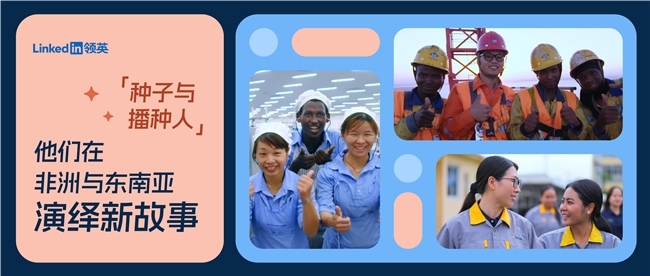
“种子与播种人”,他们在非洲与东南亚演绎新故事
Feng Huang Wang Cai Jing· 2025-12-18 07:33
Core Insights - Chinese companies have a long history of expanding into underdeveloped markets in Africa and Southeast Asia, bringing advanced technology and business concepts while establishing brand reputation and industrial ecosystems [2] - Recent developments show that these markets are evolving, with local entrepreneurship and modern industrial parks emerging, challenging the traditional business models that Chinese companies have relied on [2] - Companies like Senda Group and Sailun Group are adopting a more localized approach, focusing on understanding and integrating into local markets rather than imposing a singular value perspective [2] Group 1: Senda Group's Strategy - Senda Group has been operating in Africa since its establishment in 2004, becoming a leading player in the building materials and fast-moving consumer goods sectors [3] - The company has developed a vast sales network across Africa, overcoming challenges related to the continent's diverse market conditions and consumer behaviors [4] - Senda's transformation into a "trade and manufacturing integration" model began in 2015, focusing on local investment and hiring to better meet consumer needs [5] Group 2: Consumer Insights and Localization - Senda Group recognizes the structural differences in consumer spending power across Africa, with both low-income groups and an emerging middle class [5] - The introduction of smaller packaging for products like diapers and sanitary pads has made quality hygiene products more accessible to families, addressing a significant market gap [5] - The company has achieved a 90% local employee ratio, enhancing its understanding of consumer needs through localized talent development programs [5] Group 3: Sailun Group's Approach - Sailun Group has established manufacturing bases in Southeast Asia, focusing on building a resilient supply chain while addressing the talent gap in local markets [8] - The company has partnered with local technical schools to cultivate local talent, ensuring that management positions are filled by local employees [8] - Sailun emphasizes an inclusive work environment and empowers local staff, fostering a sense of trust and commitment to the company's long-term success [9]
香港大学教授谭亮:三大维度打造中国企业出海“硬实力”
2 1 Shi Ji Jing Ji Bao Dao· 2025-12-17 07:59
Core Insights - The article highlights the ongoing wave of Chinese enterprises going global, with significant growth in exports and foreign direct investment, particularly in Belt and Road Initiative countries [1][3] - It emphasizes the structural changes in the outbound environment, necessitating a focus on AI as infrastructure, localization as a core strategy, and intergenerational collaboration as a driving force for success [1][2] Group 1: Changes in Outbound Environment - The outbound environment has undergone significant changes in policy compliance, competitive landscape, and localization demands [3] - Key changes in policy compliance include fluctuations in tariff policies, upgraded ESG (Environmental, Social, and Governance) requirements, and increasing complexity in data compliance [5][4] - The competitive landscape has shifted from predominantly large enterprises to a broader range of small and medium-sized enterprises, creating a "co-opetition" dynamic among Chinese companies [5][6] Group 2: Localization and Talent Management - Localization demand has intensified, with companies needing to transition from pure export to localized operations [5][6] - Challenges in balancing global strategies with local execution include misconceptions from headquarters, organizational structure issues, and talent management difficulties [7][8] - Companies are encouraged to promote local talent to better adapt to overseas market developments [8] Group 3: Role of AI in Outbound Strategy - AI is increasingly recognized as essential infrastructure for outbound enterprises, enhancing capabilities in market research, supply chain management, marketing, customer service, and compliance [9][10] - Specific applications of AI include efficient market research, improved supply chain efficiency, enhanced marketing strategies, 24/7 customer service, and risk identification in compliance [10][11] Group 4: Recommendations for Enterprises - Companies are advised to fully embrace AI as a core support for outbound strategies [11] - There is a need to solidify internal capabilities as enterprises evolve from product export to capability, rule, and brand export [11] - Emphasizing intergenerational collaboration can turn differences into opportunities for mutual learning and growth [11]
华人撑起AI世界?这组数据太震撼了!
21世纪经济报道· 2025-07-03 09:50
Core Insights - The rise of Chinese AI talent is a significant phenomenon in the global technology landscape, with a notable increase in the number of top AI researchers from China [4][5][6] Group 1: Talent Acquisition and Movement - Nvidia's CEO Jensen Huang has recently recruited two prominent Chinese AI experts, Banghua Zhu and Jiantao Jiao, highlighting the demand for Chinese talent in the AI sector [2] - Meta has also been actively recruiting Chinese researchers, with at least four out of seven core researchers recently hired from OpenAI being Chinese [3] Group 2: Educational and Institutional Support - The proportion of top AI talent from Chinese universities has increased from 27% in 2019 to 38% in 2022, surpassing that from U.S. universities [4] - The Chinese education system has undergone reforms, leading to the establishment of over 600 AI-related programs in universities by 2024, which has contributed to the growth of local talent [5][6] Group 3: Innovation and Patent Activity - Since 2017, the number of patent applications in generative AI has surged by over 800%, with China leading in the number of new generative AI patents, accounting for 61.5% of the total in 2024 [6] - Chinese companies like DeepSeek are demonstrating the capability to independently develop cutting-edge AI technologies, indicating a shift towards self-sufficiency in AI innovation [6] Group 4: Challenges and Future Outlook - Despite the rapid growth of AI talent, there are still significant challenges, particularly in foundational technologies like high-end chips [8] - A McKinsey report predicts a shortage of 4 million high-skilled AI talents in China by 2030, emphasizing the need for a balanced approach in talent cultivation, foundational research, and global collaboration [8]