价值共振

Search documents
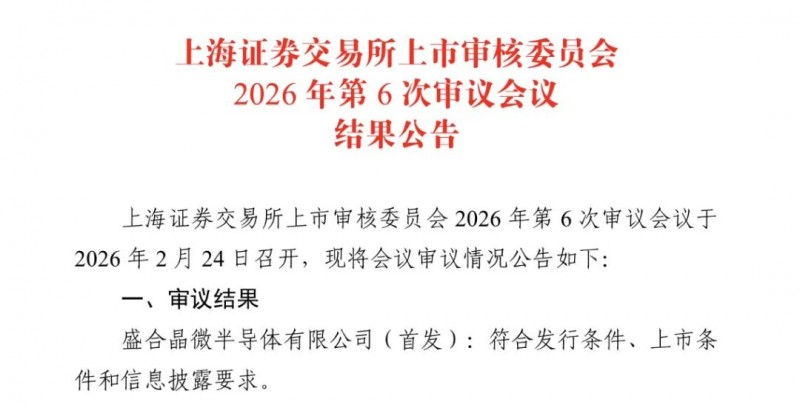
盛合晶微科创板首发过会 坤元资产FOF生态圈迎“马年开门红”
Cai Fu Zai Xian· 2026-02-26 07:28
Core Insights - Shenghe Jingwei Semiconductor Co., Ltd. has successfully passed the IPO approval for the Sci-Tech Innovation Board, marking it as the first company to achieve this in the Year of the Horse [1][2] - The company is the first and only enterprise in mainland China to achieve large-scale production of 2.5D silicon-based chip packaging technology, showcasing its strategic rise supported by Kunyuan Asset's FOF ecosystem [1] Industry Trends - The AI boom is reshaping the global technology landscape, with computing power becoming a focal point in the semiconductor industry, as evidenced by IDC's prediction that China's computing power will reach 1,460.3 EFLOPS by 2026, doubling from 2024 [3] - The demand for high-performance chip manufacturing is surging, with industry experts noting that computing power demand is doubling every 3 to 4 months, necessitating new evolution paths in the semiconductor sector [4] Company Performance - Shenghe Jingwei is recognized as one of the largest and fastest-growing advanced packaging enterprises globally, ranking as the 10th largest and 4th largest in mainland China according to Gartner [6] - The company has the largest 12-inch bumping capacity in mainland China and is the first to provide 14nm advanced process bumping services, filling a critical gap in the high-end integrated circuit manufacturing chain [6] - In the 2.5D packaging market, Shenghe Jingwei holds an impressive 85% market share in mainland China, demonstrating its leading position in this technology [7] Financial Aspects - Shenghe Jingwei plans to raise 4.8 billion yuan through its IPO to invest in three-dimensional multi-chip integration packaging projects and enhance its manufacturing capacity for advanced packaging technologies [7] - The company’s revenue growth rate from 2022 to 2024 is the highest among the top ten global enterprises in the advanced packaging sector [6] Strategic Vision - Kunyuan Asset emphasizes the importance of "patient capital" in supporting hard technology breakthroughs, fostering a collaborative investment ecosystem that nurtures leading tech companies [8] - The successful IPO of Shenghe Jingwei is seen as a testament to the deep trust and mutual achievement between capital and technology, highlighting the potential for significant industrial advancement driven by the synergy of computing power, core algorithms, and intelligent terminals [9]

新茶饮2026:一半是深海,一半是远洋
3 6 Ke· 2026-01-05 12:57
Core Insights - The new tea beverage industry is reaching its ceiling, with contrasting signals indicating the end of a chaotic growth phase and a shift towards stability and efficiency [1][2] - The industry growth rate is projected to stabilize between 5%-7% in the first three quarters of 2025, similar to the previous year, leading to a more strategic competition focused on brand loyalty and operational efficiency [2][20] Industry Trends - Product innovation has shifted from a focus on sensory stimulation to becoming a "meaning anchor" for consumers' lifestyle and emotional needs [3] - The controversy surrounding the pricing strategy of brands like Mixue Ice City highlights the risks of straying from established brand perceptions [4][5] Brand Strategies - Successful brands are transitioning towards health-oriented products, emphasizing low-calorie and functional ingredients to align with consumer trends towards healthier lifestyles [6] - The evolution of co-branding strategies reflects a deeper engagement with consumers, moving from simple logo placements to creating shared values and experiences [7] Retail Dynamics - The role of physical stores is evolving from mere distribution points to brand experience centers that collect data and provide localized services [8][9] - The focus is shifting towards optimizing store efficiency and creating unique customer experiences that cannot be replicated online [9][11] Market Expansion - Brands like Mixue Ice City are rapidly expanding internationally, leveraging their successful domestic models in emerging markets, while others like Nayuki and Heytea are focusing on cultural branding in developed markets [17][18] - The competition will increasingly hinge on supply chain efficiency and the ability to adapt to local markets, with successful brands needing to balance cost control with product innovation [14][15][19] Future Outlook - The tea beverage industry is expected to surpass a market size of one trillion yuan by 2026, with growth concentrated among leading brands, making it challenging for smaller players to survive [20][21] - The industry is entering a phase of intense competition and consolidation, where only brands with robust supply chains and operational capabilities will thrive [21]

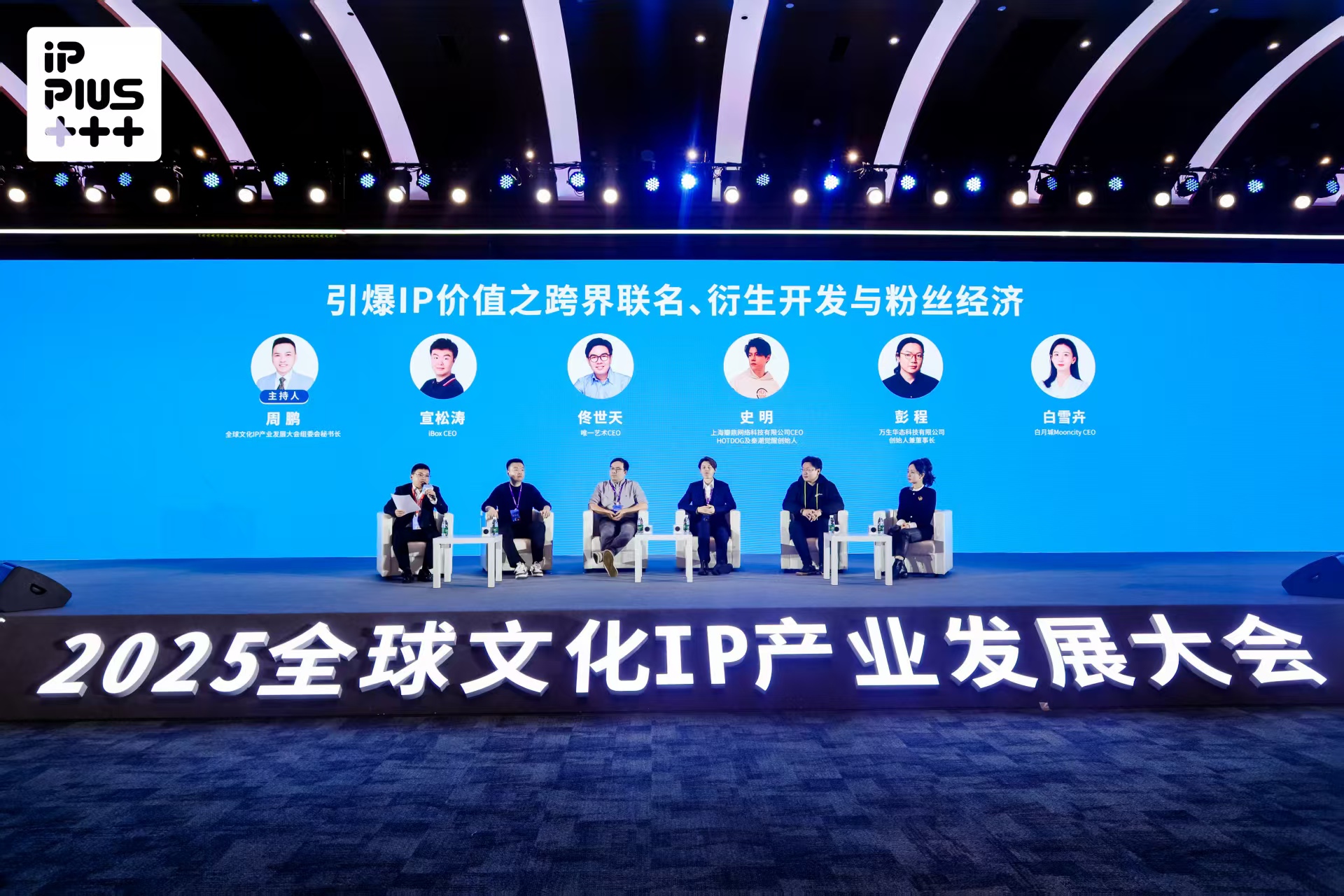
圆桌对话:跨界联名不止“流量互换”,数字文创加速走向“二次破圈”
Xin Lang Cai Jing· 2025-12-30 09:04
Core Insights - The 2025 Global Cultural IP Industry Development Conference will be held in Shanghai on December 26-27, focusing on cross-border collaboration, derivative development, and fan economy [1][11] - The roundtable discussion emphasized that the underlying logic of cross-border collaboration is "value resonance" rather than mere "traffic exchange" [7][10] Group 1: Cross-Border Collaboration - The key to successful brand collaboration lies in understanding user profiles and mentalities, aiming for a co-creation approach that achieves "1+1 greater than 2" [5][9] - Successful partnerships should not focus on one-way traffic but rather on creating a sustainable symbiotic relationship through shared values [5][10] Group 2: Digital Asset Transformation - The process of transforming real assets into digital assets involves meticulous planning, scanning, and standardization to ensure multi-platform adaptability [6][10] - The digitalization process can be likened to film production, where pre-selection and planning determine the value of the material, and rigorous scanning processes are essential [6][9] Group 3: Productization and Commercialization - The transition from "hit products" to a "product matrix" allows for the extension of cultural narratives into related product categories, enhancing capabilities across various fields [10] - Platforms should select IP based on user demographics, with a focus on anime and second-dimensional content for younger audiences [10] Group 4: Future Outlook - Industry experts foresee a shift towards breaking boundaries and ecological collaboration, moving beyond single digital collectible forms to a combination of virtual and real-world interactions [10] - The emphasis on compliance and standardization will lead to broader participation in digital cultural creation, viewed as a viable business opportunity [10]
AI浪潮下的B2B营销快速破局秘籍:让技术成为桨,而非枷锁
Sou Hu Cai Jing· 2025-12-24 10:44
Core Insights - The rise of AI, particularly generative AI like ChatGPT, has transformed various industries, leading to a proliferation of similar content that lacks originality, posing challenges for B2B marketers [2][4] - The over-reliance on AI for content creation risks diminishing the unique brand personality and emotional connection that human marketers can provide [4][6] - Effective B2B marketing requires a balance between leveraging AI's capabilities and maintaining human creativity and emotional intelligence [18][20] Group 1: Challenges of AI in Marketing - The phenomenon of "algorithmic echo chambers" results in marketers becoming mere quality inspectors of AI-generated content, leading to a lack of differentiation [2] - AI's inability to grasp the deeper narratives and personalities of brands results in generic content that fails to resonate with audiences [4] - A case study illustrates that personalized, human-crafted communication significantly outperforms generic AI-generated emails in terms of response rates, highlighting the importance of understanding client needs [6] Group 2: Strategies for Effective AI Utilization - Marketers should position AI as an assistant, using it for data analysis and initial drafts while retaining control over strategic decisions and emotional connections [10][18] - AI can facilitate customized content creation by analyzing client-specific data, thereby enhancing the personalization of marketing efforts [12] - Utilizing AI for pre-event simulations can help marketers anticipate client reactions and refine messaging, ultimately increasing the likelihood of success [13][15] Group 3: Redefining Marketing Value - The future of B2B marketing lies in integrating AI's strengths with human capabilities, ensuring that technology enhances rather than replaces the marketer's role [18][20] - Successful marketing strategies will require professionals to be both technically adept and emotionally intelligent, fostering trust and understanding with clients [20] - The ongoing transformation driven by AI presents an opportunity to redefine marketing value, emphasizing the importance of human insight alongside technological efficiency [20]