企二代接班

Search documents
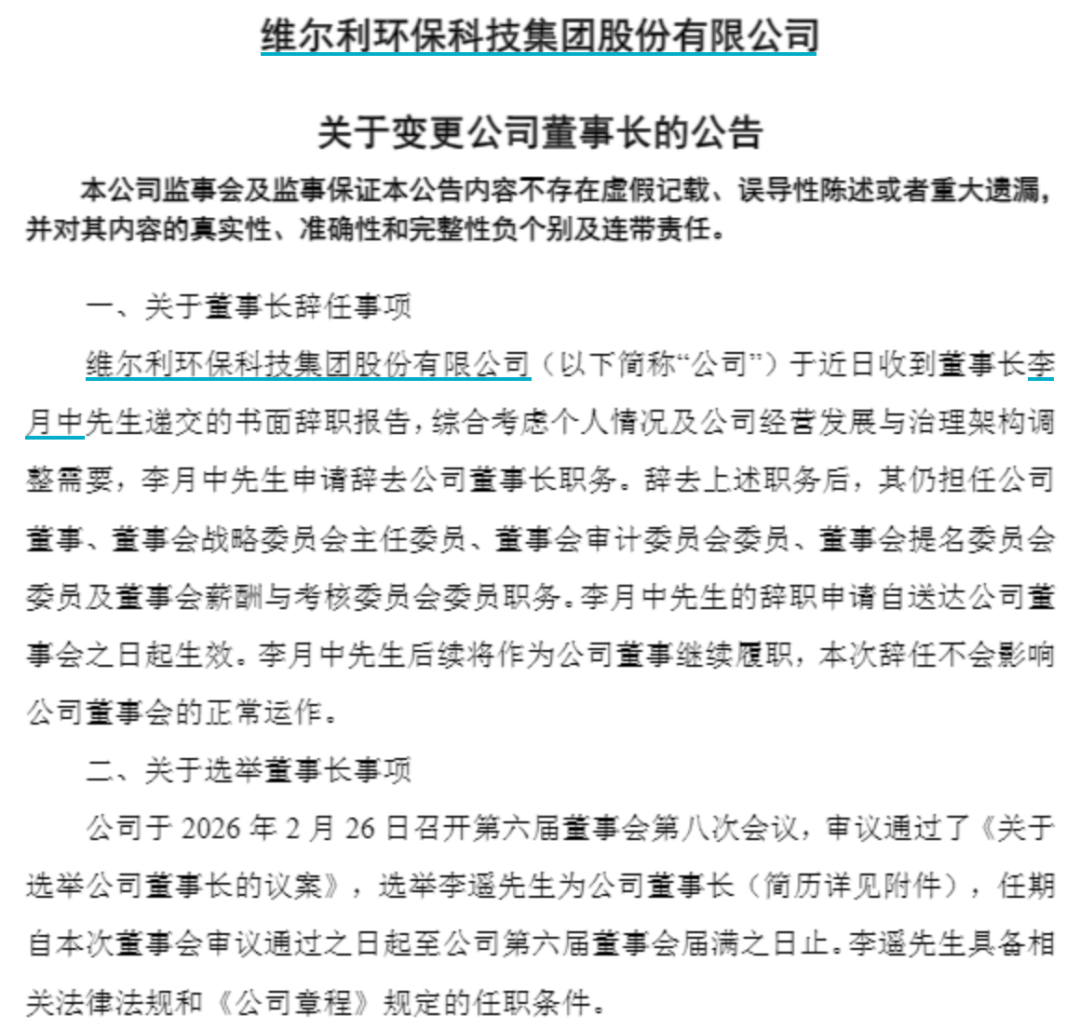
“90后”李遥,任上市公司董事长!公司已连亏3年,最新业绩预告仍亏损
Sou Hu Cai Jing· 2026-02-27 10:01
Core Viewpoint - The company is undergoing a leadership transition with Li Yao, the son of the founder Li Yuezhong, taking over as president while the company continues to face financial challenges, including three consecutive years of losses and a projected loss for 2025 that is expected to be significantly reduced compared to previous years [3][4][7]. Group 1: Leadership Transition - Li Yuezhong has resigned as chairman but remains involved in the company as a director and chairman of the strategic committee [1] - Li Yao, born in 1990, has been with the company since 2016 and has held various positions, including international department manager and group vice president, before becoming president in April 2023 [3][4] - Li Yao plans to increase his stake in the company by investing between 5 million to 10 million yuan, currently holding 422,800 shares, which is 0.05% of the total share capital [4] Group 2: Financial Performance - The company has reported net losses for three consecutive years: 450 million yuan in 2022, 197 million yuan in 2023, and 736 million yuan in 2024 [7] - For 2025, the company anticipates a net loss between 250 million to 350 million yuan, which represents a significant reduction of over 50% compared to the previous year [7] - The company is adjusting its business structure, focusing on stricter evaluations in traditional sectors, which has led to a decrease in overall revenue [9] - Operating cash flow is expected to improve, with an estimated 390 million yuan for 2025, indicating a positive trend in operational quality and financial status [9] Group 3: Company Background - Established in 2003 and listed in 2011, the company specializes in environmental technology across municipal, agricultural, and industrial sectors [4] - The company has evolved from a specialist in leachate treatment to a leader in organic waste resource utilization, holding a strong position in various niche markets [4] - The company currently employs over 2,000 staff and has more than 100 subsidiaries, with total assets nearing 100 billion yuan [4]

王思聪做“小生意”,郑裕彤长孙闯迪拜,“新贵老钱”如何破局?
Sou Hu Cai Jing· 2026-02-22 11:09
Core Viewpoint - The transition of leadership from the first generation of entrepreneurs to the second generation is reshaping the landscape of China's private economy, with the "second generation" becoming a key variable in the business world [2][3]. Group 1: Transition of Leadership - The "first generation" of entrepreneurs is gradually stepping back, while the "second generation" is either taking the stage or preparing to do so, marking a significant shift in power and wealth [2][3]. - The future of Chinese business is being shaped by the choices of the "second generation," who may either break through traditional barriers with new perspectives or face challenges that could leave opportunities for a new "first generation" [2][3]. Group 2: Notable Second Generation Entrepreneurs - Wang Sicong, a prominent figure among the "second generation," has shifted his focus from high-risk investments to more stable, cash-flow-driven businesses, indicating a potential change in strategy [6][9]. - Zheng Zhigang, from the Zheng family, has transitioned from managing a family business to independent entrepreneurship, focusing on innovative industries and global markets [10][12]. - The succession of leadership in Fuyao Glass, with Cao Hui taking over from his father Cao Dewang, is highlighted as a successful example of family business transition, with the company showing steady growth in revenue and profit [13][14][15]. Group 3: Financial Background of Second Generation - A trend is emerging where younger "second generation" members with backgrounds in finance are returning to family businesses, bringing with them experience in capital operations and compliance management [16][18][19]. - The entry of "00s" into leadership roles is becoming more common, with young leaders like Jin Xi and Nie Yipeng stepping into significant positions despite facing performance pressures [20][21]. Group 4: Challenges Faced by Second Generation - The "second generation" of Meike Home, led by Feng Lu, is struggling with significant financial losses, highlighting the difficulties in transitioning leadership while managing declining performance [22][24]. - The marriage between high-profile entrepreneurs, such as Gao Haichun and Zhang Junjie, reflects the ongoing dynamics of wealth and social capital in the business landscape, but both companies face their own operational challenges [25][28][29].


福建90后接班,押宝10倍大牛股赛道
投中网· 2026-01-08 02:23
Core Viewpoint - The recent leadership change at Jinziham (金字火腿) with the appointment of 90s-born Zheng Hu as president raises questions about the company's future direction and potential growth under new management [4][5]. Group 1: Leadership Transition - Zheng Hu, born in 1991, has taken over as president of Jinziham after a brief tenure of 5 months by the previous president, Guo Bo, who resigned for personal reasons [4][5]. - Zheng Hu's background includes significant experience in the luxury car sector, having worked with Aston Martin for 7 years, which may influence his strategic vision for Jinziham [5]. - The transition marks a generational shift in leadership, with Zheng Hu representing the second generation of the Zheng family in the company [6]. Group 2: Strategic Investments - Jinziham has diversified its investments, including a 300 million yuan stake in Zhongsheng Microelectronics, a company focused on optical communication chips [4][8]. - The company has established two wholly-owned semiconductor subsidiaries, indicating a strategic pivot towards high-tech industries [8]. - Zhongsheng Microelectronics has developed core chips for high-speed optical modules, which are crucial for the growing demand in AI and telecommunications [9]. Group 3: Market Trends - The optical communication industry is experiencing significant growth, with a projected compound annual growth rate of 17% from 2025 to 2030 [9]. - The domestic optical communication market is expected to reach approximately 147.3 billion yuan in 2024, with a compound annual growth rate of 5.67% from 2019 to 2024 [9]. - The shift towards domestic alternatives in high-end optical chips is accelerating, driven by policy support for self-sufficiency [9]. Group 4: Generational Shift in Business Leadership - The rise of "second-generation" entrepreneurs is notable, with many 90s and 00s born leaders stepping into significant roles, bringing fresh perspectives and strategies [13][14]. - These new leaders often have international educational backgrounds and diverse experiences, leading to a willingness to invest in high-growth sectors like AI, semiconductors, and biotechnology [14]. - The transition poses challenges, including the need to balance traditional business cash flow with long-term investments in technology [15].


福建90后接班,押宝10倍大牛股赛道
3 6 Ke· 2026-01-06 05:13
Group 1: Company Leadership Changes - The management of Jinziham (002515.SZ), known as the "first ham stock," has undergone a significant leadership change with the appointment of 90s-born Zheng Hu as the new president, following the resignation of Guo Bo after only five months [1][2] - Zheng Hu, born in 1991, has a background in luxury car sales, having worked with Aston Martin for seven years, which may influence his approach to leading the company [1][2] Group 2: Strategic Investments - Jinziham has diversified its investments by acquiring a 3 billion yuan stake in Zhongsheng Microelectronics, a company specializing in optical communication chips, indicating a strategic shift towards the semiconductor industry [1][3] - The company has established two wholly-owned semiconductor subsidiaries focused on integrated circuit design and chip development, with Zheng Hu as the legal representative [3] Group 3: Market Trends and Opportunities - The optical communication industry is experiencing significant growth, driven by AI computing, cloud expansion, and increasing bandwidth demands, with a projected compound annual growth rate of 17% from 2025 to 2030 for global optical communication chipsets [4] - Domestic market predictions estimate the optical communication market to reach approximately 147.3 billion yuan in 2024, with a compound annual growth rate of 5.67% from 2019 to 2024 [4] Group 4: Emerging Leadership Trends - The rise of "second-generation" entrepreneurs, such as Zheng Hu, reflects a broader trend where younger leaders are taking charge of family businesses, often with a focus on high-growth sectors like AI, semiconductors, and biotechnology [6][7] - A survey indicates that 7% of family-owned enterprises in A-shares have completed generational transitions, up from 4.6% in the previous year, highlighting a growing trend of younger leaders in the market [7]
毕马威中国杨嘉燕:全国超过四分之三的民营企业正面临代际传承的挑战
Zhong Guo Jing Ying Bao· 2025-11-22 10:24
Core Insights - The "14th Five-Year Plan" emphasizes the importance of invigorating various business entities and ensuring the legal and institutional support for the private economy, which is crucial for its high-quality development [1][4] Group 1: Challenges in Private Enterprises - Over 75% of private enterprises in China face challenges related to generational succession, with ownership typically remaining within the family while management rights are gradually shifting towards a more inclusive approach [1][6] - Issues such as governance structure flaws, succession risks, and the gap between professional managers and family trust are prevalent in private enterprises [1][6] Group 2: Importance of Private Economy - The private economy contributes over 50% of tax revenue, 60% of GDP, 70% of technological innovations, 80% of urban employment, and 90% of the total number of enterprises in China [1][4] - In 2024, the top 1,000 private enterprises are expected to increase their R&D investment to a total of 1.43 trillion yuan, marking a 2.78% growth from the previous year, accounting for 39.64% of national R&D expenditure [4][5] Group 3: Innovation in Private Enterprises - Private enterprises exhibit advantages in technological innovation due to their agility and rapid iteration capabilities, often resulting from a culture that embraces failure and continuous exploration [5][6] - Recommendations for enhancing innovation include strengthening early-stage technology validation, improving intellectual property protection, and diversifying financing channels for high-risk R&D projects [5][6] Group 4: Succession and Entrepreneurial Spirit - The transition of family businesses is increasingly becoming a focal point, with a need for practical experience in passing down the entrepreneurial spirit rather than relying solely on verbal transmission [6][7] - The new generation of entrepreneurs, often referred to as "second-generation entrepreneurs," typically possess higher educational backgrounds and global perspectives, which can facilitate digital transformation and international expansion [6][7]

从宗馥莉到王思聪,为何企二代陷“接班困局”?
Sou Hu Cai Jing· 2025-10-12 23:13
Core Insights - The resignation of Zong Fuli, the chairwoman of Wahaha Group, marks a significant shift in leadership after only one year, highlighting challenges in family business succession and generational conflicts in management philosophy [1][11][12] Group 1: Leadership Changes - Zong Fuli officially resigned from all positions at Wahaha Group on September 12, 2023, following confirmation from the shareholders' meeting and board of directors [1] - Her departure reflects deeper issues within the company regarding family business succession and the difficulties faced by the second generation in taking over [1][10] Group 2: Background and Experience - Zong Fuli studied at Occidental College in the United States, gaining international perspectives and modern management concepts before returning to China [2] - She began her career at a subsidiary of Wahaha, gradually accumulating practical experience before being named the successor by her father, Zong Qinghou, in 2018 [2] Group 3: Challenges Faced - Zong Fuli's attempts to modernize the brand and appeal to younger consumers faced resistance from traditional distributors and consumers, leading to a lack of success in new product launches [3][10] - The existing sales system, based on a vast network of distributors, created a culture resistant to change, complicating her efforts to implement data-driven decision-making and digital management [3][10] Group 4: Control and Trust Issues - A significant incident involved Zong Fuli's attempt to transfer 387 Wahaha trademarks to a company she controlled, which was halted by local authorities, revealing trust issues with the largest shareholder [6] - The resignation was reportedly triggered by compliance issues related to trademark usage, indicating a struggle for control within the mixed-ownership structure of the company [6][10] Group 5: Broader Implications for Second-Generation Leaders - Zong Fuli's experience is part of a larger trend where many second-generation leaders in Chinese family businesses face difficulties in succession, often due to a disconnect between modern management practices and traditional business models [10][11] - The cases of other second-generation leaders, such as Wang Sicong and Yang Huiyan, illustrate the challenges of stepping into established businesses and the potential pitfalls of pursuing independent ventures [9][10] Group 6: Future Considerations - The resignation signifies a transition into an uncertain era for Wahaha, emphasizing the need for family businesses to adapt and prepare for change to facilitate successful succession [11][13] - The narrative suggests that the success of second-generation leaders is less about their educational background and more about the organization's readiness for transformation [11][12]

宗馥莉辞职后,对遗产争夺案有什么影响?
首席商业评论· 2025-10-11 07:59
Group 1 - The core viewpoint of the article revolves around the resignation of Zong Fuli from Wahaha, which has sparked mixed reactions among entrepreneurs, with some supporting her decision as a courageous move towards personal brand development, while others criticize it as detrimental to the interests of Wahaha and its shareholders [2] - Zong Fuli's resignation is seen as a potential strategy to protect her inheritance rights, as she retains a 29% stake in the company, and it allows her to focus on external capital collaboration for her own brand [3] - The article discusses three possible trajectories for the inheritance dispute: peaceful division, capital restructuring, or escalation into legal battles, each with specific triggering conditions and outcomes [5][6] Group 2 - The transition from a power holder to a sidelined figure may garner some sympathy from public opinion, which could influence future developments [4] - Long-term success for Zong Fuli in her new venture will depend on the strength and number of her allies, particularly those outside the family, including professional managers, loyal old associates, and external capital supporters [6]
上市船舶企业公告老板被留置,儿子‘临危受命’
Sou Hu Cai Jing· 2025-07-07 13:20
Company Overview - Yaguang Technology, formerly known as Sunbird, is a major provider of yacht, business boat, and special boat system solutions in China, established in 2003 and listed in 2010 as the first yacht manufacturing public company in the country [2][3] - The company has a registered capital of 139.1 million yuan and total assets of 940 million yuan, with production bases in Hunan and Guangdong, and subsidiaries in multiple locations including the USA and Italy [2] Recent Management Changes - Li Ji has been appointed as the Vice General Manager of Yaguang Technology, following the leave of absence of his father, Li Yuexian, the company's actual controller and chairman, who is currently under investigation [1][7] - Li Ji has been with Yaguang Technology for several years and has served as a director of Chengdu Yaguang, assisting in business operations and capital management [1][7] Financial Performance - As of July 7, Yaguang Technology's stock closed at 6.40 yuan per share, marking a significant decline of 10.24%, which is the largest single-day drop for the stock this year [1] - On July 7, the stock price opened significantly lower, dropping over 12% at one point during trading, and closed down 9.4% at 6.46 yuan per share [4][5] Corporate Governance - The fifth board meeting of Yaguang Technology was held on July 6, where Li Ji's appointment was unanimously approved by the participating directors, despite his father being absent due to the ongoing investigation [7] - The company has stated that its production and management operations remain normal, with other board members and senior management continuing their duties [4][7]