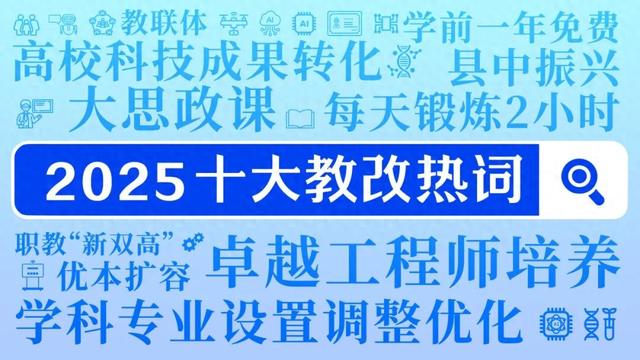
优本扩容

Search documents
“优本扩容”何以实现一举多得
Xin Lang Cai Jing· 2026-02-24 10:04
Core Viewpoint - The "Outline for Building a Strong Educational Nation (2024-2035)" emphasizes the strategic goal of fostering "outstanding innovative talents" but lacks clarity on the specific pathways to achieve this goal [1] Group 1: Strategic Goals and Mechanisms - The outline suggests exploring new models for discovering and cultivating outstanding innovative talents in strategic and emerging fields [1] - The outline proposes to "orderly expand the enrollment scale of quality undergraduate education" as a tactical measure to optimize higher education layout [1] Group 2: Paths for "Quality Undergraduate Expansion" - The first path for "quality undergraduate expansion" involves increasing the enrollment scale of first-year students at "Double First-Class" universities through the traditional college entrance examination, which may dilute the quality of talent [2] - The second path involves allowing "Double First-Class" universities to recruit third-year transfer students from other universities, which historically has been beneficial for fostering innovative talents [3] Group 3: Historical Context and Evidence - Historical examples from the Republic of China show that universities like Peking University and Tsinghua University successfully promoted innovative talents through transfer students [3] - In the 1950s, a planned transfer system at Peking University produced a large number of key talents in nuclear technology, demonstrating the effectiveness of the transfer model [3] Group 4: International Comparisons - The transfer model has been crucial in forming world scientific centers, with Germany and the United States emphasizing student mobility as a key feature for continuous talent emergence [3][4] - In the U.S., research universities actively recruit transfer students, allowing for a more flexible and efficient educational experience compared to first-year students [4] Group 5: Implications for Talent Development - The transfer model could theoretically double the scale of "quality undergraduate expansion," meeting the demand for quality universities more effectively [4] - By leveraging the strengths of both "Double First-Class" and other universities, the transfer model can enhance educational outcomes and align with the goals of optimizing higher education layout [4][5] - The transfer model provides empirical support for allowing underperforming students to access better developmental environments, making it a promising avenue for cultivating outstanding innovative talents [5]
二〇二五十大教改热词发布
Ren Min Ri Bao Hai Wai Ban· 2026-01-11 23:07
Core Viewpoint - The article discusses the implementation of a three-year action plan for building a strong education system in China, highlighting various reforms and initiatives aimed at improving educational quality and accessibility across different levels of education [10]. Group 1: Educational Reforms - The "Big Ideological and Political Course" aims to integrate social resources into education, enhancing the teaching of the Communist Party's stories and promoting national rejuvenation [11]. - The initiative "Daily Exercise for 2 Hours" mandates that primary and secondary school students engage in at least two hours of physical activity daily, as part of a broader effort to reform school sports [12]. - The "Adjustment and Optimization of Academic Programs" focuses on aligning higher education disciplines with national strategic needs, resulting in the establishment of new programs in fields like artificial intelligence and integrated circuits [13]. Group 2: Higher Education Initiatives - "University Technology Transfer" is emphasized as a key reform to enhance the integration of education, technology, and talent, facilitating the conversion of academic research into practical applications [14][15]. - The "Excellence Engineer Training" program aims to cultivate high-level engineering talents through a collaborative education model that integrates industry needs with academic training [16]. - "Expansion of Quality Undergraduate Education" seeks to increase enrollment in top-tier universities while ensuring that the quality of education is maintained, particularly in emerging fields [19][20]. Group 3: Support for Rural Education - The "County High School Revitalization" plan aims to improve the quality of education in rural areas by optimizing resource allocation and enhancing teaching conditions [17]. - The "Free Year Before School" initiative will eliminate fees for the final year of preschool education in public institutions, addressing financial barriers for families [18]. Group 4: Vocational Education - The "New Dual High for Vocational Education" focuses on enhancing the quality of vocational training to better serve industry needs, with a significant proportion of programs aligned with major national industries [21]. Group 5: Collaborative Education Models - The "Education Alliance" initiative promotes collaboration among schools, families, and communities to support student development and address educational challenges [22].

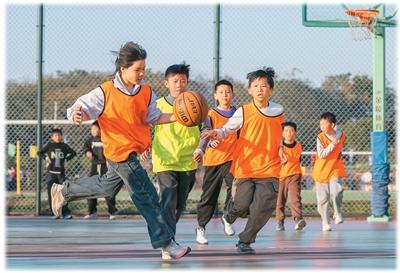
每天锻炼2小时、学前一年免费……2025十大教改热词发布
Ren Min Ri Bao· 2025-12-30 04:57
Core Viewpoint - The Ministry of Education and the National Language Resources Monitoring and Research Center have launched the "Top 10 Education Reform Buzzwords for 2025," highlighting key initiatives aimed at advancing educational reform and quality in China [40]. Group 1: Major Education Reform Buzzwords - "Big Ideological and Political Course" aims to integrate traditional ideological education with real-world examples to enhance students' understanding of socialist values and national stories [40][41]. - "Daily Exercise for 2 Hours" mandates that primary and secondary school students engage in at least 2 hours of physical activity daily, promoting health and fitness [42]. - "Adjustment and Optimization of Subject and Major Settings" focuses on aligning higher education programs with national strategic needs and industry developments, enhancing talent quality and adaptability [43]. - "Transformation of University Scientific Achievements" emphasizes the importance of converting academic research into practical applications to foster economic and social development [44][45]. - "Cultivation of Excellent Engineers" aims to develop high-level engineering talents through a collaborative education model that integrates industry needs with academic training [46]. - "County High School Revitalization" seeks to improve the quality of education in rural areas by optimizing resources and enhancing teaching conditions [47]. - "Free Year of Preschool Education" will eliminate fees for the final year of public kindergarten starting in the 2025 academic year, promoting educational equity [48]. - "Expansion of Quality Undergraduate Education" focuses on increasing enrollment in top-tier universities while ensuring quality through targeted adjustments in program offerings [50]. - "New Dual High Standards in Vocational Education" aims to enhance vocational training by aligning educational programs with industry demands and national strategies [51]. - "Education Collaborative Network" promotes cooperation among schools, families, and communities to support student development and well-being [52].
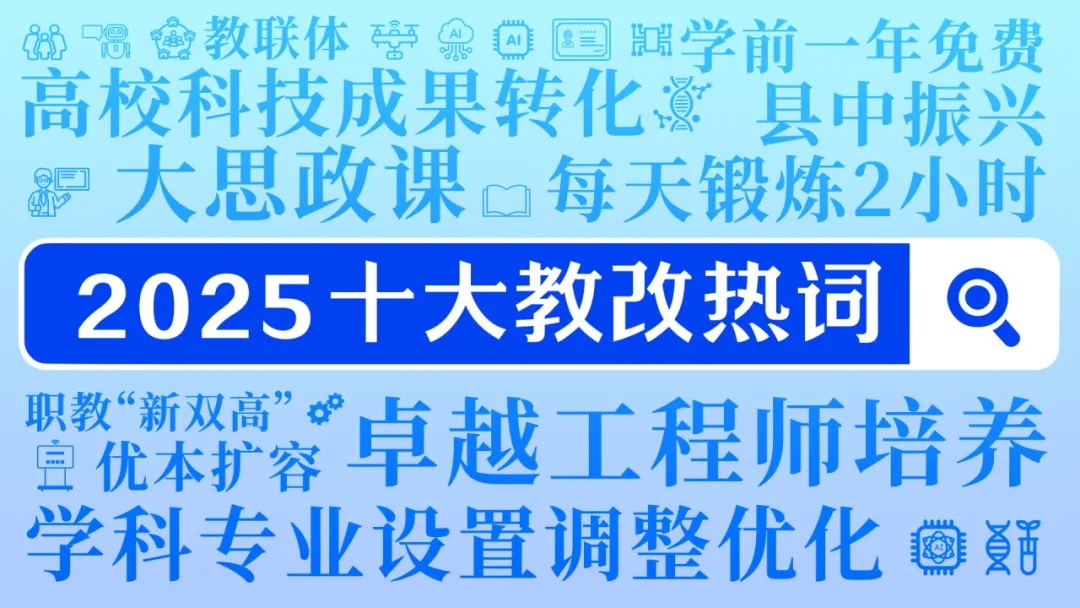
速递!2025十大教改热词发布
Bei Jing Ri Bao Ke Hu Duan· 2025-12-30 04:30
Core Viewpoint - The article discusses the "Top Ten Education Reform Buzzwords for 2025" released by the Ministry of Education, highlighting key initiatives aimed at advancing educational reform and strengthening the education system in China [3][4]. Group 1: Major Educational Initiatives - "Big Ideological and Political Course" aims to integrate social resources into education, focusing on practical education that aligns with Xi Jinping's thoughts on socialism with Chinese characteristics [3][4]. - "Daily Exercise for 2 Hours" mandates that primary and secondary school students engage in at least 2 hours of physical activity daily, as part of a broader initiative to enhance student health [6]. - "Adjustment and Optimization of Subject and Major Settings" involves systematic changes to higher education programs to better align with national strategic needs and industry developments, including the introduction of new disciplines like artificial intelligence and integrated circuits [7]. Group 2: Technology and Innovation in Education - "Transformation of University Scientific Achievements" focuses on enhancing the integration of education and technology, promoting the commercialization of research outcomes through various methods [8][9]. - "Cultivation of Excellent Engineers" emphasizes training high-level engineering talents through a collaborative education model that integrates industry needs and practical problem-solving [10]. Group 3: Enhancing Educational Access and Quality - "Revitalization of County High Schools" aims to improve the quality of education in rural areas by optimizing resource allocation and enhancing teaching conditions [11]. - "Free Year of Preschool Education" will eliminate fees for the final year of preschool education in public kindergartens starting in the fall of 2025, addressing public concerns about educational costs [12]. - "Expansion of Quality Undergraduate Education" seeks to increase enrollment in high-quality undergraduate programs, particularly in fields aligned with national needs [13]. Group 4: Vocational Education and Community Collaboration - "New Dual High Standards in Vocational Education" focuses on enhancing vocational education to better serve industry needs and societal development, with a strong emphasis on practical skills [14]. - "Educational Alliance" promotes collaboration among schools, families, and communities to support student development and address challenges in their growth [15][16].