传统与现代结合

Search documents
让古老技艺焕发生机
Xin Lang Cai Jing· 2026-02-22 17:58
Core Viewpoint - The article highlights the innovative approach of Gu Baoshan, a representative inheritor of traditional craftsmanship, in revitalizing ancient techniques through modern materials and themes, particularly in aluminum-plastic board carving, thus bridging the gap between tradition and contemporary culture [1][2]. Group 1: Traditional Techniques and Innovation - Gu Baoshan has successfully combined traditional craftsmanship with modern aesthetics by using black aluminum-plastic boards as a medium and silver engravings as ink, creating a unique metal carving aesthetic [2]. - His work incorporates contemporary themes, such as the historical significance of the "Belt and Road" initiative, and merges classic paintings with modern sensibilities, allowing traditional art to resonate with today's audience [2]. Group 2: Cultural Heritage and Education - The preservation of intangible cultural heritage requires both adherence to core techniques and innovative practices that connect tradition with modernity, encouraging younger generations to engage with and learn these skills [2]. - Gu Baoshan actively teaches and shares his expertise, starting from basic skills and utilizing online platforms to reach a wider audience, thereby promoting the appreciation of aluminum-plastic board carving [2]. Group 3: The Role of Craftsmanship - The dedication to craftsmanship and the spirit of innovation are essential for the survival and growth of traditional arts, ensuring that they thrive in contemporary society [2]. - The article emphasizes that many inheritors like Gu Baoshan are committed to protecting cultural heritage while also exploring new avenues for its expression, contributing to the vibrant revival of ancient techniques [2].
昆明多彩活动“燃”动全城
Xin Lang Cai Jing· 2026-02-17 22:47
Core Viewpoint - The article highlights the vibrant cultural activities and festive atmosphere in Kunming during the Spring Festival, showcasing a blend of traditional customs and modern experiences that attract both locals and tourists. Group 1: Cultural Activities - Kunming's parks and public spaces are transformed into lively venues for family outings, featuring a mix of traditional and contemporary celebrations [2][4] - The "New Year Elegant Gathering - Intangible Cultural Heritage Temple Fair" at Kunming Confucius Temple offers hands-on experiences like tie-dyeing and paper-cutting, alongside classical readings [2] - Daguang Park is adorned with floral displays and hosts performances, including traditional Yunnan opera, creating a festive environment [2][3] Group 2: Tourist Attractions - Major tourist sites in Kunming serve as immersive celebration venues, providing continuous entertainment from day to night [4] - Yunnan Ethnic Village features traditional dance performances and interactive experiences that celebrate ethnic unity, drawing in large crowds [4] - The Kunming Expo Garden combines daytime activities for children with enchanting nighttime events, such as the "National Style Lantern Night Banquet" [4] Group 3: Local Traditions - The atmosphere in Guandu Ancient Town is characterized by traditional festivities, including dragon and lion dances, which engage both residents and visitors [5] - The lively street markets offer a variety of local foods and crafts, contributing to the authentic Kunming New Year experience [5]
机械厂“变装”化身潮流新集市 “特色年货+复古场景”为消费添活力
Yang Shi Wang· 2026-02-04 09:44
Core Viewpoint - The transformation of an old factory into a popular New Year market in Gansu's Qingyang has become a significant cultural and social attraction, blending traditional and modern elements. Group 1: Market Features - The New Year market offers unique local delicacies such as yellow wine, fried oil cakes, and hot noodle dishes, providing visitors with a taste of local culture [3]. - Visitors can engage in traditional crafts like movable type printing and rubbings, enhancing the cultural experience [3]. Group 2: Cultural Significance - The market has become a popular destination for locals, showcasing a mix of traditional and modern cultural elements that resonate with contemporary trends [5][7]. - Local resident Liu Min highlights the integration of Qingyang cultural elements, emphasizing the blend of tradition and modernity [7].

老味新传
Jing Ji Ri Bao· 2026-01-03 01:07
Core Viewpoint - The article discusses how traditional brands, referred to as "old brands," are innovating their business models and customer experiences to attract younger consumers while preserving their cultural heritage and traditional flavors [1][9]. Group 1: Innovation in Traditional Brands - Traditional brands are creating engaging spaces that blend cultural experiences with modern interactive elements, as seen in Beijing Daoxiangcun's "Zero No. Treasure Museum" [1][2]. - The focus is on enhancing customer experiences through immersive environments that evoke nostalgia while introducing new cultural narratives [2][3]. - Brands are shifting from merely replicating traditional stores to creating unique, culturally rich experiences that resonate with contemporary consumer interests [2][7]. Group 2: Customer Engagement and Retention - The success of these innovations relies on creating memorable experiences that encourage repeat visits, moving beyond superficial attractions [3][4]. - Effective training and motivation for staff are crucial to ensure that customer interactions are meaningful and engaging, rather than just aesthetic [4][5]. - The integration of local culture and community interaction enhances the overall customer experience, making it more than just a transaction [4][5]. Group 3: Balancing Tradition and Modernity - Traditional brands face the challenge of maintaining their core flavors and techniques while adapting to modern consumer preferences and competitive pressures [6][7]. - The approach involves a commitment to preserving traditional recipes and methods while also innovating in presentation and cultural storytelling [7][8]. - Brands like Huo Gong Dian and Beijing Daoxiangcun exemplify this balance by combining classic culinary techniques with contemporary marketing strategies to appeal to a broader audience [7][8]. Group 4: Cultural Significance and Brand Identity - Old brands are positioned as guardians of cultural heritage, tasked with preserving and narrating historical flavors and stories for future generations [9]. - The ongoing innovation within these brands is essential for their survival and relevance in a rapidly changing market landscape [9].
在汉外籍人士比拼做热干面,哪个味道最受欢迎?
Chang Jiang Ri Bao· 2025-10-17 01:15
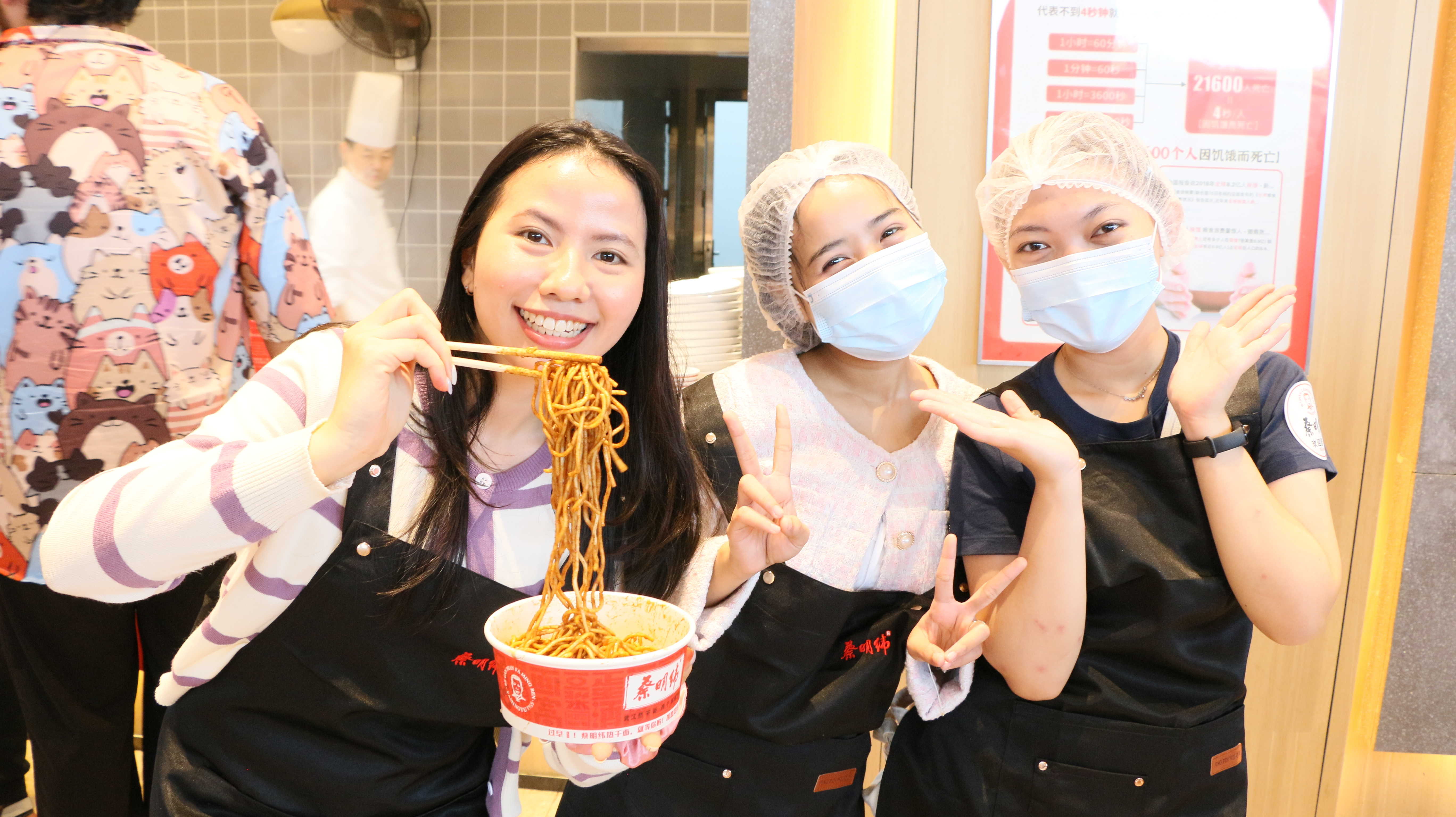
Group 1 - The event "Exploring Traditional Flavors, Witnessing Modern Manufacturing" was organized by the Wuhan Municipal Government's Foreign Affairs Office and the Market Supervision Administration, showcasing the cultural experience of hot dry noodles to over twenty foreign friends from thirteen countries [1] - The sesame paste workshop features 36 electric stone mills, each with a capacity of 600 kilograms, demonstrating a clean and hygienic production process with minimal manual operation [4] - The hot dry noodle production line is fully automated, with precise online monitoring, allowing for a production time of only 10 hours while maintaining the noodles' chewy texture [4] Group 2 - The emphasis on food safety is highlighted, with strict protocols in place, including the use of different colored disposable protective clothing for each workshop [6] - The international kitchen experience allowed foreign participants to engage in making hot dry noodles, enhancing their understanding of the cultural significance and technological advancements in Chinese cuisine [8] - The integration of traditional techniques with modern technology was praised, showcasing how industrial production can preserve the essence of traditional food [4][6]
贝聿铭回顾展来到上海,这里是他建筑之梦开始的地方
Di Yi Cai Jing· 2025-04-21 11:59
Core Insights - The exhibition "I. M. Pei: Life as Architecture" celebrates the legacy of renowned architect I. M. Pei, showcasing his significant contributions to modern architecture through a comprehensive retrospective in Shanghai [1][3][5]. Group 1: Early Life and Influences - I. M. Pei's journey began in Shanghai, where he was inspired by the city's architectural landscape, including the International Hotel, which fueled his ambition to become an architect [1][3]. - His education at Harvard exposed him to modernist architectural ideas, where he developed a unique perspective that emphasized the importance of regional characteristics in design [3][5]. Group 2: Major Architectural Projects - Pei gained international recognition for designing significant buildings such as the East Building of the National Gallery of Art in Washington, D.C., and the Louvre Pyramid in Paris, which became iconic landmarks despite initial controversies [5][6][17]. - His design for the Kennedy Library was a pivotal moment in his career, showcasing his ability to gain the trust of high-profile clients like Jacqueline Kennedy [5][14]. Group 3: Cultural Significance and Philosophy - Pei's work often reflected a deep understanding of cultural context, as seen in his designs that integrated traditional Chinese elements with modern architectural practices, such as the Suzhou Museum [6][24][30]. - The exhibition features over 400 items, including sketches and models, organized into themes that highlight Pei's cross-cultural influences and innovative approaches to architecture [6][12]. Group 4: Legacy and Impact - Pei's architectural philosophy emphasized the relationship between buildings and their environments, advocating for designs that respect and enhance their surroundings [6][30]. - The exhibition aims to illustrate how Pei's work transcends personal achievement, connecting architecture to broader societal and cultural narratives [30].