
估值泡沫破裂

Search documents
银行股,资金出手了
3 6 Ke· 2026-02-05 11:21
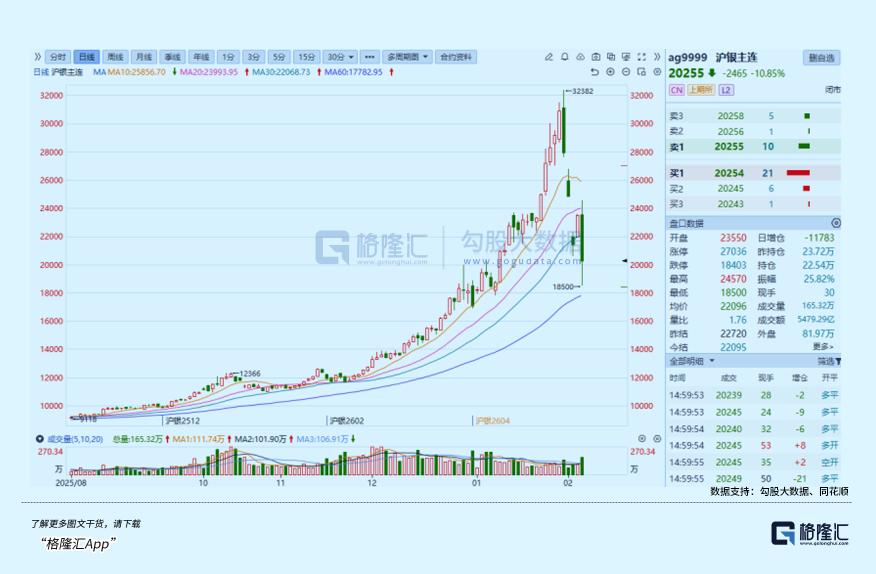
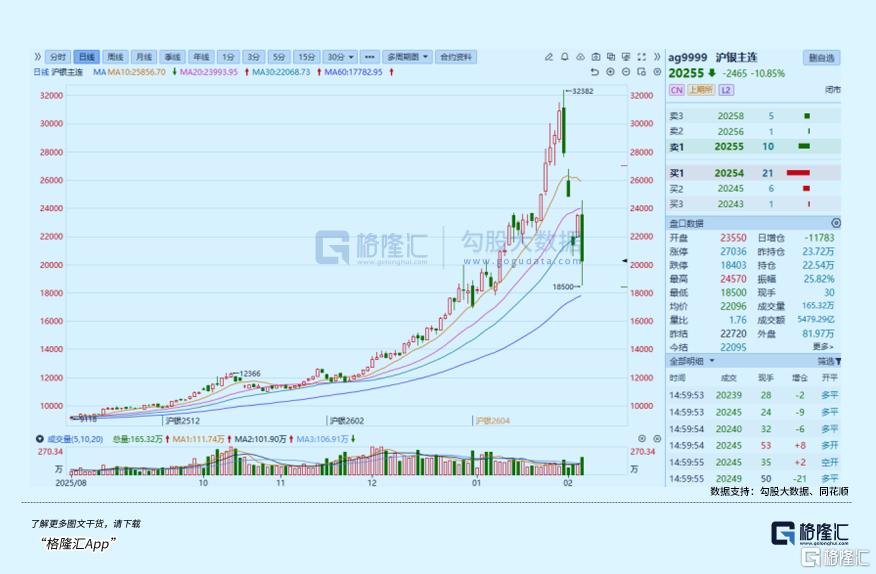
Core Viewpoint - A significant market shift occurred as global funds fled from technology stocks and precious metals, leading to a notable decline in major indices and a surge in bank stocks as a safe haven for investors [1][2][3]. Group 1: Market Reactions - On February 4, U.S. tech stocks experienced a sharp decline, with the Nasdaq dropping over 2% and major companies like Nvidia, Meta, and Tesla falling more than 3%. AMD saw a staggering drop of 17.3%, marking its largest single-day decline in nearly nine years [1][3]. - The panic spread to A-shares and Hong Kong stocks, with sectors like solar energy and precious metals witnessing significant sell-offs. Silver futures plummeted nearly 20% at one point, exacerbating market fears [2][5]. - Despite the overall market turmoil, the banking sector in A-shares rose by 2.1%, with all 42 bank stocks closing in the green, indicating a flight to safety among investors [2][10]. Group 2: Capital Flows - Southbound funds recorded a net purchase of over 22 billion HKD, with major Chinese banks like ICBC, CMB, and CCB becoming core targets for accumulation [3][13]. - A significant shift in capital is underway, with funds moving from tech and precious metals to banks, which are perceived as having a higher safety margin [3][9]. Group 3: Banking Sector Performance - The banking sector is supported by strong earnings growth and historically low valuations, making it an attractive option for risk-averse investors [15][20]. - As of February 4, several banks reported robust earnings, with Qingdao Bank, Hangzhou Bank, and others showing significant profit increases, further solidifying the sector's appeal [16][18]. - The banking sector's average dividend yield ranges from 4.87% to 5.2%, significantly higher than the 10-year government bond yield of around 2%, enhancing its attractiveness in a low-interest-rate environment [21][22]. Group 4: Future Outlook - The recent market volatility raises questions about whether the declines in tech stocks and precious metals will lead to further panic selling. However, the influx of funds into bank stocks suggests a potential shift in market sentiment [23].







银行股,资金出手了!
Ge Long Hui· 2026-02-05 10:50
Core Viewpoint - A significant market sell-off occurred globally, particularly affecting technology stocks in the US, leading to a shift in investment sentiment towards safer assets like bank stocks [1][4][21]. Group 1: Market Reaction - The US tech sector experienced a sharp decline, with the Nasdaq dropping over 2% and major companies like Nvidia, Meta, and Tesla falling more than 3%. AMD saw a staggering drop of 17.3%, erasing its gains for the entire year [1][4]. - Panic spread to A-shares and Hong Kong stocks, with sectors like solar energy and precious metals experiencing significant declines. Silver futures plummeted nearly 20% in one day, exacerbating market fears [2][5]. Group 2: Capital Flow - Southbound capital saw a net inflow of over 22 billion HKD, with major Chinese banks like ICBC, CMB, and CCB becoming key targets for accumulation [3][12]. - The banking sector in A-shares rose by 2.1%, with all 42 bank stocks closing in the green, indicating a flight to safety among investors [2][9]. Group 3: Banking Sector Performance - The banking sector is viewed as a "safe haven" due to strong earnings growth and historically low valuations. Recent performance reports from banks like Qingdao Bank and Ningbo Bank showed robust profit increases [14][15]. - The average dividend yield for bank stocks is between 4.87% and 5.2%, significantly higher than the 10-year government bond yield of around 2%, making them attractive to investors seeking stable returns [19][20]. Group 4: Future Outlook - Despite the current volatility, there are signs of a potential shift in investment style towards bank stocks, driven by their strong fundamentals and recovery potential [21]. - Institutional interest in bank stocks is increasing, with significant research and investment activity noted, suggesting a possible influx of capital into the sector [20].


股指结构牛,债市持续震荡
Chang Jiang Qi Huo· 2025-09-22 05:46
Group 1: Report's Core View - The short - term A - share market may continue to fluctuate upwards, but short - term volatility should be watched out for. The style may become more balanced in the future, and a defensive allocation is recommended, focusing on opportunities in technology sector rotation, high - dividend, and cyclical sectors. The bond market is expected to be volatile and bearish [6]. - The "watch - the - stock - to - trade - bonds" principle dominates short - term trading, and the bond market is difficult to decline significantly before the stock market cools down [8]. Group 2: Stock Index Strategy Stock Index Trend Review - Last week, the A - share market showed a significant divergence. The Shanghai Composite Index representing large - cap blue - chips fell, while the Shenzhen Component Index, ChiNext Index, and STAR Market Index rose. The weakness of financial and real - estate sectors dragged down the Shanghai - related indices, while the growth - style sectors provided support for relevant indices [6]. Technical Analysis - The market maintained a differentiated pattern last week. The ChiNext and STAR Market indices were strong, while the SSE 50 was weak. After a ground - volume rebound on a certain day in August, there was a significant volume decline on Thursday, forming a divergence with the previous up - volume. The short - term profit - taking pressure was prominent [6]. Strategy Outlook - Reasonably control positions and pay attention to policies and sector rotation rhythms [6]. Group 3: Treasury Bond Strategy Treasury Bond Trend Review - The bond market oscillated last week. Although the central bank made a net injection, liquidity did not loosen significantly due to tax - period disturbances. Rumors of the central bank's bond - buying operation and the Fed's interest - rate cut provided some support [9]. Technical Analysis - The T - contract K - line oscillated upwards, with the MACD yellow and white lines intertwined, and the BOLL lines still opening downwards [9]. Strategy Outlook - The bond market is expected to be volatile and bearish. It is recommended to reduce positions in a timely manner [9]. Group 4: Key Data Tracking PMI - In July, the manufacturing PMI dropped to 49.3%, weaker than market expectations and seasonal trends. Both supply and demand sides weakened, with external demand falling more significantly on the demand side and production slowing on the supply side. Upstream non - ferrous and steel industries improved, while downstream export - oriented industries were suppressed [13]. Inflation - In a certain month, the year - on - year CPI was flat, and the month - on - month CPI rose by 0.4%. The year - on - year PPI decreased by 3.6%, and the month - on - month PPI decreased by 0.2%. There were positive changes in prices, but the year - on - year CPI and PPI remained sluggish [16]. Industrial Added Value - The year - on - year growth rate of industrial added value in a certain month dropped to 5.7%, and the growth rate of the service production index dropped to 5.8%. The decline in industrial added value was mainly due to the export - oriented industries such as automobiles, electronics, textiles, and electrical machinery [19]. Fixed - Asset Investment - The estimated year - on - year growth rate of fixed - asset investment in a certain month turned negative to - 5.2%. The reasons were complex, including short - term factors like extreme weather and statistical method issues, medium - term factors such as export - expectation decline and policy implementation, and long - term factors like the shrinking real - estate investment [22]. Social Retail Sales - The year - on - year growth rate of social retail sales in a certain month dropped to 3.7%, and that of above - quota retail sales dropped to 2.8%. The decline was mainly reflected in low - level fluctuations in catering revenue, weak sales of state - subsidized products, and a decline in real - estate - related consumption [25]. Social Financing - In a certain month, new social financing was 1.2 trillion yuan, and new RMB loans were negative. At the end of the month, the year - on - year growth rate of social financing stock was 9.0%, and that of M2 was 8.8%. Although the credit growth was negative, the growth rates of social financing, M1, and M2 improved. In the future, the social financing growth rate may peak and decline, and policies may be adjusted according to the situation [28]. Import and Export - In a certain month, China's exports were $3217.8 billion, imports were $2235.4 billion, and the trade surplus was $982.4 billion. The import and export performance was stronger than expected, mainly due to the "rush" behavior under the threat of US tariffs on semiconductors and pharmaceuticals [31]. Group 5: Weekly Focus - The report lists a series of US economic indicators to be focused on, including the second - quarter core PCE price index, personal consumption expenditure, real GDP, and initial jobless claims [33].