低碳消费

Search documents
2025年中国可持续消费报告-商道纵横
Sou Hu Cai Jing· 2026-02-05 07:38
Core Insights - The report titled "2025 China Sustainable Consumption Report" marks a milestone in sustainable consumption research, based on 3,122 nationwide surveys, providing data support and practical references for the industry [1][9] - Over 60% of respondents feel the impact of climate change, with more than 85% identifying as "low-carbon pioneers," indicating a shift from vague concepts to concrete actions in daily life [1][19] - Consumer demand has shifted from "responding to advocacy" to "value-driven," with 43.34% of purchasing motivation stemming from "resource savings and cost reduction" [1][32] Group 1: Consumer Awareness and Trends - Climate change awareness is deepening, with over 60% of respondents feeling its effects, a 10% increase since 2022 [19] - The perception of low-carbon consumption has evolved, with over 85% of consumers identifying as "low-carbon pioneers," believing their consumption choices can help combat climate change [19][49] - Social media has become a key platform for spreading low-carbon information, with trust in recommendations from acquaintances being crucial for product adoption [28][29] Group 2: Consumer Behavior and Preferences - Low-carbon practices are integrated into daily life, with clothing donations, water-saving laundry, and reduced takeout becoming mainstream behaviors [2] - Online channels dominate purchasing, but high prices and low recognition remain significant barriers [2] - Consumers show a high acceptance of recycled products, preferring incentives like cash back and door-to-door recycling [2] Group 3: Corporate Strategies and Recommendations - Companies need to accurately target their audience and optimize strategies around the SICAS model, focusing on authority certification and practical value [2] - The importance of a transparent and authoritative certification system is emphasized to build consumer trust and facilitate low-carbon consumption [38][39] - As technology and market conditions improve, low-carbon consumption is expected to transition from a niche choice to widespread participation [2] Group 4: Demographic Insights - Climate-aware individuals are more likely to be low-carbon pioneers, with notable participation from married, educated, and older demographics [1][42] - Different generations exhibit distinct preferences, with Gen Z willing to pay a premium for beauty products, while Gen Y focuses on family-related items, and older generations prioritize cost-effectiveness [1][42] Group 5: Challenges and Consumer Concerns - Price sensitivity has surged, with 43.34% of consumers motivated by cost savings, indicating a shift in purchasing drivers [32] - Consumers are increasingly wary of "greenwashing," with nearly 50% citing difficulty in identifying genuine low-carbon products as a reason for not purchasing [36] - The demand for clear, quantifiable information about low-carbon products remains high, reflecting a need for transparency in marketing [38][39]



9问公众 选择低碳消费会影响生活质量吗
Si Chuan Ri Bao· 2026-01-04 03:38
Core Viewpoint - The importance of public participation in carbon neutrality is emphasized, as individual low-carbon consumption choices can drive societal green transformation [1][2][3] Group A: Consensus on Public Participation - Public participation in carbon neutrality is crucial for personal safety and property security due to climate change-related extreme weather events [1] - Residents' energy consumption growth has consistently outpaced industrial energy consumption, indicating significant potential for public impact on emissions [3] - Low-carbon consumption can directly reduce carbon emissions and drive green transformation in production sectors [3] Group B: Misconceptions about Low-Carbon Consumption - Low-carbon consumption does not equate to a decrease in quality of life; rather, it should be integrated into economic and social development [4][5] - The perception that low-carbon living contradicts a high quality of life is overly simplistic; low-carbon choices can coexist with modern living standards [6] Group C: Current Challenges in Public Engagement - There exists a gap between high public awareness of carbon neutrality and low actual engagement in low-carbon practices [9] - The public's understanding of climate change and its connection to low-carbon products is still developing, leading to a disconnect in lifestyle adjustments [10] - The supply of low-carbon products is limited, and many remain expensive, indicating a need for technological advancement and market opportunities [10] Group D: Recommendations for Improvement - Enhancing infrastructure for green initiatives, such as electric vehicle charging stations and public transport, is essential for reducing carbon emissions [13] - Promoting carbon labeling on products can help consumers make informed low-carbon choices [13] - Implementing incentive mechanisms, such as tax benefits and reward points for low-carbon behaviors, can encourage public participation [14] - Developing a clear guide for low-carbon living can help the public understand the benefits and practices of low-carbon consumption [14][15] - Establishing scientific carbon accounting standards at the local level can serve as a model for nationwide public low-carbon living [15]
交行上海市分行“五一”小长假促消费成效显著 总消费额达38亿元
Zhong Guo Jin Rong Xin Xi Wang· 2025-05-12 11:04
Group 1 - The core viewpoint of the articles highlights the proactive measures taken by the Bank of Communications Shanghai Branch to boost consumer spending during the 2025 "May Day" holiday, achieving a total consumption amount of 3.8 billion yuan, a year-on-year increase of 11% [1][2] - The bank engaged in multi-level marketing strategies, launching a series of promotional activities under the theme "'Enjoy with Bank of Communications, Benefits in Shanghai," focusing on four major areas: dining, entertainment, shopping, and transportation [1] - The bank plans to establish a year-round themed consumption promotion system to create a sustainable consumption ecosystem [1] Group 2 - The bank introduced the "Bank of Communications Elderly Care" brand, targeting the elderly demographic with tailored services, resulting in a year-on-year increase of 12.2% in transaction numbers and 15.15% in transaction amounts for customers aged 50 and above [1] - For younger consumers, the bank launched unique events such as the Cultural Tourism Carnival and "Second Dimension Pilgrimage Season" to cater to personalized consumption needs [1] - The bank enhanced the payment environment for foreign consumers by collaborating with leading taxi companies to offer mobile POS services for international card acceptance, leading to a year-on-year increase of 37% in transaction counts and 34% in transaction amounts during the holiday [2] Group 3 - The bank introduced the "Hui Shang Dai 2.0" inclusive financial product to provide efficient financing services for individual businesses and small enterprises [2] - The bank also promoted consumption upgrades in green home appliances and new energy vehicles by leveraging the national "old-for-new" policy, government subsidies, and exclusive discounts [2] - The Bank of Communications Shanghai Branch aims to deepen the synergy between policy, finance, and market to inject more momentum into Shanghai's development as an international consumption center [2]

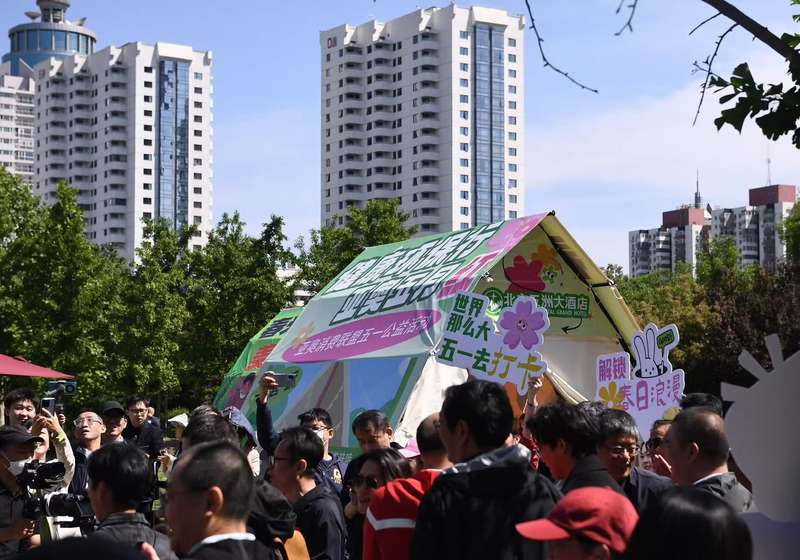
打卡攒积分换奖品,亚奥商圈启动“健康环保行”公益活动
Xin Jing Bao· 2025-05-01 06:05
Core Viewpoint - The "Health and Environmental Walk" event organized by the Asia-Olympic Business Circle New Consumption Innovation Alliance aims to promote health, environmental awareness, and public welfare through diverse leisure and consumption experiences from May 1 to May 4 [1][2]. Group 1: Event Overview - The event is themed "Health and Environmental Protection, Public Welfare Together," aligning with the national initiative for weight management and promoting a healthy lifestyle [2]. - It features a "digital check-in and low-carbon consumption" approach, connecting 14 unique check-in points in the Asia-Olympic business area, including notable landmarks like the Bird's Nest and the Olympic Museum [2][5]. - The initiative encourages participants to engage in low-carbon travel methods such as walking and cycling, enhancing the area's cultural and commercial vibrancy [2][5]. Group 2: Participation and Rewards - Participants can use the "Asia-Olympic Circle" app for navigation and check-in, earning points that can be redeemed for various rewards, including hotel vouchers and cultural tickets [5][6]. - The event includes surprise musical performances and a consumption market at several check-in points, enriching the leisure experience for attendees [5][6]. Group 3: Organizational Background - The Asia-Olympic Business Circle New Consumption Innovation Alliance was established on December 28, 2022, by the Chaoyang District Committee, District Government, and Beichen Group, comprising 23 member units [9]. - The Asia-Olympic business area serves as a significant consumption hub in northern Beijing, featuring a mix of commercial, tourism, exhibition, cultural, and sports venues, contributing to the city's economic vitality [9].