
低碳算力

Search documents
地方两会|广东政协委员丘育华建言AI多维发力 赋能经济高质量发展
Xin Lang Cai Jing· 2026-01-26 15:53
Core Viewpoint - The "14th Five-Year Plan" emphasizes technological self-reliance, modern industrial system construction, and high-level opening-up, aligning closely with Guangdong's economic development needs [1][3]. Group 1: Proposals for Economic Development - During the Guangdong Two Sessions in 2026, proposals were made to leverage the "14th Five-Year Plan" to address development bottlenecks and cultivate new productive forces [1][3]. - Key proposals include enhancing open cooperation, promoting industrial upgrades, and utilizing low-carbon computing and AI systems to empower economic development [1][4]. Group 2: Directions for Industrial Upgrade - Three main directions for activating new industrial upgrade momentum were proposed: deepening open cooperation, transforming traditional industries, and cultivating emerging future industries [3][4]. - In open cooperation, suggestions include leveraging the "Belt and Road" initiative to enhance international collaboration and optimize export-import channels for high-value products [4][5]. - For traditional industry upgrades, the focus is on integrating AI and green technologies to improve efficiency and sustainability in sectors like home appliances and textiles [4][5]. - Emerging industries such as low-altitude economy and biomanufacturing are highlighted, with specific targets for growth and development by 2027 [5][6]. Group 3: Empowering Development through AI and Computing - The proposal emphasizes the importance of low-carbon computing as a core production factor, suggesting three practical paths for its integration into industrial upgrades [5][6]. - The first path involves establishing a collaborative ecosystem for low-carbon distributed intelligent computing nodes, leveraging local resources and technologies [5][6]. - The second path focuses on creating a trusted data space to drive AI applications in healthcare, enhancing data management and operational efficiency [6]. - The third path explores integrating AI into urban renewal processes, improving planning, construction, and operational efficiency through intelligent systems [6]. Group 4: Policy Environment and Future Outlook - Guangdong's strong manufacturing base, innovative ecosystem, and large market size position it well to capitalize on the "14th Five-Year Plan" policies [6]. - Ongoing initiatives like the construction of a national computing hub in the Guangdong-Hong Kong-Macao Greater Bay Area are expected to provide a favorable policy environment for these proposals [6].

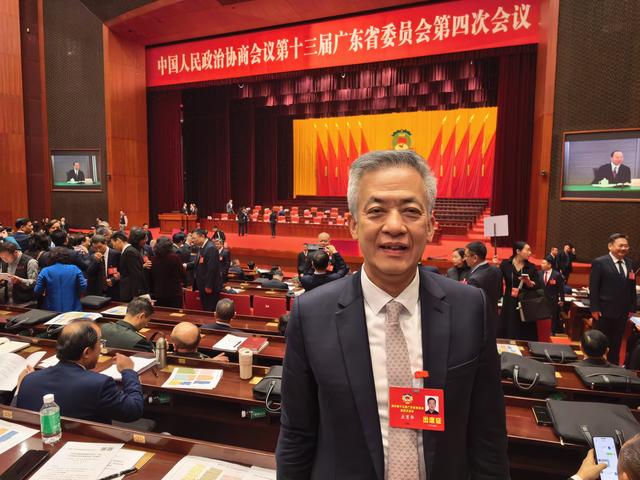
地方两会 广东政协委员丘育华建言AI多维发力 赋能经济高质量发展
Zhong Guo Jing Ying Bao· 2026-01-26 15:09
Core Viewpoint - The "14th Five-Year Plan" focuses on technological self-reliance, modern industrial system construction, and high-level opening-up, aligning closely with Guangdong's economic development needs [1][3]. Group 1: Proposals for Economic Development - During the Guangdong Two Sessions in 2026, proposals were made to leverage the "14th Five-Year Plan" to address development bottlenecks and cultivate new productive forces [1][3]. - Key proposals include deepening open cooperation, promoting industrial upgrades, and utilizing low-carbon computing power and AI systems to empower economic development [1][4]. Group 2: Industrial Upgrade Strategies - Three main directions for activating new momentum in industrial upgrades were proposed: open cooperation, traditional industry transformation, and nurturing emerging future industries [3][4]. - In open cooperation, suggestions include enhancing international collaboration through the "Belt and Road" initiative and optimizing logistics routes for high-value product exports [4][5]. - For traditional industry upgrades, the focus is on integrating AI into production processes to improve efficiency and quality, alongside promoting sustainable practices in sectors like textiles and construction [4][5]. Group 3: Future Industry Focus - The emphasis on emerging industries includes low-altitude economy and biomanufacturing, with a target of achieving a total output value of 500 billion yuan by 2027 in biomanufacturing [5][6]. - The low-altitude economy is expected to leverage the Greater Bay Area's advantages to create a multi-scenario application ecosystem [5][6]. Group 4: AI and Computing Power Integration - The proposal highlights three practical paths for integrating low-carbon computing power and AI into industrial upgrades [5][6]. - The first path involves establishing a distributed intelligent computing node ecosystem, leveraging local energy resources and AI for efficient energy consumption [5][6]. - The second path focuses on creating a trusted data space for AI applications in healthcare, enhancing data resource management and operational systems [6]. - The third path suggests incorporating AI throughout the urban renewal lifecycle to improve planning, construction, and operational efficiency [6]. Group 5: Policy Environment and Implementation - Guangdong is accelerating the construction of a national computing power hub and low-altitude economy innovation pilot projects, providing a favorable policy environment for the proposals [6].
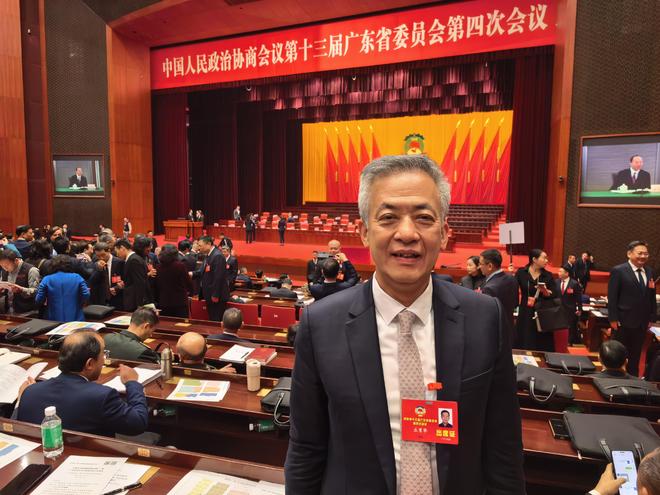
北理工报告:建议全国统一算力定价,绿电算力享折扣、向小微企业发算力券
Xin Lang Cai Jing· 2026-01-21 14:26
Core Insights - The unprecedented demand for computing power driven by AI large models has become a critical topic in energy research, highlighting the interconnection between computing power and energy supply [1] - The report from Beijing Institute of Technology emphasizes the need for a low-carbon computing power service system to support China's transition from a "big computing power country" to a "strong computing power country" [1] Group 1: Current Challenges in Computing Power Services - The report identifies five major challenges in China's computing power services, including structural imbalances in demand and supply, insufficient autonomy in key hardware, and technical bottlenecks in transmission [2] - The demand side shows a coexistence of high-end computing shortages and low-end computing idleness, while the supply side faces dual constraints of hardware autonomy and uneven distribution [2] Group 2: Regional Disparities in Computing Power - Eastern core urban areas have a high concentration of computing power demand, with some hotspots experiencing load rates exceeding 85%, while western regions have low utilization rates due to insufficient demand [3] - The report notes that the cost of cross-regional transmission can reach 2-5 times that of local resources, undermining the economic attractiveness of western computing power [3] Group 3: Recommendations for Optimizing Computing Power Services - The report suggests strengthening the "East Data West Computing" initiative by implementing differentiated access requirements and establishing a compensation mechanism for green electricity [4] - It recommends creating a unified national pricing mechanism for computing power and providing subsidies for green electricity usage [4] Group 4: Future Projections - The report forecasts that by 2030, the average power load of data centers nationwide will reach 105 million kW, with total electricity consumption averaging 525.76 billion kWh [4] - By 2040, data centers are expected to account for 10.84% of national electricity demand, driven by medium-speed growth in intelligent computing power [4] Group 5: Integration of Computing Power and Energy Systems - Experts emphasize the need for coordinated planning between computing centers and the overall power grid to optimize both computing and energy transmission networks [5] - There is a call for improved price transmission channels between the electricity market and the computing power market to enhance synergy [6]
2026年能源经济预测与展望研究报告在京发布
Zhong Guo Neng Yuan Wang· 2026-01-11 12:33
Core Viewpoint - The "2026 Energy Economic Forecast and Outlook Research Report" was released, highlighting the development trends and challenges in China's energy sector during the 14th Five-Year Plan period and beyond [1][2]. Group 1: Energy Development Outlook - The report on China's energy development during the 14th Five-Year Plan indicates that a sustainable internal driving force for the new energy system has been established, with traditional fossil energy consumption expected to enter a historical downward trend [2]. - The development of new energy is seen as a key pathway for macroeconomic counter-cyclical and cross-cyclical regulation, contributing significantly to both qualitative and quantitative economic growth [2]. Group 2: Energy Economic Situation - The 2026 China Energy Economic Index report suggests that the macroeconomic situation in 2025 improved steadily with the support of the energy economy, and the hydrogen energy sector is expected to maintain strong momentum alongside batteries and photovoltaics in 2026 [3]. - The report emphasizes the need for the energy sector to enhance quality and efficiency through "anti-involution" policies, supported by traditional energy sources [3]. Group 3: Global Energy Transition - The global energy transition index report indicates that by 2024, the overall energy transition is expected to surpass 2015 levels, although the polarization of energy trade networks has increased system vulnerability [3]. - China ranks 13th globally in energy transition, with potential for improvement in sustainability dimensions [3]. Group 4: Oil Market Analysis - The international oil price analysis predicts that in 2026, the fundamental support for oil prices will weaken, leading to a more relaxed overall market structure, with Brent and WTI crude oil prices expected to average between $53-63 and $49-59 per barrel, respectively [3]. Group 5: Carbon Market Insights - The carbon market report highlights significant growth in the national carbon market in 2025, with an expanded coverage scale and enhanced policy influence and market expectations [4]. - Future efforts are needed to boost market trading vitality and align with global carbon pricing mechanisms and cross-border emission reduction rules [4]. Group 6: Low-Carbon Computing Services - The low-carbon computing services report indicates that China's computing industry is entering a critical transformation phase focused on green, low-carbon, and efficient services [4]. - The report calls for the establishment of a low-carbon computing service system that integrates various market types and enhances sustainability [4].