关税红利

Search documents
美国民众能“减负”吗?——特朗普七大政策构想分析
一瑜中的· 2026-01-27 16:01
Core Viewpoint - The importance of the "Affordability" issue is increasingly prominent as the U.S. enters the midterm election year, with Trump proposing several policies aimed at addressing this concern [2]. Group 1: Proposed Policies - The proposed policies can be categorized into four areas: housing, finance, cost of living, and defense [21]. - In the housing sector, Trump has proposed two measures: directing Fannie Mae and Freddie Mac to purchase $200 billion in mortgage-backed securities (MBS) to lower mortgage rates, and restricting large institutional investors from buying single-family homes to stabilize home prices [21][26]. - In the finance sector, a proposal to set a credit card interest rate cap at 10% has been introduced [22]. - For the cost of living, three measures include issuing tariff dividends, requiring large tech companies to cover their electricity infrastructure costs, and a comprehensive healthcare plan aimed at reducing medical expenses [23][24]. - In defense, a proposal has been made to prohibit defense contractors from stock buybacks and dividends while limiting executive compensation [25]. Group 2: Feasibility of Policies - The feasibility of these policies is assessed based on whether they require congressional legislation, the attitudes of both parties, and predictions from the betting market [27]. - Two of the proposed policies do not require congressional approval and have already begun implementation: directing Fannie Mae and Freddie Mac to purchase MBS, and prohibiting defense contractors from stock buybacks and dividends [29][32]. - The remaining five policies may require congressional legislation, with varying degrees of clarity regarding their implementation paths [29][33][34]. Group 3: Potential Impacts - The potential impacts of the proposed policies are significant, particularly in four areas: 1. Directing Fannie Mae and Freddie Mac to purchase MBS could help narrow mortgage loan spreads, although their holdings represent only about 1.1% of the total MBS market [46][50]. 2. Restricting institutional purchases of homes could affect only about 3% of the market, as large investors hold a small share of single-family rentals [53][59]. 3. The proposed credit card interest rate cap could reduce rates by 11%, but the net interest margin for credit card businesses is only around 9% to 10%, potentially making the business unprofitable [63][65]. 4. The prohibition on dividends and buybacks for defense contractors could impact their financial strategies, as these actions currently represent a significant portion of their market value [17]. Group 4: Future Monitoring Points - Key future monitoring points include the Defense Secretary's review of defense contractors on February 6, the State of the Union address on February 24, the presidential budget proposal in February-March, and potential affordability measures that may be announced during the primary election period from May to August [4].


贵贵贵贵贵2026、01、05
Zi Jin Tian Feng Qi Huo· 2026-01-08 06:20
Group 1: Investment Rating - No investment rating information is provided in the report. Group 2: Core Viewpoints - In 2025, the cumulative increase of spot gold was 64%, and spot silver soared 147%, becoming the best - performing commodity category of the year. In January 2026, the core concerns of the precious metal market are the successor of Powell, the December non - farm payroll data to be released on January 9, and the potential sanctions of the US on Chinese mining enterprises in South America. The core macro - logic supporting the gold price in 2026 will continue, and the resilience of the gold price will support the silver price [4]. Group 3: Summary by Directory Overseas Main Interest Rates - The market has factored in two interest rate cuts in 2026, the first in April and the second in October. After the release of the December FOMC meeting minutes, traders' bets on the two interest rate cuts in 2026 remained unchanged. There were significant differences in the December meeting minutes [8]. - Last week, the yields of US Treasury bonds of various maturities diverged. The 30 - year UST yield rose 5.52bps to 4.87%, the 10 - year UST yield rose 6.3bps to 4.19%, and the 2 - year UST yield fell 0.16bps to 3.47%. The yield curve steepened. The term premium of long - term interest rates is at a relatively high level since 2025 [11]. - The use of ONRRP last week was $5.67 billion, a decrease of $4.88 billion from the previous value. The Fed's reserve balance last Wednesday was $2.853 trillion, a decrease of $128 billion from the previous week [17]. - As of December 23, the positions of long - and short - term US Treasury bond interest rates were bearish. The non - commercial net short positions of 2 - year UST futures increased by 11,570 lots to 1,362,703 lots, and the non - commercial net short positions of 10 - year UST futures increased by 72,262 lots to 742,370 lots. As of the week of December 15, the sentiment of JPM Treasury net long investors was 21, a significant rebound from the previous week [21]. - The yields of 5 - year and 10 - year TIPS diverged. The 5 - year TIPS yield remained flat at 1.46% compared with the previous week, and the 10 - year TIPS yield rose 3bp to 1.94% [28]. Dollar Index and Liquidity - Last week, the dollar index and the gold price moved in opposite directions. The gold price fell 4.4%, and the dollar index rose 0.4% to 98.5, with their rolling correlation increasing. The dollar appreciated 0.2% against the yen, 0.5% against the euro, and 0.3% against the pound [34]. - As of December 23, the total position of the dollar index increased. The non - commercial long positions increased by 793 lots to 16,700 lots, and the non - commercial short positions increased by 219 lots to 21,000 lots, with the long - side force dominant. In terms of position ratio, the non - commercial long position ratio was 59%, unchanged from the previous week, and the short position ratio was 73%, a decrease from the previous week [38]. - Last week, the 3 - month Basis Swap of the yen and the euro increased month - on - month, and the financing cost of offshore dollar liquidity decreased [41]. Inflation High - Frequency Indicators - Last week, the copper - to - gold ratio rose to 2.88, with the copper price rising and the gold price falling, indicating a marginal increase in global aggregate demand momentum [48]. Price Ratios and Volatility - The gold - to - silver ratio fluctuated higher because the decline of the gold price was smaller than that of the silver price last week. The gold - to - copper ratio decreased because the gold price fell and the copper price rose. The gold - to - oil ratio decreased month - on - month because the oil price rose and the gold price fell [57]. - From the perspective of rolling correlation, the correlation between gold and crude oil and copper decreased, while the correlation between gold and the dollar index increased [65]. - During the rapid rise of Shanghai silver last week, the price difference between the domestic and foreign silver markets reached a maximum of about - 400, significantly deviating from the equilibrium level, and then gradually declined [70]. Inventory and Positions - In terms of inventory, last week, the COMEX gold inventory was 36.403 million ounces, a month - on - month increase of 244,000 ounces, and the COMEX silver inventory was 449.774 million ounces, a month - on - month decrease of 1.579 million ounces. The SHFE gold inventory was about 97.7 tons, a month - on - month increase of 3.9 tons, and the SHFE silver inventory decreased by 182.9 tons to 669.5 tons [75]. - The SPDR gold ETF position decreased by 6 tons to 1,065 tons, and the current position scale is near the lower median of the past 10 years. The SLV silver ETF position increased by 53.6 tons to 16,444 tons, currently at a medium - to - high level [80]. - The total COMEX gold position increased by 21,010 lots to 492,000 lots. Among them, the non - commercial long positions increased by 9,241 lots to 290,000 lots, and the short positions increased by 2,519 lots to 49,000 lots, indicating an increase in the long - side force of gold allocation. In terms of position ratio, the non - commercial long position ratio decreased to around 59%, and the non - commercial short position ratio remained around 10% [86]. - The total COMEX silver position increased by 2,789 lots to 156,000 lots. Among them, the non - commercial long positions decreased by 791 lots to 55,000 lots, and the short positions decreased by 323 lots to 19,000 lots, indicating an increase in the short - side force of silver allocation. In terms of position ratio, the non - commercial long position ratio decreased to around 35.5%, and the non - commercial short position ratio decreased to around 12.4% [92].
特朗普发“关税红利”遭党内反对
Guo Ji Jin Rong Bao· 2025-11-20 08:06
Core Points - President Trump has proposed direct payments of $2000 to low- and middle-income households, suggesting that funding would primarily come from tariff revenues [1] - The proposal is seen as an attempt to regain political momentum on economic issues ahead of the midterm elections, amid rising inflation and living costs [1] - There is a general reluctance among Republicans regarding the proposal, with many preferring to use tariff revenues to reduce federal deficits rather than stimulate consumer spending [1][2] Group 1 - The conservative Tax Foundation estimates that the proposed tariff policies could generate $158 billion in revenue by 2025 and over $2.3 trillion over the next decade [1] - Republican lawmakers, including Rep. Blake Moore and Sen. Tom Tillis, express concerns that using tariff revenues for direct payments contradicts initial intentions of using them to reduce debt [2] - Concerns are raised about the potential inflationary impact of large direct payments, as previous stimulus measures have been linked to rising prices [2][3] Group 2 - The estimated cost of providing $2000 payments to middle-income families ranges from $280 billion to $607 billion, significantly exceeding projected tariff revenue [3] - There is uncertainty regarding the legal authority of some tariffs imposed during Trump's presidency, which could further complicate revenue projections [3]
股指期货将震荡整理,白银期货再创上市以来新高,黄金、锡期货将震荡偏强,铜、铝期货将偏强震荡,原油、燃料油期货将震荡偏弱
Guo Tai Jun An Qi Huo· 2025-11-13 05:14
Report Industry Investment Rating No relevant content provided. Core Viewpoints - Through macro - fundamental and technical analysis, the report predicts the price trends and key support and resistance levels of various futures contracts on November 13, 2025 [2][3][4]. Summary by Directory 1. Macro News and Trading Alerts - China - Spain leaders met and witnessed the signing of 10 cooperation documents in economic, technological, and educational fields [7]. - Chinese and US economic officials emphasized the importance of economic and trade cooperation [7]. - Chinese officials welcomed foreign retail enterprises to invest in China [7]. - Seven Chinese government departments jointly issued an opinion to strengthen science and technology education in primary and secondary schools [7]. - The US House of Representatives will vote on a temporary appropriation bill, potentially ending the 43 - day government shutdown [8]. - The US Treasury Secretary announced upcoming "substantial" tariff news and a "tariff dividend" plan [8]. - Different Fed officials have different views on interest rate cuts [8]. 2. Commodity Futures - related Information - On November 12, US and Brent crude oil futures prices fell, with OPEC lowering its global oil demand forecast [9]. - On November 12, international precious metal futures generally rose, driven by factors such as the approaching end of the US government shutdown and geopolitical risks [9]. - On November 12, most London base metals rose [10]. - The EIA adjusted its 2025 and 2026 crude oil price forecasts [10]. - The IEA believes that global oil and gas demand may continue to grow until 2050 [11]. - OPEC expects the oil market to achieve supply - demand balance in 2026 [11]. - The Simandou iron ore project officially started production, with proven reserves of 4.4 billion tons [11]. - On November 12, the on - shore RMB against the US dollar and the RMB central parity rate both rose [11]. - On November 12, the US dollar index fell slightly, and non - US currencies showed mixed performance [12]. 3. Futures Market Analysis and Forecast 3.1 Stock Index Futures - On November 12, the main contracts of stock index futures showed different trends, with overall weak rebounds [12][13][14]. - A - share markets were volatile on November 12, with some sectors rising and others falling [14]. - The Shanghai Stock Exchange International Investors Conference was held, with officials announcing measures to optimize the capital market [15][16]. - Overseas investors' holdings of A - shares have increased, and institutions are generally optimistic about A - shares in 2026 [15][16]. - On November 12, the Hong Kong stock market rose, with different performances among sectors [16]. - On November 12, US and European stock markets showed different trends, and institutions are cautious about the future performance of US stocks [17]. - It is expected that stock index futures will oscillate and consolidate on November 13, 2025, and will have wide - range oscillations in November [18]. 3.2 Treasury Bond Futures - On November 12, the main contracts of ten - year and thirty - year treasury bond futures rose slightly, with weak rebounds [33][39]. - On November 12, the central bank conducted 195.5 billion yuan of reverse repurchase operations, with a net investment of 130 billion yuan [34]. - On November 12, short - term Shibor rates declined [34]. - It is expected that the main contracts of ten - year and thirty - year treasury bond futures will have wide - range oscillations on November 13, 2025 [36][40]. 3.3 Precious Metal Futures - On November 12, the main contract of gold futures had a slight decline, with weakening upward momentum [40]. - On November 12, the main contract of silver futures rose significantly, hitting a record high [48]. - It is expected that in November 2025, the main continuous contracts of gold and silver futures will have strong wide - range oscillations, and the silver futures will hit a record high. On November 13, 2025, both are expected to oscillate strongly [40][41][49][50]. 3.4 Base Metal Futures - On November 12, the main contracts of copper, aluminum, and tin futures rose slightly, with varying degrees of upward momentum [53][57][61]. - It is expected that in November 2025, the main continuous contracts of copper, aluminum, and tin futures will have strong wide - range oscillations. On November 13, 2025, they are expected to oscillate strongly [53][57][61]. 3.5 Other Commodity Futures - On November 12, the main contracts of polysilicon, lithium carbonate, rebar, hot - rolled coil, iron ore, coking coal, crude oil, fuel oil, and PTA futures showed different trends [65][66][72][75][77][84][89][94][96]. - It is expected that on November 13, 2025, polysilicon and lithium carbonate futures will have wide - range oscillations; rebar, hot - rolled coil, iron ore, coking coal, and PTA futures will oscillate weakly; crude oil and fuel oil futures will oscillate weakly [66][73][75][77][85][89][94][96].
特朗普要给美国民众发关税红利,最高法9位执法长老将如坐针毡!
Sou Hu Cai Jing· 2025-11-12 08:11
Core Viewpoint - Trump's proposal to distribute $2,000 to every American is contingent on the success of his tariff policy, which is currently facing legal challenges in the Supreme Court [1][3][5] Group 1: Legal Challenges - The legality of Trump's tariff policy is under scrutiny, with the Supreme Court set to hear arguments on November 5, 2025, and the situation appears unfavorable for the Trump administration [3][5] - The legal basis for the tariffs relies on the International Emergency Economic Powers Act of 1977, but the Constitution grants tariff authority to Congress, raising concerns among the justices [5][7] - If the Supreme Court rules against the Trump administration, the current tariff policy may be deemed illegal, jeopardizing the promised $2,000 payments [5][8] Group 2: Implementation and Funding - The $2,000 payment may not be direct cash but could be realized through tax reductions, such as on tips, overtime pay, or social security exemptions [7] - Trump's claim that tariffs could generate "trillions" in revenue is contradicted by actual tariff collections of approximately $195 billion as of Q3 2025, significantly lower than his projections [7] - The uncertainty surrounding the Supreme Court's decision could impact future revenue from tariffs, further complicating the funding for the proposed payments [7][8] Group 3: Political Implications - Trump's announcement of the $2,000 payment has created political pressure on the Supreme Court justices, as public anticipation builds around the potential distribution [3][8] - Critics, including political opponents, have expressed skepticism about Trump's promises, labeling him a "liar" and questioning the feasibility of his plans [8]
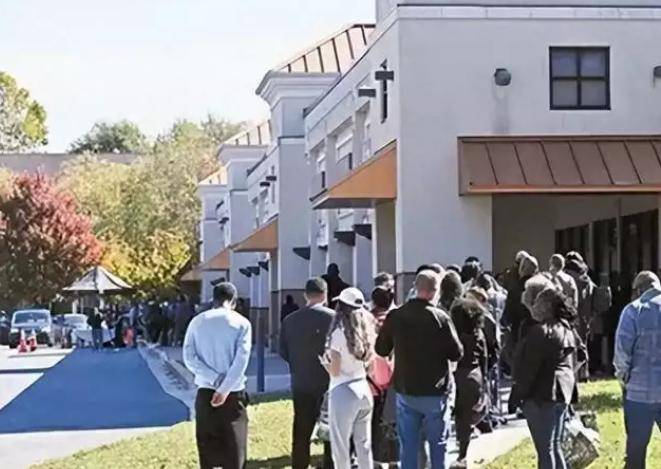
反对关税的是傻瓜?特朗普承诺发放关税红利,美国每人2000美元
Sou Hu Cai Jing· 2025-11-11 16:40
Group 1: Trump's "Dividend" Proposal - Trump's proposal to distribute at least $2,000 to most Americans is seen as a political strategy to regain public support after recent electoral losses [3][8] - The proposal claims that tariffs are generating trillions in revenue, which would fund the dividend, but this contradicts previous statements about using tariff revenue to pay down national debt [9][11] - The feasibility of the proposal is questioned due to the necessity of Congressional approval, with Republican lawmakers expressing strong opposition to direct cash payments [13] Group 2: Economic Implications - The U.S. federal debt has surpassed $37 trillion, making it economically unviable to support both cash payments and debt repayment through tariff revenue [11] - If implemented as tax cuts rather than direct payments, the proposal could exacerbate income inequality, benefiting high-income groups more than low-income ones [17] - The potential for a global trade war arises if Trump increases tariffs to fund the dividend, leading to retaliatory measures from other countries [39] Group 3: Ukraine's Security Concerns - Ukrainian President Zelensky warns that a desperate Russia may extend its aggression to European nations, reflecting the precarious security situation in Ukraine [18][24] - Ukraine's energy infrastructure has been severely damaged, with 60% of gas production and electricity facilities destroyed, leading to a significant energy shortfall this winter [20] - The ongoing conflict and the U.S. political landscape may impact military aid to Ukraine, with concerns that reduced U.S. support could embolden Russian actions [34][38] Group 4: Broader Geopolitical Context - The intersection of Trump's economic policies and the Ukraine conflict highlights the delicate balance between domestic politics and international security [32] - European nations may need to increase their defense spending and support for Ukraine if U.S. aid diminishes, creating a cycle of escalation in response to perceived threats [42][44] - The outcome of U.S. Congressional deliberations on the dividend proposal and the Supreme Court's ruling on tariff legality will be critical in shaping future U.S. economic and foreign policy [47]
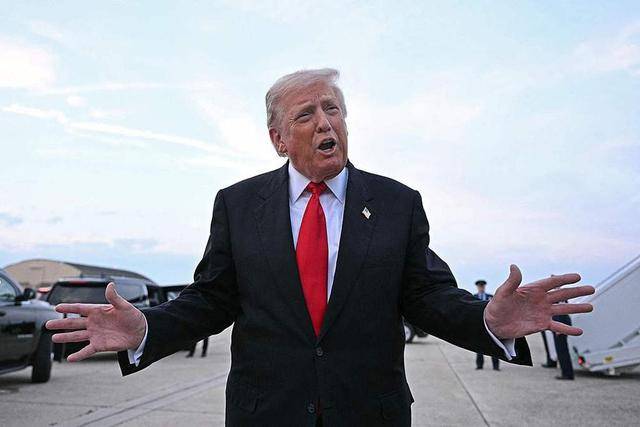
特朗普赚大了,达成新的关税协议,还要每人发放2000美元关税红利
Sou Hu Cai Jing· 2025-11-11 10:07
Core Viewpoint - Trump's proposal to distribute $2,000 "tariff dividends" to American citizens raises questions about the feasibility and implications of such a plan, particularly regarding funding sources and potential economic consequences [1][22]. Funding Sources - Trump's claim that the funds will come from increased tariff revenues is based on the U.S. Treasury's report indicating a record $195 billion in tariff income for FY2025, a 150% increase from FY2024 [3]. - However, the actual daily tariff revenue is approximately $5.3 million, contradicting Trump's assertion of $2 billion per day [3]. Financial Viability - With over 220 million low- to middle-income adults in the U.S., distributing $2,000 each would cost around $440 billion, and a broader coverage could push the total to $600 billion, significantly exceeding current tariff revenues [5]. - The U.S. Treasury Secretary has suggested that the "dividends" may not be direct cash payments but rather tax reductions, indicating a shift from Trump's initial cash distribution narrative [5][7]. Legal and Economic Concerns - Trump's use of the International Emergency Economic Powers Act to implement tariffs raises constitutional questions, with the Supreme Court currently reviewing the legality of these actions [7]. - The potential for inflation to rise again due to large-scale fiscal stimulus is a concern, especially with current inflation rates around 3%, which are still above the Federal Reserve's target [9][11]. Political Implications - Politically, the proposal may resonate with voters facing rising living costs, as it mirrors past strategies used during the pandemic to gain electoral support [13]. - Trump's narrative of "America first" suggests that foreign entities are funding these dividends, but the reality of who bears the economic burden is more complex [14]. Economic Impact - Tariffs, while generating short-term revenue, may harm U.S. businesses in the long run, with estimates indicating over $80 billion in losses for American companies in 2025 due to increased costs from tariffs [16]. - The retaliatory tariffs imposed by other countries have diminished the competitiveness of U.S. products globally, leading to a potential restructuring of supply chains away from the U.S. [18][20]. Conclusion - The logic behind Trump's "tariff dividends" appears flawed, as the funding is insufficient to support the proposed plan, and the broader economic implications could lead to higher prices and reduced purchasing power for consumers [22][23].
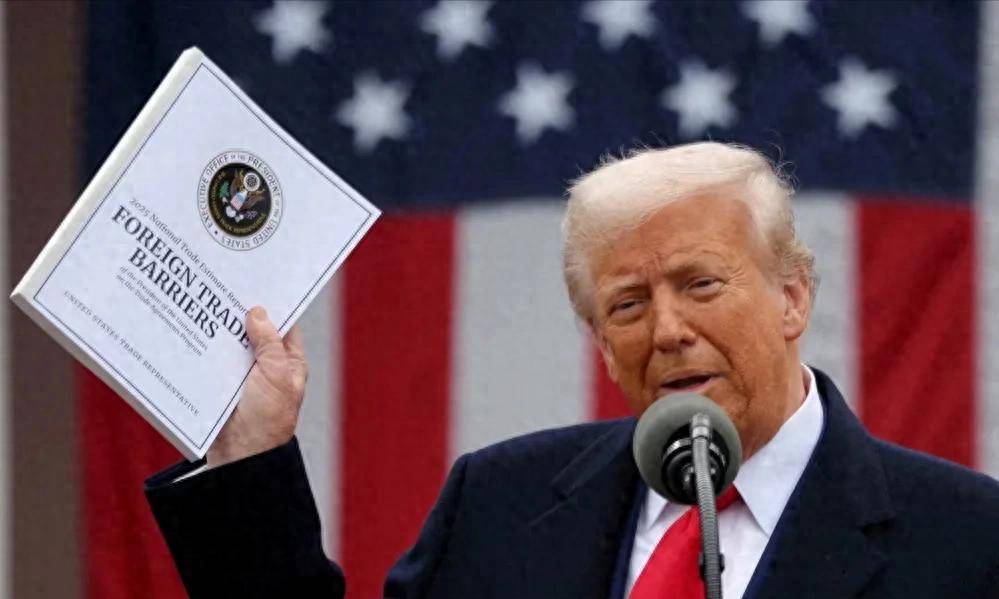
特朗普要给每人发2000美元!“关税红包”恐成通胀炸弹
Guo Ji Jin Rong Bao· 2025-11-11 06:33
Core Points - President Trump announced a plan to distribute "at least $2000 per person" to all Americans except "high-income individuals," funded by tariff revenues [1][3] - The bipartisan Committee for a Responsible Federal Budget (CRFB) warned that the proposed distribution could exceed potential tariff revenue [1][8] - Economic experts express concerns that this initiative may lead to inflation similar to that experienced during the pandemic stimulus payments [1][8] Group 1: Proposal Details - The proposed "tariff dividend" could cover approximately 85% of American adults, amounting to about 220 million people [7] - Individuals earning up to $75,000, families earning up to $112,500, and married couples earning up to $150,000 would receive the full amount [7] - The plan lacks specific details on implementation and the definition of "high-income individuals" [3] Group 2: Economic Implications - Historical data suggests that large cash distributions can lead to significant inflation, as seen during the pandemic [8] - The CRFB estimates the total cost of the proposed dividend could reach $600 billion, while current tariff revenues are only $195 billion [8][9] - Experts argue that the plan could exacerbate the national debt, which is nearing $40 trillion, and criticize the irresponsibility of using fiscal revenue for cash distributions [9]
美股英伟达暴涨6%,引领纳指报复性反弹
3 6 Ke· 2025-11-11 05:52
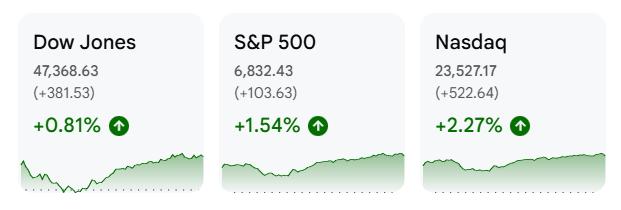
Group 1 - The reopening of the Z government is expected to boost market sentiment and restore delayed economic data, providing more information for the Federal Reserve's December decisions [1] - Trump's proposal of "tariff dividends" aims to return tariff revenues directly to the public, enhancing consumer spending and investor confidence [1] - Nvidia's strong performance, particularly a 5.79% increase, has contributed to the market's upward movement [1] Group 2 - Nvidia has requested TSMC to increase the monthly production of its new Blackwell chips by 50%, indicating a significant demand increase [2] - Huang Renxun stated that market demand is expanding at an explosive rate, prompting major HBM chip suppliers to ramp up production [4] - The AI chip market is experiencing a reassessment of Nvidia's growth potential, positively impacting the overall tech sector [4] Group 3 - The optical communication sector is witnessing a surge, driven by the need for high-speed optical interconnects to support AI data centers [5] - Major cloud providers are expected to significantly increase their capital expenditures, with a forecast of $473 billion by 2027 [5] - Ciena (CIEN) and Credo Technology (CRDO) have seen substantial stock price increases, reflecting the strong performance of the optical communication sector [7][8] Group 4 - Robinhood plans to launch a new fund aimed at retail investors to access rapidly growing private AI companies, indicating a shift in asset management towards individual investors [11][12] - The fund will focus on a concentrated portfolio of top private companies, potentially using leverage to enhance returns [12] - Despite structural risks associated with the fund's design, there is strong investor interest in AI themes, suggesting a robust market for such financial products [13]

Peter Schiff Slams Trump's $2,000 'Dividend' Checks: '...Defeats The Very Purpose Of The Tariffs' - Apple (NASDAQ:AAPL), Qualcomm (NASDAQ:QCOM)
Benzinga· 2025-11-10 11:18
Core Viewpoint - Economist Peter Schiff warns that President Trump's proposal for a "$2,000-per-person tariff dividend" is economically self-defeating and would undermine the purpose of tariffs [1][2]. Group 1: Economic Implications - Schiff argues that the total cost of the proposed dividends would exceed the revenue generated from tariffs, potentially leading to an increased trade deficit [1]. - He believes that consumers will use the extra income from the dividends to purchase more expensive imports, further exacerbating the trade deficit [2]. Group 2: Market Reactions - The proposal has elicited mixed reactions from financial commentators, with some viewing it as a market-boosting stimulus, while others share Schiff's concerns about its inflationary potential [3]. - Anthony Pompliano noted that stocks and bitcoin tend to rise in response to stimulus measures, while Otavio Costa warned against using monetary payouts to combat inflation [3]. Group 3: Alternative Interpretations - Treasury Secretary Scott Bessent suggested that the "$2,000 dividend" might not be a direct payment but could take various forms, such as tax deductions, indicating that the figure may represent cumulative tax-cut proposals [4].