债务经济

Search documents
美国已入死局!现在打,立马死,不打,过几年死,只差咱们掀桌子
Sou Hu Cai Jing· 2026-02-19 17:12
Group 1: Military Spending and Debt - The U.S. defense budget for fiscal year 2026 is expected to exceed $900 billion, accounting for nearly 30% of global military spending, which is significantly higher than the combined total of several other countries [1] - The U.S. national debt is rising sharply, with daily increases in debt levels, and interest payments on this debt are approaching the annual military spending, becoming a rigid expenditure in the budget [1][5] - If the U.S. were to engage in a large-scale war, it would require immediate substantial funding, which the current fiscal system cannot support, potentially leading to a breakdown in financial flows and a significant impact on the global credibility of the dollar [3] Group 2: Economic and Social Challenges - The U.S. fiscal deficit for fiscal year 2024 is projected to exceed $1.8 trillion, with debt continuing to expand at a rate of several trillion dollars annually, leading to increased interest payments that will consume a larger portion of fiscal revenue [5] - The global position of the dollar is declining, with its share in global foreign exchange reserves dropping to 56.92%, the lowest in nearly 30 years, as more countries seek to reduce reliance on the dollar [7] - The wealth gap in the U.S. has reached a historical high, with the wealthiest 1% holding more wealth than the bottom 90%, exacerbating social tensions and leading to a decline in public safety and social cohesion [9][10] Group 3: Strategic Implications - The U.S. faces a dilemma: engaging in war could lead to significant financial and monetary system shocks, while not engaging would exacerbate debt pressures and social divisions, diminishing its global leadership over the coming years [12][13] - China's approach of promoting multilateral cooperation and maintaining a peaceful development path contrasts with U.S. strategies, which may lead to a shift in global dynamics [11][15] - The intertwined issues of military spending, debt-driven economy, and social divisions create a complex development predicament for the U.S., making it difficult to find a straightforward solution [13]


“斩杀线”折射消费主义泥潭
Xin Lang Cai Jing· 2026-01-28 10:32
Group 1: Core Insights - The article highlights the paradox of American consumerism, where individuals are increasingly spending money they have not earned on unnecessary items to impress others, leading to a decline in the "American Dream" [1] - The total household debt in the U.S. has reached a record $18.59 trillion, with mortgages, auto loans, and student loans being the primary contributors to this debt trap [2] - The financial burden of housing costs disproportionately affects low-income and minority groups, with African Americans facing a housing cost burden that is typically 10 percentage points higher than that of white Americans [2] Group 2: Debt and Economic Pressure - In 2025, personal bankruptcy filings in the U.S. are projected to reach nearly 540,000, a 12% increase from 2024, with mortgage debt being a significant factor [2] - The real annual income of the middle class, adjusted for inflation, has decreased by 5.7% over the past 50 years, while essential costs like healthcare and food have risen faster than overall inflation [3] - Auto loans have become a necessary expense for many American families, with 20.3% of new car buyers expected to have monthly payments of $1,000 or more in 2025, up from 18.9% the previous year [3] Group 3: Student Loans and Financial Stability - The total student loan debt in the U.S. stands at $1.8 trillion, with nearly 43 million Americans holding federal student loan debt, averaging between $30,000 and $40,000 per person [4] - Many borrowers are in default or near-default status, indicating that student loans are becoming a long-term financial burden rather than an investment in future earnings [4] - The uncertainty surrounding student loan policies, including the recent Supreme Court ruling against debt forgiveness, adds to the financial instability faced by borrowers [5] Group 4: Consumerism and Marketing Influence - Advertising and social media play a significant role in shaping consumer behavior, with 63% of Generation Z and 49% of millennials stating that social media ads heavily influence their purchasing decisions [6] - The constant promotion of an idealized lifestyle through advertising creates a "fear of missing out," leading consumers to engage in excessive spending [7] - The reliance on debt to support consumerism is evident, as the U.S. economy increasingly depends on debt expansion for growth [8] Group 5: Broader Economic Implications - The U.S. federal debt has surpassed $38 trillion, with borrowing rates outpacing economic growth, raising concerns about the country's ability to repay its debts [8] - The intertwining of consumer debt and economic policy reflects a broader reliance on debt-driven consumption, challenging the sustainability of the American Dream narrative [9] - The disparity between the promised benefits of consumerism and the reality faced by many Americans raises critical questions about the future of consumer culture in the U.S. [9]
美国经济金融走势背离 “双周期”演绎新特征
Jin Rong Shi Bao· 2025-12-08 02:43
Core Viewpoint - The concept of "dual cycles" in the economy and finance indicates that economic cycles and financial cycles operate independently, leading to a divergence that poses higher demands for macroeconomic policy coordination [1][3][4]. Summary by Sections Evolution and Definition of Dual Cycles - The debt economy era began in the 1990s, where economic growth increasingly relies on debt expansion, leading to a credit-driven economic model [2][3]. - The financial policies in Western economies tend to accumulate excessive money supply, resulting in a disconnect between monetary policy and real economic activity [2][3]. Divergence of U.S. Economy and Finance - Post-pandemic, the U.S. economy shows a gradual decline, with real GDP growth rates projected at 2.5%, 2.9%, and 2.8% from 2022 to 2024, while nominal GDP growth rates are expected to decline from 9.8% to 5.3% in the same period [4][5]. - Despite a decline in economic growth, U.S. consumer spending remains strong, with personal consumption expenditures projected to grow by 9.7%, 6.5%, and 5.6% from 2022 to 2024 [5][6]. Strong Financial Performance - U.S. financial markets have shown robust performance, with domestic listed company market capitalization expected to grow by -17.0%, 21.5%, and 27.0% from 2022 to 2024, indicating a divergence from economic growth trends [7][8]. - The U.S. capital market has adopted internationalization strategies to counteract the trend of "de-equitization," maintaining a stable number of listed companies despite a decline in domestic listings [8]. Implications of Economic and Financial Separation - The divergence between economic and financial cycles has become evident, particularly during the periods of 2019-2020 and 2023-2024, highlighting the independent evolution of these cycles [15][16]. - The current economic and financial landscape suggests that the U.S. maintains a "strong financial" stance to support a weaker economy, which may not be sustainable in the long term [16][17]. International Economic Competition - The importance of capital flows in the international financial landscape is expected to rise, with the "dual cycles" phenomenon becoming more pronounced in open economies [18]. - The shift in focus from trade and currency to capital will redefine international economic competition, necessitating careful consideration of capital project openness for countries aspiring to become financial powers [18].
关键数据突然反转!行情可能要变了?
大胡子说房· 2025-09-28 10:31
Core Viewpoint - Recent economic data from the U.S. indicates a potential shift in the economic landscape, with improved employment figures and GDP growth, while inflation remains a concern, suggesting that the Federal Reserve may reconsider its interest rate policies [1][2][3]. Economic Data Summary - Initial jobless claims in the U.S. were reported at 218,000, lower than the expected 235,000 and the previous month's 232,000, indicating a potential improvement in employment conditions [1]. - The actual GDP for Q2 was reported at 3.8%, significantly above the market expectation of 3.3%, suggesting stronger economic growth than previously anticipated [1]. - The PCE price index for the month showed a 0.2% increase, aligning with market expectations, indicating that inflation has not worsened but also has not improved significantly [1]. Federal Reserve Implications - The recent data signals to the Federal Reserve that there may not be an immediate need to lower interest rates in October, contrasting previous expectations of rate cuts [2][3]. - There are concerns regarding the authenticity of the employment data, with suggestions that it may be inflated to prevent the Fed from continuing its rate cuts, reflecting the influence of Wall Street interests [2][3]. Debt and Economic Strategy - The U.S. is facing a significant debt burden, with total global debt reaching a record $337.7 trillion, and the U.S. short-term debt constituting 20% of its total debt, indicating a reliance on short-term borrowing [6][8]. - The necessity for the U.S. to lower interest rates is underscored by the need to manage its debt effectively, as high-interest rates could exacerbate the debt situation [8][9]. Market Outlook - Despite potential short-term market volatility, the expectation remains that the U.S. will continue to pursue a path of lower interest rates, which could benefit non-dollar assets, particularly in emerging markets [9]. - The current economic conditions present an opportunity for investors to capitalize on the anticipated appreciation of assets in the context of ongoing U.S. monetary policy adjustments [9].

全球债券被抛售,这是什么信号?
大胡子说房· 2025-09-06 04:23
Core Viewpoint - The article emphasizes the importance of monitoring global debt markets alongside domestic markets to understand the current economic environment and potential asset price movements [1]. Group 1: Global Debt Market Changes - The global economy is heavily reliant on debt, with developed countries like the US, Europe, and Japan issuing bonds to sustain their economies [1]. - Recently, a significant crisis has emerged in the global debt market, with Japan's bond market experiencing historic yield increases, such as the 30-year bond yield reaching 3.222%, the highest since 1999 [1][2]. - The surge in bond yields indicates a lack of demand for these bonds, as evidenced by overseas investors selling 6.39 trillion yen (approximately 439 million USD) worth of Japanese bonds in a single month [2]. Group 2: Bond Market Dynamics - The rising yields in Japan are mirrored in other developed countries, with the UK seeing its 30-year bond yield rise to 5.64%, the highest since 1998 [2][3]. - German and French 30-year bond yields have also reached their highest levels since 2011, with monthly increases of approximately 15 and 27 basis points, respectively [3]. - The unusual behavior of US Treasury yields, which are rising despite strong expectations for interest rate cuts, suggests a declining willingness among investors to hold US debt [3]. Group 3: Interconnectedness of Global Bonds - The bonds of developed countries are interconnected, meaning a crisis in one can lead to a cascading effect on others due to the investment strategies of cross-border financial institutions [3][5]. - The decline in demand for bonds from major economies indicates a potential systemic risk, as the collapse of one country's bond market could trigger failures in others [5][6]. - The article warns that the current situation could lead to a global economic crisis, potentially larger than the 2008 financial crisis or the Great Depression of 1929 [6]. Group 4: Implications for Investment Strategy - Investors are advised to remain cautious and consider diversifying their portfolios with recognized safe-haven assets, such as gold, in light of the rising global financial risks [6][7]. - The article stresses the importance of not being complacent with domestic market optimism and recognizing the broader risks present in the global economic landscape [7].

一个隐藏的危机,将引发全球市场震荡!
大胡子说房· 2025-09-02 12:23
Core Viewpoint - The article emphasizes the importance of monitoring global debt markets alongside domestic markets to understand the current economic environment and potential asset price movements [1]. Group 1: Global Debt Market Changes - The global debt market is experiencing significant turmoil, with rising yields indicating a loss of investor confidence in government bonds, particularly in developed countries like Japan, the UK, and Germany [1][2]. - Japan's 30-year bond yield reached a record high of 3.222% on August 30, while the 10-year yield surpassed 1.627%, marking peaks not seen since the 2008 financial crisis [1][2]. - Overseas investors sold 6.39 trillion yen (approximately 439 million USD) of Japanese bonds in a single month, reflecting a drastic reduction in demand [2]. Group 2: Interconnectedness of Global Bonds - The article highlights that bonds from developed countries are increasingly interconnected, meaning that issues in one country's bond market can trigger crises in others [3][5]. - The rise in yields across European bonds, such as the UK's 30-year bond reaching 5.64%, indicates a broader trend of declining demand for government debt [2][3]. - The decline in demand for U.S. bonds, despite strong expectations for interest rate cuts, suggests a growing reluctance among investors to hold these assets [3]. Group 3: Implications for Global Economy - The rising yields and lack of buyers for government bonds signal potential crises in the global financial markets, which could lead to a significant economic downturn, potentially worse than the 2008 crisis [6]. - The article warns that even countries with strong macroeconomic controls will be affected by these global trends, as their economies are tied to external demand [6][7]. - The current environment necessitates a careful approach to asset allocation, with a recommendation to invest in recognized safe-haven assets like gold [6][7].

巴菲特给“懂王”的关税战敲响了警钟
Sou Hu Cai Jing· 2025-05-05 09:51
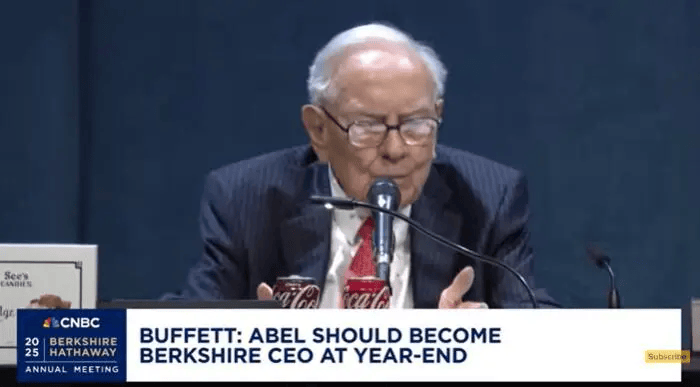
Group 1 - The annual Berkshire Hathaway shareholder meeting highlighted the end of an era as Warren Buffett prepares for retirement, passing leadership to Greg Abel, indicating a strategic transition within the company [2] - Buffett's decision to retire is influenced by the passing of his long-time partner, Charlie Munger, suggesting a shift in personal and professional dynamics [2] - Berkshire Hathaway's cash reserves have reached a record high of $347 billion, providing ample resources for future investments under new leadership [2] Group 2 - Buffett criticized the trade war initiated by Trump, labeling it a strategic mistake that could alienate allies and provoke global discontent, emphasizing the importance of international trade [2] - The ongoing trade conflict has created a challenging environment for the U.S., with potential long-term economic repercussions as allies begin to protect their interests [3] - The U.S. economy's reliance on consumer spending and high leverage could face severe impacts from rising inflation, which may lead to a reversal of the current interest rate policies [4] Group 3 - Buffett warned that the current fiscal decision-making in the U.S. is systematically undermining the value of currency, a trend observed globally [4] - The reliance on debt and monetary expansion is reaching its limits, with potential consequences for the U.S. economy as it faces significant debt challenges [4] - The metaphor of cash and bonds as "melting ice cubes" illustrates the urgency of addressing currency devaluation and the risks associated with fixed-income investments in a deteriorating economic environment [4]