学生心理健康

Search documents
健康第一!新学期动起来
Xin Lang Cai Jing· 2026-02-27 19:29
Core Viewpoint - The article outlines a three-phase plan for building a "Healthy School" system in China, aiming for comprehensive health education and improved student health by 2035 [1] Phase Goals - By 2027, the plan aims to complete the three-year action plan for building a strong education system, establishing health school construction pilot programs, and developing standards for health school work [1] - By 2030, the "Health First" education concept is expected to be widely adopted, with significant improvements in health education and conditions in schools, leading to better student health outcomes [1] - By 2035, the goal is to establish higher quality health schools universally [1] Key Tasks - Strengthening school sports work by implementing a student fitness plan, ensuring that middle and primary school students engage in at least 2 hours of physical activity daily, and promoting extracurricular sports activities [1] - Enhancing aesthetic education by fully implementing art courses to help students develop 1-2 artistic specialties [1] - Promoting labor education by integrating labor habits into education and encouraging skill and achievement showcases among students [1] - Deepening mental health education by building a robust team of mental health teachers and establishing a national monitoring system for student mental health [1] - Comprehensive prevention of myopia by focusing on key stages in early education and implementing detailed prevention measures [1] - Effective management of student weight by enhancing obesity prevention efforts and fostering collaboration between families and schools [1] - Ensuring food safety on campuses by strictly regulating food service management and training staff accordingly [1] - Strengthening life safety education by incorporating emergency rescue knowledge into the curriculum and equipping schools with necessary emergency devices [1]
建议提案办理见成效丨集众智谋良策,为建设教育强国添活力——教育部扎实推动落实代表委员建议提案
Xin Hua Wang· 2026-02-10 00:31
Core Viewpoint - The Ministry of Education is actively addressing the challenges posed by changes in school-age population through flexible allocation of educational resources and has received numerous suggestions from representatives to enhance educational reform [1][2]. Group 1: Educational Resource Allocation - The Ministry of Education has implemented a special action plan for transparent enrollment in compulsory education and established a monitoring and early warning system for changes in resident school-age population [2]. - The Ministry is also promoting the revitalization of ordinary high schools in counties to expand educational resources [2]. - Various regions, such as Sichuan, are utilizing digital maps of school-age populations to guide the optimization of educational resource allocation [2]. Group 2: Legislative Engagement and Suggestions - In 2025, the Ministry of Education handled a total of 2,721 proposals from the National People's Congress, with 1,326 being led by the Ministry, covering various aspects of educational reform [2]. - The suggestions reflect the concerns of representatives and the public regarding educational development, serving as both a "barometer" and a "task list" for the Ministry [2]. Group 3: Curriculum and Talent Development - The Ministry is accelerating the establishment of a mechanism for adjusting academic disciplines and professional settings in response to national strategic needs, with 275 new master's and doctoral programs, 1,839 new undergraduate programs, and 12,000 new vocational programs added in 2025 [2]. - To address the cultivation of top talent in artificial intelligence, the Ministry is promoting the establishment of related academic disciplines and innovative teaching models [3]. Group 4: Mental Health Initiatives - The Ministry issued measures to strengthen mental health work for middle and primary school students, focusing on alleviating exam anxiety and enhancing psychological resilience [4]. - There is a nationwide implementation of a requirement for students to engage in at least two hours of comprehensive physical activity daily, alongside an increase in the number of mental health teachers across educational stages [5]. - The Ministry is enhancing communication with representatives to gather opinions and feedback on educational policies and to ensure the effective implementation of suggestions [5].
心理咨询室挤满大学生
经济观察报· 2026-02-05 12:58
Core Insights - The article highlights a significant increase in mental health issues among university students, with a 60% rise in psychological counseling requests in one institution alone, indicating a broader trend across multiple universities [3][13] - The underlying causes of these mental health challenges are linked to high academic pressure, lack of social skills, and inadequate support systems during formative years [9][19] Group 1: Mental Health Trends - In 2025, among over 200 students managed by a counselor, 7 reported suicidal thoughts, attributed to academic stress, relationship issues, and roommate conflicts [2][3] - A key university in Jiangsu reported a 30% increase in psychological counseling requests from 2019 to 2025, outpacing enrollment growth [3] Group 2: Social Skills and Communication - Many students lack basic social skills, often avoiding direct communication with roommates, leading to conflicts that escalate to requests for room changes or even police involvement [5][6] - Students exhibit a tendency to feel overwhelmed by peer pressure, leading to feelings of inadequacy and jealousy, which further exacerbates mental health issues [7][9] Group 3: Family Influence and Background - A significant number of students diagnosed with mental health disorders come from high-pressure family environments, often referred to as "tiger parents," which contributes to their struggles in university [9][10] - The article discusses individual cases, such as a student who faced severe familial expectations and violence, leading to long-term psychological issues [10][11] Group 4: Resource Allocation and Professional Support - The demand for psychological counseling in universities has outstripped available resources, with some students facing long wait times for appointments [13][14] - There is a noted shortage of qualified mental health professionals in educational institutions, leading to increased pressure on existing staff [13][14] Group 5: Stigma and Acceptance of Mental Health Issues - There is a growing acceptance of mental health issues among students, with more individuals seeking help compared to previous years, indicating a shift in societal attitudes [20] - The article emphasizes the importance of emotional intelligence and interpersonal skills in preventing mental health issues, suggesting that current educational systems focus too heavily on academic performance [19][20]


“AI+心理健康” 守护学生成长
Ren Min Ri Bao Hai Wai Ban· 2026-01-15 22:44
Core Insights - The integration of AI technology in schools is enhancing psychological health assessments and support for students, allowing for early detection and intervention of mental health issues [9][10][12]. Group 1: AI Psychological Assessment - Schools are adopting portable AI psychological assessment devices to evaluate students' mental health, providing metrics such as anxiety levels and emotional tendencies [10][11]. - The AI assessment device can collect over 30,000 pulse data points in just five minutes, offering a more accurate reflection of students' psychological states compared to traditional methods [11]. - Beijing Hongzhi Middle School has introduced 50 AI psychological assessment devices, enabling efficient and dynamic mental health screenings for over 1,300 students [12]. Group 2: AI Psychological Counseling - AI technology is also being utilized for psychological counseling, with systems like the AI Stress Relief Sphere providing personalized support and emotional recognition for students [12][13]. - The AI counseling programs are designed to be more approachable for students, particularly those who may be reluctant to seek help from human counselors [12][13]. - The "Zizai" psychological counseling model has been implemented in schools, offering empathetic chat and expert-level guidance, which has shown significant engagement from students and parents [13][14]. Group 3: Community and Public Services - Community centers are incorporating AI psychological systems to provide mental health support for youth, creating safe spaces for emotional expression and assessment [15][16]. - The AI mental health monitoring system in Guangzhou includes 14 modules to assess various psychological aspects, aiming to create comprehensive mental health profiles for adolescents [16][17]. - The "Yuexin" Growth Center in Wuxi is leveraging AI and big data to build a dynamic database for 46,000 students, facilitating collaborative mental health education across schools and communities [17].

2025全球高教十大趋势:你的留学、求职与未来,正被重塑!
Sou Hu Cai Jing· 2026-01-10 07:16
Core Insights - The global higher education landscape is undergoing a profound transformation, moving beyond the traditional model of "study-graduate-job" to a more complex and integrated approach by 2025 [1] Group 1: AI Integration in Education - AI's role in education has shifted from discussion to implementation, with countries developing national strategies to integrate AI into teaching [3] - Future classrooms will feature "human-machine collaboration," where AI personalizes learning experiences based on individual progress [3] Group 2: Digital Education Frameworks - The EU has introduced a higher education interoperability framework to standardize technology and data across member states, enhancing resource sharing [5] - This framework allows for "cross-border virtual learning," enabling students to take courses from different countries with credit transferability [5] Group 3: Flexible Academic Certification - The Lisbon Convention has been revised to include micro-credentials and online learning outcomes, enhancing the recognition of diverse educational experiences [7] - Students can now combine traditional degrees with recognized micro-credentials, improving their employability [7] Group 4: Sustainability in Higher Education - Sustainability has become a core agenda for universities, with initiatives promoting environmentally friendly practices in campus management and curriculum [10] - Attending a sustainable university provides students with relevant knowledge and experiences in green economy and ESG-related fields [10] Group 5: Inclusivity in Education - There is a notable increase in access to higher education for refugees and marginalized groups, reflecting the universal value of education [12] - This inclusivity fosters a diverse campus culture, enriching the learning experience through varied perspectives [12] Group 6: Policy Considerations for Study Abroad - Students must pay attention to changing immigration policies in different regions, as some areas tighten regulations while others become more welcoming [14] - Long-term visa and work policy stability should be key factors in study abroad planning [14] Group 7: Mental Health Support - There is a growing institutional focus on student mental health, with digital services contributing to reduced anxiety and depression rates among students [16] - Prospective students should consider the mental health support systems of universities when making choices [16] Group 8: Interdisciplinary Learning - Over 40% of OECD countries are encouraging universities to implement interdisciplinary programs, highlighting the demand for multifaceted skill sets [19] - Students are advised to cultivate interdisciplinary thinking by taking courses outside their primary field of study [19] Group 9: Evolving Role of Educators - The role of university faculty is shifting from knowledge transmitters to facilitators of learning and practical connections [21] - Students will benefit from professors with industry experience who can provide real-world insights [21] Group 10: Importance of Humanities - In the AI era, skills developed through humanities education, such as critical thinking and ethical judgment, are becoming essential [23] - STEM students are encouraged to engage with humanities to enhance their understanding of human and societal dynamics [23] Group 11: Future Directions in Higher Education - The future of global higher education is directed towards four core themes: intelligence, connectivity, humanity, and sustainability [25] - Students are urged to leverage these trends to create personalized, interdisciplinary, and socially responsible educational paths [25]

教育部发布10条措施!
券商中国· 2025-11-19 15:09
Core Viewpoint - The Ministry of Education has issued a notification outlining ten measures to further strengthen mental health work for primary and secondary school students, aiming to alleviate exam-related anxiety and improve overall student well-being [1]. Group 1: Measures to Alleviate Anxiety and Improve Health - Effective measures to alleviate students' exam and admission anxiety have been introduced [1]. - Implementation of "two hours of physical activity every day" for students is mandated [2]. - Sufficient sleep time for students is ensured, with strict regulations against excessive study hours [3][8]. Group 2: Homework and Examination Management - Reduction of heavy homework burdens is emphasized, with strict control over written assignments and the prohibition of repetitive or punitive tasks [4]. - Examination management is standardized, with a reduction in the frequency of tests and a ban on ranking students based on exam scores [4]. Group 3: Health Education and Physical Activity - Comprehensive health education, including life safety and health, is integrated into the curriculum, with monthly practical activities to enhance students' resilience and emotional regulation [4]. - Schools are encouraged to collaborate with communities to provide sports facilities for after-school physical activities [4]. Group 4: Internet Use and Special Student Groups - Promotion of healthy internet usage habits among students is prioritized, with education on online safety and legal awareness [5][8]. - Special attention is given to vulnerable student groups, with tailored psychological support and regular monitoring of their emotional well-being [6][8]. Group 5: Psychological Support and Family Engagement - Establishment of a comprehensive psychological support system within schools, including training for teachers and the integration of mental health education into regular teaching [9][12]. - Encouragement of family involvement in students' mental health, with regular communication and educational activities for parents [11][12]. Group 6: Monitoring and Intervention Mechanisms - Development of monitoring and early intervention systems for students' mental health, including annual psychological assessments [7][8]. - Collaboration with various departments to create a robust framework for identifying and addressing significant psychological issues among students [13].

排解“情绪毒素” 以体育促身心健康——专家热议教育部要求全面落实“体育每天2小时”
Xin Hua She· 2025-10-26 08:57
Core Viewpoint - The Ministry of Education's recent measures emphasize the importance of implementing "2 hours of physical activity daily" for students, highlighting sports as a key factor in promoting mental health and overall well-being [1][5]. Group 1: Policy Implementation - The new measures aim to reduce academic pressure, ensure adequate sleep, and enhance physical activity, creating a comprehensive approach to student mental health [1]. - Experts believe that the role of sports in education is shifting from an extracurricular activity to a core component of holistic student development [1][2]. Group 2: Expert Insights - Expert Yu Sumei describes the pathway to enhancing mental health through sports as "moving, rising, and strengthening," emphasizing the need for sufficient physical exercise, quality improvement, and responsibility for personal health [2]. - The integration of sports and mental health education at Tianfu No. 7 Middle School serves as a successful model, demonstrating how sports can invigorate students' lives and promote mental well-being [2][3]. Group 3: Benefits of Physical Activity - Physical activity is seen as a natural outlet for emotional release, helping students manage stress and regain a sense of control and vitality [4]. - The implementation of "2 hours of physical activity daily" is viewed as a systematic approach to enhancing mental health, requiring a collaborative effort from schools, families, and society [5].
专访黄花春:广西男女升学率差距为何越拉越大
Jing Ji Guan Cha Wang· 2025-07-30 08:24
Core Viewpoint - The gender education gap in Guangxi, particularly in Chongzuo High School, is widening, with female students increasingly outnumbering male students in higher education settings, raising concerns about the future of male education and employment opportunities [1][2][8]. Group 1: Gender Education Disparity - Over the past decade, the ratio of male to female students in Chongzuo High School has shifted, with female students now making up over 50% of the science classes, leading to some male dormitories being converted to female dormitories [1]. - In the past 15 years, the proportion of female students in demonstration high schools in county towns has risen from about 25%-33% to 75%, while boys dominate in lower-tier high schools and vocational schools [1][2]. - In 2022, female students accounted for 73.3% of the admissions in Guangxi's ordinary undergraduate institutions, highlighting the growing gender disparity in education [2]. Group 2: Male Student Behavior and Academic Performance - In rural areas, while the number of boys and girls in classes appears balanced, boys often exhibit poor academic behavior, such as being disruptive or disengaged, leading to a significant number of boys failing to qualify for regular high schools [2][3]. - Many boys in rural areas tend to drop out of school and either work in low-skilled jobs or remain unemployed, relying on their parents for support [3]. Group 3: Family Education and Cultural Attitudes - The prevalence of left-behind children in rural Guangxi, where grandparents often take care of children while parents work away, contributes to a lack of educational focus and traditional gender biases favoring boys [6][7]. - The educational philosophy in some families is characterized by a "lying flat" mentality, where parents do not prioritize their children's education, believing that survival needs are sufficient [7]. - The lack of parental involvement in education leads to a situation where children, especially boys, lack motivation and responsibility, further exacerbating the educational gap [6][10]. Group 4: Societal Implications - The gender imbalance in education is leading to a mismatch in the marriage market, with educated women struggling to find suitable partners among less-educated men, particularly in rural areas [8]. - The increasing number of single-parent families, often resulting from educational and economic disparities, contributes to a new generation of left-behind children, perpetuating the cycle of educational neglect [9][10].
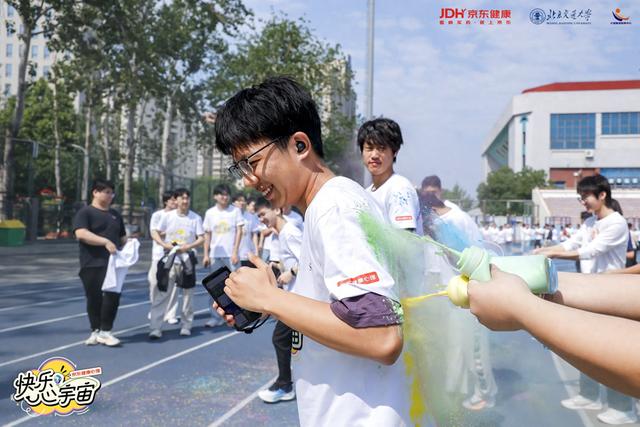
彩虹跑释放青春活力,北交大引入AI疏导学生心理健康
Bei Jing Ri Bao Ke Hu Duan· 2025-05-25 12:19
Core Viewpoint - The event held by Beijing Jiaotong University and JD Health on National Mental Health Day highlights the integration of AI technologies in enhancing mental health education for students [1][3]. Group 1: Event Overview - A mental health cultural activity was organized at Beijing Jiaotong University, featuring various interactive games and activities aimed at helping students relieve stress and improve psychological resilience [1]. - The event included a running activity where participants engaged in a colorful powder throw, symbolizing emotional support [1]. Group 2: AI Integration in Mental Health - The university has introduced AI large models and other new technologies in student mental health counseling to improve the quality of psychological education [3]. - The online psychological service platform "Red Fruit Garden Heart Station" allows students to engage in AI video chats for real-time depression detection reports [4]. Group 3: Support Systems and Challenges - The university aims to provide more channels and tools for students to seek help with psychological issues, focusing on early screening, identification, intervention, and treatment [3]. - Despite advancements in mental health infrastructure at universities, challenges remain during peak times like the start of the semester and exam periods, necessitating the use of internet platforms and AI to assist counselors [3]. Group 4: Comprehensive Support Services - The platform offers 24/7 psychological companionship through AI tools, enhancing the efficiency of mental health consultations and crisis prevention [4]. - It also connects students with over 6,000 psychiatrists and 2,000 psychological counselors, providing a green channel for offline medical services and comprehensive rehabilitation advice [4].