
先进计算

Search documents
中电港(001287) - 2026年2月5日投资者关系活动记录表
2026-02-05 13:06
Group 1: Company Overview and Product Lines - The company has approximately 130 authorized brand product lines, including domestic semiconductor brands such as Ziguang, Spreadtrum, and others, as well as international brands like NVIDIA, AMD, and Qualcomm [2][3]. Group 2: Internationalization Strategy - The company is establishing a subsidiary in Singapore to serve as a hub for its international operations, enhancing collaboration with upstream and downstream enterprises [4]. Group 3: Competitive Advantages and Development Focus - The company integrates top international brands and quality domestic resources, creating a strong brand influence and comprehensive product categories, which cover deep market needs across various industries [5]. - It aims to optimize profit structures and enhance performance contributions by focusing on sectors like artificial intelligence, automotive electronics, and renewable energy [5]. Group 4: Innovation and Application Development - The company has developed self-research solutions in areas such as AI, renewable energy, and automotive electronics, including various development boards and application solutions [6]. - Future innovation efforts will focus on key applications, value-added service platforms, and building a collaborative ecosystem to enhance supply chain resource advantages [6].
【行业深度】一文洞察2026年全球及中国芯片测试接口行业发展前景及投资趋势研究报告
Sou Hu Cai Jing· 2026-02-02 02:08
Core Insights - The global integrated circuit market is projected to recover to $539.5 billion in 2024, with a year-on-year growth of 25.9%, driven by the demand for artificial intelligence and advanced computing [2][8] - The semiconductor testing industry is expected to see significant growth, with the chip testing interface market projected to reach approximately $2.95 billion in 2025, reflecting a year-on-year increase of 13.4% [2][6] - China's chip testing interface market is anticipated to expand to around 6.5 billion yuan in 2025, supported by strong domestic demand and policy backing [2][11] Industry Overview - Chip testing interfaces, also known as test sockets, serve as a crucial hardware component connecting testing machines with the chips under examination, ensuring high signal fidelity and operational stability [4][6] - The industry is characterized by a competitive landscape where foreign companies dominate, while local firms are rapidly catching up, with notable players including Yamaichi and Leeno [2][3] Market Dynamics - The demand for logic and storage chips is expected to drive the integrated circuit market to $677.85 billion in 2025, with a further increase to $874.29 billion projected for 2026 [2][8] - The structure of China's integrated circuit industry is evolving, with design, manufacturing, and testing segments optimizing their market shares to 46%, 31%, and 23% respectively, indicating a shift towards higher value-added segments [11] Competitive Landscape - The chip testing interface market is witnessing a trend of foreign firms leading the market, while domestic companies like He Lin Wei Na and Tao Sheng Electronics are emerging as significant players [2][3] - The industry is experiencing a technological upgrade driven by the expansion of the semiconductor testing sector and advancements in manufacturing processes [2][6]

两部门印发指导意见 加快应急管理装备创新发展
Ren Min Ri Bao· 2026-01-29 22:02
Core Viewpoint - The Ministry of Emergency Management and the Ministry of Industry and Information Technology have issued guidelines to accelerate the innovation and development of emergency management equipment, aiming to overcome over 20 key core technologies and develop more than 20 innovative equipment by the end of 2027 [1] Group 1: Objectives and Goals - The guidelines emphasize the importance of emergency management equipment as a crucial support for modernizing emergency management systems and capabilities [1] - The goal includes promoting over 30 advanced technology equipment and ensuring high-quality development of the safety emergency equipment industry [1] Group 2: Specific Measures - The guidelines propose 12 specific measures to enhance the research and innovation of urgently needed technical equipment, strengthen the promotion and application of advanced applicable equipment, and support the development of the equipment industry [1] - There is a focus on integrating emergency management equipment with new technologies such as artificial intelligence, 5G, big data, the Internet of Things, satellite internet, Beidou, and advanced computing [1] Group 3: Modernization and Application - The guidelines call for increasing the deployment and application of advanced applicable technology equipment based on the functions of emergency rescue teams, aiming to accelerate the construction of a modernized equipment system [1]
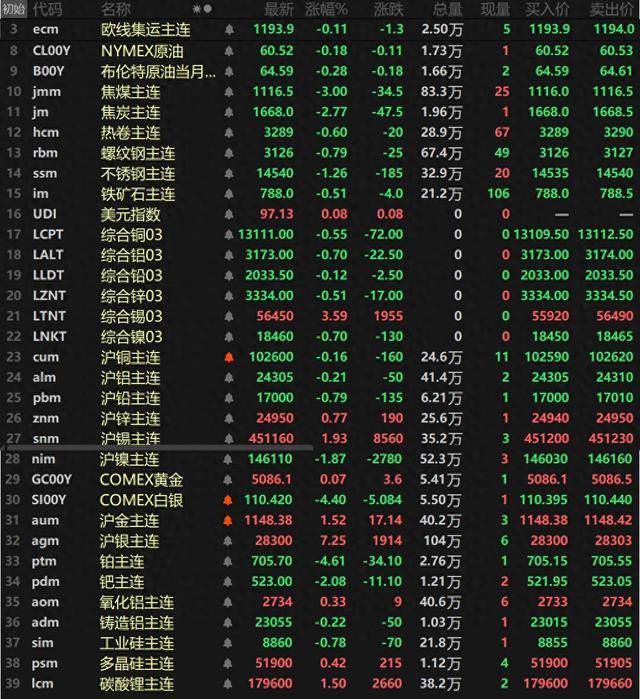
金属普跌 伦锡涨3.59% 沪银涨逾7%升破3万 沪金沪银续刷新高
Sou Hu Cai Jing· 2026-01-27 09:19
Metal Market - Domestic base metals experienced a general increase, with Shanghai tin rising by 1.93% and Shanghai zinc by 0.77%, while other metals saw declines, with Shanghai nickel leading the drop at 1.87% [1] - In the external market, most base metals fell, except for London tin, which increased by 3.59% [1] - Precious metals showed mixed results, with COMEX gold rising by 0.07% and COMEX silver dropping by 4.4%. In the domestic market, Shanghai gold rose by 1.52%, reaching a new historical high of 1154.46 yuan per gram, while Shanghai silver surged by 7.25%, breaking the 30,000 yuan per kilogram mark [1][2] Black Metals - The black metal sector collectively declined, with stainless steel down by 1.26% and rebar down by 0.79%. Other metals also saw minor declines [1] - In the coking coal sector, coking coal fell by 3% and coking coke by 2.77% [1] Lithium and Silicon - Lithium carbonate rose by 1.5%, while polysilicon increased by 0.42%. However, industrial silicon fell by 0.78% [1] Macro Economic Indicators - The National Bureau of Statistics reported that profits for large-scale industrial enterprises in China are expected to grow by 0.6% in 2025, totaling 73,982 billion yuan [4] - The People's Bank of China conducted a net injection of 780 billion yuan through reverse repos, maintaining the operation rate at 1.40% [5] Oil Market - Oil prices fell slightly, with WTI down by 0.18% and Brent down by 0.28%. Investors are closely monitoring the resumption of supply from Kazakhstan [8] - Canada and India are set to expand their oil and gas trade, indicating a strategic value in their energy relationship [8][9]
刚刚,两部委突发利好!A股,迎来三大变数!
券商中国· 2026-01-27 03:57
Core Viewpoint - The article discusses the rapid changes in the A-share market style, highlighting the influence of recent government policies on emergency management equipment innovation and the implications for investment strategies in the technology sector [1][3][4]. Group 1: Government Policies and Initiatives - The Ministry of Emergency Management and the Ministry of Industry and Information Technology issued guidelines to accelerate innovation in emergency management equipment, aiming to tackle over 20 key core technologies and develop more than 20 innovative equipment types by the end of 2027 [3]. - Recent favorable policies from various government departments aim to enhance the investment in technology innovation, including the promotion of artificial intelligence in manufacturing [4]. Group 2: Market Dynamics and Trends - The A-share market has experienced rapid style shifts, with funds rotating between technology, cyclical, and dividend sectors, leading to uncertainty among investors [1][6]. - The market is currently influenced by three main variables: the impact of deleveraging on bullish sentiment, the adjustment of large-cap stocks affecting theme speculation, and the potential for earnings surprises as the reporting season approaches [5][8]. - As of January 26, the financing balance in the Shanghai and Shenzhen stock exchanges remained high, indicating sustained market activity despite recent adjustments [7].

两部门:推进应急管理装备与人工智能、5G、大数据等新技术融合创新
Zhi Tong Cai Jing· 2026-01-27 03:01
Core Viewpoint - The Ministry of Emergency Management and the Ministry of Industry and Information Technology have issued guidelines to accelerate the innovation and development of emergency management equipment, emphasizing the importance of integrating advanced technologies and enhancing the capabilities of emergency management systems [1][2]. Group 1: Overall Requirements - The guidelines are guided by Xi Jinping's thoughts and aim to enhance the modernization of emergency management equipment, focusing on reform and innovation to strengthen core technology development [2]. - The approach emphasizes a demand-driven and practical orientation, targeting urgent needs in emergency management and ensuring a systematic and comprehensive planning process [2]. Group 2: Key Equipment Research and Innovation - By the end of 2027, the goal is to overcome more than 20 key core technologies, develop over 20 innovative equipment types, and promote more than 30 advanced technology applications [3]. - A mechanism for continuous collection of equipment research needs will be established to ensure timely and precise responses to frontline demands [4]. Group 3: Promotion and Application of Advanced Equipment - There will be an increased focus on equipping emergency rescue teams with advanced and applicable technologies, enhancing their capabilities in extreme scenarios [6]. - The guidelines call for the establishment of a standardized equipment system to improve interoperability and efficiency among various emergency management tools [5]. Group 4: Strengthening Support Structures - The establishment of technology innovation platforms and support for key laboratories will be prioritized to enhance research and development capabilities in emergency management equipment [8]. - Talent development initiatives will be encouraged, including partnerships with educational institutions to cultivate professionals in emergency management and equipment technology [8]. Group 5: Standardization and Normative Support - A comprehensive standardization system for emergency management equipment will be developed to improve the relevance and performance of the equipment [10]. - The guidelines advocate for the creation of a classification system for emergency management equipment to enhance its practical application [10]. Group 6: Promoting Equipment Industry Development - A platform for professional exchange and supply-demand matching will be established to foster collaboration between various stakeholders in the emergency management equipment sector [11]. - The guidelines aim to cultivate a robust ecosystem for the emergency management industry, encouraging innovation and the development of high-tech enterprises [11]. Group 7: Implementation and Coordination - Mechanisms for research, validation, promotion, and standardization of emergency management equipment will be improved to ensure coordinated efforts across different levels of government and industry [12]. - The guidelines emphasize the need for diversified funding mechanisms to support the development of emergency management equipment and industry [12].
国芯科技发预亏,预计2025年度归母净亏损2.38亿元
智通财经网· 2026-01-22 13:34
Core Viewpoint - Guoxin Technology (688262.SH) anticipates a net loss of 238 million yuan for the year 2025, which represents an increase in losses of 56.97 million yuan compared to the previous year [1] Financial Performance - The company expects to achieve an operating revenue of 532 million yuan in 2025, a decrease of 42.52 million yuan or 7.40% compared to 2024 [2] - Due to the revenue decline, gross profit is projected to decrease by 20.17 million yuan, reflecting a year-on-year decline of 14.52% [2] Business Segment Analysis - The revenue from the company's information technology innovation and information security business, which includes self-developed chips and modules, custom chip services, and IP licensing, is expected to reach 195.39 million yuan, marking a year-on-year increase of 39.38% [2] - Revenue from automotive electronic chips and industrial control chips is projected to be 166.79 million yuan, showing a significant year-on-year growth of 78.65% [2] - The automotive electronic chip business is expected to see substantial market progress, with anticipated shipments exceeding 13 million units in 2025, and cumulative shipments surpassing 25 million units by December 31, 2025, leading to an expected revenue of 126.50 million yuan, an increase of 82.32% year-on-year [2] - Revenue from artificial intelligence and advanced computing business is projected to be 169.50 million yuan, primarily from custom chip services, which is a decrease of 50.24% year-on-year due to supply chain disruptions affecting customer deliveries [2] - The supply chain for the artificial intelligence and advanced computing business is expected to return to normal by the end of August 2025, with active developments ongoing [2]

有色涨热潮:宏观、供需与产业变革共舞,后市谁主沉浮?长江1#铜价大涨2600元/吨
Xin Lang Cai Jing· 2026-01-12 03:34
Core Viewpoint - The recent surge in non-ferrous metal prices is driven by improved macroeconomic expectations, a reshaped supply-demand landscape, and transformative changes in industrial demand [1][2][9] Group 1: Macroeconomic Expectations - Global macroeconomic conditions are favorable for rising non-ferrous metal prices, with expectations of liquidity easing and a rebound in risk appetite following a slowdown in U.S. employment growth and a drop in unemployment rate [2] - The U.S. stock market, particularly the S&P 500, has reached record highs, boosting global risk appetite and directing funds towards commodities, making non-ferrous metals a focal point for investment [2] - In China, government stimulus plans, including consumption incentives and large-scale investment projects, are expected to enhance market sentiment and increase demand for non-ferrous metals [2] Group 2: Supply-Demand Landscape Supply Side - Supply constraints are evident, with significant production interruptions in major copper mines, leading to heightened concerns about copper supply [3] - Domestic aluminum production is nearing capacity limits, while overseas production is hampered by power issues, limiting overall supply growth [3][4] - Other metals like zinc and nickel are also facing supply tightness due to geopolitical tensions and production policy changes in key regions [4] Demand Side - Traditional demand for copper remains stable, while new demand from sectors like artificial intelligence and electric vehicles is surging, particularly in China [5][6] - Aluminum demand is expected to strengthen due to new energy applications, despite seasonal slowdowns in traditional sectors [5] - Zinc demand is anticipated to rise as companies prepare for year-end orders and stockpiling ahead of the Lunar New Year [5] Group 3: Industrial Demand Transformation - Rapid developments in emerging industries such as artificial intelligence and renewable energy are reshaping the demand structure for non-ferrous metals, with significant growth in the need for copper, aluminum, nickel, and tin [7] - Tin is experiencing explosive demand due to its critical role in advanced computing and AI infrastructure, while nickel is driven by the growth of high-nickel batteries in electric vehicles [7] Group 4: Market Outlook - The overall outlook for non-ferrous metal prices remains strong, supported by macroeconomic improvements and structural changes in supply and demand [9] - Copper prices are expected to fluctuate between 101,500 and 104,500 yuan/ton, while aluminum may see a rebound despite seasonal demand pressures [9] - Zinc and lead prices are projected to rise due to increased demand and low inventory levels, while nickel and tin are expected to maintain a strong upward trend due to ongoing supply constraints and robust industrial demand [9]

长江有色:地缘溢价AI与光伏需求爆发 12日锡价或上涨
Xin Lang Cai Jing· 2026-01-12 03:34
Group 1 - The core viewpoint is that the current surge in tin prices is driven by a combination of macroeconomic liquidity improvements, geopolitical disruptions, and a revolutionary change in industrial demand, particularly in AI and advanced computing sectors [1][2] - International oil prices have rebounded, positively impacting commodity prices, with LME tin closing at $45,700, up $2,025 or 4.64% from the previous trading day [1] - The macroeconomic environment is characterized by expectations of major central banks, especially the Federal Reserve, shifting towards a looser monetary policy, which has weakened the pressure on dollar-denominated assets and provided liquidity support for metal prices [1] Group 2 - Supply tightness is the central contradiction in the current market, with production recovery in Southeast Asia lagging behind expectations and new resource export management policies affecting cash flow and shipping schedules for traders [2] - The demand side is experiencing a dual engine pattern of "traditional recovery" and "emerging explosion," with domestic consumption stimulus policies effectively boosting traditional solder demand for electronic products, while AI and advanced computing are creating explosive new demand for high-end tin materials [2] - The active spot market has seen some products trading at a premium, and the overall market is expected to maintain a strong price center due to long-term supply constraints and robust industrial demand [2]
V型反转!锡价强势收复32.5万关口,“算力金属”迎来价值重估?
Xin Lang Cai Jing· 2025-12-19 07:27
Core Viewpoint - The recent rebound in tin prices is driven by macroeconomic expectations, supply chain risks, and changing industry narratives, indicating a significant shift in market trading logic [1][3]. Group 1: Macroeconomic Factors - The immediate catalyst for the rebound is the weak U.S. employment data, which has raised expectations for an upcoming interest rate cut by the Federal Reserve, leading to a weaker dollar and providing upward valuation support for dollar-denominated commodities [1][2]. - The easing liquidity expectations are becoming a key variable influencing commodity market sentiment [1]. Group 2: Supply Dynamics - The core contradiction in the fundamentals remains the rigid supply tension, exacerbated by low inventory levels, which amplifies price volatility [2]. - Global tin inventories are at historically low levels, making the supply chain highly sensitive to any disruptions [2]. Group 3: Demand Shifts - The demand narrative is undergoing structural changes, with emerging technologies like artificial intelligence and advanced computing driving new long-term growth for tin, despite seasonal pressures in traditional consumer electronics [2]. - Tin is essential for high-end soldering materials, serving as a foundation for AI servers and high-performance chip packaging, thus gaining robust support from future demand [2]. Group 4: Market Dynamics - The market focus has shifted from weak expectations to strong realities, with recent price rebounds reflecting a renewed investor attention on supply shortages [2]. - Any negative news from the supply side could be quickly priced in, especially in the context of extremely tight global inventories [2]. Group 5: Price Outlook - Short-term expectations indicate that tin prices will maintain a strong oscillating pattern, supported by persistent supply constraints and low global inventories [3]. - The anticipated price fluctuation range is between 320,000 to 335,000 yuan/ton, with the ability to break through the 330,000 yuan/ton resistance depending on new supply signals and the strength of emerging demand [3].