
全球生态文明建设

Search documents
共谋全球生态文明建设之路
Xin Lang Cai Jing· 2026-01-31 19:29
Core Viewpoint - The world has entered a "competitive era" influenced by geopolitical tensions and regional conflicts, leading to a decrease in the urgency of environmental risks in the short term, while extreme weather, biodiversity loss, and ecosystem collapse remain major challenges for humanity in the next decade [1] Group 1: Global Environmental Crisis - The world is experiencing a "boiling era," with the years 2023-2025 projected to be the hottest on record, with average temperatures 1.48°C higher than pre-industrial levels, approaching the 1.5°C threshold set by the Paris Agreement [2] - Systemic imbalances in global water resources have emerged, with approximately 60 million people living in water-insecure countries, and nearly 4 billion facing severe water shortages for at least one month each year [2] - Biodiversity loss is severe, with freshwater species populations decreasing by an average of 85%, terrestrial species by 69%, and marine species by 56% from 1970 to 2020 [3] - Land desertification is worsening, with 77.6% of land becoming drier from 1990 to 2020, and an increase of 4.3 million square kilometers of arid land, potentially affecting over 5 billion people by the end of the century [3] Group 2: Challenges in Global Environmental Governance - The global environmental governance framework is under strain, with rising populism and anti-globalization sentiments undermining international cooperation, particularly affecting the authority of UN agencies [4][5] - Developed countries are imposing rules that disadvantage emerging economies, such as carbon tariffs, while shifting the burden of emission reductions onto these nations [5] - Emerging economies face dual pressures of development and emission reduction, complicating their modernization efforts amid international expectations for greater accountability [5] Group 3: Call for Collaborative Action - The international community is urged to uphold the concept of a shared future for humanity, promoting multilateralism and a fair global environmental governance system to achieve the 2030 Sustainable Development Agenda [6] - China is highlighted as a responsible major country, contributing significantly to global ecological civilization efforts, including a commitment to reduce net emissions by 7%-10% from peak levels by 2035 and increasing forest coverage [7] - Collaborative international efforts in green development are emphasized, with China engaging in partnerships for sustainable projects and providing a significant share of global renewable energy components [7]
立法保护南极,立在当下、利在长远
Ren Min Wang· 2025-12-28 02:42
Core Viewpoint - The draft law on Antarctic activities and environmental protection aims to enhance the regulation and management of scientific research, tourism, and fishing activities in Antarctica, providing a legal framework for China's participation in global governance of the region [1][2]. Group 1: Legislative Context - The draft consists of 7 chapters and 57 articles, expanding the scope of existing administrative permits for Antarctic activities [1]. - The legislation seeks to transform the principles of the Antarctic Treaty into domestic law, clarifying departmental responsibilities and regulating relevant activities [1]. Group 2: China's Antarctic Activities - Over 40 years, China's Antarctic endeavors have evolved from minimal to significant, characterized by innovation and diversification [2]. - The increasing demand for legal management of growing private Antarctic activities underscores the need for a dedicated law to enhance coordination and supervision of these activities [2]. Group 3: Future Implications - The Antarctic region's role in addressing global climate change and promoting sustainable development is increasingly recognized, making it a crucial area for human society [2]. - Strengthening legal foundations for polar exploration and scientific research is essential for achieving the goal of benefiting humanity [2][3]. Group 4: International Cooperation - China plays a vital role in international governance related to Antarctic ecological and marine protection, proposing initiatives such as the establishment of special protection zones [2]. - The country is committed to enhancing its legal framework and scientific capabilities to contribute to global ecological civilization and sustainable development [3].
指引共同书写全球生态文明建设新篇章(深入学习贯彻习近平新时代中国特色社会主义思想·学习《习近平生态文明文选》第一卷专家谈)
Ren Min Ri Bao· 2025-10-27 22:38
Core Ideas - The article emphasizes the importance of Xi Jinping's ecological civilization thought in guiding global ecological civilization construction, highlighting the need for a harmonious relationship between humanity and nature [1][4][11] Group 1: Ecological Wisdom - The historical development of humanity is closely tied to the relationship with nature, with industrial civilization leading to severe environmental degradation due to reckless resource exploitation [2][7] - Xi Jinping's ecological civilization thought integrates traditional Chinese culture, advocating for a harmonious coexistence with nature as a fundamental principle of modernization [2][3] Group 2: Vision for a Clean and Beautiful World - Xi Jinping proposes a vision for a clean and beautiful world, emphasizing the need for collective efforts to protect the Earth for future generations [4][6] - The concept of "clean" is rooted in the idea of clean production, which aims to reduce pollution and improve resource efficiency [5][6] Group 3: Green Development Practices - Green development is a key component of Xi Jinping's ecological civilization thought, which has gained global consensus despite challenges in implementation [7][8] - The thought expands the concept of green development beyond production methods to include lifestyle changes, promoting a comprehensive approach to sustainability [8] Group 4: Global Ecological Governance - Effective global ecological governance requires cooperation among nations, addressing the underrepresentation of developing countries in decision-making processes [9][10] - Xi Jinping's ecological civilization thought advocates for a fair and cooperative global governance system, emphasizing shared responsibilities among nations [11][12] Group 5: Sharing Ecological Civilization Achievements - The article stresses the importance of sharing the benefits of ecological civilization construction, ensuring that all nations, especially developing ones, can enjoy the improvements in environmental quality [12][13] - Xi Jinping's thought promotes a vision of shared development, urging developed countries to support developing nations in achieving sustainable growth [14]
全球滨海论坛“国际朋友圈”再扩容
Xin Hua Ri Bao· 2025-09-24 21:48
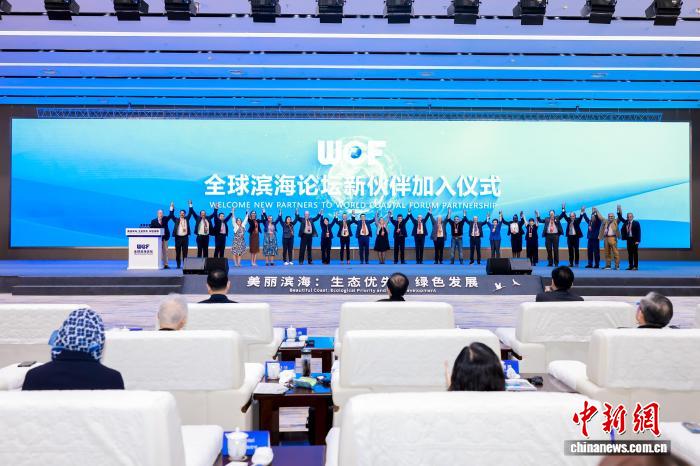
Core Points - The 2025 Global Coastal Forum (WCF) opened in Yancheng on September 24, with an expansion of its international partnerships from 15 to 25, involving government agencies, international organizations, universities, and research institutions from 14 countries and regions across five continents [1] Group 1 - The WCF will use this conference as a new starting point, guided by the "Global Coastal Forum Partnership Initiative" [1] - The forum emphasizes an "ecology-first" consensus and is committed to advancing "green development" [1] - The WCF aims to deepen international cooperation and share outcomes, promoting harmonious coexistence between humans and nature in coastal areas [1]
全球滨海论坛“国际朋友圈”再次扩容
Zhong Guo Xin Wen Wang· 2025-09-24 10:57
Core Points - The 2025 Global Coastal Forum has opened in Yancheng, Jiangsu, with an expansion of its "international circle" from 15 to 25 partners, representing government agencies, international organizations, universities, and research institutions from 14 countries and regions across five continents [1][3] - The 2023 Global Coastal Forum, co-hosted by the Jiangsu Provincial Government, the Ministry of Natural Resources, and the National Forestry and Grassland Administration, received significant international attention and praise [3] - The forum has been approved to remain as one of Jiangsu's three provincial-level forums, to be held biennially, and will be included in the action plan of the Global Civilization Dialogue Ministerial Meeting scheduled for July 2025 [3] - The chairman of the Global Coastal Forum International Coordination Committee emphasized the commitment to "ecological priority" and "green development," aiming to deepen international cooperation and share results for a harmonious coexistence between humans and nature [3]

和音:携手共建万物和谐的美丽家园
Ren Min Ri Bao· 2025-08-13 02:53
Group 1 - The core idea emphasizes the urgent need for global ecological governance in response to increasing ecological challenges, such as record high temperatures and significant loss of wetlands and mangroves [1] - China is committed to the philosophy of "Lucid waters and lush mountains are invaluable assets," actively contributing to global ecological civilization and the construction of a community of shared future for mankind [1][2] - China's ecological practices, such as the construction of the Saihanba forest farm and various ecological restoration projects, have received international recognition, including the United Nations' "Earth Guardian Award" [1] Group 2 - China advocates for a global green development path and has initiated various international cooperation projects, including the establishment of the Kunming Biodiversity Fund and partnerships for wildlife protection [2] - In 2024, China's exports of clean energy technologies are projected to help reduce global carbon emissions by 1%, showcasing its role in promoting global green transformation [2] - The "Belt and Road" initiative has led to the formation of international alliances focused on green development, fostering a global consensus on ecological governance [3]
人民日报和音:携手共建万物和谐的美丽家园
Bei Jing Ri Bao Ke Hu Duan· 2025-08-12 23:20
Group 1 - The core idea emphasizes China's commitment to ecological civilization and the concept of "Lucid waters and lush mountains are invaluable assets," advocating for harmonious coexistence between humans and nature [1][2][3] - China has actively engaged in international cooperation for ecological governance, including funding biodiversity initiatives and establishing partnerships with over 100 countries for green energy projects [2][3] - The "Belt and Road" initiative has facilitated the establishment of international alliances focused on green development, promoting the global acceptance of China's ecological philosophy [3] Group 2 - China's ecological practices have received international recognition, including the "Earth Guardian Award" from the United Nations, showcasing its role in global ecological governance [1] - The export of clean energy technologies from China is projected to reduce global carbon emissions by 1% in 2024, highlighting its impact on global climate change efforts [2] - The collaborative efforts in ecological governance aim to create a fair and just framework for global environmental management, moving beyond zero-sum games [3]
携手共建万物和谐的美丽家园(和音)
Ren Min Ri Bao· 2025-08-12 21:56
Group 1 - The core idea emphasizes China's commitment to ecological civilization and the concept of "Lucid waters and lush mountains are invaluable assets," advocating for harmonious coexistence between humans and nature [1][2][3] - China has actively engaged in international cooperation for ecological governance, including funding biodiversity initiatives and establishing partnerships with over 100 countries for green energy projects [2][3] - The "Belt and Road" initiative has facilitated the establishment of international alliances focused on green development, promoting the acceptance of China's ecological philosophy globally [3] Group 2 - China's ecological practices have received international recognition, including the "Earth Guardian Award" from the United Nations, showcasing its commitment to sustainable development [1] - The export of clean energy technologies from China is projected to contribute to a 1% reduction in global carbon emissions in 2024, highlighting its role in global climate governance [2] - The collaborative efforts under the "Belt and Road" framework aim to create a cleaner and more beautiful world, fostering a global consensus on ecological governance [3]
奏响人与自然和谐共鸣的时代乐章
Shang Hai Zheng Quan Bao· 2025-08-10 17:40
Core Viewpoint - China is accelerating the optimization of industrial structure and promoting a comprehensive green transition in its economy and society, aiming to enhance the proportion of green low-carbon industries in the overall economy and establish a high-quality development path that prioritizes ecology, conservation, and green low-carbon practices [1] Group 1: Green Economic Transformation - Since 2012, China has supported an average economic growth of over 6.1% with an average energy consumption growth rate of 3.3%, establishing the world's largest clean power and clean steel production systems [1] - China has built the largest and fastest-growing renewable energy system globally and has created the largest carbon trading market for greenhouse gas emissions, which is operating steadily [1] Group 2: Regional Development Strategies - China has positioned regional coordinated development as a major national strategy, promoting significant regional initiatives such as the coordinated development of Beijing-Tianjin-Hebei, the Yangtze River Economic Belt, and the Guangdong-Hong Kong-Macao Greater Bay Area [1] Group 3: Green Lifestyle Promotion - The concept of a green lifestyle emphasizing simplicity, moderation, and health is gaining popularity across China, with various regions adopting green consumption practices [1] Group 4: Economic Models for Ecological Protection - The report outlines three economic transformation paths: "Protecting Green for Wealth," "Gathering Green for Wealth," and "Borrowing Green for Wealth," which have led to various successful practices and development models over the past 20 years [2] - "Protecting Green for Wealth" focuses on ecological protection and restoration as a prerequisite for economic returns through government-led compensation and policy incentives [2] - "Gathering Green for Wealth" emphasizes the development of green industries through technological innovation and brand building, transforming ecological resources into sustainable economic models [2] - "Borrowing Green for Wealth" promotes the development of green markets and finance, facilitating the market circulation of ecological resources [2] Group 5: Green Finance Development - China has established a multi-level green finance product and market system, leading the world in green credit and green bond issuance [3] Group 6: Global Ecological Civilization Contribution - The concept of "Green Mountains and Clear Water are Gold and Silver Mountains" serves as a guiding principle for global ecological civilization, addressing deep-seated contradictions in development and protection [4][5] - China actively participates in global climate governance, providing stability and support for developing countries in addressing climate change [5][6] - In 2024, China is expected to contribute the largest share of the 585 GW of new global renewable energy capacity, significantly reducing the costs of wind and solar power generation [6]
奏响人与自然和谐共鸣的时代乐章——智库报告解析生态文明建设的中国创新与世界意义
Xin Hua She· 2025-08-10 04:26
Core Concept - The concept of "Lucid waters and lush mountains are invaluable assets" has evolved into a guiding principle for ecological civilization in China, emphasizing the integration of economic development and environmental protection [1][2][4] Group 1: Theoretical Foundation - The principle is rooted in a deep understanding of natural laws and sustainable development, forming a significant part of Xi Jinping's ecological civilization thought [2][4] - It highlights the importance of a beautiful environment as a component of people's happiness and well-being, with continuous efforts to improve ecological quality [2][3] Group 2: Practical Applications - The transformation of Anji's Yucun village from mining to eco-tourism exemplifies the successful application of this principle, with 1.22 million tourists and revenue of 60 million yuan in the previous year [2][3] - Various models such as "protecting green to exchange for gold," "gathering green to create gold," and "borrowing green to generate gold" have been developed to convert ecological benefits into economic returns [6][7] Group 3: Economic Impact - Since 2012, China's energy consumption has grown at an average rate of 3.3%, supporting an economic growth rate exceeding 6.1%, showcasing the effectiveness of green development strategies [5] - The country has established the world's largest clean power system and carbon trading market, indicating a strong commitment to green economic transformation [5] Group 4: Global Influence - The principle serves as a global reference for ecological civilization, addressing deep-seated contradictions in development and environmental protection, and positioning China as a key player in global ecological governance [9][10] - China's contributions to global renewable energy capacity and its leadership in climate diplomacy reflect its commitment to sustainable development and environmental stewardship [10]