全球经济合作

Search documents
美媒:加对华合作是务实,而非短视
Xin Lang Cai Jing· 2026-01-23 22:58
Core Viewpoint - The article argues that Canada's diplomatic engagement with China is a strategic move for diversification rather than a short-sighted provocation against the U.S. [1][2] Group 1: Strategic Diversification - Canada's approach to deepen cooperation with China is a calculated strategy to mitigate risks associated with U.S. protectionism and unilateralism [2][4] - The shift towards China is not an emotional reaction to U.S. policies but a rational decision based on national interests [2][4] Group 2: Economic Benefits - Canada has reduced tariffs on Chinese electric vehicles to 6.1%, benefiting consumers and promoting green energy transition [3] - The reduction of tariffs on Canadian canola to 15% by China provides significant advantages to Canadian farmers, offering a buffer against market volatility [3] Group 3: Arctic Sovereignty and Cooperation - Discussions on Arctic sovereignty with China are framed as a necessary collaboration to address climate change and resource management, rather than a betrayal of NATO [4] - Canada’s willingness to engage with China in Arctic governance reflects a recognition that global challenges require inclusive dialogue rather than military alliances [4] Group 4: Changing Global Dynamics - The article highlights a shift away from a unipolar world dominated by a single superpower, emphasizing the need for middle powers like Canada to collaborate [5] - Canada's recent actions are portrayed as a bold step towards establishing itself as a resilient core in the global economy, rather than a subordinate to Washington [5]
2026年我们怎么交更多朋友
Xin Lang Cai Jing· 2025-12-24 16:47
Group 1 - The global economy in 2025 is characterized by significant transformation pressures, with countries seeking to reposition themselves amid imbalanced globalization, emphasizing the need for cooperative win-win strategies rather than zero-sum games [1][2] - Countries such as the UAE, New Zealand, Singapore, and Switzerland have formed partnerships focusing on fair trade, supply chain resilience, and digital trade, while the EU and Japan have established a competitiveness alliance covering economic security and advanced technology rules [1][2] - China's participation in global cooperation includes the signing of the China-ASEAN Free Trade Area 3.0, expanding cooperation into digital and green sectors, and initiatives under the Belt and Road framework to enhance industrial connectivity with European nations [2][3] Group 2 - The focus of global cooperation is shifting towards countries with similar values, geopolitical interests, or complementary development stages, with supply chain resilience and economic security becoming core issues [2][3] - China is encouraged to maintain strategic partnerships with neighboring and traditional allies while actively setting agendas in emerging fields and providing cooperative solutions [3] - The need for institutional openness and domestic reforms is highlighted to align with international rules, positioning China as a bridge connecting different economic sectors [3][4]
第八届进博会|彰显开放姿态 共享发展机遇——海外媒体聚焦第八届进博会
Xin Hua She· 2025-11-07 09:08
Group 1 - The eighth China International Import Expo (CIIE) opened in Shanghai, showcasing China's commitment to high-level opening-up and providing opportunities for global enterprises to access the Chinese market [1][2] - The event serves as a significant platform for international companies to display their products, with notable participation from companies like Panasonic, which launched a voice-controlled washing machine tailored for Chinese consumers [2][3] - The CIIE has seen record participation, with 155 countries, regions, and international organizations involved, and over 4,108 foreign enterprises exhibiting, marking the largest exhibition area in history at over 430,000 square meters [3] Group 2 - The expo has become a crucial platform for global southern countries to integrate into the global value chain, with an 80% increase in African enterprises participating this year [4][5] - Countries like Pakistan are leveraging the CIIE to showcase their unique products, such as textiles and traditional crafts, aiming to strengthen trade relations with China [4][5] - The event is viewed as an important opportunity for countries to enhance their trade, investment, and economic relationships with China, reflecting a broader commitment to trade liberalization and global economic cooperation [2][4]
外媒聚焦进博会:中国坚定承诺引全球共鸣,贸易合作持续升温
Zhong Guo Xin Wen Wang· 2025-11-06 10:09
Core Points - The 8th China International Import Expo (CIIE) opened in Shanghai on November 5, attracting global attention and emphasizing China's commitment to promoting trade freedom and global economic cooperation [1][2] Group 1: Event Overview - The CIIE features participation from over 155 countries, regions, and organizations, with more than 4,100 overseas enterprises exhibiting [2] - The event runs from November 5 to November 10, showcasing a wide range of products and services [2] Group 2: International Participation - 78 Russian companies are participating in the expo, representing the "Made in Russia" section, which spans 1,380 square meters and includes food, agricultural products, consumer goods, and industrial information technology [2] - The Belarusian pavilion is hosting various cultural activities to showcase its national traditions, highlighting the expo as an effective platform for Belarusian exports to China [2] - Malaysia's Deputy Prime Minister attended the opening ceremony, marking the sixth high-level participation since the expo's inception in 2018 [2][5] Group 3: Regional Highlights - Cambodian officials emphasized the expo's role in demonstrating quality products and services to Chinese and international consumers [5] - Iranian enterprises are increasingly participating, aligning with Iran's economic strategy of resilience and diversification [5] - African participation has notably increased, with a reported 80% year-on-year growth in the number of exhibitors, showcasing products like Nigerian cashews and Burundian coffee [5][6] Group 4: Success Stories - The expo has significantly boosted demand for previously lesser-known products, such as Nigerian cashews, and has transformed Rwanda's chili pepper industry into a key export sector benefiting local farmers [6]


“开放合作的中国是推动世界经济发展的重要力量”——第十六届夏季达沃斯论坛与会外方嘉宾热议中国经济前景和国际贡献
Ren Min Ri Bao· 2025-06-26 21:54
Group 1: Global Economic Trends - The 16th Summer Davos Forum focused on "New Era of Entrepreneurial Spirit," with over 1,700 representatives from more than 90 countries discussing global economic trends and cooperation [1] - Participants emphasized the need for dialogue and understanding to bridge differences, advocating for a resilient global economy and inclusive economic globalization [1][2] - The forum highlighted the importance of multilateralism and international cooperation in addressing global challenges, with China recognized as a key player in maintaining global governance [2][8] Group 2: China's Role in Global Development - China is seen as a stabilizing force in the global multilateral trade system, promoting high-level openness and providing certainty for global development [1][2] - The forum showcased China's advancements in emerging technologies, particularly in artificial intelligence and green transformation, which are expected to create new opportunities for global development [4][5] - China's commitment to sustainable development and climate change initiatives was underscored, with increased investments in climate-related projects and cooperation with developing countries [5][6] Group 3: Belt and Road Initiative - The Belt and Road Initiative was highlighted as a significant platform for international cooperation, enhancing connectivity and trade among participating countries [7] - Countries like Kyrgyzstan and Egypt expressed strong support for the initiative, noting its positive impact on infrastructure development and economic collaboration [7] - The initiative is seen as a means to promote financial connectivity and support the development goals of participating nations [7] Group 4: International Business Interest - The high attendance at the forum reflects strong international interest in China and Asian markets, indicating a positive outlook for investment opportunities [8] - Experts emphasized the need for countries to maintain multilateralism and reduce trade barriers to foster a diverse economic environment [8] - Collaborative efforts between China and other regions, such as the EU and BRICS nations, are expected to enhance stability and certainty in the global economy [8]
哈伊马角酋长出席首届东盟—中国—海合会峰会
Shang Wu Bu Wang Zhan· 2025-05-30 12:15
Group 1 - The summit between ASEAN, China, and the Gulf Cooperation Council (GCC) emphasizes the importance of friendship and partnership among these regions, highlighting trust, dialogue, and common interests as the foundation for a better future [1] - The UAE views the Gulf region as a strategic bridge connecting Asia and the Arab world, serving as a vital corridor for trade, culture, and cooperation [1] - The UAE is committed to deepening partnerships with ASEAN and China, aiming for broader growth and coordination that aligns with its vision of building trust-based relationships for global stability and prosperity [1] Group 2 - The UAE's Foreign Trade Minister emphasized that enhancing cooperation among Asian countries can accelerate growth, drive innovation, and solidify the region's emergence as a global economic powerhouse [2] - The UAE aims to strengthen trade and investment partnerships globally, with a focus on Asian countries as natural collaborators [2] - The UAE has signed the Comprehensive Economic Partnership Agreement (CEPA) with countries like Indonesia, Cambodia, Vietnam, and Malaysia, targeting a non-oil trade volume with ASEAN nations to reach $37.7 billion by 2024 [2]
DLSM外汇平台:美国参加南非G20峰会 合作机遇还是新挑战?
Sou Hu Cai Jing· 2025-05-28 14:17
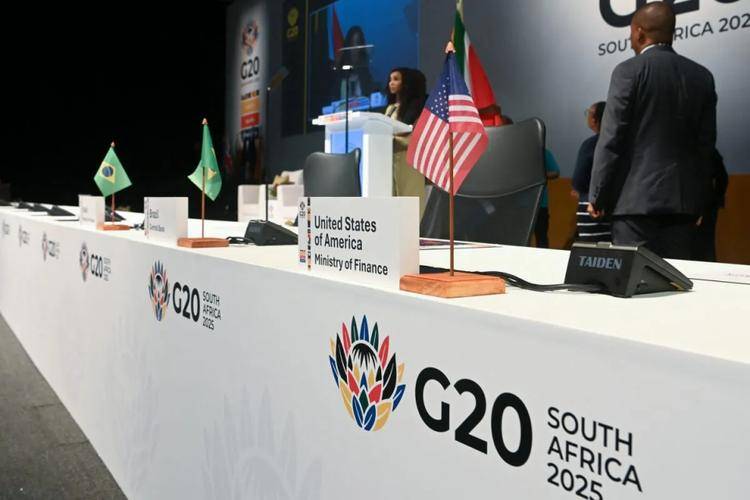
Core Viewpoint - The participation of the United States in the upcoming G20 summit in South Africa is a significant signal of its commitment to international economic cooperation and multilateralism [1][3]. Group 1: Positive Aspects - The U.S. involvement in the G20 summit indicates a willingness to play an active role in global economic collaboration, which is crucial given the current uncertainties such as trade tensions and climate change [3]. - The summit provides an opportunity for the U.S. and South Africa to enhance bilateral cooperation, particularly in areas like economy, trade, and investment [3][5]. - The U.S. participation will aid South Africa in fulfilling its responsibilities as the G20 chair, potentially leading to a successful summit [3][5]. Group 2: Challenges and Risks - Despite the positive signal, there are potential policy divergences between the U.S. and other countries, particularly regarding trade policies that have led to tensions [4]. - The global multilateral cooperation framework faces challenges, including the questioning of the authority and effectiveness of international organizations, which could impact the G20 summit [4]. - The success of the G20 summit will require collective efforts to overcome domestic political factors and policy disagreements among member countries [5].
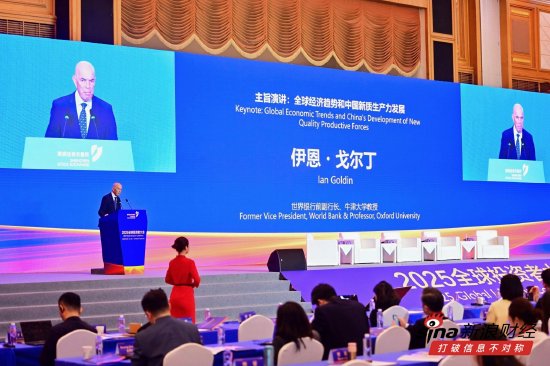
伊恩·戈尔丁:全球经济需强化合作应对系统性风险,深圳开放创新为全球发展提供“中国范式”
Xin Lang Cai Jing· 2025-05-19 03:59
Core Viewpoint - The Shenzhen Stock Exchange 2025 Global Investor Conference emphasizes the theme of "New Quality Productivity: Investment Opportunities in China - Open Innovation in the Shenzhen Market," showcasing the investment value of Chinese assets and the A-share market through various formats such as keynote speeches, roundtable discussions, and company roadshows [1] Group 1 - The keynote speech by former World Bank Vice President Ian Goldin discusses global economic trends and the development of new quality productivity in China [1] - Goldin expresses concerns about protectionism and nationalism, highlighting that these factors can lead to distrust between nations and reduce cooperation, which is essential for addressing systemic risks [2][3] - He emphasizes the need for stable mechanisms to foster cooperation among countries, as global challenges such as climate change and pandemics require collective action [2][3] Group 2 - Goldin advocates for tighter cooperation among countries, especially in light of the U.S. imposing tariffs and reluctance to collaborate, stressing the importance of open trade systems and stable global financial frameworks [3] - He praises Shenzhen as an open city that has made significant efforts to integrate into the global economy, noting its achievements over the past 40 years and expressing optimism for its future development [3]